
Ab Crunch Machine vs Abdominal Bench: A Commercial Buyer Guide
Choose the format by member profile, supervision, peak demand and the role missing from the current floor. A selectorized crunch supports quick load changes, a plate-loaded lever fits a plate-based strength zone, and a supported bodyweight bench offers a lower-complexity station. Trial the exact revision for entry, contact points, starting position, controlled travel, resistance steps, reset time, cleaning and service access before approving quantity.
Define the job before choosing a machine
Start with the training program, not the catalogue category. Record who will use the station, whether staff supervise the area, which core exercises are already available on cables and benches, and when members currently wait. A general club, hotel room and performance facility can need different degrees of guidance, adjustment speed and external loading even when each asks for an abdominal station.
Write a measurable brief covering user-size range, expected set duration, acceptable queue, minimum resistance step, plate availability, cleaning routine, delivery route and local service capability. The station should add a defined role rather than duplicate floor exercises that already have enough capacity. This brief becomes the same comparison sheet for every supplier and prevents appearance from deciding the order.
Separate selectorized, plate-loaded and supported formats
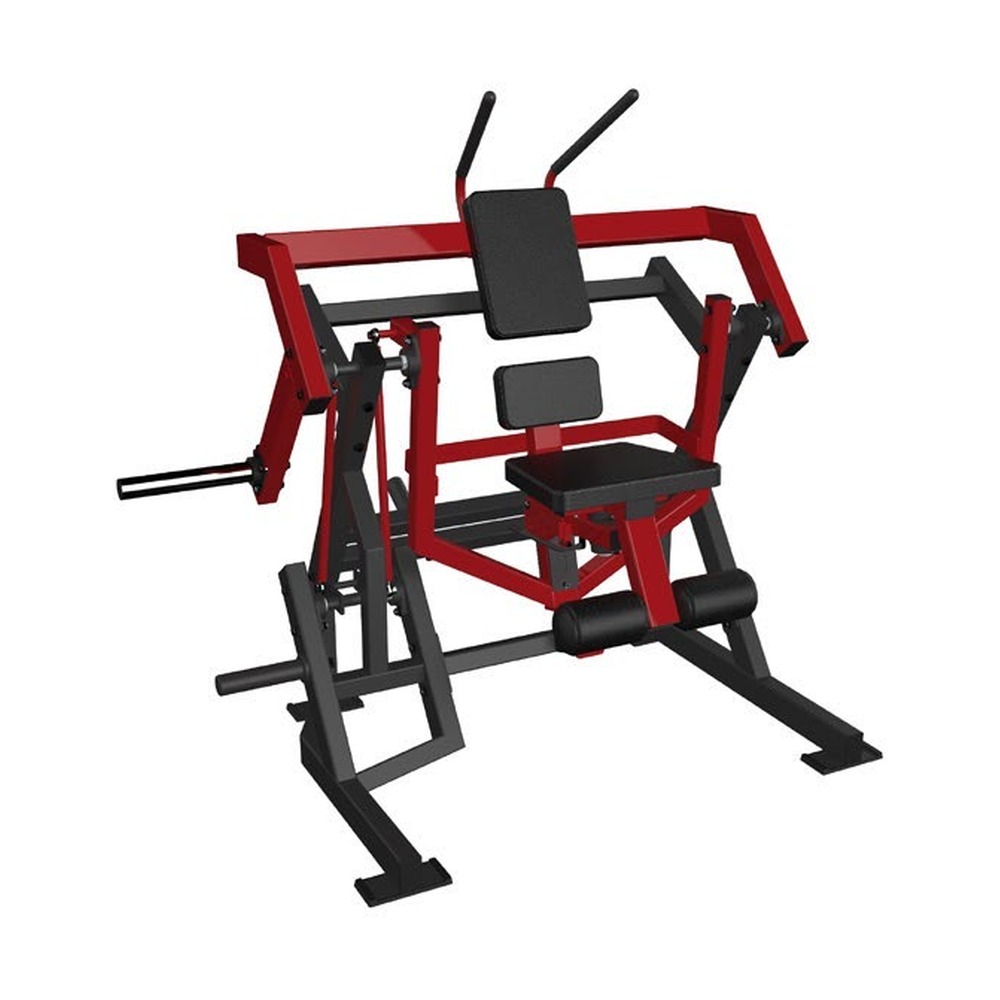
A selectorized crunch connects the user to a weight stack through a lever, cable or cam and changes load with a pin. A plate-loaded machine requires plates on horns and can include a fixed or swivelling seat. A supported bodyweight station guides the torso through pads and pivots without a selectable stack. These architectures create different entry, resistance, reset and maintenance tasks.
Ask each supplier to demonstrate the entire operating cycle: approach, seat or pad setup, restraint, load selection, starting position, controlled flexion, return and exit. Do not group a torso-rotation unit, cable kneeling position or back-extension station into the same capacity count. Their exercises, setup time and member expectations are different even when they are sold under one core-equipment heading.
| Format | Best-fit role | Reference-unit checks | Planning consequence |
|---|---|---|---|
| Selectorized seated crunch | Mixed membership and fast circuit changes | Seat, grips, foot support, start, increments, stack transmission | Quick resets; stack and covers need service clearance |
| Plate-loaded crunch | Strength-led floor with plates already managed | Starting load, horn access, plate mix, seat, handles, stops | Allow plate handling, storage and unloading time |
| Supported bodyweight bench | Simple accessory work with little load handling | Entry, pivot, pad contact, restraint, stability, exit | Lower mechanical complexity; fit and coaching remain critical |
| Cable-based alternative | Flexible programming where stations have spare capacity | Attachment, pulley position, kneeling zone, queue interaction | Does not equal dedicated peak-hour capacity |
Prove fit and movement with representative users
Include smaller, mid-range and larger users, plus members with different training experience. Check whether each person can enter without climbing over moving parts, place feet or legs securely, reach the handles, align with the intended pivot and find a start position without forced spinal or hip posture. Record the settings and contact points rather than relying on one experienced demonstrator.
Observe the full controlled path at light and moderate resistance. Pads should stay in the intended contact area, grips should support rather than pull the user out of position, and the return should remain controlled. Reject a configuration that depends on loose blocks, extra pads or constant staff holding. Instructions and adjustment markings must remain readable after routine cleaning.
Compare delivered resistance, not headline load
For a selectorized model, request the starting resistance, increment schedule, transmission ratio and the resistance the user actually feels through the working range. Stack mass alone cannot compare different cams, levers and cable paths. Test the lightest settings because friction, slack and a heavy first step can exclude users even when the maximum load looks generous.
For a plate-loaded model, identify the empty starting load, accepted plate diameter, usable horn length, load symmetry, storage provision and safe loading posture. Confirm whether rotation or seat changes alter the movement. On a supported bench, document how body position changes leverage and whether progression requires external plates, bands or another method. Keep these formats in separate quote columns.
Model peak capacity and the complete live area
Measure approach, setup, working sets, rest, load changes, wipe-down and departure during a realistic session. A pin change is fast, but the machine still remains occupied during rest. Plate loading adds collection and return time; a bench can reset quickly yet require coaching for first-time users. Use observed demand and service downtime, not a universal stations-per-member ratio.
Draw the torso path, entry side, foot position, plate trolley, storage, trainer stance, circulation, cleaning and technician access around the exact unit. Compare this live area with ceiling features, mirrors, walls and neighbouring equipment. Also verify packed dimensions, component weights, door and lift limits, turns, floor protection and the assembly sequence before freight is booked.
Inspect contact points, wear parts and cleaning access
Review pads, seams, handles, foot supports, seat slides, pins, pivots, bearings, cables, pulleys, guide rods, stops, fasteners, plate horns, guards and floor contacts as applicable. Cycle every adjustment and listen for rubbing or impact. Look for side play, incomplete pin engagement, pad rotation, frame lift and pinch exposure across all settings, not only the showroom position.
Ask how covers open, how wear parts are identified and which ordinary inspections require the machine to move. Confirm compatible cleaning products for upholstery, labels, grips and coated surfaces. The quotation should name manuals, exploded diagrams, parts lists, special tools and the responsibility for initial adjustment. Service access blocked by the planned layout is a purchasing defect, not a later maintenance problem.
Approve one physical reference unit
Have representative members, a coach, cleaner and technician use the exact offered revision. Time setup and reset, verify contact comfort, assess the controllable range at light and moderate loads, clean the touch points and perform the routine inspection described by the supplier. The trial should prove repeatable commercial operation rather than the heaviest repetition one person can complete.
Keep dated photographs, measurements, model and revision identifiers, approved drawings, manuals and signed observations. List every agreed correction with an owner and closure record. If the seat, pad, lever, cam, stack, horn, guard or base changes after approval, return that change to review before production. A catalogue name is not sufficient configuration control.
Lock the quotation and replay acceptance
The final schedule should state model and revision, quantity, loading architecture, starting resistance, increments or plate requirements, adjustment range, upholstery and frame choices, labels, manuals, spare parts, packing, assembly scope and acceptance evidence. Separate product price from freight, internal delivery, installation, anchoring where specified, commissioning and training so proposals remain comparable.
At receiving, match cartons and serial records to the schedule, inspect shipping damage, assemble to the approved instructions and repeat the reference-unit sequence. Confirm stable entry, full adjustment engagement, smooth travel, stops, guards, load changes, labels, cleaning access and service clearance. Record defects before handover and release the station only when the agreed corrections are closed.
FAQ
Which abdominal format should a general commercial gym buy first?
A selectorized crunch often supports the fastest load changes for mixed users, but the final choice must follow observed demand, representative-user fit, available floor area, staff support and the functions already supplied by cables and benches.
Can stack weight compare two selectorized abdominal machines?
No. Compare starting resistance, increments, transmission, friction, movement path and the resistance delivered through the range. Two equal stacks can feel and operate differently.
Can an abdominal bench replace a dedicated crunch machine?
It can cover a supported bodyweight role, but it does not automatically provide the same guided path, load selection, setup speed or peak-hour capacity. Treat it as a different station in the plan.
How many abdominal stations does a gym need?
Count peak arrivals, exercise choice, occupied minutes, acceptable utilisation, planned downtime and growth. Validate the result with real observation because member mix and programming change demand.
What should an abdominal-machine quotation include?
Request the exact revision, movement and adjustment description, starting resistance, increments or plate requirements, dimensions and live area, finish, manuals, parts, packing, installation scope and a written acceptance method.
Sources
- ISO 20957-1 general safety requirements — International Organization for Standardization
- ISO 20957-2 strength equipment requirements — International Organization for Standardization
- ISO 20957-4 strength-training bench requirements — International Organization for Standardization
- Life Fitness Insignia Series Abdominal — Life Fitness
- Hammer Strength plate-loaded abdominal / oblique crunch — Life Fitness / Hammer Strength
- Precor supported abdominal trainer — Precor