
How to Choose a Commercial Chest Press Machine
Choose a commercial chest press by matching the loading format, press angle and adjustment range to the people who will use it and to the busiest-hour operating pattern. Selectorized models support fast changes and a mixed membership; plate-loaded models suit a strength-led zone that already controls plates and storage. Test the exact offered machine for entry, seat and back support, starting position, handle reach, wrist alignment, delivered resistance and controlled return. Then plan the full operating area, approve one reference unit and place the accepted configuration and receiving tests in the purchase order.
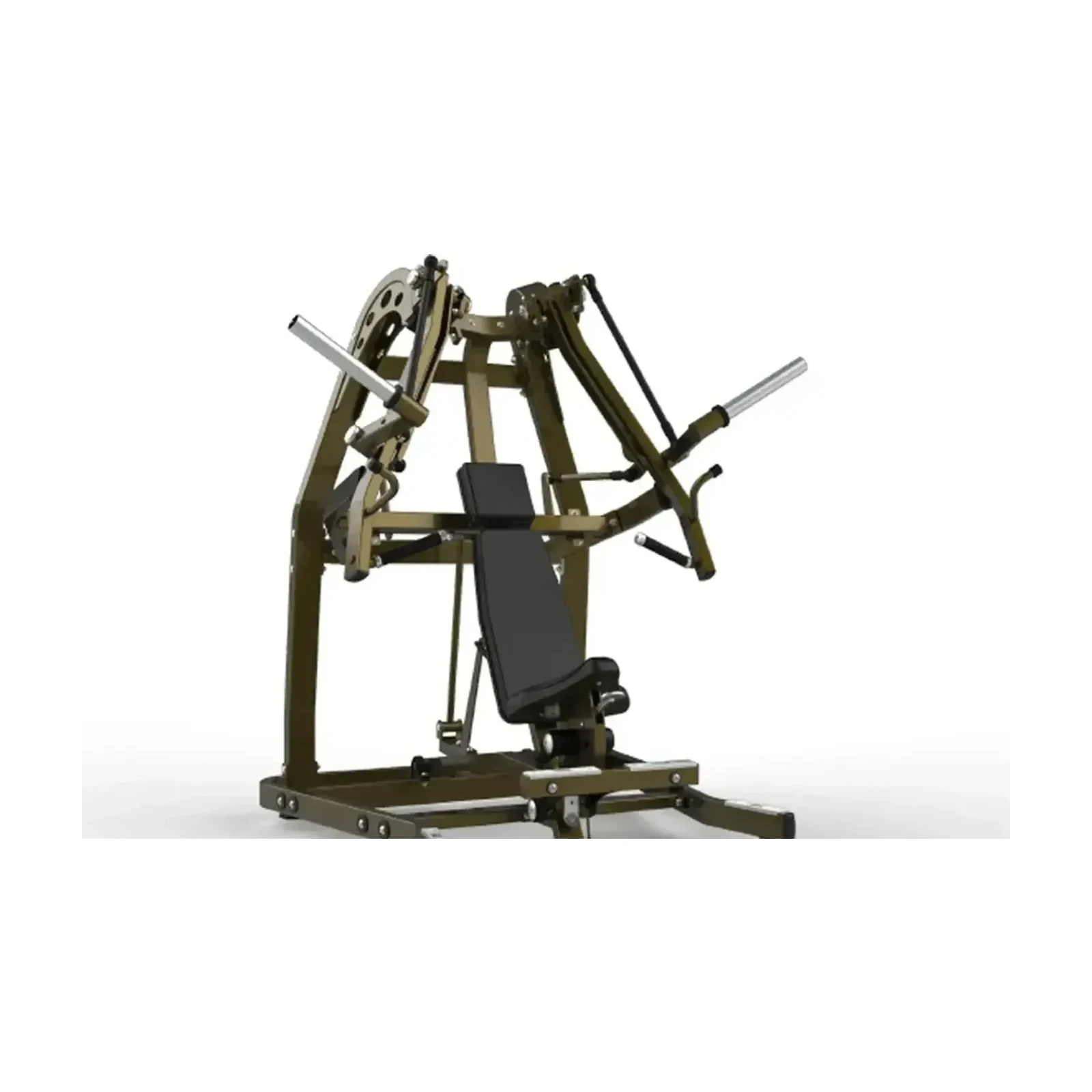
Define the chest station's operating job
Start with users and training flow, not a catalog label. Record whether the facility needs a simple horizontal push for new members, a heavier independent-arm station for experienced lifters, or a second angle that removes pressure from benches and racks. Hotels, schools, general clubs and strength facilities can all need a chest press, yet the supervision level, expected load changes and acceptable setup time differ. Write those operating conditions before comparing frames.
Observe the present push zone in fixed time blocks. Count bench queues, occupied minutes, staff assistance, abandoned sets and the substitutions members make when equipment is busy. Separate demand for horizontal pressing, incline pressing and fly movements. This prevents a familiar-looking machine from being treated as an automatic purchase and gives the supplier a clear capacity problem to solve.
Compare the formats as operating systems
A selectorized press allows quick load changes and keeps plates off the aisle. A plate-loaded press moves loading and housekeeping into daily operation and normally needs access at both arms. Independent arms permit unilateral work but do not prove equal resistance through the full stroke. A dual-function press can cover more than one movement from one frame, while each change of seat, back or arm position adds setup work and the station still serves one person.
Do not rank these formats with one universal winner. Put the user mix, required training angle, load-change frequency, available plates, coaching model and maintenance capability beside each option. The table is a shortlisting tool; approval still depends on the exact model, because two machines within the same format can differ substantially in start position, handle path, adjustment range and access.
| Format | Best operating fit | Trial priority | Often-missed cost |
|---|---|---|---|
| Selectorized press | Mixed membership and rapid turnover | Lightest setting, increments and adjustments | Cable, pulley and stack access |
| Plate-loaded press | Strength-led floor with plate control | Start load, arm path and loading access | Plates, collars, storage and housekeeping |
| Independent/converging press | Unilateral work and defined motion variety | Fit across body sizes and both arms | Pivot service and full arm sweep |
| Dual-function press | Compact site with low demand overlap | Every setup change and shared capacity | Changeover time and one-user occupancy |
Test fit before judging the movement
Have representative users enter without stepping across a loading arm or squeezing past a weight tower. Adjust the seat so the handles meet the intended press line, then check foot support, pelvis and back contact, head position, shoulder clearance and reach to both handles. The lightest usable setting must allow a controlled first repetition without staff lifting the arms into place. Record the accepted setting range instead of saying only that the seat is adjustable.
Repeat the trial with short, mid-range and tall users, plus anyone who represents the facility's accessibility needs. Watch the deepest approved start position, wrist angle, elbow path, contact with the pad and the ability to release the handles and exit. A comfortable trial by one strong buyer is not a fit study. If a start adjustment, foot lever or alternate grip is essential, name it in the order rather than assuming it is standard.
Compare motion and delivered resistance
Stack labels and plates on a lever are not directly comparable. Ask for starting resistance, increments, cable ratio or lever geometry, the usable travel and the relationship between the left and right arms. Test the first, middle and final portions of the stroke at the same user setup. Note dead spots, abrupt changes, end-stop contact, cable slack, arm synchronization and whether a controlled return remains smooth at a practical training load.
A converging path can provide a useful pressing pattern, while a straight or adjustable path can also suit a defined program. Treat these as design choices that must fit the user range, not as proof by themselves. For independent arms, load and move each side alone and together. For selectorized models, verify the pin, guides, pulleys and stack return; for plate-loaded models, check sleeve access, collars, storage and the effect of uneven loading allowed by the instructions.
Plan capacity across the whole push zone
One chest press should not be evaluated in isolation from adjustable benches, racks, dumbbells, shoulder presses and cable stations. Map which user groups can use each option and where demand overlaps. A general club can place a fast-change selectorized press in the main circuit and use a plate-loaded press in a strength area. A compact hotel may instead choose one easy-entry press and rely on dumbbells for a second angle. The correct mix follows the program and observed traffic.
Estimate capacity with occupied minutes rather than a machine-to-member ratio. During the busiest observation window, record arrivals who choose pressing work, average station time, changeover time and the utilization level at which a queue becomes unacceptable. Keep planned service downtime separate from everyday capacity. If one dual-purpose machine is proposed, count it as one simultaneous position even when the brochure lists several exercises.
Use the live area, not only the footprint
Draw the frame to scale, then add movement-arm sweep, plate loading, selector access, entry, spotter or coach position, cleaning route and service-panel clearance. Keep handles and moving arms out of circulation paths. Check doors, lifts, turns and ceiling obstacles before delivery, and confirm whether the machine ships assembled or in modules. The same static dimensions can produce different installation risks when towers, arms or weight horns face another station.
The installation plan should state floor level tolerance, anchoring or hold-down requirements, fastener responsibility and the clearance required by the manufacturer. Avoid inventing one spacing number for every model. Confirm the offered unit's instructions, local access rules and the facility's evacuation routes. Mark nearby plate storage so users do not carry discs through the pressing path, and preserve room for technicians to remove covers or service pivots.
Inspect the parts that control uptime
For a selectorized press, inspect the cable route, pulley alignment, guide rods, stack travel, selector pin, guards and access to routine wear parts. For a plate-loaded press, inspect pivots, bearings or bushings, sleeves, stops and storage horns. On both formats, examine welds, frame contact points, fasteners, handles, adjustment mechanisms, upholstery seams and pad attachment. A finish color cannot compensate for a rough adjustment or a component that technicians cannot reach.
Ask the supplier to identify wear parts, tools, lubrication points, cleaning restrictions, replacement lead process and the documents used to match a part to a model revision. Confirm how an occupied machine can be isolated when a fault is found. Include pads, grips, pins, cables and labels in the service discussion without assuming that every model uses all of them. The aim is a maintainable configuration with traceable parts, not a generic promise of heavy-duty construction.
Approve a reference unit and normalize the quote
Approve one unit with the same model code, revision, loading system, arm arrangement, adjustments, handles, pads, finish and safety information intended for the order. Test it with the agreed user group and protocol. Photos help identify the configuration, but they do not replace a written approval record. Standards such as ISO 20957-1, ISO 20957-2 and ASTM F2216 define relevant safety frameworks; request model-specific evidence rather than turning a standard name into an unsupported claim.
Make every quotation answer the same schedule: exact model and revision, loading method, starting resistance and increments where applicable, adjustment positions, supplied handles and accessories, plate storage, required clearances, anchoring, packaging, assembly scope, manuals, parts list and acceptance documents. Price plates, storage, installation, training and spare parts separately. This removes attractive omissions and makes supplier comparisons operationally meaningful.
Receive, assemble and commission by identity
At receipt, reconcile package marks with the purchase schedule before assembly. Record damage and inspect frame, finish, pads, grips, arms, pivots, cables or loading sleeves, fasteners, guards, labels, manuals and included parts. Assemble and secure the machine according to the current instruction. Do not treat a complete-looking frame as accepted until the exact approved identity and supplied configuration are confirmed.
Run the agreed checks unloaded and at light practical resistance before progressing to normal use: entry, every adjustment, selector or loading point, left and right arm movement, full approved travel, controlled return, abnormal noise, stability and clearances. Record serial or asset identity, accepted settings, open defects and the person responsible for closure. Only then place the machine into the floor plan and staff handover.
FAQ
Should a new gym buy selectorized or plate-loaded first?
A mixed-user facility often benefits from the faster changeovers of a selectorized press. A strength-led facility can prioritize plate loading when it already controls plates, storage and circulation. Use observed users and peak traffic to decide.
Does a converging path make one chest press superior?
No single path fits every project. Test handle travel, shoulder and wrist position, start depth and controlled return on the exact machine with representative users.
Are independent arms required for a commercial press?
They add unilateral options and can expose left-right differences, but they also add pivots and do not guarantee good fit. Evaluate the complete mechanism, resistance and service access.
Which press angle should a compact gym choose?
Start with the angle that closes the largest programming and capacity gap after reviewing benches, dumbbells, cables and shoulder equipment. For many mixed-user rooms this is a clear, easy-entry horizontal press, but the floor evidence should lead.
What must appear in the purchase order?
Record model, revision, loading system, resistance fields, adjustments, arms, handles, finish, accessories, clearances, anchoring, packaging, assembly, documents, parts and the receiving test.
Sources
- ISO 20957-1 general safety requirements — International Organization for Standardization
- ISO 20957-2 strength equipment requirements — International Organization for Standardization
- ASTM F2216 selectorized strength specification — ASTM International
- Life Fitness Insignia chest press — Life Fitness
- Precor Resolute converging chest press — Precor
- Precor Discovery plate-loaded chest press — Precor