
Introduction
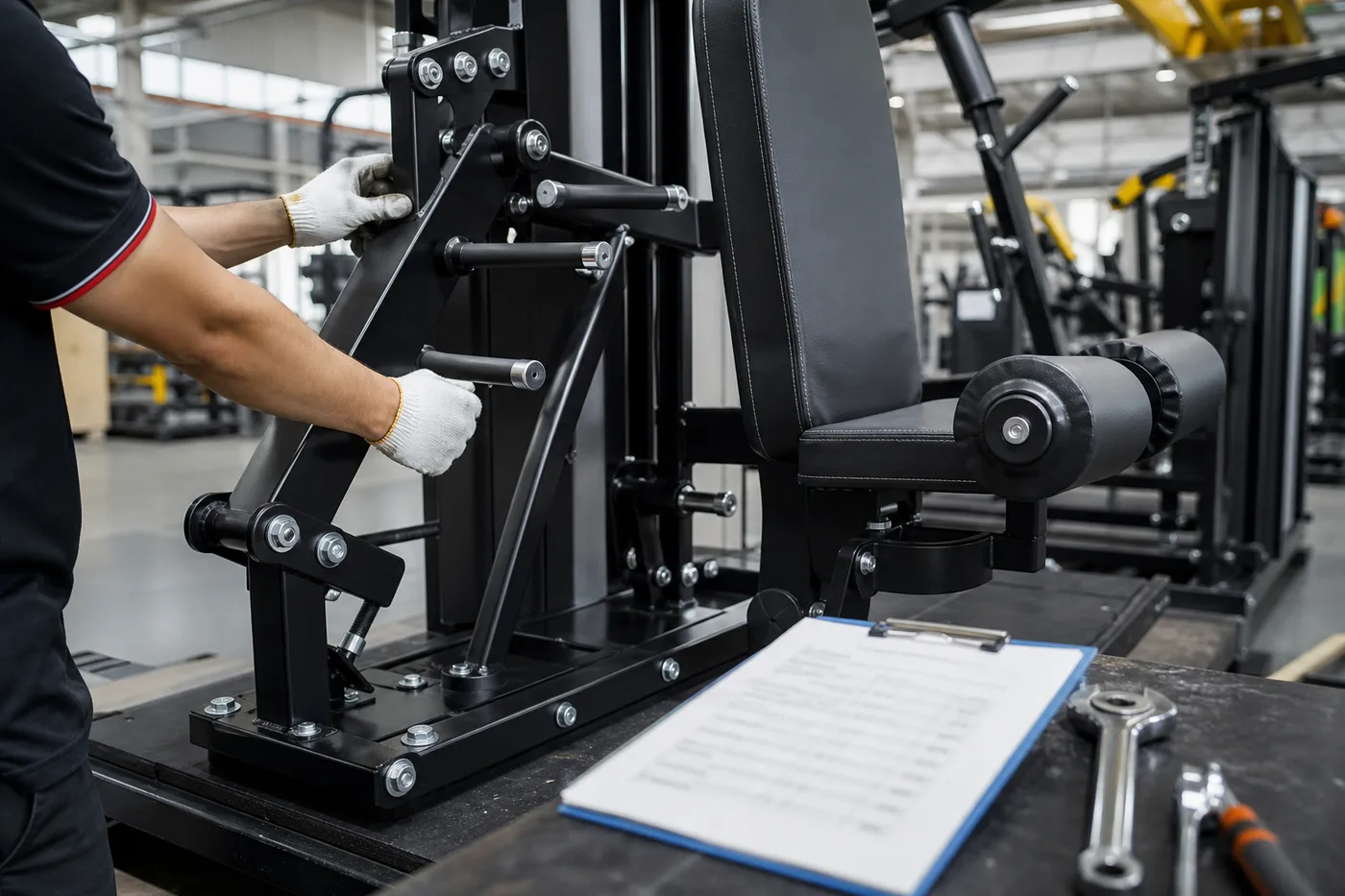
A pre-shipment inspection for commercial strength equipment should confirm the product is complete, functional, correctly customized and properly packed before balance payment and loading. Buyers should check frame quality, movement, upholstery, accessories, labels, packing and order quantity.
Key takeaways
- Inspection should cover frame finish, movement path, hardware, accessories, packing and loading.
- Functional checks are as important as appearance checks for strength machines.
- Clear photos and a structured checklist make pre-shipment decisions easier.
Why inspection should happen before shipment
Once a container leaves the factory, solving product problems becomes slower and more expensive. A missing handle, wrong color, damaged pad or incomplete hardware package can delay installation. For distributors, a quality problem can affect local customer trust. For gym owners, it can delay opening or create member complaints.
Inspection does not mean distrusting the supplier. It means both sides confirm the order together. A good inspection checklist helps reduce misunderstanding and gives the buyer a clear record before loading.
Inspection starts with the order list
Before checking machines, buyers should first compare the actual goods with the confirmed order list. The inspection should verify:
- Model and quantity
- Frame color
- Upholstery color
- Logo and label requirements
- Weight stack or plate loaded configuration
- Included accessories
- Spare parts and hardware
- Packing marks
If the order document is unclear, inspection becomes difficult. The best inspection starts with a clean, updated purchase list.
Frame and welding inspection
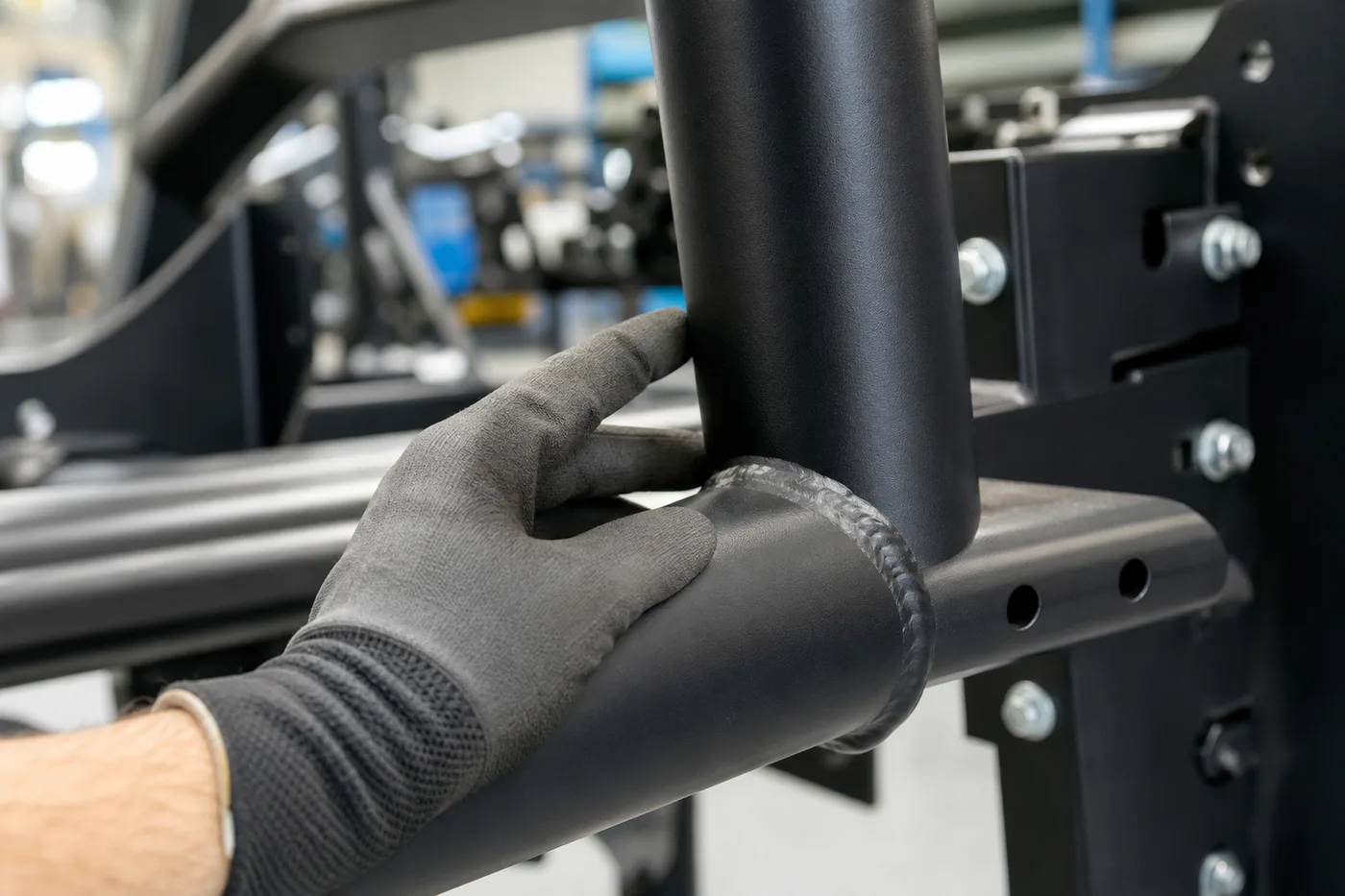
The frame is the foundation of commercial strength equipment. Inspectors should check visible welding, frame alignment and surface condition.
Key points include:
- Welding should be consistent and properly finished.
- Main frame should not show distortion.
- Contact points should sit stable on the floor.
- Bolt holes should align correctly.
- Moving arms should not rub against the frame.
- No sharp edges should be exposed in user contact areas.
For plate loaded machines, frame strength and machine stability are especially important because users load weight plates directly onto arms or horns. For selectorized machines, guide rods, stack movement and cable path should receive more attention.
Powder coating and surface finish
Powder coating protects the frame and affects the visual quality of the gym. Buyers should inspect:
- Color consistency
- Surface scratches
- Coating bubbles or peeling
- Exposed metal
- Protection on edges and corners
- Matching color across machines
Small marks can happen during production or handling, but repeated scratches or poor coating may indicate weak process control. If the order is for a private label brand or chain gym, color consistency becomes more important.
Movement and training path inspection
Commercial strength equipment must feel smooth and safe during use. A machine should not only look correct; it should move correctly.
For plate loaded machines, check:
- Movement arm path
- Handle stability
- Seat adjustment
- Back pad position
- Range of motion
- Plate horn alignment
- Stop position
For selectorized machines, check:
- Cable travel
- Pulley alignment
- Weight stack movement
- Pin insertion
- Guide rod smoothness
- Handle attachment
- Noise during movement
Inspection should include repeated movement, not just one quick test. Some problems appear only when the machine moves through the full range.
Upholstery, pads and contact areas
Seats, back pads, rollers and arm pads directly affect user comfort. Inspectors should check:
- Pad shape and firmness
- Stitching quality
- Upholstery surface marks
- Pad alignment
- Secure installation
- Roller position
- User contact comfort
For leg machines, rollers and footplates should be checked carefully. For chest and shoulder machines, seat height and back support affect exercise position. For rowing and pulldown machines, grip and chest pad placement can affect user control.
Hardware, accessories and spare parts
Missing accessories are one of the most common post-arrival problems. The inspection should confirm that bolts, washers, handles, pins, cables, belts, caps, manuals or labels are included when required.
A practical method is to pack hardware by machine model and label it clearly. This helps installation teams avoid mixing parts from different machines.
For distributors, spare parts planning is also important. Common consumable parts may include cables, pulleys, selector pins, adjustment knobs and upholstery parts. Buyers should confirm which spare parts are included and which can be ordered later.
Packing inspection
Packing should be checked after product inspection but before loading. A good packing check includes:
- Frame protection
- Pad protection
- Hardware packing
- Carton or crate labels
- Moisture protection if needed
- Heavy item support
- Protection between stacked parts
- Packing list accuracy
Large machines should not be packed in a way that puts pressure on vulnerable parts. Painted surfaces and upholstery need protection because scratches and marks are often caused during transport, not during production.
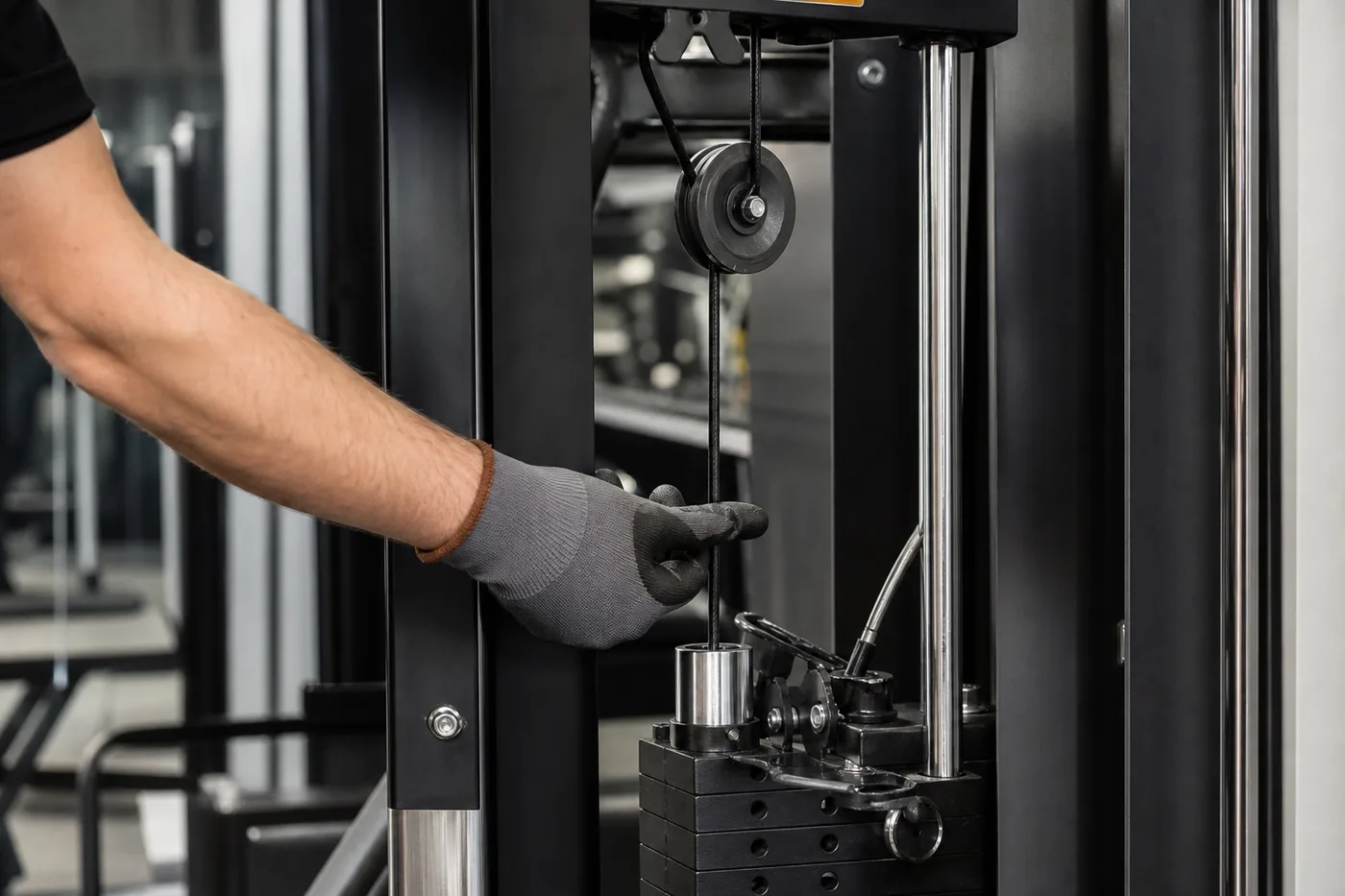
Photo and video records
Buyers should request clear inspection photos or videos. Useful records include:
- Full product view
- Close-up of frame and coating
- Logo and color confirmation
- Movement testing video
- Accessories and hardware
- Packing photo
- Loading photo
These records help both sides if there is a question after arrival.
Useful next pages
Buyer FAQ
What should be included in a commercial gym equipment inspection checklist?
It should include order quantity, model, frame, welding, coating, movement, upholstery, accessories, spare parts, packing and loading checks.
When should pre-shipment inspection happen?
Inspection should happen after assembly and before final packing or loading. Some buyers also request production-stage checks for customized orders.
Should I inspect every machine or only sample units?
For large orders, buyers may inspect all high-value machines and sample-check repeated accessories. For small orders, checking every item is usually more practical.
What is the most important part of strength equipment inspection?
Movement and structural stability are critical. A machine must be complete, stable and smooth through its exercise path.
How do I check powder coating quality?
Look for color consistency, scratches, bubbles, peeling, exposed metal and damage around corners or contact points.
Why is packing part of quality control?
Poor packing can damage good equipment during transport. Export packing protects the product until it reaches the buyer's warehouse or gym site.
Should inspection include videos?
Yes. Movement videos are useful for plate loaded machines, selectorized machines, cable systems and cardio equipment.
What if a problem is found before shipment?
The supplier should correct the issue before loading. Clear photos and written records help both sides agree on the correction.
Conclusion
A good commercial gym equipment inspection checklist protects both the buyer and the supplier. It confirms that the machine is built correctly, moves properly, includes the right accessories and is packed safely for export. Buyers should not wait until the container arrives to discover problems that could have been checked before shipment.
Need this topic turned into a real equipment plan?
Send your market, gym size, product categories or OEM needs. Kloe can help clarify the next step.