Spare-Part Version Control for Commercial Gym Equipment Distributors
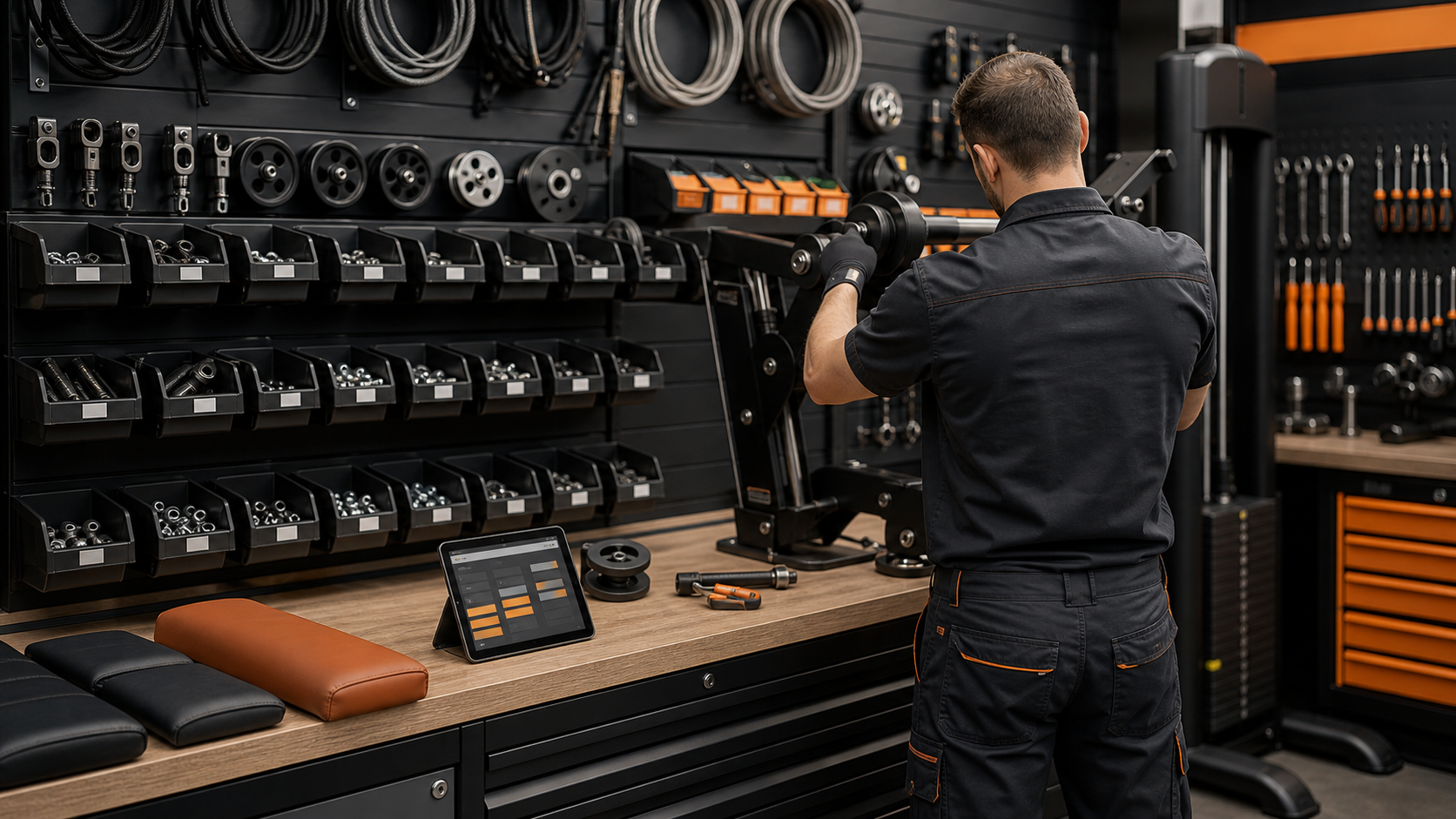
Spare-part availability is useful only when the part can be matched to the correct model revision and asset. Distributors need a controlled chain from equipment serial or batch identification to part number, drawing or photograph, compatibility decision, stock location, installation record and post-repair test.
Frame the buying decision
Spare-part availability is useful only when the part can be matched to the correct model revision and asset. Distributors need a controlled chain from equipment serial or batch identification to part number, drawing or photograph, compatibility decision, stock location, installation record and post-repair test.
Build the installed-base register from model codes, serial or batch identifiers, order dates, destination customers and known revisions. Add local failure history and substitute capacity before deciding which cables, pulleys, belts, pads, pins, sensors or boards justify stock.
Demand model-level evidence
Ask the supplier for a parts list linked to model revision, annotated images, critical dimensions where appropriate, supersession rules and a method for confirming uncertain requests. A photograph alone is insufficient when visually similar components have different geometry, connector or software dependencies.
Broad stock can shorten some repairs but increases obsolete inventory and mis-picking risk. A narrower verified list with fast replenishment may be better for low-failure electronic modules, while frequently used mechanical wear items may justify local quantities based on real service data.
Compare on one basis
Agree how part numbers survive product changes, who approves substitutes, what documentation accompanies a revised component and how discontinued items are handled. Purchase descriptions should include both the equipment identity and the required part identity, not a generic name such as cable or console.
At receipt, match labels and quantities to the parts order, quarantine unidentified items and store materials under suitable conditions. After installation, record the technician, asset, removed part, installed part and functional check so the compatibility decision becomes reusable evidence.
| Decision area | Evidence to request | Release condition |
|---|---|---|
| Decision area | Build the installed-base register from model codes, serial or batch identifiers, order dates, destination customers and known revisions. Add local failure history and substitute capacity before deciding which cables, pulleys, belts, pads, pins, sensors or boards justify stock. | Agree how part numbers survive product changes, who approves substitutes, what documentation accompanies a revised component and how discontinued items are handled. Purchase descriptions should include both the equipment identity and the required part identity, not a generic name such as cable or console. |
| Evidence to request | Ask the supplier for a parts list linked to model revision, annotated images, critical dimensions where appropriate, supersession rules and a method for confirming uncertain requests. A photograph alone is insufficient when visually similar components have different geometry, connector or software dependencies. | Wrong parts can create delayed repairs, new hazards, warranty disputes and inconsistent service across dealers. Version control also fails when sales teams change model names without updating the technical and warehouse records used by after-sales staff. |
| Release condition | At receipt, match labels and quantities to the parts order, quarantine unidentified items and store materials under suitable conditions. After installation, record the technician, asset, removed part, installed part and functional check so the compatibility decision becomes reusable evidence. | Provide the installed model list, current parts register and service history when discussing distributor support. The result should be a verified starting catalogue and exception process, not an unsupported promise that every future part will fit. |
Write responsibility into the order
Wrong parts can create delayed repairs, new hazards, warranty disputes and inconsistent service across dealers. Version control also fails when sales teams change model names without updating the technical and warehouse records used by after-sales staff.
This article does not declare interchangeability for any PowerBaseFit component. Compatibility remains model- and revision-specific and must be confirmed from the actual order and technical record before installation.
Accept and operate with records
Provide the installed model list, current parts register and service history when discussing distributor support. The result should be a verified starting catalogue and exception process, not an unsupported promise that every future part will fit.
A practical sequence for spare-part version control for commercial gym equipment distributors starts with the buyer-owned inputs, then asks the supplier for model-level evidence before price or schedule is allowed to close an unresolved technical point.
- Agree how part numbers survive product changes, who approves substitutes, what documentation accompanies a revised component and how discontinued items are handled. Purchase descriptions should include both the equipment identity and the required part identity, not a generic name such as cable or console.
- At receipt, match labels and quantities to the parts order, quarantine unidentified items and store materials under suitable conditions. After installation, record the technician, asset, removed part, installed part and functional check so the compatibility decision becomes reusable evidence.
- Wrong parts can create delayed repairs, new hazards, warranty disputes and inconsistent service across dealers. Version control also fails when sales teams change model names without updating the technical and warehouse records used by after-sales staff.
Boundaries and next action
The decision file should connect gym equipment spare part version control to the quoted configuration, approved change record and named acceptance owner; that link is what makes later service, claims and audits workable.
The next release gate is not a marketing statement but the documented acceptance condition: At receipt, match labels and quantities to the parts order, quarantine unidentified items and store materials under suitable conditions. After installation, record the technician, asset, removed part, installed part and functional check so the compatibility decision becomes reusable evidence.
FAQ
What should be fixed before requesting a quote?
Build the installed-base register from model codes, serial or batch identifiers, order dates, destination customers and known revisions. Add local failure history and substitute capacity before deciding which cables, pulleys, belts, pads, pins, sensors or boards justify stock.
Which supplier evidence is useful?
Ask the supplier for a parts list linked to model revision, annotated images, critical dimensions where appropriate, supersession rules and a method for confirming uncertain requests. A photograph alone is insufficient when visually similar components have different geometry, connector or software dependencies.
How should offers be compared?
Broad stock can shorten some repairs but increases obsolete inventory and mis-picking risk. A narrower verified list with fast replenishment may be better for low-failure electronic modules, while frequently used mechanical wear items may justify local quantities based on real service data.
What belongs in the purchase order?
Agree how part numbers survive product changes, who approves substitutes, what documentation accompanies a revised component and how discontinued items are handled. Purchase descriptions should include both the equipment identity and the required part identity, not a generic name such as cable or console.
When is the decision ready to approve?
At receipt, match labels and quantities to the parts order, quarantine unidentified items and store materials under suitable conditions. After installation, record the technician, asset, removed part, installed part and functional check so the compatibility decision becomes reusable evidence.
Sources
- GS1 Global Traceability Standard — GS1
- ASTM F2276-23 Standard Specification for Fitness Equipment — ASTM International
- ISO 20957-1:2024 — Stationary training equipment — International Organization for Standardization