
Introduction
A performance-based commercial gym equipment tender should describe the users, duty level, required movement or training outcome, measurable acceptance criteria, evidence to be submitted, installation scope and post-installation support. It should avoid copying one supplier's cosmetic details unless those details are operationally necessary. The best specification lets qualified bidders propose equivalent equipment while giving the buyer an objective way to reject incomplete, unsafe or unsupported offers.
Key takeaways
- Separate mandatory pass/fail requirements from scored preferences.
- Specify outcomes and verification methods, not unsupported marketing language.
- Treat delivery, installation, commissioning, training and documentation as part of the supply scope.
- Require a clear deviation schedule so hidden exceptions are visible before award.
What a performance-based tender specification is
A performance-based specification describes what the equipment and supplier must achieve in the intended facility. It connects the user group, expected traffic, training function and operating environment to requirements that can be checked. A selectorized machine may need stable movement, accessible adjustments and a defined acceptance test; a treadmill may need confirmed power information, service access and an emergency-stop check. The specification does not need to reproduce every dimension from a catalogue.
This approach differs from a brand-shaped specification. When a document copies a particular frame profile, cosmetic shroud or console layout without explaining the operational need, it can exclude useful alternatives and make evaluation difficult. Performance language creates room for equivalent products, but equivalence must be supported by model-specific data, drawings, samples or test evidence rather than a bidder simply writing 'complies'.
Begin with the facility and user brief
Before listing machines, define the facility type, approximate floor area, operating hours, supervision level and likely users. A public recreation centre, hotel fitness room, university performance facility and membership gym do not have the same priorities. The brief should also identify whether the project is a new fit-out, a replacement programme or an expansion within an operating site.
- Target users and expected peak occupancy
- Training zones and required outcomes
- Accessibility and supervision expectations
- Power, floor, doorway and delivery constraints
- Opening date and interfaces with other contractors
- Local maintenance model and expected support period
A clear brief prevents the equipment schedule from becoming an unrelated shopping list. It also gives bidders enough context to flag a poor fit. If a supplier can see that a cardio zone has limited electrical capacity or that an upper-floor room has a restricted lift, those constraints can be resolved before the price is treated as final.
Build the equipment schedule by function
Group the schedule into strength, free weight, functional training, cardio, flooring and storage. Within each group, describe the function first and the preferred configuration second. For example, define the required lower-body movement, adjustment range, loading method and intended user group before adding preferred upholstery or frame colour. This keeps the specification connected to use rather than appearance.
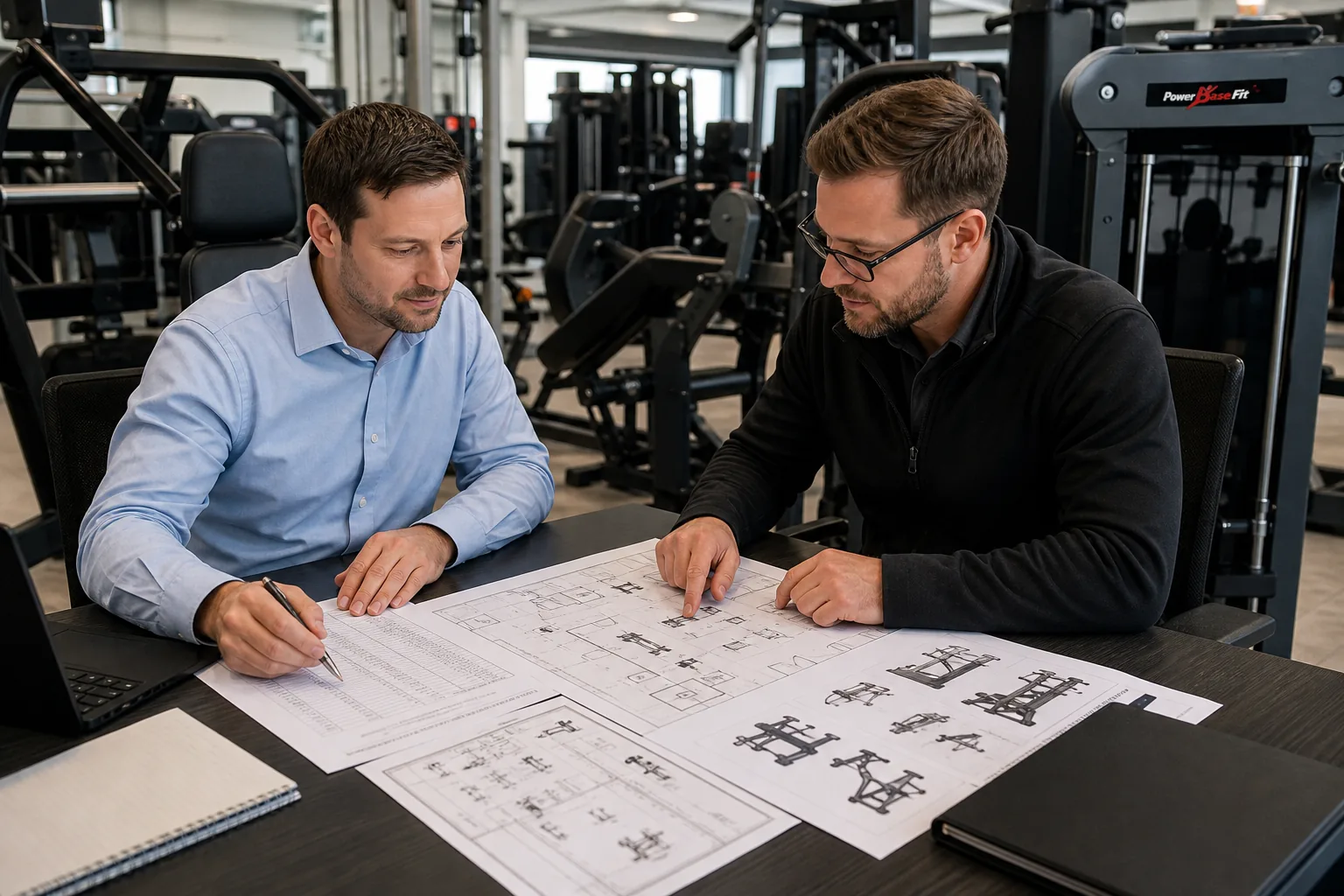
Quantity should follow capacity planning. Two machines with similar exercise names may not provide the same peak-hour throughput, and a multi-station cable system can serve several exercises while requiring careful circulation space. State whether quantities are fixed, provisional or subject to a final layout review. Ask bidders to identify footprint, operating envelope and service clearance for every proposed model.
Use a three-layer requirement structure
A practical tender separates requirements into mandatory gates, evaluated requirements and information-only fields. Mandatory gates cover matters that make an offer unacceptable, such as missing models, inability to meet the installation date or refusal to provide required documentation. Evaluated requirements distinguish compliant offers through serviceability, ergonomics, delivery planning, parts support or lifecycle value.
- Mandatory: model identified, commercial application confirmed, dimensions supplied and scope accepted
- Evaluated: adjustment usability, maintenance access, parts strategy, warranty response and programme strength
- Information: optional finishes, alternative configurations, future expansion and additional services
Do not make every preference mandatory. An overfilled pass/fail list reduces competition and encourages bidders to hide deviations. Conversely, a document made entirely of scored wishes may allow a low price to compensate for a critical technical omission. The three-layer structure protects both compliance and commercial comparison.
Define evidence before bids arrive
Each important requirement should name the evidence the evaluator will accept. Useful evidence includes a model-specific datasheet, dimensioned drawing, electrical schedule, warranty document, spare-parts list, installation method, packaging plan or signed compliance statement that identifies exceptions. Generic brochures are helpful for orientation but rarely prove every tender requirement.
Create an evidence column beside each requirement. This reduces subjective evaluation and makes clarification questions more consistent. For high-risk or unfamiliar models, the tender can reserve the right to request a sample review, remote video inspection or factory acceptance activity. The document should state who pays for that activity and whether it occurs before award, before shipment or both.
Write delivery, installation and commissioning into the scope
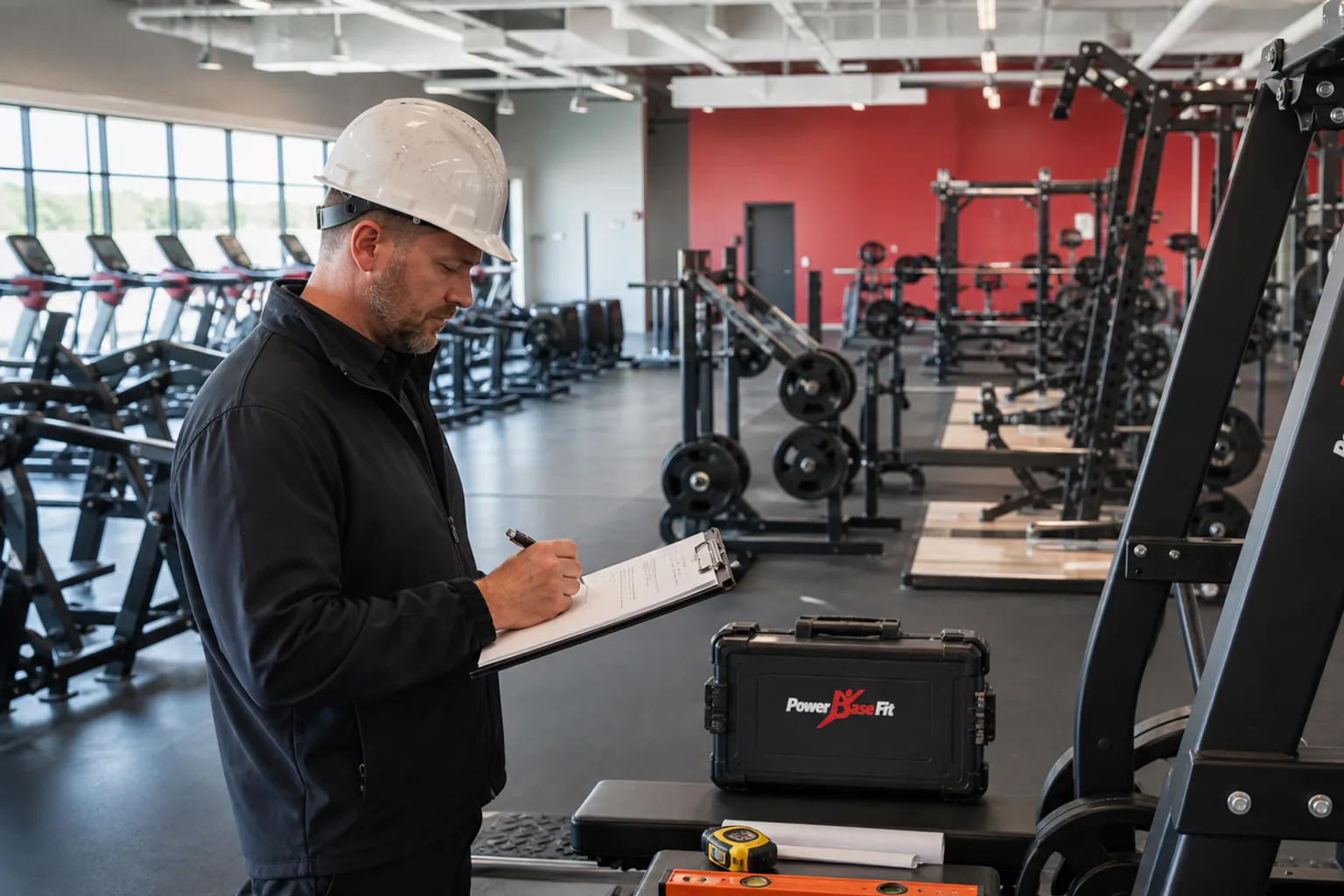
Equipment supply does not end at the loading dock unless the tender explicitly says so. State who unloads, moves equipment through the building, removes packaging, assembles machines, anchors approved items, connects cardio equipment, levels units and protects finished surfaces. Identify working-hour restrictions, lift limits and whether the site remains open to users during installation.
Commissioning should verify quantity, identity, condition, stability, adjustments, movement, cables, fasteners, guards, labels, console functions and emergency controls where applicable. Require a punch list with owners and closure dates. Final acceptance should depend on agreed critical defects being closed and the required handover documents being delivered, not merely on boxes arriving at the address.
Include service, parts and training requirements
Warranty duration alone does not describe support. The tender should ask who receives a fault report, what information is needed, whether labour and travel are included, how parts are dispatched and what happens when the local technician cannot resolve the issue. For imported equipment, define the expected relationship between the manufacturer, distributor, installer and facility team.
Training should be role-based. Floor staff may need safe adjustment and daily inspection guidance; maintenance staff need access, lubrication and fault-isolation information; procurement needs asset and warranty records. Ask for manuals, parts diagrams and serial-number lists in a usable format. Avoid requiring unsupported response times that no bidder can realistically deliver in the project location.
Create a controlled equivalence and deviation process
If equivalent products are allowed, define equivalence around function, duty, safety, footprint, serviceability and evidence. A bidder should map the proposed model to each requirement and list every deviation in one schedule. Silence should not be treated as an invisible exception. This is especially important when the quotation combines standard models, substitutions and optional accessories.
Clarifications should be recorded and shared according to the tender rules. Do not let one bidder quietly revise the equipment schedule after seeing a competitor's approach. When a substitution is accepted, update the controlled schedule and drawings so the purchase order, production file and final acceptance team all work from the same version.
Common specification mistakes
- Copying a catalogue without defining the intended user or operating duty
- Using words such as heavy-duty or premium without a verification method
- Specifying a brand-shaped cosmetic feature as mandatory without a business reason
- Leaving unloading, assembly, anchoring and packaging removal unassigned
- Requesting certificates or test claims without checking that they apply to the proposed model
- Omitting a deviation schedule and accepting blanket compliance statements
- Making final payment unrelated to inspection, documents or defect closure
These mistakes usually appear later as variation claims, rejected substitutions, site delays or arguments about what the supplier price included. A tender does not need to be long for its own sake. It needs to be structured so that every material obligation has an owner, evidence and acceptance point.
Manufacturer perspective: make the schedule manufacturable
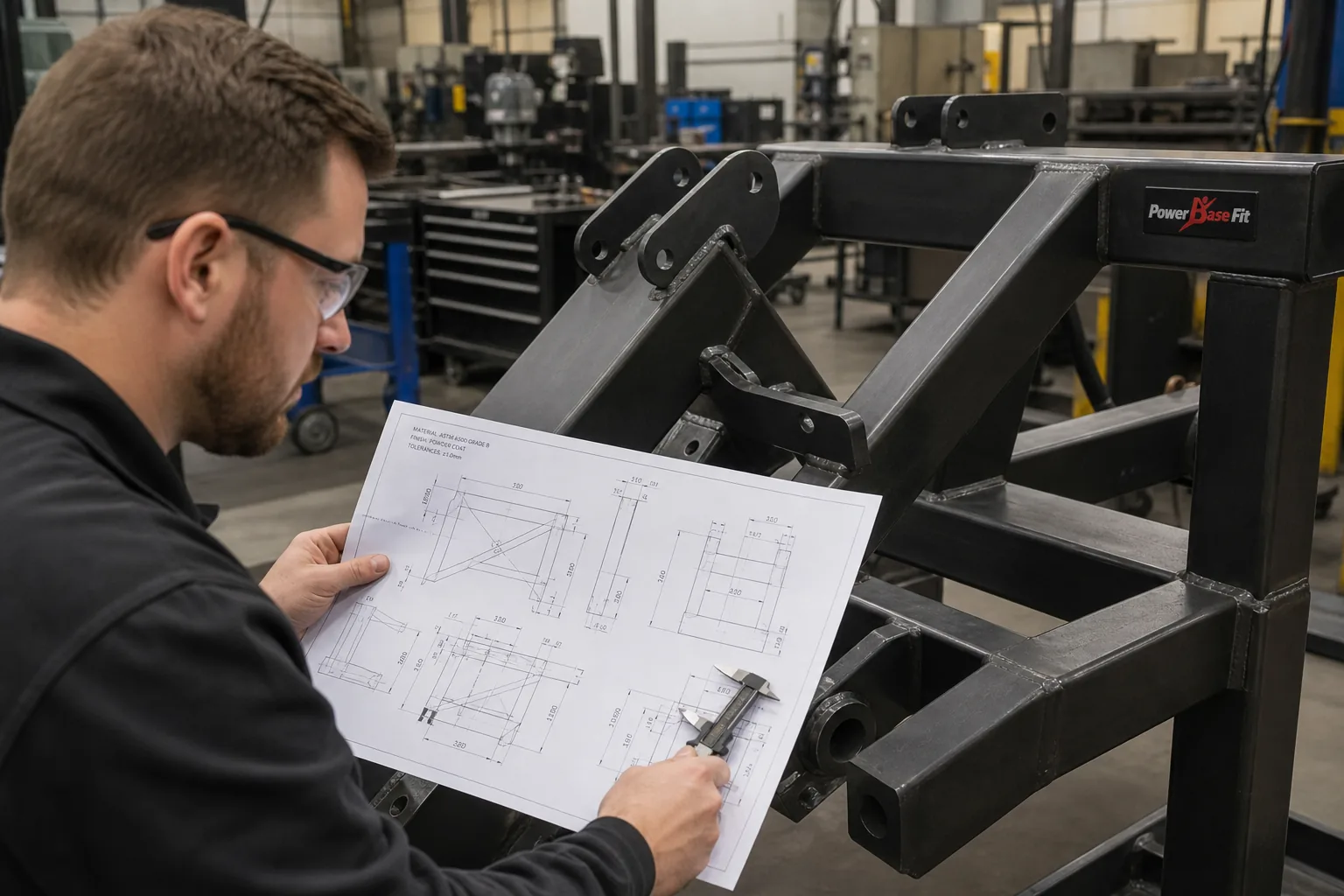
From a factory perspective, the strongest tender schedules distinguish standard production from project-specific changes. Logo, frame colour, upholstery, console voltage, labels, packaging and accessories should be confirmed before the production freeze. Requirements that alter structure or tooling need earlier review than cosmetic choices. A bidder should flag these effects instead of treating every customization as a simple note.
Ask the selected supplier to convert the awarded schedule into a controlled production and submittal register. Model names, quantities, finishes, electrical data, drawings, inspection points and delivery batches should align. This handoff is where a good specification becomes a reliable order rather than a document that is forgotten after the contract is signed.
Tender requirement framework
| Requirement area | What to define | Evidence or acceptance |
|---|---|---|
| Application | Users, traffic, supervision and duty | Facility brief and bidder confirmation |
| Equipment | Function, configuration, quantity and operating envelope | Model schedule and dimensioned drawings |
| Delivery | Unloading, access, protection and packaging removal | Method statement and programme |
| Commissioning | Tests, punch list and acceptance authority | Signed records and defect closure |
| Support | Warranty route, parts, training and documents | Warranty matrix and handover pack |
Useful next pages
Buyer FAQ
Should a tender name specific gym equipment brands?
Only when the procurement rules and operational need justify it. Otherwise describe the required performance and allow demonstrably equivalent models.
What makes a requirement measurable?
It identifies the expected result, the proposed model, the evidence to submit and the method or stage used to verify compliance.
Should every requirement be pass or fail?
No. Reserve pass/fail treatment for essential conditions and score preferences that can reasonably vary between compliant offers.
How should equivalent equipment be evaluated?
Compare function, duty, user fit, footprint, serviceability, support and model-specific evidence rather than appearance alone.
What installation details belong in the tender?
Include unloading, internal movement, protection, assembly, anchoring, electrical connection boundaries, levelling, testing and packaging removal.
What documents should be handed over?
Typically the final equipment schedule, serial list, manuals, parts information, warranty contacts, inspection records and outstanding-action register.
How can buyers prevent hidden exclusions?
Require one consolidated deviation and exclusion schedule, then incorporate accepted clarifications into the final contract documents.
When should the final equipment layout be approved?
Before production or dispatch, after proposed model footprints, operating envelopes, access and service clearances have been checked.
Conclusion
A strong commercial gym equipment tender turns an operating need into a controlled procurement process. Define the facility, separate mandatory and evaluated requirements, name the evidence, allocate installation responsibilities and connect payment or acceptance to real deliverables. That structure gives suppliers a fair basis to bid and gives the buyer a defensible basis to compare, inspect and accept the final equipment.
Need this topic turned into a real equipment plan?
Send your market, gym size, product categories or OEM needs. Kloe can help clarify the next step.