
How to Choose a Hip Thrust Machine for a Commercial Gym
Choose a commercial hip thrust station from the training program, expected peak use and the users who must enter, secure and leave the machine without staff rebuilding the setup. Compare plate-loaded, selectorized and barbell-station formats by starting resistance, adjustment sequence, back and pelvic support, foot-platform geometry, live operating area, changeover time, cleaning access and replaceable wear parts. Do not compare the kilograms on a lever arm, weight stack and barbell as if they created the same resistance. Approve the exact offered configuration with representative users, then attach the accepted setup and receiving tests to the purchase order.
Start with the operating job
Write down who will use the station, how hip-extension training is coached and how many people are expected during the busiest period. A bodybuilding gym with experienced plate handling has a different operating brief from a hotel, school or general club that needs fast setup and clear instructions. Record whether the station supplements or replaces barbell hip thrusts, and whether single-leg or band-assisted work is part of the program.
Observe the existing floor before choosing a mechanism. Count how long users occupy a rack and bench to prepare a barbell setup, how often staff correct the arrangement and whether loose pads or benches migrate. A dedicated station is justified when it solves a documented queue, setup or consistency problem. If demand is occasional, a controlled barbell station can preserve capital and floor area while still requiring a stable bench, suitable flooring and a defined storage plan.
Compare three purchasing formats
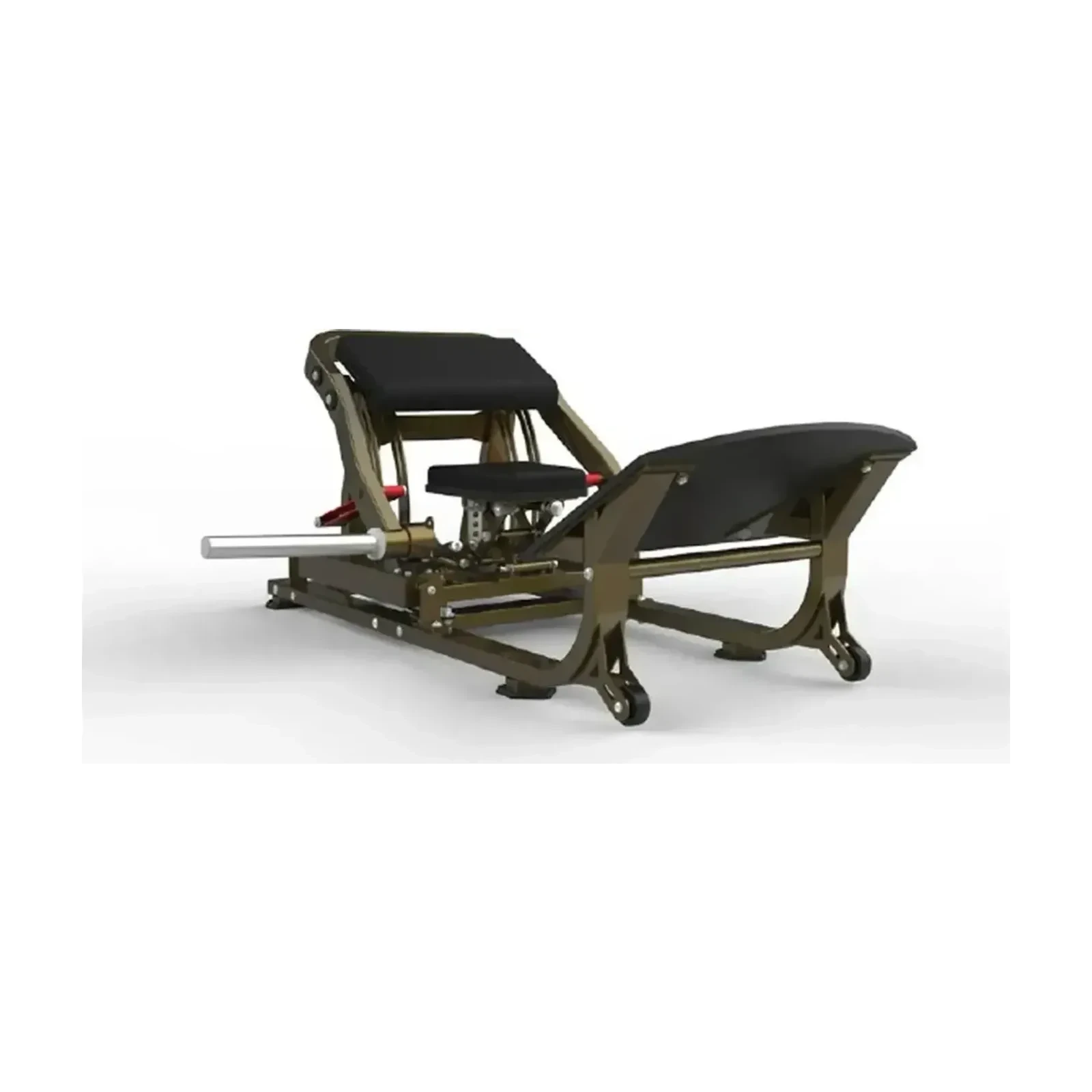
A plate-loaded hip thrust machine suits facilities that already manage compatible plates and want direct, visible loading. A selectorized version favors quick resistance changes and reduces plate transport during busy sessions. A fixed barbell station uses familiar free-weight stock and can support more than one variation, but the operator must control bench position, bar path, padding and the space used for loading and unloading.
Standing hip-extension and other glute machines belong in a separate comparison line because body position, support and resistance path differ from a seated or supine hip thrust. Manufacturer catalogs from Life Fitness, Nautilus and Booty Builder show how substantially dedicated designs can vary in supports, belts, foot platforms and loading. Treat the format name as a starting point, then request the exact model drawing and operating instructions.
| Format | Best operating fit | Main verification | Hidden scope |
|---|---|---|---|
| Plate-loaded machine | Strength and bodybuilding floors with managed plates | Starting resistance, lever path and plate interface | Compatible plates, storage and loading clearance |
| Selectorized machine | General gyms needing fast changeovers | Stack increments, cable path and start position | Service access and wear parts |
| Barbell station | Lower demand or multi-use free-weight zones | Bench stability, bar path and repeatable setup | Bench, bar, collars, pad and floor space |
| Standing glute format | Programs needing another hip-extension position | Body support and resistance path | User instruction and model-specific fit |
Test entry, adjustment and user fit
Run the full sequence from an empty station: approach, sit or position the torso, secure the belt or pelvic pad, place both feet, reach the handles, begin from the stated start position and leave without climbing over a loaded arm. Test users from the buyer's real population rather than one experienced salesperson. Note every contact point and every adjustment that must be explained during an induction.
Check that the back or shoulder support remains useful throughout the intended movement and that the pelvic contact does not shift across clothing types. The foot platform must offer stable contact for the approved stance range without forcing a user against an edge. Ask how the belt, strap or pad is adjusted, inspected, cleaned and replaced. A model that fits one user well but leaves others unable to secure the start position does not satisfy a broad commercial brief.
Compare resistance on the delivered mechanism
Request the declared starting resistance, adjustment increments, loading interface and permitted configuration for the exact model. On a plate-loaded lever, record where plates are fitted, whether both sides require equal loading and how thick plates affect usable sleeve space. On selectorized equipment, inspect the stack selector, cable or belt path, increment pattern and whether small changes are available for the intended users.
Do not transfer numbers from a competing product or assume that one hundred kilograms of plates equals one hundred kilograms at the pelvis. Pivot location, lever length, cable ratio and movement path change effective resistance through the repetition. Use a repeatable reference test with the same settings and user, and write down what is being compared. ISO 20957-2 identifies externally loaded and stack-based strength equipment within its scope, but compliance evidence and test reports must be requested for the offered product rather than inferred from the category.
Draw the complete live area
Place the machine on a scaled plan with its operating arm, plate-loading positions, user approach, trainer position and cleaning access. Include the area occupied by a person carrying plates and the swing or travel of every moving component. Keep the entry route away from another user's bar path and do not let stored plates narrow a required passage. Confirm floor conditions and any anchoring requirement from the current installation instructions.
A barbell station needs room for the bar, collars, plates, bench, hip pad and safe unloading on both ends. A selectorized station removes most plate traffic but can be taller or require rear service access. A plate-loaded station can appear compact in a catalog photograph while needing substantial side clearance in operation. Mark plate storage and the return route so a busy user does not cross the active movement zone.
Inspect high-contact and service parts
List the components that receive repeated contact or movement: pelvic belt or pad, back support, upholstery seams, handles, foot surface, pivots, bearings or bushes, weight horns, cables or belts, guide rods, selector pin, fasteners and floor feet. Ask which parts are replaceable, how they are identified and which checks belong to the owner. Cleaning instructions must match the offered upholstery, coating, strap and grip materials.
The service review should follow the actual mechanism. Plate-loaded arms require inspection of loading sleeves, stops, pivots and storage interfaces; selectorized systems add stack, cable, pulley, guide and selector checks. Ask how technicians reach those parts without moving unrelated equipment. Include a method for isolating the station when a belt, pad, fastener or moving part no longer meets the supplied instructions.
Approve a production-representative unit
Use a unit that matches the proposed mechanism, pads, belt, foot platform and loading system. Have representative members and coaches repeat setup at light and working resistance, then record entry, adjustment, movement clearance, changeover and exit. The test is not a contest for the heaviest load. It is a controlled check that the approved station works for the intended population and operating routine.
Photograph the approved contact points and record model code, revision, finish, upholstery, belt or pad type, attachments and instructions. Time a normal changeover and a cleaning cycle. If staff need a specific induction sequence, include it in handover documents. A showroom machine with different padding or resistance architecture is useful for exploration but cannot freeze the production order unless the differences are identified and accepted.
Compare quotations on one evidence schedule
Send every supplier the same training brief, user range and floor plan. Request the exact code, assembled and moving dimensions, machine mass, resistance format, starting resistance, adjustment range, plate or stack interface, user-contact parts, plate storage, floor requirements, packaging, assembly, manuals, replacement parts and warranty responsibilities. Put optional bands, steps, storage horns and color work on separate lines.
Compare delivered scope rather than the frame price. Include compatible plates, collars, floor protection, freight, unloading, installation, anchoring where specified, staff instruction and the first set of named wear parts. State who confirms compatibility when plates, bands or flooring come from another source. Any substituted belt, pad or mechanism should pass the same written fit and acceptance review before shipment.
Receive, commission and choose by facility
At delivery, match packages and model identity to the order before assembly. Inspect finish, upholstery, belt or pad, foot surface, pivots, loading sleeves, stack parts, fasteners, labels and manuals. Assemble to the supplied instructions, confirm level and any specified fixing, then repeat the approved entry, adjustment, low-load movement, changeover and exit checks. Record divergent or damaged parts before releasing the station.
Choose selectorized equipment when broad access and rapid changes dominate; choose plate-loaded equipment when the program, users and plate-management routine support it; keep a barbell station when demand and floor economics do not justify a dedicated mechanism. For a PowerBaseFit quotation, send the destination country, user profile, preferred loading format, floor plan, expected quantity and purchase schedule so the exact offered configuration can be checked rather than assumed.
FAQ
Which hip thrust format is best for a commercial gym?
There is no universal winner. Match plate-loaded, selectorized or barbell formats to user experience, peak throughput, plate handling, available area and service capability, then test the exact offered unit.
Is plate weight equal to the resistance felt by the user?
No. Lever geometry, pivot position, cable ratio, starting resistance and movement path change effective resistance. Compare exact mechanisms with a documented reference test.
How many hip thrust machines should a gym buy?
Measure peak simultaneous demand, average setup and set time, queues at racks and the role of alternative stations. Start from observed operations instead of a membership ratio.
What user-fit checks matter most?
Check entry and exit, belt or pad reach, back support, stable foot contact, handle access, starting position and movement clearance across representative users.
What should be written into the order?
Record model and revision, loading format, dimensions, contact parts, adjustments, included accessories, finish, packaging, assembly, manuals, replacement parts and agreed receiving tests.
Sources
- ISO 20957-1 general requirements — International Organization for Standardization
- ISO 20957-2 strength equipment requirements — International Organization for Standardization
- Hammer Strength plate-loaded glute drive — Life Fitness
- Nautilus glute drive product sheet — Core Health & Fitness
- Booty Builder hip thrust formats — Booty Builder
- Booty Builder selectorized V8 — Booty Builder