
45-Degree vs Seated Leg Press: A Commercial Buyer Guide
Choose a commercial leg press by the job it must perform on your floor, not by the largest plate rating or the most imposing frame. A 45-degree plate-loaded sled suits facilities that need familiar heavy lower-body training and already manage plates. A seated selectorized press supports fast changeovers and a broad user mix. Vertical and leg-press/hack-squat combinations solve narrower space or programming needs, but they require careful entry, clearance and changeover testing. Freeze the decision only after a representative user trial, a measured working envelope, service review and an order-specific acceptance plan.
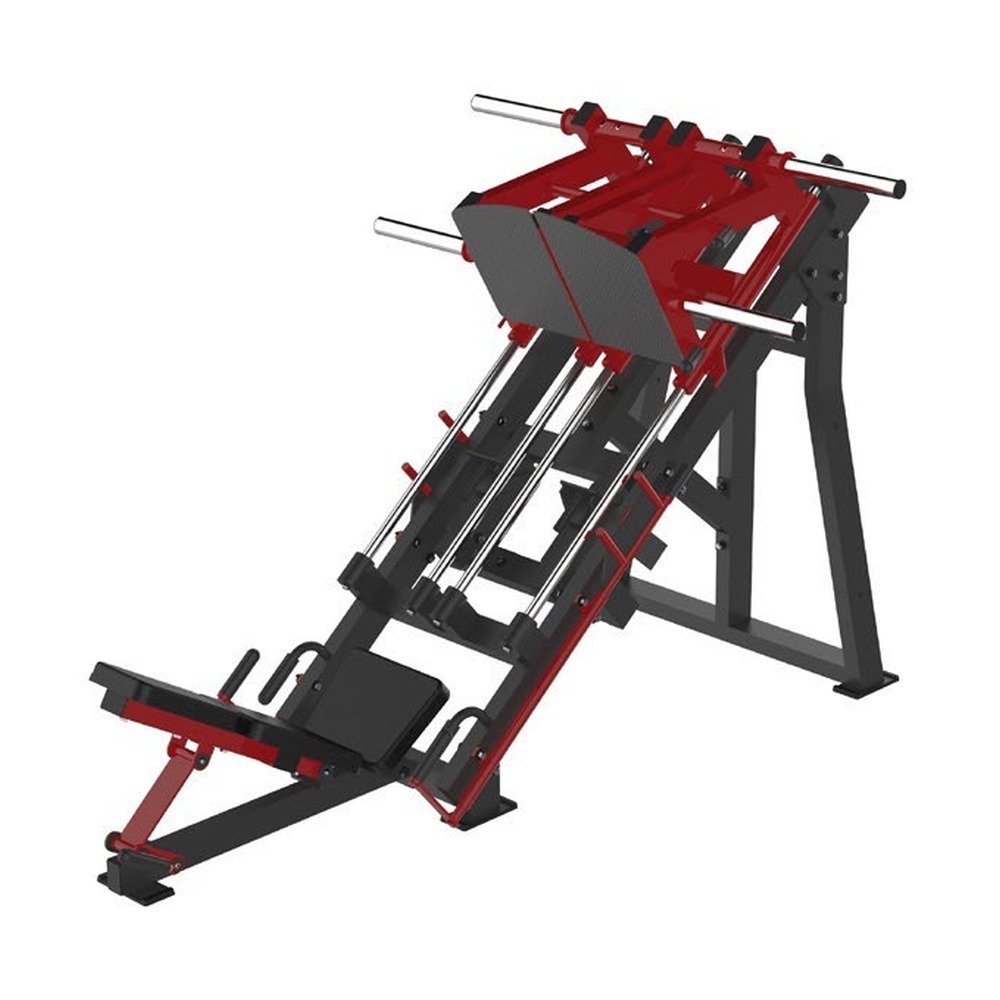
Define the leg press job before comparing machines
Start with the facility, users and program. A general membership club, hotel, school, performance center and bodybuilding gym do not create the same duty cycle or coaching environment. Record who will use the station, which lower-body movements are already covered, peak-period demand, supervision level and whether the first leg press must prioritize simple setup, high loading flexibility or a distinctive training experience. A machine is valuable when it closes a documented floor-program gap rather than repeating a nearby squat or press pattern.
Decide whether the purchase is a primary lower-body station or an additional format. A single general-purpose room often benefits from quick adjustments and clear entry. A strength-focused floor can justify a plate-loaded sled when members expect it and plates are already controlled nearby. A vertical press or a combined leg-press/hack-squat frame should be treated as a specialist decision: verify the users who need it, the extra setup steps and whether the second function remains available during busy periods.
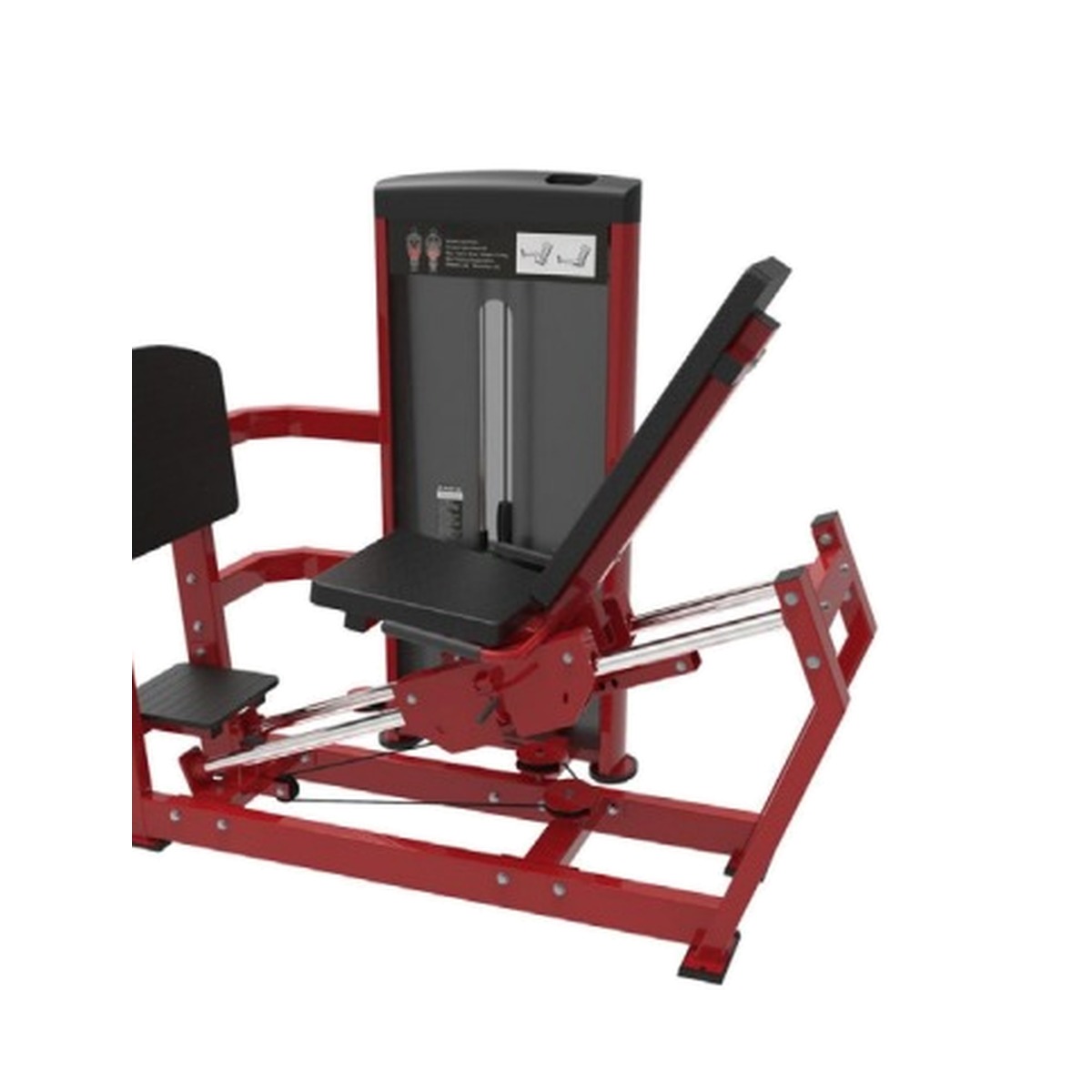
Compare formats by operating consequence
A 45-degree sled normally moves a carriage along inclined guides and uses external plates. Its buying questions center on starting load, usable travel, stops, rail or roller service, plate access and unloading behavior. A seated selectorized model transfers a stack through a cable, belt or lever arrangement. It changes resistance quickly and contains the load, but the buyer must verify the effective resistance, increments, starting resistance, stack access and service path rather than reading stack mass as the only capacity figure.
Horizontal, vertical and combination labels are not complete specifications. Horizontal machines can move the platform or the seat and can use stacks, plates or leverage. Vertical models reduce length in one direction while increasing height, entry and overhead-clearance demands. Combination frames exchange one footprint for more changeover operations, contact surfaces and instructions. Ask every supplier for a movement diagram, adjustment list, complete operating dimensions and a video of the exact configuration under consideration.
| Decision factor | 45-degree plate-loaded | Seated selectorized | Vertical or combination | Evidence to request |
|---|---|---|---|---|
| Main floor role | Familiar heavy leg station | Fast general-use station | Specialist or dual-purpose station | Program and user brief |
| Resistance review | Carriage, angle, plates and lever path | Stack, ratio, increments and travel | Design-specific path and transitions | Resistance explanation and test method |
| Space review | Sled travel, loading and plate storage | Entry, stack and service access | Height, changeover and user position | Scaled operating-envelope drawing |
| Daily operation | Plate return and unloading | Pin changes and upholstery cleaning | Setup control and instruction clarity | Observed pilot session |
| Acceptance focus | Stops, carriage tracking and plate horns | Selector, cable or belt and full travel | Both modes and every lock | Signed installation checklist |
Test user entry, fit and adjustment range
A buyer should not infer fit from the phrase ergonomic design. Observe how short, average and tall test users enter, reach handles, position their feet, adjust the seat or back support, select a start position and exit without crossing a moving path. Record where the pelvis and back lose stable contact, where knees approach the torso, and whether the user can reach the release or stop from the intended position. The goal is not one universal posture; it is an adjustment range that serves the declared member population with clear instructions.
Include beginners and users with limited confidence in the pilot, while keeping clinical claims outside the purchase decision. A lower entry step, visible stop, contained weight stack and simple selector can improve usability, yet those features still need direct testing. For an angled sled, check whether the carriage can be released and re-racked from every approved start position. For a vertical or combined unit, watch every transition and confirm that pads, platforms and handles do not create a confusing sequence.
Draw the complete working envelope
Place the manufacturer footprint on the scaled plan, then add every moving extremity. Mark the sled or lever travel, seat adjustment, step or platform, user approach, coach position and the route used to load plates. Add plate trees only after checking that users can remove large plates without twisting into the frame or blocking the aisle. A compact catalog footprint can become a poor layout choice when its loading horns face circulation or its carriage enters a neighboring station's working zone.
Keep service access separate from user circulation. Technicians need to inspect guides, rollers, bearings, pivots, fasteners, cables, belts, stack components and stop mechanisms without moving unrelated machines. Confirm door, corridor, lift and turning dimensions for delivery, as well as the largest subassembly and the permitted disassembly sequence. Ask whether anchoring is required for the quoted model and coordinate the answer with the floor system and site professional before installation.
Normalize resistance before comparing capacity
Do not compare a 45-degree machine by added plate mass against a selectorized machine by stack mass. The sled or lever has its own starting load, the force direction changes with geometry, and a cable or lever system can alter the relationship between stack movement and platform force. Friction and the movement curve also affect feel. Ask the supplier to state starting resistance, loading method, any ratio, travel and the method used for published limits; keep each value tied to the exact model and revision.
Build the planned loading package around real programming. A plate-loaded machine also requires compatible plates, storage, handling rules and a process for unloading after use. A stack machine needs increments that support the intended user range and a selector that remains legible and retained. During the pilot, compare smoothness and control at low, middle and higher approved settings without turning a subjective preference into an unsupported engineering conclusion.
Inspect stops, guides and high-contact components
For sled machines, observe the main stop, secondary travel limit, handle movement and the visibility of the locked state from the user position. Run the empty or minimum permitted carriage through its full approved travel, listening and watching for inconsistent tracking. Inspect guides, rollers or linear bearings according to the model's design, and confirm how contamination is removed and wear is measured. Plate horns, collars and storage positions must match the ordered plate specification and remain clear of handles and walkways.
For selectorized models, test the pin, stack alignment, guide rods, cable or belt routing, terminations, pulleys and guards. Check that the selected plate engages cleanly and that no loose pin can migrate into the movement area. On every format, review upholstery seams, grip security, footplate surface, adjustment labels and fastener access. ISO 20957-1 and ISO 20957-2 identify the general and strength-equipment safety framework; obtain supplier evidence for the relevant product class and market instead of treating a logo as complete proof.
Model throughput and daily floor work
Peak-hour value depends on changeover time as well as training appeal. Time a realistic handoff: return the carriage or seat, remove or change resistance, adjust the start, clean contact surfaces and begin the next set. A selectorized station can shorten load changes, while a plate-loaded station can create queues when users leave plates behind or when the available plate mix is wrong. Record observed demand on comparable equipment before ordering a second format or assuming one station will absorb all lower-body traffic.
Assign routine tasks and evidence. Staff should know who checks stops, moving components, adjustment pins, fasteners, upholstery, instructional labels and floor condition, and what removes the machine from service. The maintenance plan should follow the supplied manual and local obligations. Confirm spare and wear-part identifiers, revision control, access to service instructions and the information required for a support request. A machine that cannot be diagnosed without guesswork adds avoidable downtime.
Approve a pilot unit with a written protocol
Use the same pilot sheet for every shortlisted model. Record model and revision, assembled configuration, plate or stack setup, tester stature range, entry and exit observations, adjustment reach, start positions, travel, stop operation, noise, tracking, cleaning access and technician comments. Photograph permitted details and number each issue. A showroom impression is useful, but it does not replace a repeatable comparison under the operating conditions that matter to the project.
Separate preference from a failed requirement. A tester can prefer one movement feel while both machines pass the mandatory gates. Conversely, an unreachable stop, unclear changeover or missing service document should not be hidden inside an average score. Freeze the approved configuration, color, upholstery, labels, attachments, plate interface and documentation revision in the order. If the supplier changes a controlled item, review the change before production or shipment.
Write the quotation and receiving checks around the decision
Send the supplier the destination country, facility type, user brief, model and quantity, resistance format, required plate interface or stack configuration, operating-envelope drawing, colors, labeling language, documentation, spare-parts request, packaging, delivery access and installation scope. Request assembled and shipping dimensions, net and gross mass, largest package, unloading method, anchoring instructions and declared exclusions. Keep plates, storage and installation hardware as explicit lines so the comparison does not hide different scopes.
At receipt, reconcile model codes, quantities, packages, finishes, labels, manuals and visible condition before assembly. After installation, repeat the approved checks across all adjustments and both sides where applicable: stability, fasteners, seat or back movement, stop engagement, selector operation, full travel, tracking, abnormal contact and clear access. Record serial or batch identifiers available for the model, unresolved issues and final handover. Release the station only after the responsible party accepts the evidence.
- Facility and user brief
- Scaled footprint and operating envelope
- Resistance and starting-load explanation
- Pilot protocol with acceptance gates
- Plate, storage and spare-part scope
- Delivery, assembly and anchoring responsibilities
- Signed receiving and handover record
FAQ
Is a 45-degree or seated leg press better for a commercial gym?
Neither format is universally better. Choose the 45-degree plate-loaded type for documented heavy-training demand and plate operations; choose seated selectorized for faster changes and broad general use.
Can leg press capacity be compared by kilograms alone?
No. Starting load, carriage or lever geometry, cable ratio, travel and friction affect the experienced resistance, so compare model-specific evidence and a controlled user test.
How much room should be allowed around a leg press?
Use the supplier's exact footprint, then add moving travel, entry, plate loading, coaching, circulation and technician access on a scaled layout.
What should a leg press pilot test include?
Test entry, adjustments, approved user fit, resistance changes, full travel, stops, tracking, noise, cleaning and service access with a written protocol.
What information belongs in a leg press quotation request?
Send the user brief, model, resistance system, plate or stack needs, layout, colors, labels, packaging, delivery, installation, documents, spares and acceptance requirements.
Sources
- ISO 20957-1:2024 — General stationary equipment requirements — International Organization for Standardization
- ISO 20957-2:2024 — Strength equipment requirements — International Organization for Standardization
- Precor Resolute seated leg press — Precor
- Precor Discovery angled leg press data sheet — Precor
- Hammer Strength Select seated leg press — Life Fitness
- Life Fitness linear leg press — Life Fitness