
How to Compare Commercial Pilates Reformers for a Studio
Choose a commercial Pilates Reformer from the studio programme, client range, instructor workflow and maintenance plan before comparing frame finish or spring count. Normalize each quotation around usable carriage travel, the distance between shoulder rests and footbar, adjustment positions, documented spring set, rope and pulley layout, storage method, accessories, replaceable wear parts, manuals and warranty scope. Approve one reference unit with instructors, record its settings and feel, then repeat the same dimensional, functional, noise and safety checks when the fleet arrives.
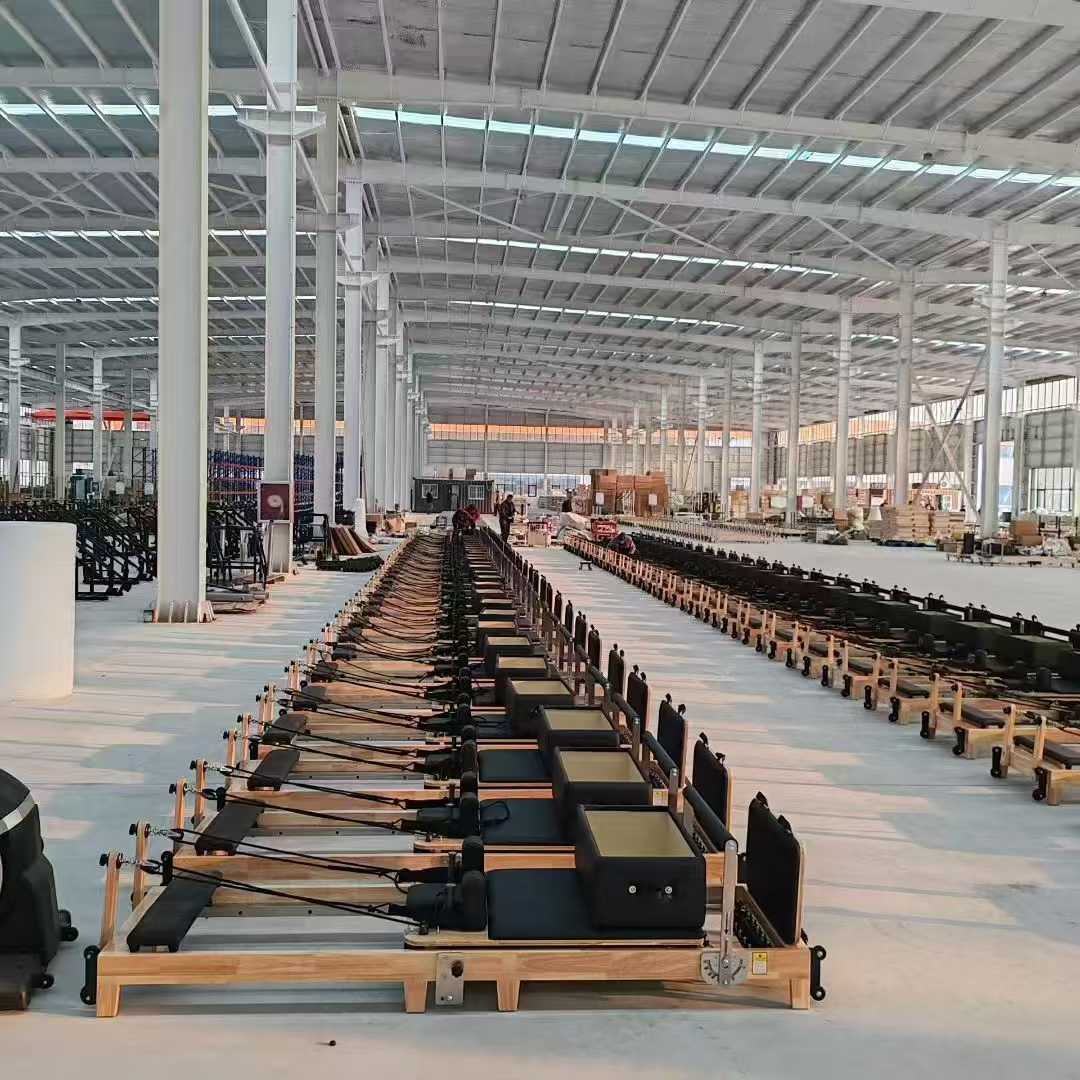
Define the teaching model before selecting the machine
A group Reformer room, a private-training studio, a rehabilitation setting and a hotel wellness room use the same apparatus name but create different demands. Group classes value consistent settings and fast transitions. Private sessions value a broad adjustment range. Clinical work can place greater weight on access height, controlled assistance and instructor reach. A multi-use room also needs an approved storage or movement method.
Write the weekly timetable, class size, client range, instructor method and planned accessories before requesting models. Mark which movements require a box, jumpboard, platform extender or tower, and which additions are optional. This prevents an attractive base offer from winning even though it cannot deliver the programme that generates the studio's revenue.
Treat frame, rails and carriage as one alignment system
Wood, aluminum and steel can each support professional equipment when the complete structure is engineered and maintained for the intended duty. Compare frame joints, leg attachment, rail support, surface finish, floor contact and the supplier's repair instructions. Ask how alignment is checked after transport and which adjustments are permitted on site.
Inspect the carriage together with the rails, wheels or rollers, stops and side guidance. Move it slowly through the complete travel, then repeat under a representative user load. Record noise, hesitation, lateral movement, end-stop contact and return. A smooth unloaded push cannot prove performance under teaching conditions.
Normalize springs and adjustments before comparing offers
Quotation tables should list the installed spring set, each strength reference, attachment method, spring-bar or gear position and available starting-distance adjustment. Do not compare two machines by color or spring count alone because those labels belong to the model's own system. Ask for replacement identifiers and instructions that preserve fleet consistency.
Use one approved reference unit to create a settings card for common exercises and client profiles. Record carriage travel, shoulder-rest-to-footbar distance at each relevant setting, rope adjustment method, stopper positions and footbar locking checks. The table below turns those observations into evidence the purchasing and coaching teams can share.
| Decision area | Evidence to request | Reference-unit check |
|---|---|---|
| Programme and client fit | Teaching model, usable settings and accessory map | Run planned transitions with target user profiles |
| Frame, rail and carriage | Material, joint, alignment and service documentation | Loaded travel, side play, noise, stops and return |
| Spring system | Installed set, strength references and replacement codes | Attachment, combination logic and repeatability across units |
| Adjustments | Footbar, stopper, rope, riser and headrest positions | Lock engagement, equal ropes and transition time |
| Delivered scope | Accessory, tool, manual, packing and installation list | Count, fit, identification and operating handover |
Check instructor transitions and client fit
Fast adjustment matters when several clients rotate through the same timetable. An instructor should be able to confirm that the footbar is fully engaged, ropes are equal, shoulder rests are secure and the spring selection is correct without improvised tools or ambiguous marks. Any removable part needs a clear parked position so it does not obstruct the next transition.
Client fit is not proven by overall frame length. Check the usable distance between contact points, carriage range, footbar positions, headrest and shoulder-rest options, platform area and instructor access from both sides. Trial the shortest and tallest intended users under supervision and document exclusions instead of assuming one setting covers the full client population.
Price the delivered configuration, not the base frame
A base-frame price does not show the cost of opening a class. Compare the exact box, jumpboard, straps, loops, handles, foot strap, platform extender, risers, tower components, transport equipment, tools and spare items included. Confirm packaging, assembly responsibility, floor delivery, commissioning and disposal of packing material as separate lines.
Accessories must match the exact model and configuration. A box that overhangs the carriage, a jumpboard that uses another fixing pattern or a tower that changes space and anchoring requirements cannot be treated as a generic extra. Ask the supplier to map each accessory code to the model list and state whether it ships installed, boxed with the unit or separately.
Make maintenance evidence part of the specification
Professional ownership requires model-specific manuals and a visible path to wear parts. Before ordering, ask for cleaning limits, inspection points, fastener checks, rail and wheel care, spring handling, rope or strap replacement, out-of-service rules and the contact route for technical support. These documents help the studio plan labour and prevent unsuitable cleaning or lubrication.
Create an asset record for every unit and preserve the model, serial identity, installed spring set and service history. Stock decisions should follow the parts that the manual identifies as replaceable and the supplier can identify by code. Do not invent a universal replacement interval; follow the approved instructions and remove any unit that fails inspection until it is released by a competent person.
Approve a reference unit and write the receiving plan
Approve one production-representative unit before the bulk order. Instructors should test the planned settings, repeated transitions, carriage travel, return, footbar lock, rope equality, spring attachment, contact comfort, accessory fit and cleaning access. Procurement should photograph the approved configuration and record measurements, labels and included items.
At receiving, check carton identity and damage before assembly, then repeat the reference-unit method on a defined number of units and expand the check when a failure appears. Verify frame support, fasteners, rails, carriage, stops, springs, footbar, ropes, pulleys, upholstery, accessories, manuals and markings. Record defects by unit identity and quarantine unsafe equipment.
- Define group, private, clinical or mixed use.
- List the client range and instructor workflow.
- Record usable carriage and contact-point geometry.
- Normalize the installed spring set and replacement codes.
- Test footbar, rope, stopper and shoulder-rest adjustments.
- Itemize every accessory and delivery responsibility.
- Obtain model-specific cleaning and maintenance documents.
- Approve a production-representative reference unit.
- Repeat loaded travel and safety checks at receiving.
- Register each unit and quarantine failed equipment.
Send suppliers a decision-ready Reformer schedule
Send each supplier the same schedule: facility type, teaching model, number of active and reserve units, client range, room access, chosen frame direction, required settings, accessories, finish, documentation, spare-part request, installation scope, inspection method, destination and purchasing date. Require the response to distinguish standard supply, option and local responsibility.
PowerBaseFit can review that schedule against the Pilates equipment category, current uploaded products, OEM request and wider gym project. The quotation still needs model-level confirmation before purchase; the guide does not turn a general capability into a fixed product specification. A clear schedule lets both sides resolve gaps before production and shipping.
Buyer questions
Is a wood or aluminum Reformer better for a commercial studio?
Neither material is automatically superior. Compare the complete frame and rail system, movement and storage needs, finish care, alignment method, repair route and support for the exact model.
Can spring colors be compared between brands?
No universal conversion should be assumed. Use each model's documented spring set and strength references, approve exercise settings with instructors and keep replacement springs identifiable by exact code.
How should a studio test carriage quality?
Test complete travel empty and under a representative load. Record hesitation, noise, lateral movement, end stops and return, then repeat after several setting changes rather than relying on one push.
Which accessories belong in a Reformer quotation?
List the accessories required by the programme and identify what is included, optional or separate. Confirm model compatibility, packaging, installation and storage for each item.
What should be inspected when a bulk order arrives?
Check identity and transport damage first, then frame support, fasteners, rails, carriage, stops, springs, locks, ropes, upholstery, accessories, manuals and markings against the approved reference unit.
Sources
- Merrithew professional wood Reformer launch — Merrithew
- Balanced Body guide to choosing a Reformer — Balanced Body
- Balanced Body assembly and maintenance library — Balanced Body
- Merrithew product care and replacement guidance — Merrithew
- Align-Pilates safety and maintenance guides — Align-Pilates