
How to Choose a Commercial Rowing Machine for a Gym
Choose a commercial rowing machine by the job it must perform, then compare the complete resistance system, monitor, user fit, operating envelope, storage method, wear parts and service plan. Air, water, magnetic and hybrid rowers respond differently, but the resistance label alone does not establish commercial suitability. A buyer should test the exact configuration with representative users, confirm how performance data can be compared, map the full slide and access space, and attach a unit-by-unit acceptance protocol to the order.
Define the rower’s job before choosing a resistance system
Start with the sessions the equipment must support. A functional-training gym can need repeatable interval stations and comparable results across several units. A hotel or residential facility can prioritize quiet operation, easy entry and simple instructions. A school, rowing club or performance center can place greater weight on standardized tests and fleet consistency. Record the user groups, supervision, peak concurrent demand, typical session length and whether the rower is a primary station, a warm-up option or part of a rotating class.
Observe actual demand before setting quantity. Count first-choice uses, queues, substitutions and abandoned sessions in the busiest periods. For classes, map the number of athletes on the rower at each rotation and the time allowed to reset foot straps and monitors. These facts turn a general request for commercial rowers into a defined operating brief and keep a specialist piece from taking floor area that the program does not use.
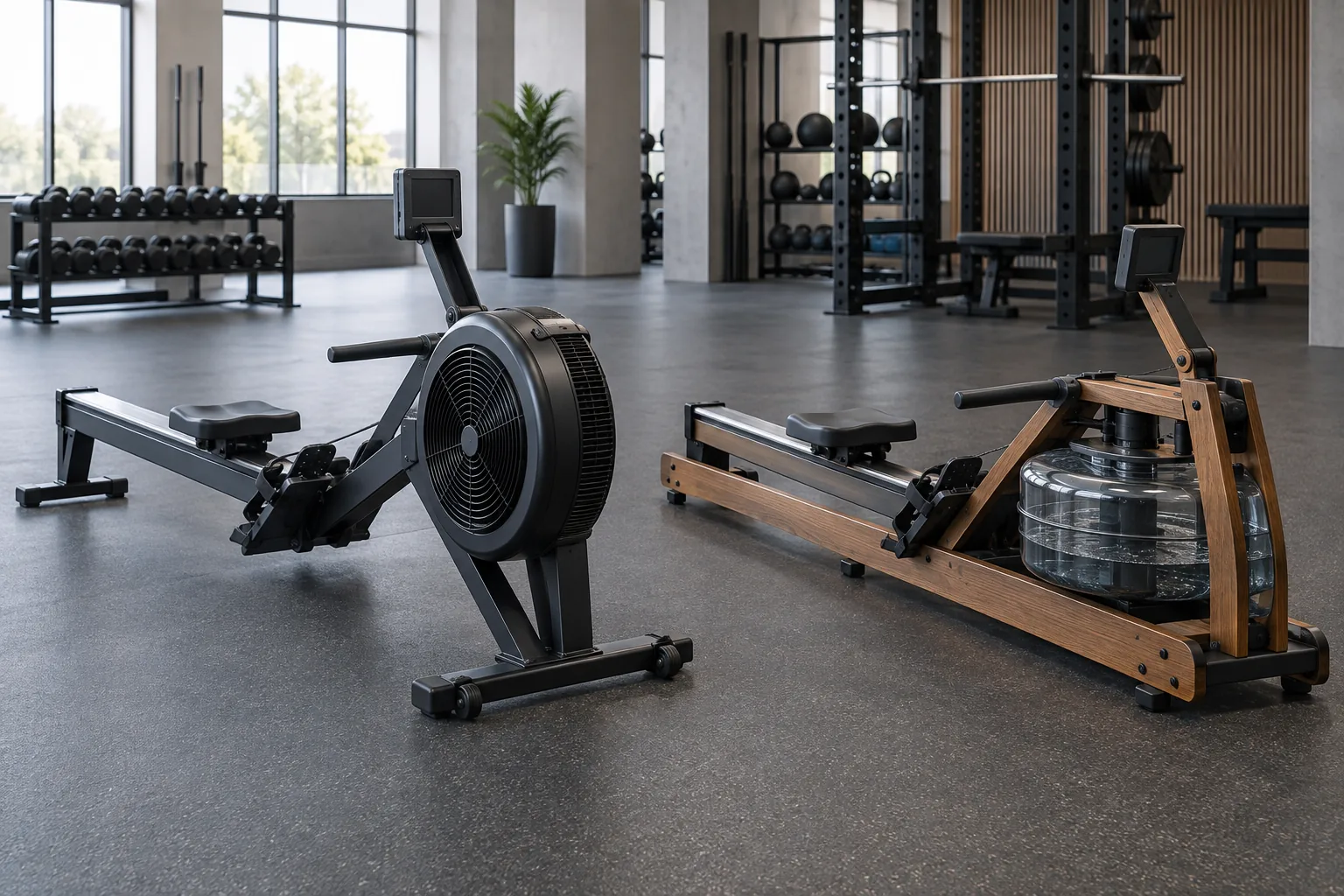
Compare air, water, magnetic and hybrid resistance as systems
Air and water rowers normally increase resistance response as the user accelerates the mechanism, while magnetic and hybrid designs can add a separately controlled load. The exact feel depends on flywheel, tank, drive, gearing, control range and software, so the category name is not a verdict on quality. Air systems bring fan airflow and a distinct sound profile. Water systems add a tank, fluid care and seal inspection. Magnetic or hybrid systems add controls, power or electronic components according to the model.
Match the system to the declared program. A fleet used for repeatable tests needs consistent monitors and setup. A hospitality room beside bedrooms needs an on-site sound trial under hard pulls, not a description such as quiet. A coached studio can value controlled changes from the catch position. Ask the supplier to explain the full load path, adjustment method, drive element, recoil system and what the user can change during a session.
| Decision field | Air rower | Water rower | Magnetic or hybrid | Evidence to request |
|---|---|---|---|---|
| Load response | Fan airflow and user effort | Paddles, tank level and user effort | Magnet control alone or combined with air | Mechanism diagram and trial |
| Operating sound | Fan and drive sound | Water, belt and seat sound | Drive, rail and control sound | Same-room test at planned intensity |
| Service focus | Fan, chain or belt, recoil and monitor | Tank, seals, water care, belt and rollers | Controls, power, belt, rail and electronics | Maintenance plan and parts list |
| Best evidence | Drag and monitor behavior | Tank instructions and leak checks | Control range and offline behavior | Configuration-coded pilot sheet |
Treat the monitor as part of the measurement system
Do not assume that 500 m pace, watts, calories or distance from unlike machines are directly interchangeable. Ask how each value is derived, whether the monitor is calibrated or self-checking, how firmware is controlled and whether several units in one fleet remain comparable. If tests, leaderboards or race preparation matter, write the accepted model and monitor revision into the specification. If the display is only for general exercise feedback, state that narrower requirement instead of paying for data the facility will not govern.
Run the same protocol on every pilot unit: defined warm-up, stroke-rate bands, timed intervals and a recovery check. Record monitor response, button sequence, visibility, language, battery or mains supply, heart-rate connection and data export. A damper or level number is a setup control, not proof that two machines create the same external load. Staff instructions should describe the selected system rather than converting one brand’s settings into a universal scale.
Test entry, rail length, foot support and complete stroke
Seat height changes how users sit down and stand up, while rail length and stop position affect the usable stroke for different body sizes. Test short, average and tall representatives. Check approach, stable hand support, seat movement during entry, footplate angle, strap range, heel movement, handle width, grip surface and clearance at the catch and finish. The goal is fit for the declared population, not a medical promise or a single maximum-user figure.
Watch repeated strokes at low, middle and high planned intensities. Look for seat vibration, roller noise, rail contact, chain or belt alignment, handle return, foot movement and frame lift. Confirm that the user can release straps and leave the machine without the seat rolling away. Where accessible entry is a project requirement, agree the assessment with the facility team and applicable local guidance before ordering.
Draw the operating envelope and approved storage plan
The catalog footprint is only the starting rectangle. Add full seat travel, the user’s torso and elbows at the finish, handle recovery, mounting side, coach position, waiting athlete, circulation, cleaning reach and technician access. Protect the rear rail from traffic and keep moving handles and seats out of neighboring equipment paths. Check doors, lifts, corridors and turns against the largest shipping package and the assembled movement method.
Storage claims need written instructions. Confirm whether the exact model can stand vertically, fold or separate, whether water remains in a tank, what lock or restraint is required and who can move it safely. Mark the stored footprint and the route between use and storage. A transport wheel does not prove that staff can move several units quickly on the installed flooring or that upright storage is allowed with the selected configuration.
Build maintenance around the parts that touch every stroke
Map the rail, seat rollers, chain or belt, recoil cord, handle, straps, pulleys, fan or tank, fasteners and console. Manufacturer instructions show that institutional air rowers can require frequent rail cleaning, scheduled chain care and flywheel inspection. Water rowers add water treatment, tank cleaning and leak response. The order should include the approved cleaning agents, inspection intervals, wear limits, part identifiers and escalation path for the exact model.
Serviceability is visible during a pilot. Time the removal of accessible covers, inspect dust and sweat paths, check whether rollers and drive parts can be identified, and confirm that routine work does not block a circulation route. Ask for exploded drawings, error or symptom guidance, tool list, initial consumables and packaging for replacement tanks, rails, monitors or drive assemblies. Compare downtime responsibility rather than relying on the word commercial.
Run a controlled pilot and record failure gates
Use one form for each candidate and keep the protocol identical. Record model, resistance architecture, monitor, firmware, seat and rail, foot supports, sound at defined effort, stability, movement, data behavior, cleaning, storage, service access and tester observations. Repeat after the unit has warmed through several sessions. A short pull in a showroom can reveal an obvious fit issue, but it cannot replace a documented fleet and maintenance review.
Separate preference from mandatory failure. A buyer can prefer the sound or feel of one system while several designs meet the brief. Uncontrolled seat movement, strap release problems, frame shift, rough drive, inconsistent monitor behavior, leaking, unsafe storage or inaccessible wear parts should remain visible as failed gates. Freeze the approved configuration and attach the completed pilot record to the purchase order.
Normalize quotations around configuration and evidence
Send every supplier the same schedule: destination, facility type, program, user range, quantity, peak concurrency, operating and stored envelope, floor, sound constraints, monitor data, connectivity, language, power, finish, labels, delivery access, installation, training and acceptance. Request assembled and moving dimensions, seat and rail references, resistance system, drive and recoil, package dimensions and mass, commercial-use classification, documentation and exclusions for the exact revision.
Keep optional displays, subscriptions, heart-rate accessories, floor protection, water-care materials, batteries, spare straps, chains or belts, freight, assembly and commissioning as separate lines. Require parts availability and revision matching to be explained without inventing a service period. Quotations become comparable when every supplier prices the same responsibilities and evidence, not when rowers merely share a resistance label.
Receive, assemble and accept each installed rower
At receipt, reconcile package count, model code, resistance and monitor configuration, finish, labels, manuals and visible condition. Photograph freight damage before discarding packaging. Assemble, level and power the unit according to its instructions; verify fasteners, guards, cables, tank fill where applicable, rail cleanliness, seat stops and clearances. Record serial or batch identifiers that the manufacturer provides.
Repeat the approved pilot sequence on every unit. Check entry and exit, full stroke, seat travel, drive and recoil, resistance control, monitor start and reset, language, required connections, sound, stability, movement and the approved storage procedure. Log defects, corrections and sign-off. The handover pack becomes the baseline for routine checks, fleet comparison and a precise support request.
- Exact model, resistance and monitor revision
- Operating and stored envelope
- User-fit and full-stroke pilot sheet
- Cleaning, water-care and wear-part plan
- Package, assembly and commissioning scope
- Parts and support documents
- Unit-by-unit acceptance record
FAQ
Is an air or water rower better for a commercial gym?
Neither is universally better. Air suits many interval and standardized fleet uses; water can suit facilities that accept tank care and prefer its feel and sound. Test the exact model against the program, space and service plan.
Does a higher damper or resistance number mean a harder workout?
Not by itself. On user-powered systems, effort and stroke speed drive the work while a damper or level changes the mechanism’s response. Follow the manufacturer’s measurement method.
How much space does a commercial rower need?
Use assembled length plus full seat and user movement, entry, coach or waiting space, circulation, cleaning reach and service access. Draw storage separately.
Can a rowing machine be stored upright?
Only when the manufacturer permits that method for the exact model and configuration. Confirm tank condition, locks, restraint, staff handling and the route to storage.
What belongs in a commercial rower acceptance test?
Verify configuration, assembly, stability, complete stroke, seat and recoil, resistance control, monitor behavior, sound, connections, clearances, storage and documentation on every unit.
Sources
- ISO 20957-1:2024 — General requirements — International Organization for Standardization
- ISO 20957-7:2024 — Rowing equipment requirements — International Organization for Standardization
- Concept2 RowErg official product information — Concept2
- Concept2 RowErg maintenance — Concept2
- WaterRower service FAQ — WaterRower
- Life Fitness Heat Row official information — Life Fitness