
How to Choose a Commercial Stair Climber for a Gym
Choose a commercial stair climber only after defining the facility program and measuring the complete installed envelope. Compare a revolving stair mill with pedal-based or seated stepping formats by entry height, step geometry, handrail positions, low-speed control, stop systems, user detection, drive, power, cleaning and service access. Use the exact model's current instructions to set ceiling clearance and electrical work, test the approved configuration with representative users, and attach a per-unit commissioning record to the purchase order.
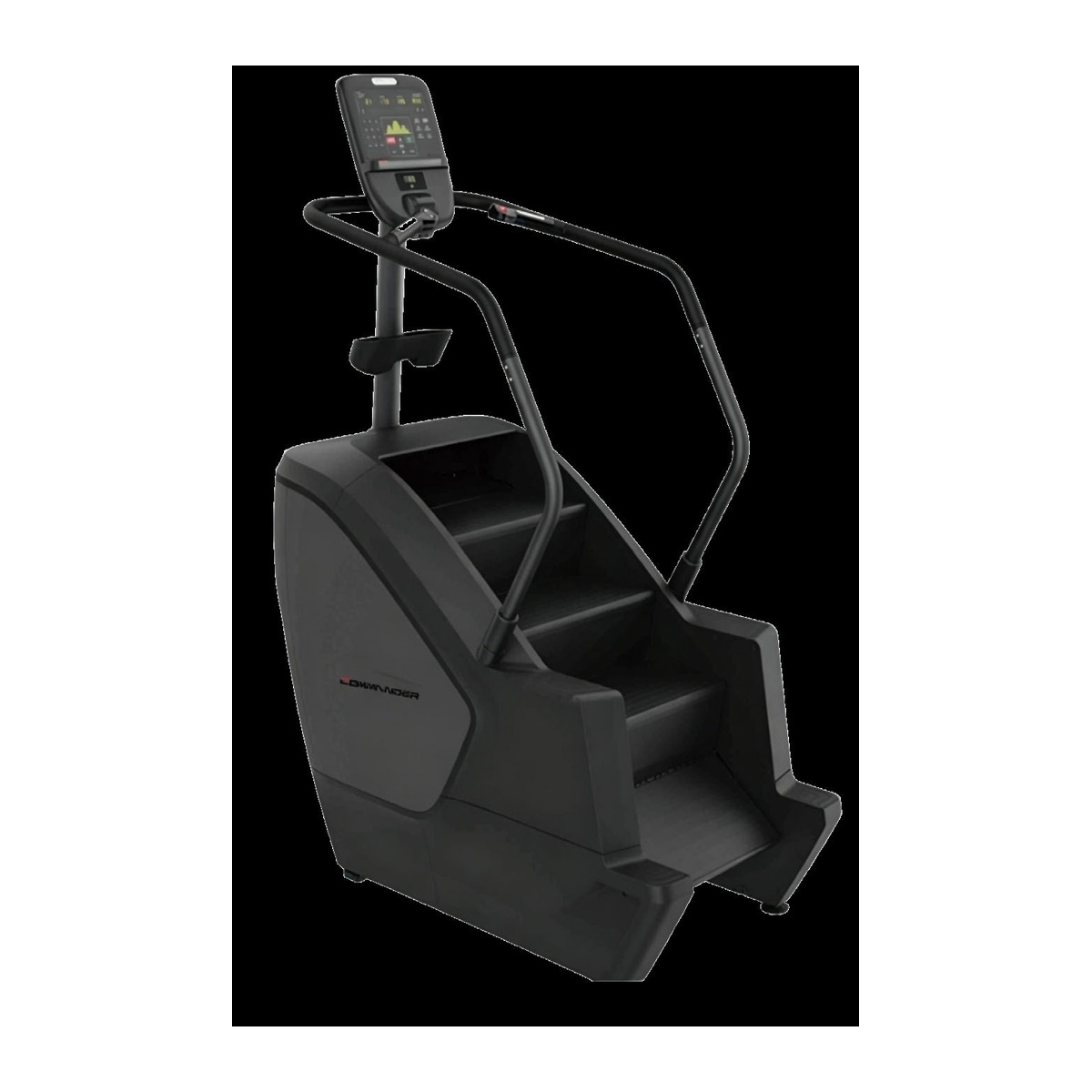
Define the program before choosing a stair-climber format
Start with the training job. A high-traffic membership club can use a revolving stair mill as a distinctive conditioning station. A hotel, apartment room or corporate facility can prefer a pedal-based stepper where entry, sound, footprint and unsupervised operation align better with the user profile. A seated stepping format serves a different access and training brief and should not be counted as an interchangeable version of a standing stair mill. Record the intended users, supervision, session length, peak concurrency and whether the unit is a primary attraction, warm-up option or coached station.
Observe demand before setting quantity. Count first choices, queues, accepted substitutions and abandoned sessions during repeatable peak periods. For a new site, state the forecast and its confidence instead of copying a fixed ratio from another club. The purchase brief should name the motion format, planned intensity range and operating environment. This prevents a supplier from satisfying a request for a stair climber with a mechanically different product that does not deliver the planned experience.
| Format | User motion | Site question | Evidence to request |
|---|---|---|---|
| Revolving stair mill | Continuous rotating steps | Can users enter, stop and descend safely within the vertical envelope? | Exact step, speed, stop and ceiling documentation |
| Independent-pedal stepper | Alternating pedal travel | Does the motion and support suit the declared program? | Pedal path, control range and pilot record |
| Seated stepper | Seated stepping action | Is seated access part of the facility brief? | Seat, transfer, adjustment and supervision review |
Calculate ceiling clearance from the usable step, not the cabinet
Measure finished floor to the lowest obstruction at every proposed bay, including beams, ducts, sprinklers, lights, signs and suspended services. Obtain the exact model’s highest usable user position or stated ceiling requirement. Then check the tallest intended user plus the manufacturer’s required head clearance and any stricter local building or fire requirement. Do not subtract only the machine’s overall cabinet height: a console can be higher than the user platform, while the user’s head remains the controlling dimension.
Mark the measurement on the scaled layout and repeat it after flooring, ceilings and services are final. Keep mounting, dismounting and handrail use within the same safe volume. The current Life Fitness PowerMill page states a model-specific ceiling requirement, while a current StairMaster page states another; that variation is the reason to request the selected model’s documentation rather than publish a universal number. If the project cannot prove the vertical envelope, change the format or location before ordering.
Test entry, step geometry, handrails and stop controls together
Record the first-step or step-assist height, usable step width and depth, step rise, side clearance and the handholds available during entry. Test short, average and tall representatives in the shoes used at the facility. Observe the path from the aisle to the first stable position, control reach, foot placement, toe and heel clearance, posture and descent after fatigue. A maximum-user rating does not prove that the step geometry or entry sequence serves the declared population.
Verify emergency stop, normal stop, step locking, braking, user-presence detection and object detection exactly as described for the model. Confirm what happens after power loss, an interrupted session and a sensor event, and how staff recover the machine. Do not infer a safety function from the shape of a guard or a sales image. ISO 20957-8 supplies stair-climber-specific safety and test requirements alongside the general standard, while the supplier must provide evidence for the quoted configuration.
Compare drive, starting behavior and the useful speed range
A motor-driven staircase, a generator-controlled design and a pedal resistance system can behave differently at start-up, at low cadence and under users of different mass. Ask what drives or brakes the steps, how speed is governed, whether a minimum user mass applies, what happens when the user stops contributing force and which components carry the load. Product pages from current manufacturers show that power supply, drive architecture and stated user limits are model-specific, not properties of every stair climber.
Pilot the slowest setting before the fastest. The unit should start predictably, hold a usable low cadence, accept control changes without abrupt movement and stop as documented. Then test the middle and upper range used by the program. Record steps per minute or level only within the same approved model; level numbers from unlike machines are not a common workload scale. If the site runs coached tests, freeze the model, console revision and protocol so results remain interpretable.
Plan the complete bay, utilities and delivery route
Place the assembled footprint on the plan, then add entry and exit space, handrail reach, rear and side clearances, circulation, cleaning, ventilation and service-panel access. Protect adjacent users from moving steps and keep the dismount zone outside a traffic crossing. Check sight lines for staff and the position of the stop controls. Because the user is elevated and the unit can be heavy, have the project team confirm floor loading, leveling and any anchoring instruction for the exact model.
Map voltage, frequency, plug, circuit, adapter, network and console requirements by destination country. Do not assume that a self-powered workout means the display or control system needs no supply. Compare the largest package, package mass and permitted handling orientation with loading dock, door, lift, corridor and turn dimensions. Identify who supplies power, moves the unit, assembles it, removes packaging and restores floor protection before freight is booked.
Build maintenance around sweat, debris and the drive path
Sweat and cleaning fluid travel toward steps, side covers, handrails, console and lower mechanisms; footwear brings grit onto the moving surfaces. Ask the manufacturer to identify approved cleaners, daily wipe points, debris-removal access, inspection intervals and surfaces that must remain dry. The service plan should cover step surfaces and fasteners, drive chain or belt where fitted, bearings, tensioning, brakes, sensors, motor or generator, controller, power lead, console and levelers according to the exact design.
Use the pilot to inspect service panels and technician posture. Time access to routine inspection points and confirm whether moving steps can be locked before work. Request an exploded parts list, diagnostic flow, tool list, lubrication schedule, wear criteria and initial spare recommendation tied to the model revision. Clarify which tasks facility staff can perform and which require a trained technician. The useful comparison is expected work and downtime responsibility, not an unsupported lifespan promise.
Run a controlled pilot with pass and fail gates
Use one form for every candidate. Record model and base, console, software, drive, power, step dimensions, entry height, handrails, low and planned operating speeds, sound, vibration, stop behavior, sensors, sweat path, cleaning and service access. Test after the mechanism has operated through several sessions, not only during a short showroom climb. Include representative users while keeping the trial within facility policy and manufacturer instructions.
Separate personal preference from mandatory failure. Different motions can all satisfy a well-written brief. Uncontrolled start, abrupt low-speed behavior, unstable entry, inaccessible stop control, unexpected step movement, sensor failure, abnormal drive noise, frame movement, liquid reaching protected components or blocked service access should remain visible as failed gates. Freeze the accepted configuration and attach the signed pilot sheet to the order so a substituted base or console cannot pass unnoticed.
Normalize quotations around one configuration schedule
Send every supplier the same project schedule: country, facility type, user profile, program, quantity, peak use, format, speed range, maximum and minimum user conditions where declared, step and entry criteria, ceiling survey, full bay, floor, power, console, connectivity, language, finish, labels, delivery route, assembly, training and acceptance. Request assembled and package dimensions and mass, current instructions, applicable commercial-use classification, parts documents and all exclusions.
Price base and console together, then separate subscriptions, network work, electrical work, floor protection, freight, lifting, assembly, commissioning, staff training, cleaning materials and spares. Record the exact model code and revision on every option. A lower offer is not comparable when it omits the step assist, console, transformer, installation or service documents used during the pilot. Changes after approval should pass a written technical review.
Receive, commission and accept every installed unit
At receipt, reconcile package count, model code, base, console, power components, finish, labels, manuals and visible condition. Photograph package and freight damage before disposal. Move and assemble the machine according to its instructions; verify level, fasteners, guards, steps, handrails, cables, stop devices, sensors, service covers and required clearances. Record serial or batch identifiers supplied by the manufacturer.
Repeat the approved pilot sequence on each unit. Check entry and exit, step locking, start at the lowest usable setting, control changes, planned speed range, normal and emergency stop, user and object detection, sound, vibration, power recovery, console reset, language and required connections. Confirm the installed ceiling envelope and service route. Log defects, corrective work and sign-off; the completed sheet becomes the baseline for routine inspections and precise support requests.
- Exact base and console codes
- Ceiling survey and full operating bay
- Entry, step and handrail pilot
- Drive, stop and sensor checks
- Power, network and delivery scope
- Cleaning, maintenance and parts pack
- Per-unit commissioning record
FAQ
What is the difference between a stair mill and a stepper?
A stair mill presents rotating steps, while a stepper normally uses alternating pedals; seated steppers form another category. Compare motion, entry, controls, vertical space and service rather than treating the names as interchangeable.
How much ceiling height does a commercial stair climber need?
Use the exact model’s highest user position or published ceiling requirement, the tallest intended user, required head clearance and the lowest room obstruction. A universal height is not reliable.
Is the fastest stair climber the best choice for a gym?
No. The useful range must match the program, and safe, smooth starting and low-speed control are critical for many users. Test the complete range that the facility will operate.
Does every stair climber need mains power?
Requirements differ by drive and console. Confirm voltage, frequency, plug, adapter, circuit and network needs for the exact base-console combination and destination.
What belongs in a stair-climber acceptance test?
Verify identity, assembly, ceiling envelope, entry, steps, handrails, low-speed start, planned range, stops, sensors, power recovery, console, sound, stability, service access and documents on every unit.
Sources
- ISO 20957-1:2024 — General requirements — International Organization for Standardization
- ISO 20957-8:2017 — Stepper and stair-climber requirements — International Organization for Standardization
- Life Fitness PowerMill official information — Life Fitness
- StairMaster 10G official information — Core Health & Fitness
- Matrix Fitness commercial ClimbMills — Matrix Fitness
- Spirit CSC900 official information — Spirit Commercial Fitness