
Introduction
A useful gym equipment asset register gives each maintainable unit a unique identity and connects it to site, zone, manufacturer, model, serial number, installation date, warranty, condition, service history, parts references and current status. Multi-site operators should standardize the required fields before delivery, verify them during commissioning and control transfers instead of creating a separate spreadsheet at every club. The register should support decisions and fault resolution, not become an archive nobody updates.
Key takeaways
- Define the data owner and update events before choosing software.
- Capture manufacturer serials plus an internal asset ID when needed.
- Separate stable master data from recurring inspection and work-order history.
- Use the register to control warranty, parts, transfers and replacement planning.
What an equipment asset register should do
An asset register is the controlled master list of equipment the organization owns or manages. For a gym portfolio, it should answer four questions quickly: what is the unit, where is it, what support applies, and what has happened to it. It is not the same as a product catalogue or a maintenance checklist, although both can link to it.
The commercial value appears when a fault is reported or a site changes. Staff can identify the exact model and serial, check warranty status, locate the correct manual, see previous repairs and order a compatible part. Procurement can compare reliability by model and verify what is actually installed before renewing a service contract or planning replacement.
Choose the asset boundary
Decide which items receive individual records. Powered cardio, selectorized machines, plate-loaded machines, functional trainers, racks and major benches normally justify unique asset identities. A complete dumbbell set may be one record with a component count, while specialty bars or high-value portable items may need separate tags. Flooring is usually managed by area and installation batch rather than one record per tile.
Avoid registering every small attachment if the team cannot maintain the data. Instead, keep an accessory inventory linked to the parent station or site. The boundary should reflect warranty, maintenance, loss risk and replacement decisions. Write the rule so all locations classify the same item consistently.
Create a minimum master-data standard
- Internal asset ID
- Manufacturer, brand, model and model revision
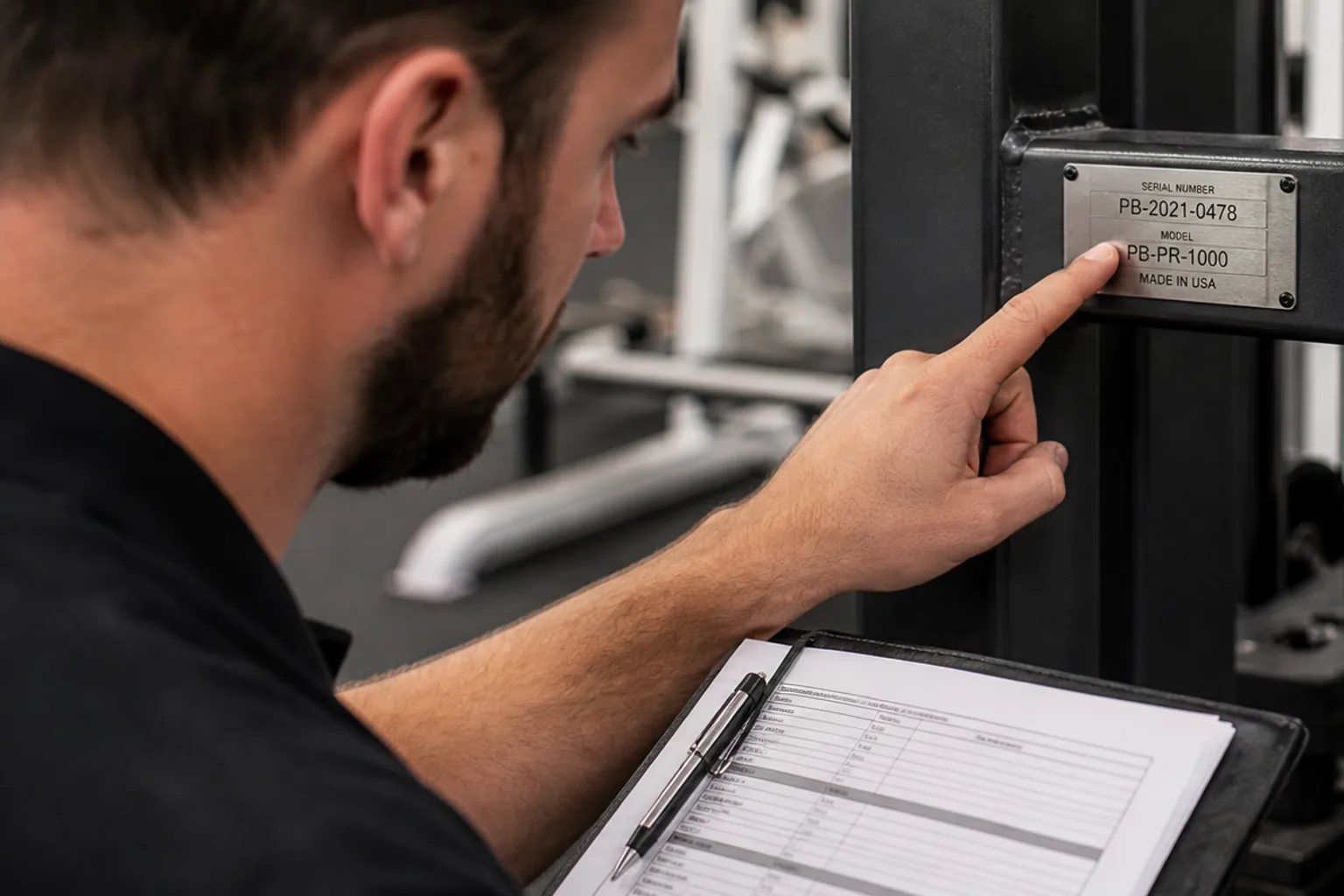
- Manufacturer serial number
- Equipment category and parent system if applicable
- Site, floor, room and training zone
- Purchase order, supplier and installation date
- Warranty start, end and coverage route
- Power specification for relevant cardio
- Current status and condition grade
- Manual, parts diagram and approved image links
Keep controlled values for site, category and status. If one club writes treadmill, another CV runner and another machine 12, portfolio reporting will fail. Allow notes for exceptions but use standard dropdown values or reference lists for the fields used in decisions.

Collect data before and during handover
Ask the supplier for a digital equipment and serial schedule before final acceptance. The installer can verify the physical serial and location during commissioning, correcting transposed numbers or substitutions. Photographs should show the asset in context and the serial label clearly; one photo rarely does both.
For existing facilities, audit by zone and tag only after identity is confirmed. Record unknown or unreadable serials as exceptions instead of inventing values. If legacy equipment lacks documentation, capture the best supported model information, approximate installation period and parts risks so uncertainty remains visible.
Separate master data from maintenance history
Manufacturer, model and original installation date are stable master data. Inspections, faults, work orders, parts and downtime are recurring events. Store events as dated records linked to the asset rather than overwriting one large notes field. This preserves the sequence needed to understand repeat failures and service cost.
A useful fault record includes reported symptom, reporter, date, asset status, evidence, technician action, part used, return-to-service approval and downtime. Warranty claims should link to the same asset and event. The register does not need to become accounting software, but it should export enough information for finance and procurement when required.
Control moves between sites
Multi-site operators often move underused equipment, replacement units or temporary stock. Record the old location, new location, movement date, reason, condition, disassembly requirements and responsible parties. A location field that is simply overwritten destroys the movement trail and can leave service contractors billing for equipment that is no longer there.
Before a transfer, check access, floor, power and reinstallation needs at the destination. Update the asset record only after physical receipt and recommissioning. Attach the new location photo and any change to warranty or service responsibility.
Use tags without depending on them
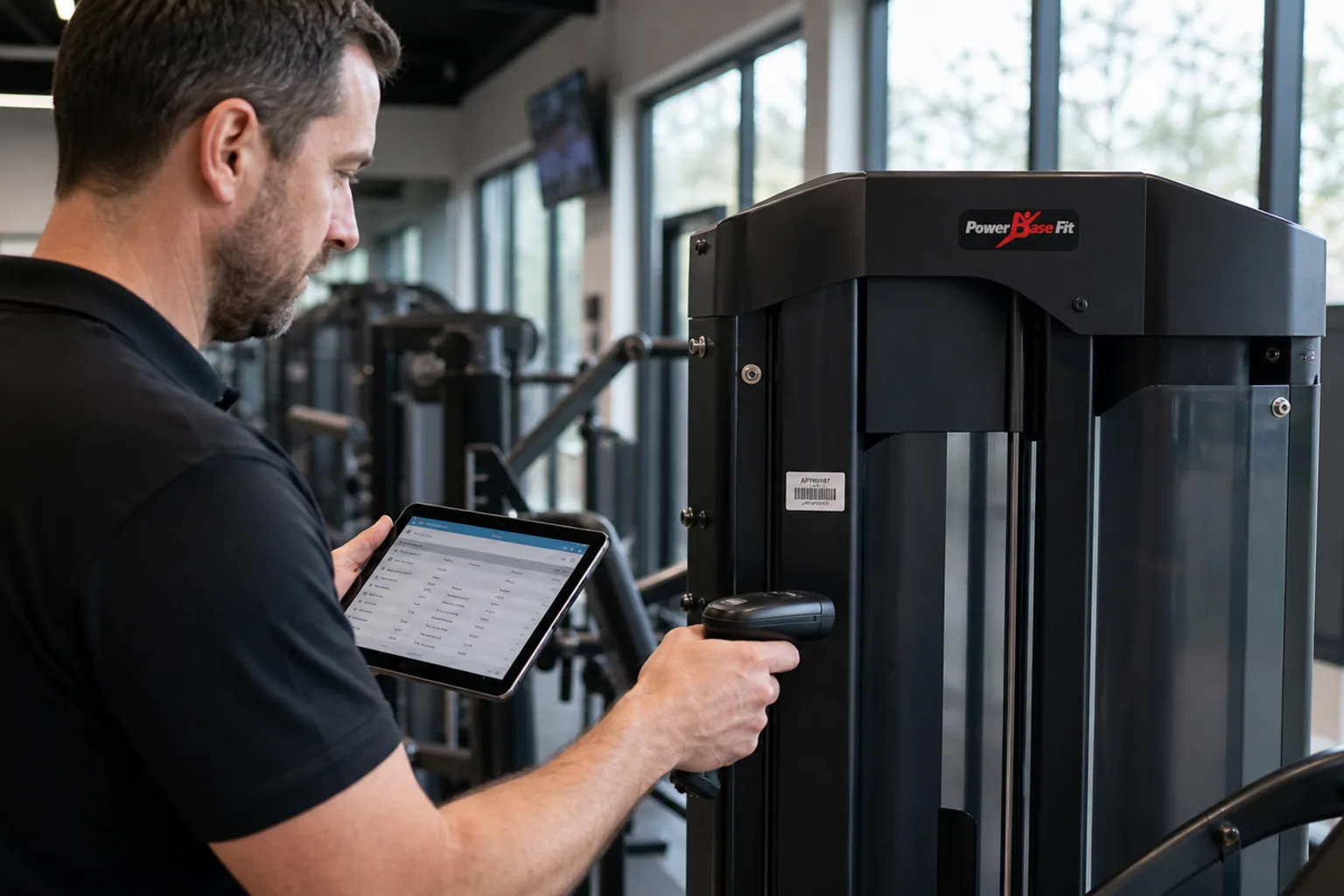
QR, barcode or NFC tags can accelerate lookup, but the tag is only a pointer. The underlying asset ID must remain readable and retrievable if the tag is damaged. Place tags where staff can scan them without entering moving mechanisms or obstructing manufacturer labels.
Define what different users can do after scanning. Floor staff may report a fault; technicians may see manuals and service history; managers may approve an asset move. Avoid exposing sensitive purchase or user data through a public link. A simple durable label and disciplined process can outperform advanced tags with poor ownership.
Turn asset data into procurement decisions
Review downtime, recurring part use, warranty claims and condition by model or site. This can reveal a training problem, environmental issue, service gap or product mismatch. Do not rank suppliers on raw fault counts without considering quantity, age and utilization. Compare normalized patterns and read the underlying records.
The register also supports tender and reorder preparation. Procurement can give bidders a credible installed base, identify models due for replacement and decide where parts standardization matters. When a product line is discontinued, the operator can immediately see the affected assets and remaining exposure.
Common asset-register mistakes
- Creating a register after handover and losing supplier data
- Using model names as unique IDs
- Letting every site invent categories and status labels
- Overwriting location and service notes instead of keeping events
- Tagging equipment before confirming identity
- Recording data no team owns or uses
- Failing to reconcile the register during annual audits and site transfers
Manufacturer perspective: deliver structured asset data
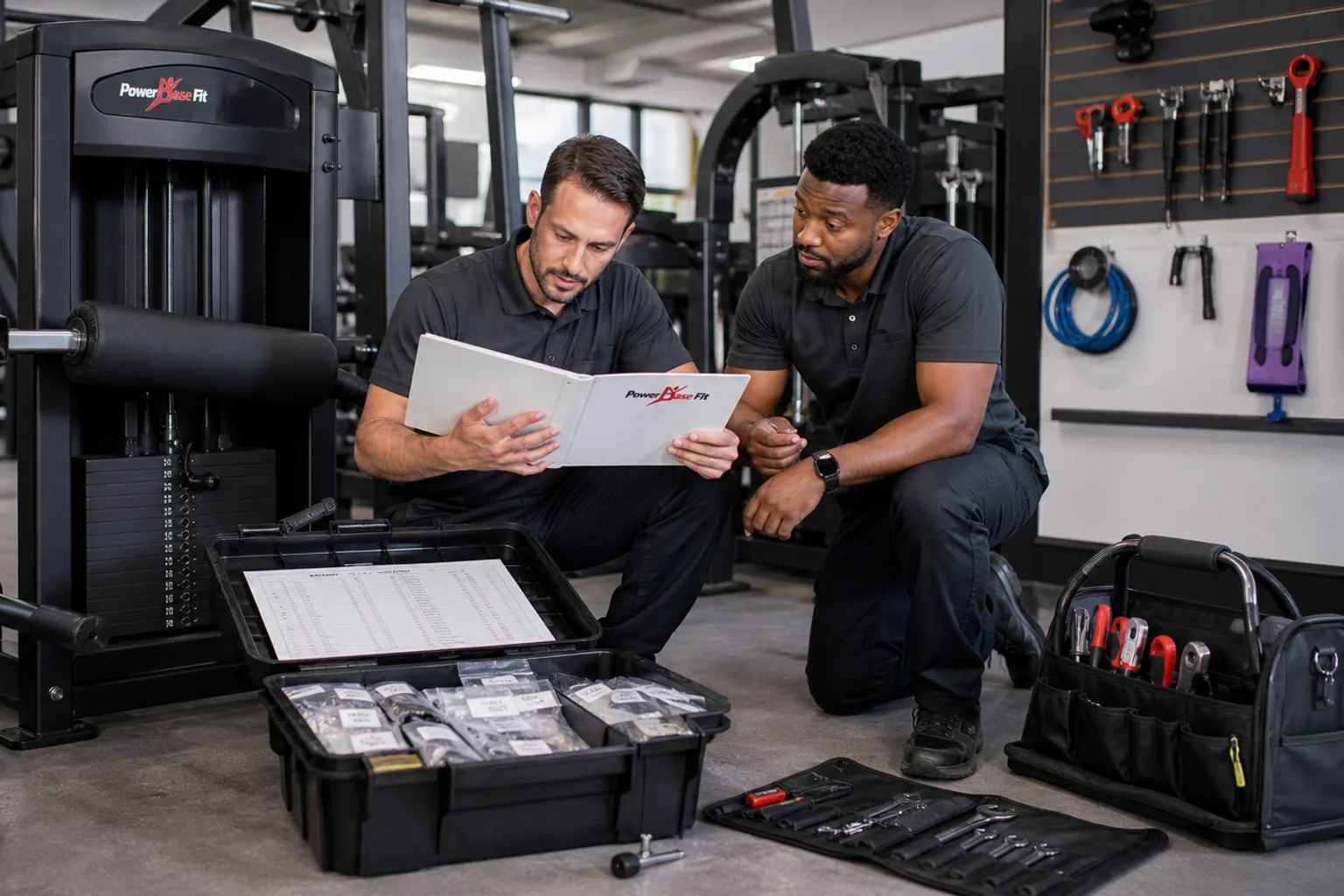
A manufacturer or supplier can reduce the buyer's setup work by providing consistent model names, serials, categories, manual links, parts references and warranty routes in a spreadsheet that maps to the packing list. The format should distinguish one physical unit from a product family. Photos and labels should use the same model identity as the commercial documents.
For repeat orders, stable naming is valuable. If a product revision changes a wear part or manual, record the effective serial range or version rather than silently replacing the information. This discipline helps distributors and facility teams support equipment long after the original salesperson has moved on.
Recommended asset-register field groups
| Field group | Examples | Primary use |
|---|---|---|
| Identity | Asset ID, manufacturer, model, revision, serial | Correct unit and parts identification |
| Location | Site, room, zone, current status | Operations and transfers |
| Commercial | Supplier, PO, installation and warranty | Claims and contract control |
| Technical | Power, manuals, parts diagram, parent system | Maintenance and safety |
| History | Inspections, faults, repairs, parts and downtime | Reliability and replacement decisions |
Useful next pages
Buyer FAQ
Do dumbbells need individual asset tags?
Usually a set or rack record is more practical, with component counts and exceptions, unless loss or warranty requirements justify individual tags.
Is the manufacturer serial number enough?
It is essential, but an internal asset ID helps when different manufacturers use similar formats or the same unit moves between sites.
When should the register be created?
Define the fields before ordering, obtain supplier data before delivery and verify physical identity and location during commissioning.
Who should own the data?
Name a portfolio owner and local update roles. Ownership should cover new assets, faults, transfers, disposals and periodic reconciliation.
Can a spreadsheet work?
Yes for a controlled smaller portfolio, provided access, validation, change history and backups are managed.
What should be photographed?
Capture one location view and one readable identity or serial view, plus defect evidence when relevant.
How often should records be audited?
Reconcile after major moves or projects and on a planned cycle appropriate to the number of sites and rate of change.
Should disposed equipment remain in the register?
Yes, change its status and retain disposal or transfer evidence rather than deleting its history.
Conclusion
A multi-site asset register succeeds when it makes everyday work faster: identifying a fault, finding a manual, checking warranty, moving a machine or planning replacement. Start with a disciplined minimum data set, verify it at handover and record changes as events. Technology can support that process, but ownership and consistent definitions are what keep the register reliable.
Need this topic turned into a real equipment plan?
Send your market, gym size, product categories or OEM needs. Kloe can help clarify the next step.