
How Many Pilates Reformers Does a Commercial Studio Need?
Do not choose the reformer count from gross square footage or an industry average. Set four independent limits: evidenced peak class demand, the number one instructor can supervise under the planned program, the stations that fit a scaled plan using the exact quoted model, and the quantity the budget can support with accessories, spares and downtime cover. Purchase the lowest supported number, then confirm it through a taped or physical full-class trial before approving the order.
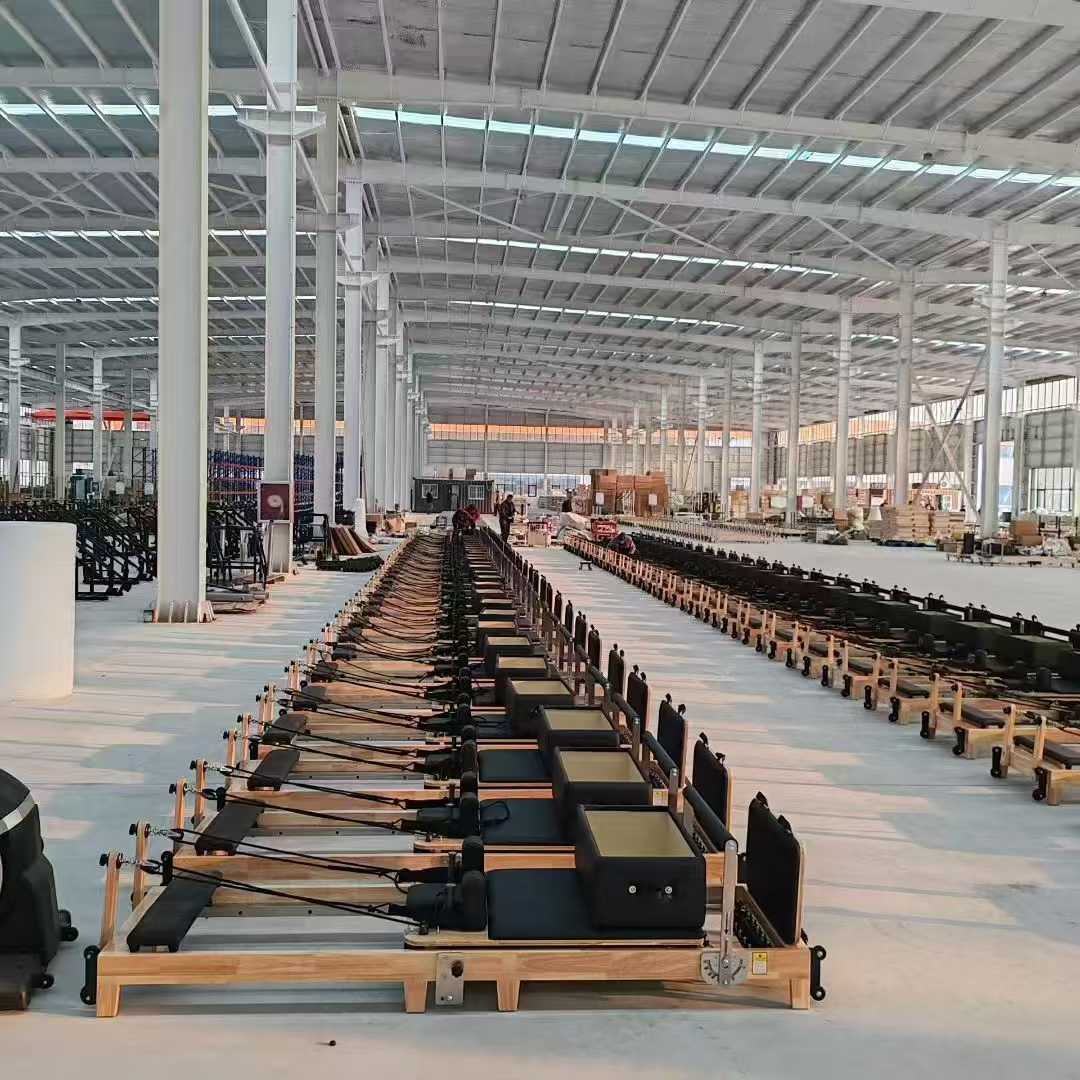
Start with sellable class seats, not a room ratio
Define the operating model before measuring rows. Separate private sessions, semi-private work, coached group classes and unsupervised open use because each creates a different capacity limit. For every peak period, record requested places, achieved attendance, waiting-list movement, class length, turnover time and the program level. New studios should use bookings, presales or a controlled launch plan rather than treating total local population as demand.
Convert the weekly timetable into equipment-hours. Six reformers offered across five classes create thirty seats, but this is supply rather than demand. Apply the facility's own expected attendance and cancellation policy, then test conservative, base and strong-demand cases. Keep instructor cost, cleaning time and room changeover outside the equipment price so one extra unit is not mistaken for one extra profitable seat in every hour.
Use four ceilings to set the first order
Calculate demand capacity, instructor capacity, room capacity and funded operating capacity separately. Demand capacity comes from sellable peak seats. Instructor capacity comes from class design, participant profile and the trainer's ability to observe and intervene. Room capacity comes from a scaled layout. Funded capacity includes the reformers, boxes, boards, delivery, assembly, floor work, initial wear parts and cash reserved for operation.
The initial purchase should not exceed the lowest ceiling. If demand supports ten places but the instructor and room each support eight, ten machines do not create a ten-person class. If the room supports eight but the launch evidence supports five, protect an expansion bay and order the justified fleet. Record the trigger for phase two, such as sustained peak occupancy, an additional instructor and a second verified layout.
| Capacity ceiling | Evidence to collect | Decision it controls |
|---|---|---|
| Peak demand | Bookings, waiting lists, trial classes and timetable | Sellable places by time band |
| Instructor supervision | Program level, participant profile and reach test | Safe coached class size |
| Usable room | Exact equipment envelope and scaled plan | Stations that fit without blocking routes |
| Funded operation | Complete landed scope and operating reserve | Affordable opening quantity |
| Downtime resilience | Service plan and fallback timetable | Whether every class relies on every unit |
Turn the quoted reformer into a full station envelope
Request the exact assembled length, width and height of the proposed configuration, including footbar, rope risers, tower, extended frame, jumpboard or other fixed option. Manufacturer product information shows that configurations differ, so a generic rectangle is not enough. Draw the carriage travel, user entry side, limb movement, spring and rope access, instructor position and the destination for removable accessories around each unit.
Measure net training area after removing reception, changing space, toilets, storage, structural columns, door swings, radiators and any route that local requirements keep clear. Test alternative row directions because a long narrow room and a square room can hold different workable counts at the same area. Validate exits, accessible circulation, fire provisions, ceiling services and floor suitability with the responsible local professionals before signing the equipment plan.
Run a complete class on the layout
Mark every frame and accessory zone at full scale or place the selected pilot unit in the room. Ask representative users to enter, store belongings, mount from the intended side, move arms and legs through programmed positions, change springs, add a box and leave at the same time. The instructor should walk the real correction route and maintain sightlines without stepping over rails, ropes or personal items.
Time the interval from one class ending to the next starting. Cleaning contact surfaces, checking the carriage, returning ropes, moving boxes and admitting clients all consume the same turnover window. A layout that works with stationary machines can fail during simultaneous changeover. Repeat the trial with the door, reception queue, storage and ventilation operating as they will during the busiest period.
Specify one coherent fleet before comparing prices
Freeze the intended frame height, carriage and track system, spring set, footbar, rope arrangement, shoulder rests, headrest, standing platform and included accessories. The fleet does not need to copy another studio, but group instruction benefits when the same cue produces the same setup at every place. If two configurations are required, assign them to named programs or rooms instead of mixing them without an operating reason.
Ask which items are wear parts and obtain identifiers for springs, ropes, straps, wheels, clips, pads and fasteners that the supplier authorizes for the quoted revision. Official manuals show model-specific inspection and replacement instructions; they do not license transferring one brand's intervals to another. Confirm commercial-use warranty terms, service territory, escalation path and the documents supplied with each unit.
Plan delivery, assembly, storage and floor protection
Measure the route from unloading point to the final room: vehicle access, lift limits, stairs, turns, door clear widths and any requirement to remove packaging before entry. Record package count and lifting method with the supplier. A reformer that fits the studio can still fail the project if the packaged frame cannot pass the building route or if assembly work blocks other tenants and public access.
Name storage positions for boxes, jumpboards, poles, loops and cleaning tools. Accessories placed under moving parts or in instructor paths create avoidable handling and trip problems. Confirm a level supporting surface using the equipment instructions and coordinate protection with the floor supplier. Do not introduce unapproved lubricant, cleaner or improvised levelling parts; cleaning and maintenance follow the manual for the delivered model.
Build downtime into capacity and maintenance
Decide how the schedule changes when one unit is isolated. Options include selling one fewer place, keeping a verified service spare, converting that session to semi-private work or moving to an alternative room. The correct choice depends on occupancy and service lead time. Counting every installed reformer as permanently available hides the operational effect of a spring, rope, wheel or fastener finding.
Create an asset record for each unit with model and revision, location, manual, assembly record, inspection history and compatible part references. Derive daily, periodic and post-event checks from the supplied documents. Record wear and remove equipment from use under a defined authority when acceptance criteria are not met; a visual wipe is not a mechanical release.
- Exact model, revision and station number
- Approved configuration and accessory set
- Inspection and cleaning instructions
- Spring, rope, wheel and hardware references
- Isolation, repair and return-to-use record
- Fallback class-capacity rule
Normalize the quotation and repeat the pilot at receiving
Ask every bidder to price the same schedule: reformer configuration, quantity, accessories per station, shared accessories, initial wear parts, packaging, freight basis, assembly scope, manuals, labels, warranty and service exclusions. Separate optional tower or board packages from the base unit. Record dimensions and configuration against a model revision so a lower price cannot be created by silently removing the features used in the layout trial.
At receiving, match packages and identifiers, inspect frames and contact surfaces, assemble to the supplied instructions and compare every station with the approved configuration. Repeat carriage travel, adjustment, spring and rope operation, footbar engagement, accessory fit, level and class-changeover checks. Record differences and close them through the agreed process before releasing the full room for bookings.
FAQ
Is there a standard number of reformers for a commercial studio?
No universal count fits every studio. The order is limited by proven peak demand, instructor supervision, the measured room using the exact model, complete budget and the fallback plan for unavailable equipment.
Should the calculation use gross or net studio area?
Use net training area after reception, changing facilities, storage, columns, door swings and protected routes are removed. Then place the complete operating envelope, not only the frame footprint.
Should every reformer in a group room be identical?
A consistent fleet simplifies cues, changes and parts control. Mixed configurations can work when each has a defined program purpose and instructors can manage the different settings without slowing or confusing the class.
Does a studio need a spare reformer?
Not automatically. Compare the cost of a verified spare with service lead time, peak occupancy and the revenue or client impact of reducing one class place. Document the chosen fallback before opening.
What should be sent for a multi-unit quotation?
Send the destination, measured plan, access route, class model, target seats, user profile, selected options, accessories, quantity, service expectations, required documents and opening schedule.
Sources
- Studio Reformer product information — Balanced Body
- Studio Reformer safety and maintenance manual — Balanced Body
- Professional Pilates reformer overview — Merrithew
- Routine safety and maintenance guide for reformers — Align-Pilates
- Commercial reformer space-planning guidance — Your Reformer