Introduction
Importing commercial gym equipment from China works best when buyers manage the order as a project, not as a simple product purchase. The safest process includes supplier verification, clear specifications, production checks, export packing, loading confirmation and realistic shipment planning before the equipment leaves the factory.
Key takeaways
- Confirm supplier capability, specifications and customization before production starts.
- Use production updates, pre-shipment inspection and packing photos to reduce avoidable delays.
- Plan documents, container loading and site readiness before the goods arrive.
Why commercial gym equipment importing needs more planning than normal product sourcing
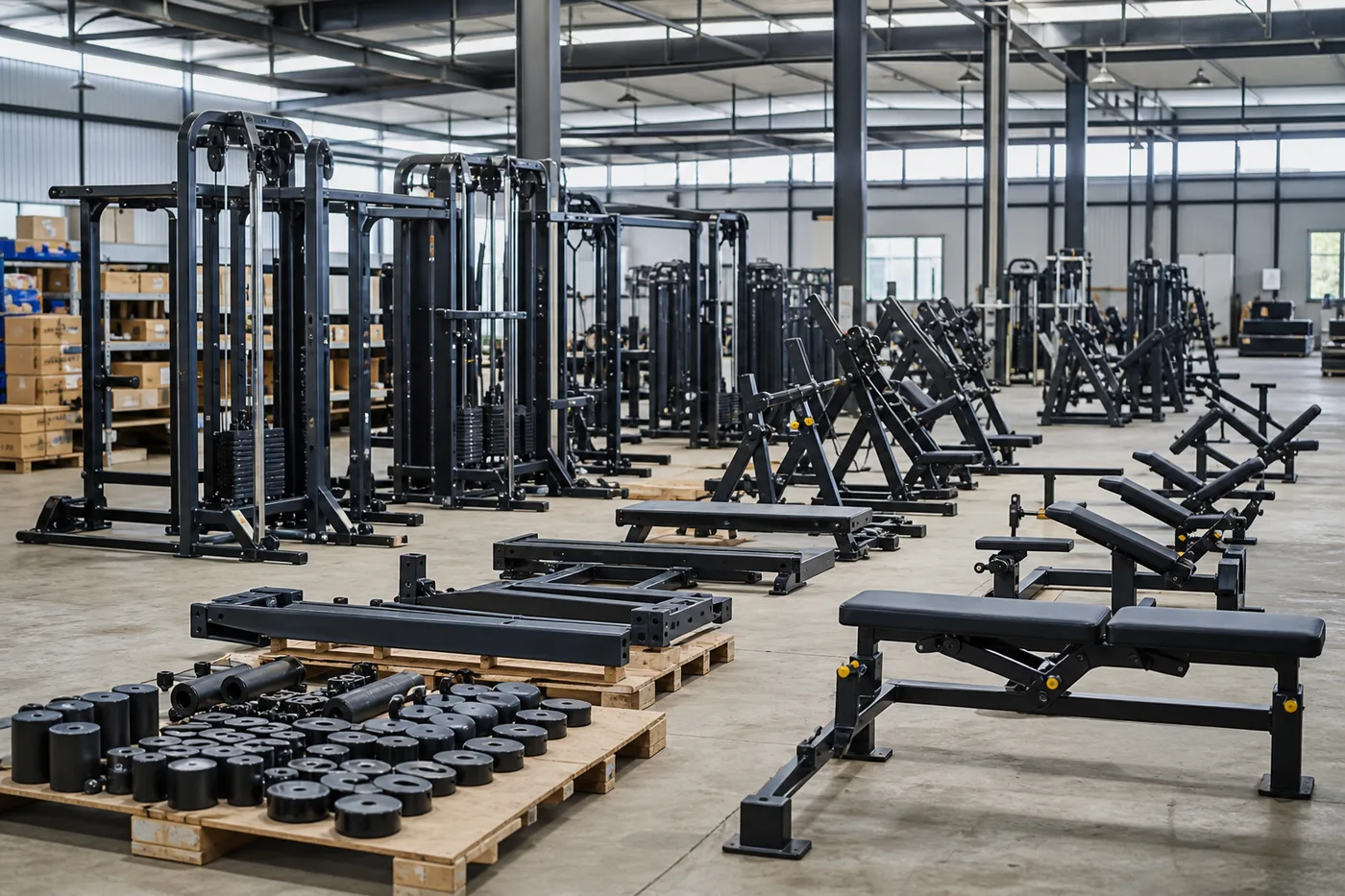
Commercial gym equipment is large, heavy, mechanically complex and often customized. A container may include plate loaded machines, selectorized machines, racks, benches, dumbbells, cardio machines, flooring and spare parts. Each category has different packing needs, different installation concerns and different risk points during shipment.
For a gym owner, a delayed container may affect opening time. For a distributor, a delayed order can interrupt local sales. For a project company, missing parts or poor packing can create installation pressure on site. This is why the import process should begin before the purchase order is confirmed.
Many international buyers focus first on price. Price matters, but the bigger cost often comes from unclear communication, wrong product configuration, missing accessories, poor packing or a shipment schedule that was never realistic. A good import plan should make the order easy to check before production, during production and before loading.
Step 1: Confirm whether the supplier can support commercial projects
Before placing an order, buyers should confirm whether the supplier understands commercial gym use. A commercial facility is different from a home gym. Equipment must handle repeated daily use, many body types, different training habits and frequent adjustment.
Useful checks include:
- Does the supplier manufacture the product or only resell it?
- Can the supplier explain the frame, welding, coating, upholstery and moving structure?
- Can the supplier support mixed orders across strength, cardio, accessories and flooring?
- Can the supplier provide OEM color, logo and packaging options if needed?
- Can the supplier share production and inspection photos during the order?
- Can the supplier prepare an organized packing list and loading plan?
From a manufacturer's perspective, the most reliable buyers are usually those who send clear requirements early. A vague request such as "send me your gym equipment price" is difficult to quote accurately. A better request includes target space, product categories, quantity range, color preference, destination port, expected opening date and whether OEM branding is needed.
Step 2: Build the order list before asking for the final price
Commercial gym equipment quotations become more accurate when the order list is structured. Buyers should divide the requirement into zones:
- Strength machine area
- Free weight area
- Functional training area
- Cardio area
- Stretching or recovery area
- Storage and accessories
- Flooring and protection
This helps both sides check whether the order is balanced. For example, a gym may order many plate loaded machines but forget benches, plate storage, dumbbell racks or flooring. A distributor may order machines but not enough fast-moving accessories for repeat sales.
If the buyer is filling a container, the order list should also consider packing volume. Some machines are bulky but not very heavy. Weight plates and dumbbells are heavy but compact. Mixing these categories correctly helps use container space better.
Step 3: Confirm technical details before production
Before production starts, the buyer should confirm details that affect the final equipment:
- Product model and quantity
- Frame color
- Upholstery color
- Logo placement
- Weight stack or plate loaded configuration
- Cable, pulley and handle requirements
- Voltage requirements for cardio or electronic parts
- Packaging method
- Spare parts list
- Product labels and carton marks
Do not rely only on catalog photos. Catalog photos are useful for product selection, but export orders need written confirmation. If the buyer needs a specific color, logo size, upholstery texture or language label, it should be confirmed before production.
For OEM/private label orders, buyers should confirm logo files, logo position and color matching early. Changing these details after production starts can delay the order or create rework.
Step 4: Request production updates at the right points
It is not necessary to ask for photos every day, but several checkpoints are helpful:
- Material preparation or frame cutting
- Welding or frame assembly
- Surface treatment or powder coating
- Upholstery and parts assembly
- Final product inspection
- Packing and loading
These checkpoints help buyers see whether the order is moving normally. They also help catch misunderstandings early. For example, if a frame color or logo placement is wrong, it is easier to correct before packing than after the container arrives.
Step 5: Inspect what matters for commercial gym equipment
Pre-shipment inspection should focus on both appearance and function. A machine can look good in photos but still require movement checks.
For strength machines, buyers should check:
- Welding consistency
- Frame surface and powder coating
- Seat and pad installation
- Adjustment holes and selector pins
- Cable travel and pulley alignment
- Movement path and bearing smoothness
- Rubber feet or floor contact points
- Safety stickers or warning labels if required
- Matching accessories such as handles, pins and bolts
For cardio machines, buyers should also confirm basic electrical function, console operation, belt movement, noise and packing protection.
For free weights and accessories, buyers should check weight markings, handle finish, coating, smell, packaging and quantity.
Step 6: Treat packing as part of quality control
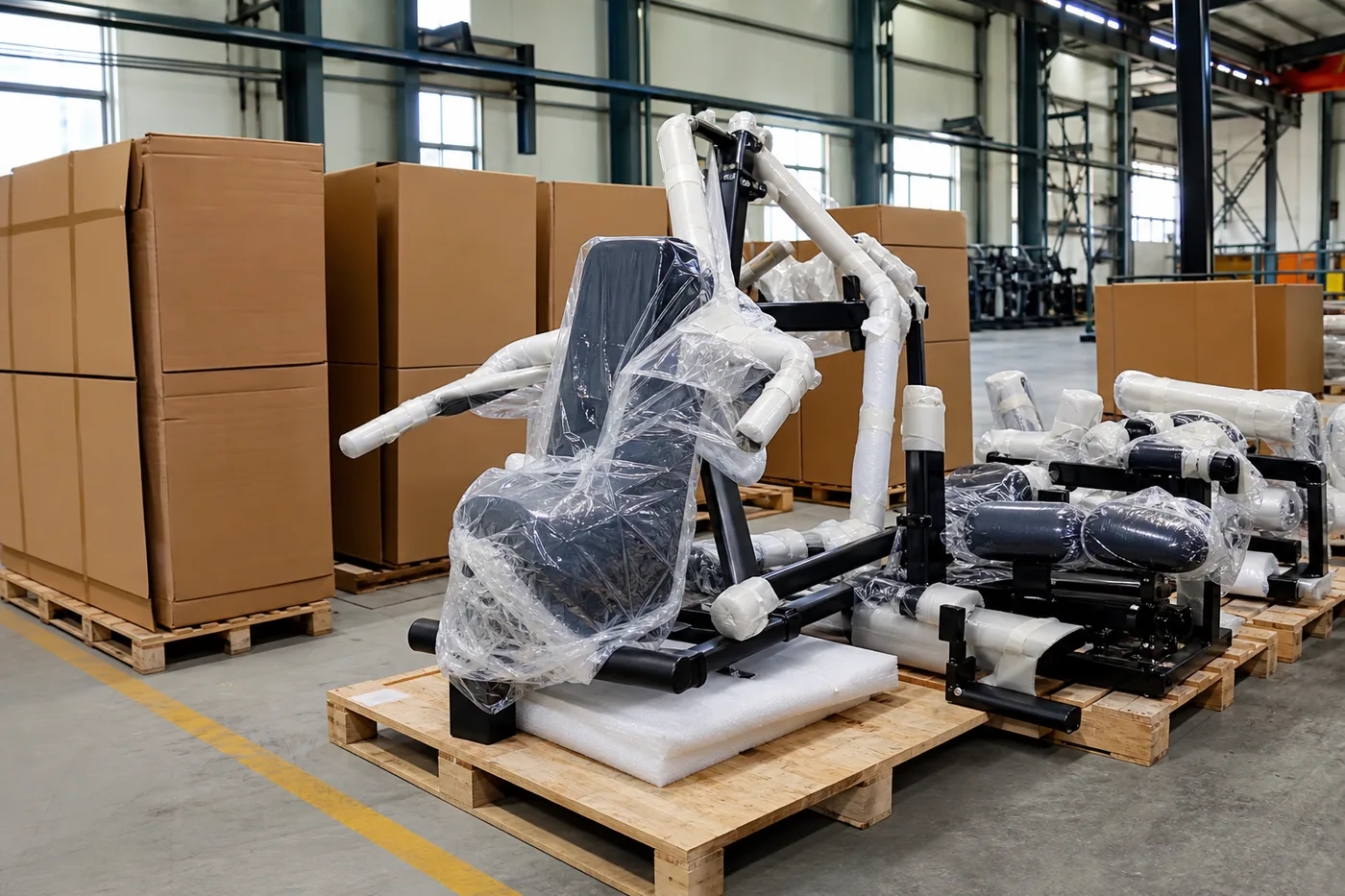
Export packing is not just a shipping task. It protects the buyer's investment. Commercial gym equipment often travels through factory loading, inland transport, port handling, sea shipping, destination port handling and local delivery. Poor packing can cause scratches, dents, missing parts or deformation.
Before loading, buyers should request packing photos and confirm:
- Product protection on frames and painted surfaces
- Hardware packed by model or machine
- Clear labels on cartons or wooden cases
- Heavy items secured properly
- Fragile parts protected separately
- Packing list matched with actual loading
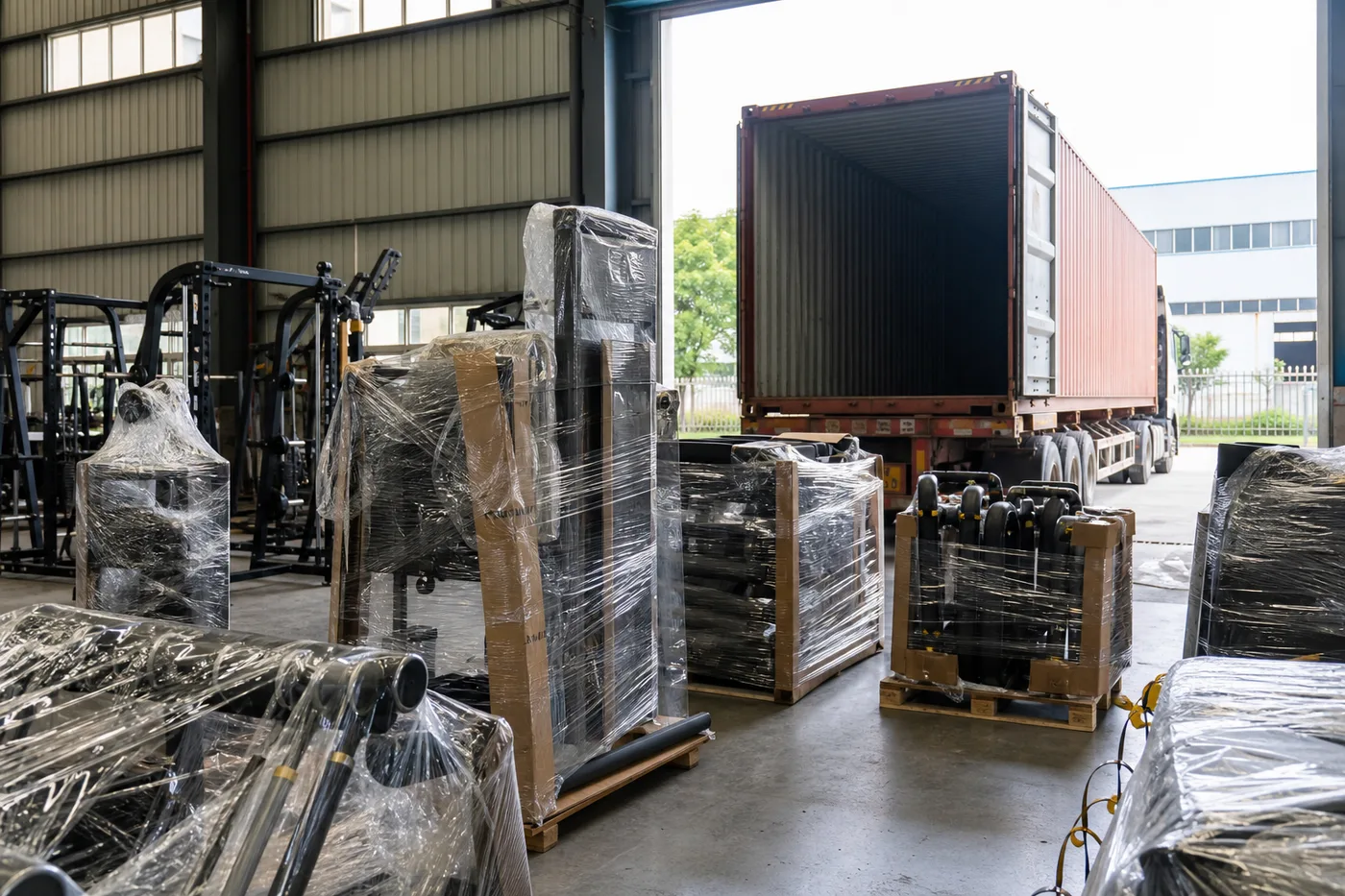
Container loading photos are also useful. They help buyers confirm that the correct products were shipped and support later unpacking and installation.
Step 7: Plan customs and installation before arrival
Many delays happen after the goods leave the factory. Buyers should prepare import documents, local customs requirements and unloading plans early. If a container includes heavy strength machines, the buyer should arrange forklift access, manpower, storage space and installation tools.
For a new gym project, the arrival schedule should match renovation progress. Equipment should not arrive too early if the site is not ready, but it should not arrive too late if the opening date is fixed.
Common risks and how to avoid them
The most common import risks are not mysterious. They usually come from missing details.
Unclear product list: confirm model, quantity and product category. Wrong customization: approve colors, logos and labels before production. Poor packing: request packing method and loading photos. Missing accessories: ask for hardware and spare parts list. Unrealistic lead time: confirm production and shipping schedule separately. No inspection: check appearance, movement and packing before balance payment. Weak communication: keep one updated order document that both sides follow.
Useful next pages
Buyer FAQ
What should I check before importing commercial gym equipment from China?
Check supplier capability, product categories, technical specifications, customization details, production lead time, inspection process, packing method, shipment terms and after-sales support.
How do I know if a gym equipment supplier is reliable?
A reliable supplier should explain product structure, manufacturing process, customization options, inspection steps, packing details and delivery planning clearly. Communication quality is often as important as the catalog.
Should I order samples before a full commercial gym equipment container?
For distributors and private label buyers, sample orders can help confirm finish, movement, logo quality and packaging. For full gym projects, buyers may instead request detailed videos, inspection photos and reference product information.
What documents are usually needed for importing gym equipment?
Common export documents include commercial invoice, packing list and bill of lading. Requirements vary by destination country, so buyers should confirm local customs rules with their forwarder.
How can I reduce shipment damage?
Confirm export packing method, ask for packing photos, protect painted surfaces and upholstery, separate hardware clearly and request container loading photos.
Can I mix strength machines, cardio equipment and accessories in one container?
Yes, mixed containers are common. The product list should be planned carefully because machines, dumbbells, flooring and accessories have different weight and volume characteristics.
When should I confirm OEM color and logo details?
Confirm them before production starts. Logo files, frame color, upholstery color and label requirements should be approved in writing.
What causes delays in commercial gym equipment orders?
Common causes include unclear specifications, late customization changes, production queue, missing payment confirmation, incomplete documents, packing delays and port or shipping schedule changes.
Should I inspect the equipment before shipment?
Yes. Pre-shipment inspection helps confirm appearance, movement, accessories, quantity, packing and loading before the goods leave the factory.
Conclusion
Importing commercial gym equipment from China can be efficient when the buyer controls the process step by step. The key is to confirm the supplier, product details, inspection points, packing method and shipment plan before the container leaves the factory. A well-prepared import order reduces delays and gives the buyer more control over cost, quality and opening schedule.
Need this topic turned into a real equipment plan?
Send your market, gym size, product categories or OEM needs. Kloe can help clarify the next step.