
How to Specify and Inspect Cable-and-Pulley Strength Equipment
Specify a cable machine as a complete transmission path: cable construction and coating, end fittings, pulley material and groove, routing, guards, adjustment method, effective resistance and replacement identity. Approve one configured unit, test every cable route through its full travel, and repeat documented visual and functional checks when the shipment arrives.
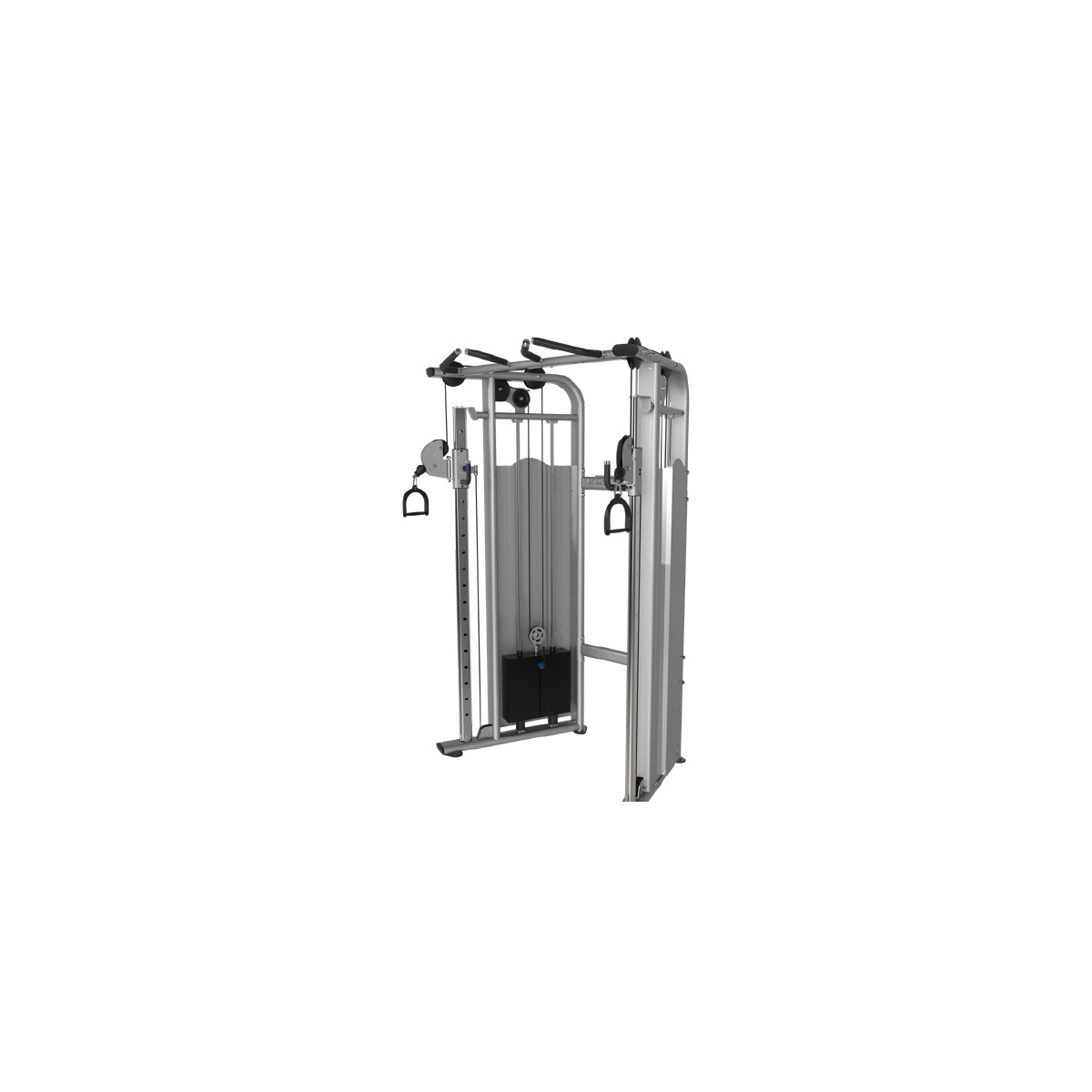
Map the transmission path before comparing offers
Begin at the handle, movement arm or ankle strap and trace the load path through each cable end, adjustable carriage, pulley, weight-stack head plate and tensioning point. Record how many independent routes exist and which exercises use each route. A functional trainer with two outlets creates a different inspection task from a single selectorized machine. This map prevents a supplier from answering a system question with one cable diameter or a broad statement about smooth movement.
Define the buyer's operating context beside that map: expected daily use, supervised or unsupervised access, user range, attachment changes, cleaning routine, room humidity and available service access. These facts do not create a universal component specification. They explain which evidence the supplier must provide and which reference-unit tests matter. Keep desired performance separate from unverified numbers, and request the exact offered configuration rather than assuming that every model in a series shares the same routing.
Ask for model-specific documents, not a generic cable claim
Request a cable-routing diagram, parts list, installation instructions, maintenance schedule and replacement procedure for the exact model and revision. The documents should identify cable assemblies and end fittings in a way that can be matched to the delivered machine. Ask where initial tension is set, which adjustments are permitted, which tools are required and which conditions take a unit out of service. A brochure image cannot replace these working documents.
For quoted claims about cable construction, coating, pulley material, bearings, load ratio or service interval, ask for the source document and the test or inspection method. Do not transfer a value from another brand, an earlier revision or a related machine. ASTM F2216 and model-specific manufacturer guides establish a relevant specification and inspection context, yet compliance evidence still needs to identify the offered product. Record document titles, revisions and issuing body in the order file.
Turn each component into an acceptance point
The table below converts visible and hidden parts into evidence that procurement, quality control and the receiving team can use. It does not prescribe one material for every project. A design is acceptable when the supplier declares the configuration, the reference unit demonstrates controlled travel, service documents match that unit, and delivered machines repeat the approved condition without damage or undocumented substitutions.
Use the table during quotation normalization. If one bidder includes a complete cable assembly, pulley guards and an identified spare while another lists only the machine, place the missing items in a clarification column instead of treating the prices as equivalent. The aim is a comparable scope: same attachments, same cable routes, same documentation, same spare-part basis and the same receiving test. This makes later deviations visible before production release.
| System point | Evidence to request | Reference and receiving check | Decision risk |
|---|---|---|---|
| Cable and coating | Declared assembly identity, construction and permitted inspection method | Inspect the full visible length, bends and contact areas | Damage or substitution remains hidden |
| End fittings | Fitting type, attachment method and parts identity | Check seating, alignment, deformation and connection | A route fails at its termination |
| Pulleys and guards | Pulley specification, routing diagram and guard layout | Observe groove tracking through full travel | Cable rubs, leaves the groove or meets an edge |
| Tension and travel | Adjustment method and usable travel for the offered setup | Cycle every outlet with named settings and attachments | Slack, restricted travel or inconsistent return |
| Effective resistance | Declared ratio, start condition and measurement basis | Compare with the same attachment and setup | Weight-stack mass is mistaken for delivered resistance |
| Replacement assembly | Part reference tied to model, revision and serial identity | Match spare and documentation before acceptance | A spare cannot be installed when needed |
Approve movement on a reference unit
Test the reference unit from the starting position to the end of usable travel on every cable outlet. Use the attachments and settings named in the quotation. Watch the cable enter and leave each pulley, listen for contact with guards or frame parts, feel for abrupt changes in resistance, and confirm that the stack settles in a controlled way. Repeat at low and higher selectable loads that are appropriate for the machine without inventing an external pass value.
Movement quality is not captured by one unloaded pull. Change carriage positions, seat settings and common attachments, then test the combinations that alter cable angle or hanging length. Confirm that the cable remains seated in its pulley groove and does not become slack in normal setup. Photograph routing and adjustment positions on the approved unit. Record the model, revision and serial identity so the same evidence can be used during pre-shipment and receiving checks.
Check routing, clearances and user contact
Inspect the full visible cable length, paying particular attention to bends, entry points, crimped or swaged ends and attachment interfaces. Look for coating cuts, flattening, kinks, exposed wire, displaced fittings and contact marks. Examine pulley edges, groove alignment, guards and fasteners. A cable that looks clean in the centre can still show damage near a termination or tight change of direction, which is why route-by-route inspection is more useful than a distant photograph.
Check how users and staff interact with the system. Hands should have a clear path to adjustment points and attachments, while moving cables and pinch areas remain protected by the designed guards. Verify that the full operating area accounts for the user, attachment and cable travel, not only the frame footprint. Confirm that maintenance staff can view the required cable sections and access declared adjustment points without improvised dismantling of surrounding equipment.
Write a repeatable receiving inspection
Write the receiving plan before shipment. Identify the sampling rule or state that every unit will be checked, list the cable routes, define the evidence to retain and name the person allowed to release a unit for use. Separate packaging damage, cosmetic observations, assembly errors and transmission-system defects. A machine with an unresolved cable, pulley or fastening concern should remain isolated until the supplier's approved resolution is documented and verified.
At receiving, match the machine and cable assembly to the packing list, model and revision. Inspect visible routes before and after assembly, confirm cable seating, guards, end fittings and fasteners, then cycle every outlet through the full usable range. Compare movement and routing with the approved reference evidence. Record photographs from consistent viewpoints. If the condition differs, open a deviation record that identifies the affected unit instead of accepting a verbal explanation across the whole lot.
- Freeze the exact model, revision, cable routes and included attachments.
- Approve a reference unit with dated photographs and full-travel test records.
- List drawings, manuals, parts references and inspection instructions as deliverables.
- State which visible defects or movement anomalies require isolation and review.
- Repeat route-by-route checks after assembly at the destination.
- Link every spare cable to the delivered model and serial identity.
- Keep signed deviation and corrective-action records with the order file.
Control replacement identity and service access
A replacement cable is a configured assembly, not an anonymous length of wire rope. The buyer needs the correct ends, finished length, coating, routing and compatibility with the exact machine revision. Require an illustrated parts reference or supplier cross-reference that uses model and serial identity. Matrix's serial-number parts workflow is a useful example of why identity matters; use the documentation supplied for the equipment actually purchased.
Review service access before placing machines close to walls or adjacent stations. Staff need the clearance described by the manufacturer to inspect, tension and replace components. Ask whether cable replacement requires removal of covers, pulleys or surrounding assemblies, and record the approved procedure. Include lead-time information for identified service parts in commercial evaluation, but do not publish or contract against an unsupported universal replacement interval.
Close the order with evidence and ownership
Close the purchase specification with a concise evidence schedule: who supplies drawings and manuals, who approves the reference unit, who records production deviations, who performs installation tests and who releases delivered equipment. Attach the agreed cable-system checklist to the order. This turns a broad request for durability into traceable decisions and gives both parties the same basis for resolving a deviation.
The practical result is straightforward: select the cable-and-pulley system through declared configuration, observable movement and service identity. Do not rank machines by a single component label. Compare complete routes, approve the exact offered unit, preserve its evidence and repeat the agreed tests after delivery. PowerBaseFit can review a project list and prepare model-specific questions without assigning unverified specifications to machines that have not been selected.
Buyer questions
Is cable diameter enough to compare two strength machines?
No. Diameter does not describe the complete assembly, coating, ends, routing, pulley interface, tension, ratio or replacement identity. Compare the full transmission path on the exact offered models.
Should the buyer require one universal cable material?
Use the manufacturer-declared construction and supporting evidence for each design. The procurement goal is a verified configuration and repeatable acceptance method, not an unsupported material rule across every machine.
What should be tested on a reference unit?
Test every cable outlet through full usable travel with the quoted attachments and representative settings. Observe tracking, seating, clearances, return, adjustments, stack movement and access for inspection.
When should a delivered machine stay out of use?
Keep it isolated when cable damage, poor seating, loose or displaced hardware, abnormal movement, missing guards or an undocumented configuration difference remains unresolved.
How should spare cables be ordered?
Order a finished assembly identified for the exact model and revision, using serial identity where required. Confirm the ends, routing reference and supplier-approved installation procedure.
Sources
- Preventative Maintenance for Commercial Fitness Equipment — Precor
- F2216 Standard Specification for Selectorized Strength Equipment — ASTM International
- Product, Assembly and Maintenance Guides — Precor
- FTS Glide Assembly and Maintenance Guide — Precor
- Matrix Fitness Replacement Parts by Serial Number — Matrix Fitness