
How to Choose a Commercial Air Bike for a Gym
Choose a commercial air bike by the job it must perform, the number of riders who need it at peak time and the exact configuration offered. Confirm the complete drive and fan system, seat and handle fit, foot pegs, console behavior, leveling, transport, cleaning access, wear parts and service documents. Trial the approved unit with representative users, record the accepted setup and repeat the same checks when the order arrives.
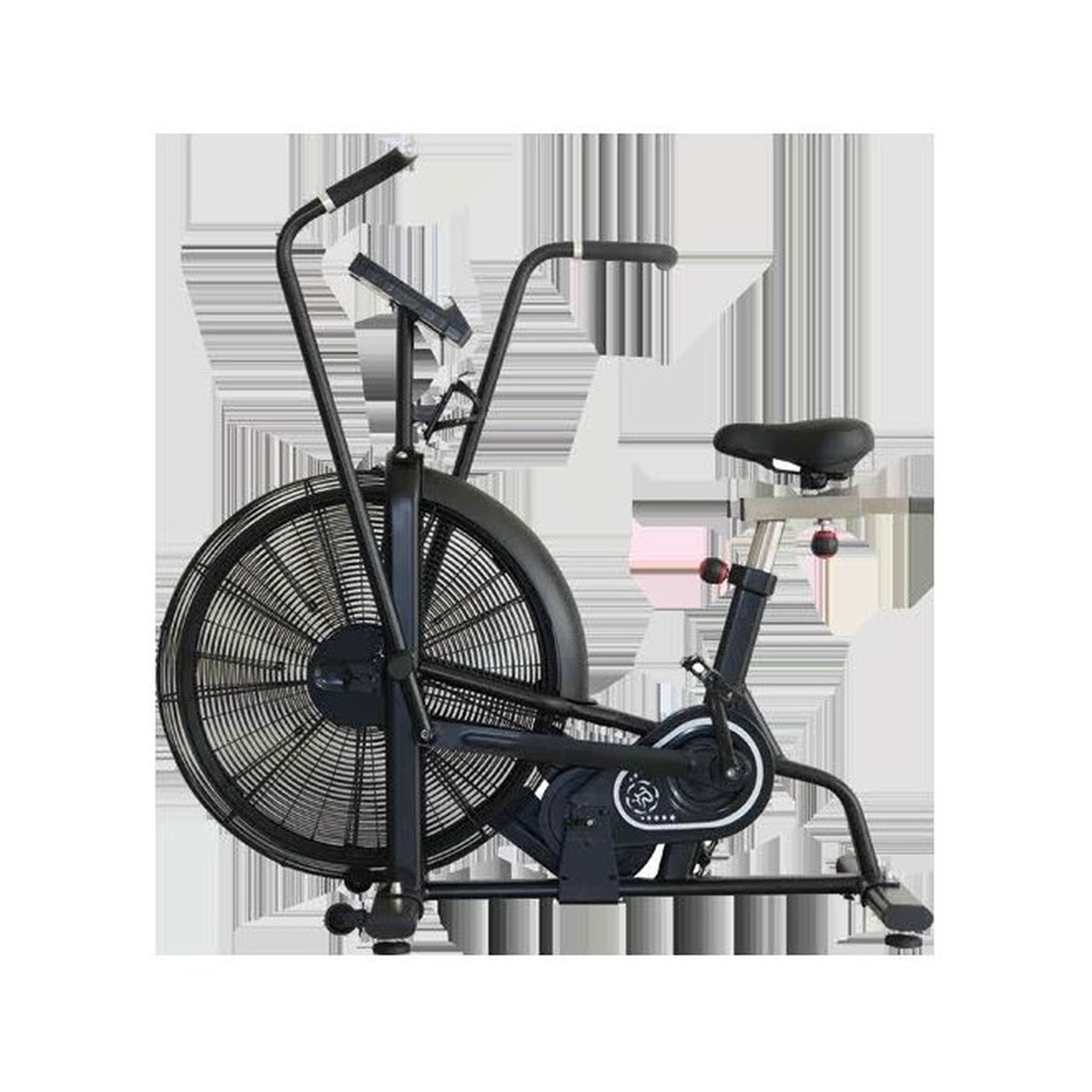
Start with the training role, not the fan size
An air bike is strongest where a facility needs self-paced conditioning, short intervals or a station that can use arms and legs together. That does not make it the default bike for every member. A general cardio floor, a small hotel room and a coached performance zone have different expectations for sound, instruction, accessibility and session length.
Write the intended sessions into the brief: open use, trainer-led circuits, fitness tests, warm-ups or team conditioning. Add the busiest-hour number of riders, work and recovery duration, changeover method and staff supervision. This turns the purchase from a product preference into a measurable capacity requirement.
Compare air bike, indoor cycle and rower by operating job
A fan bike increases air resistance as the user drives the mechanism faster and commonly links moving handles with the pedals. An indoor cycle is centered on cycling posture, cadence and adjustable resistance, while a rower uses a sliding sequence and needs a longer operating envelope. These formats should not be ranked by one intensity claim because they solve different programming tasks.
For an unsupervised mixed-membership floor, check whether first-time users can enter, adjust and stop without coaching. For a circuit studio, check whether the display can be reset quickly and whether members can move around the machine without crossing the next station. Keep an alternative cardio format where the audience needs supported seating or quieter steady work.
| Decision | Air bike check | Operational consequence |
|---|---|---|
| Program | Intervals, mixed arm-leg work or conditioning | Avoid buying it only to duplicate steady cycling |
| Capacity | Simultaneous riders and reset time | Determines unit count and spacing |
| Environment | Fan sound, airflow and nearby rooms | Controls placement and class timing |
| Service | Drive, pivots, console and parts access | Shapes downtime and maintenance workload |
Inspect the whole drive and fan system
Chain and belt are useful starting labels, not complete specifications. Ask for the power path from crank and moving arms to the fan, the number and type of stages, guarding, adjustment or tensioning procedure, bearing locations and the current exploded-parts view. Two bikes carrying the same drive label can still differ in access, noise and replacement work.
Turn the test ride into repeatable observations. Start gently, accelerate hard, alternate arm-dominant and leg-dominant work where the model permits it, then listen and feel during deceleration. Record rocking, delayed pickup, rubbing, looseness, unusual vibration and whether the fan guard remains rigid and clear throughout the test.
Fit several riders before approving the model
Seat height alone does not prove a useful fit range. Review fore-aft adjustment, saddle locking, reach to the handles, pedal position, knee clearance, hand path and foot-peg placement with short, medium and tall representative users. Staff should be able to identify and repeat settings without tools during a busy session.
Check entry and exit after the user is tired, not only at rest. The rider needs stable support, a clear route past the moving handles and a controlled way to stop. If the program uses arm-only or recovery positions, confirm that the exact machine provides suitable foot support and instructions for that use.
Specify the console as an operating tool
List the metrics and controls that the program actually uses: elapsed time, work and rest intervals, revolutions, power display, distance, heart-rate connection or a quick-start function. Ask how the console wakes, pauses, resets and stores settings, and whether batteries, sensors or cables are replaceable without dismantling unrelated assemblies.
Do not compare calorie or distance values across brands as if they share one calculation unless the supplier provides a valid basis. For repeated tests, keep the same machine, settings and protocol. If data export or wireless connection matters, identify the required protocol, device pairing process, account ownership and support period in the quotation.
Plan the live area, sound and cleaning route
Use assembled dimensions only as the inner box. Add handle travel, foot and knee movement, entry space, coach access, airflow from the fan, transport-wheel turning space and a maintenance approach. Place several bikes so a rider and coach can leave one station without entering the movement envelope of the next.
Fan noise rises with effort and moving air can affect papers, dust and nearby users. Test the proposed location during the intended session, particularly in hotels, corporate rooms or facilities next to quiet activities. Confirm floor level, protection, allowable movement and whether the operating instructions call for anchoring or another site condition.
Build serviceability into the quotation
Request the current owner, assembly and service documents; an exploded view; part numbers for belts or chains, bearings, pedals, cranks, handle pivots, seat locks, console and sensors; and the approved inspection and adjustment intervals. Separate consumables, wear parts and warranty parts instead of treating every component as one coverage promise.
Cleaning access matters because sweat reaches handles, console edges, seat hardware, guards and frame joints. Confirm compatible cleaners and areas that should not be flooded or sprayed. A fleet plan should also state who performs routine checks, who authorizes isolation and which parts can be stocked locally to return a unit to service.
- Quoted model and revision
- Drive and fan construction
- Console functions and power source
- Adjustment range and user trial
- Wear-part list and service documents
- Packing, assembly and receiving evidence
Approve one configuration and repeat the checks at receiving
The order should identify the exact model, drive, fan, console, seat, pedals, foot pegs, color, labels, included tools, documentation, packing units and spare parts. Photograph and record the accepted reference unit, including console screens and adjustment positions, so a later production change is visible before shipment.
At receiving, match package and model identifiers, inspect finish and fan guard, assemble to the current instructions, level the frame and torque fasteners as directed. Run low- and high-output checks, verify display and controls, move every adjustment, confirm supplied documents and isolate any unit that differs from the approved configuration until the discrepancy is resolved.
FAQ
Is a belt-drive air bike always better than a chain-drive model?
No. A belt can change noise and routine adjustment, while a chain can offer a familiar service path. Compare the complete drive, guarding, tensioning, parts supply and test behavior of the exact models instead of approving one label.
How many air bikes should a commercial gym buy?
Count peak simultaneous riders from the real session design. One open-floor conditioning station, a trainer circuit and a team interval class require different quantities, spacing and reserve capacity.
Does an air bike need mains power?
Many current air bikes use human power for resistance and batteries for the display, but buyers must confirm the exact console, accessories and charging or battery requirements in the offered configuration.
What should a distributor request with a bulk order?
Request the model revision, specification sheet, assembly and service documents, exploded parts view, packing data, wear-part list, console information, accepted reference record and receiving checks.
Sources
- ISO 20957-1:2024 — Stationary training equipment — General safety requirements and test methods — International Organization for Standardization
- ISO 20957-5:2016 — Stationary exercise bicycles and upper body crank training equipment — International Organization for Standardization
- AssaultBike Pro X — Assault Fitness
- Rogue Echo Bike V3.0 — Rogue Fitness
- Schwinn Product Manuals — Schwinn Fitness