
Commercial Glute Kickback Machine vs Cable Station: A Buyer’s Guide
Choose a dedicated commercial glute kickback machine when peak demand, beginner guidance and repeatable unilateral setup justify a separate station. Keep the cable option when flexibility and floor efficiency matter more than fast turnover. Test the exact offered revision with different users, compare support-leg stability, working-leg path, start resistance, left-right changeover, live area and service access, then record the approved configuration in the quotation and receiving checklist.
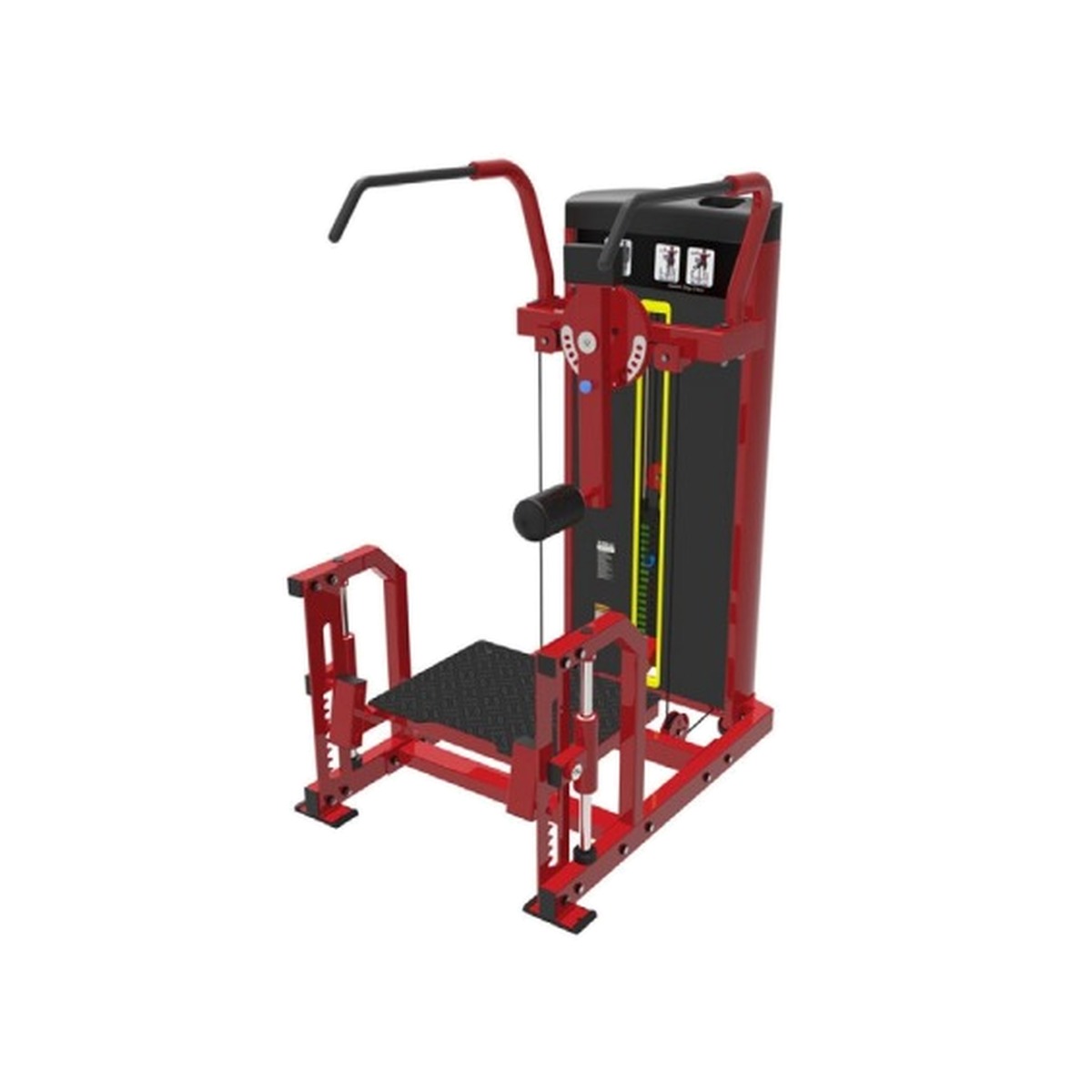
Start with the capacity problem, not the machine name
Measure who wants hip-extension work, when they train and what currently blocks them. A low pulley may already cover the movement, yet that cable bay may be occupied by rows, presses and rehabilitation work during the same peak period. A dedicated station is commercially useful when it removes an observed queue, simplifies instruction or creates a repeatable training slot; it is not an automatic requirement for every gym.
Record peak arrivals, occupied minutes, coaching requests, available substitutions and the space that another station would displace. Separate member interest from sustained use by observing several comparable periods. This produces a defensible capacity brief for a club, hotel, school or residential project and prevents a visually attractive specialist machine from consuming floor area without solving an operating constraint.
Separate kickback, hip thrust and hip abduction
A kickback station guides one leg through hip extension while the other side supports the user. A hip-thrust station loads bilateral hip extension from a different body position, while an abductor station resists movement away from the midline. They can appear in the same glute zone, but they do not create the same contact points, setup sequence, coaching task or peak-hour capacity.
Write the intended movement role into the equipment schedule. If a project already has a hip-thrust station and a cable bay, the unanswered question is whether users still need faster supported unilateral work. If the program mainly needs versatile attachments and supervised exercise, a cable station can preserve more choices. Procurement should follow the missing role, not a social-media exercise label.
| Format | Verify on the offered unit | Best fit when |
|---|---|---|
| Selectorized standing kickback | Support pad, foot contact, start load, increments and side change | Fast guided setup and frequent mixed-user use are priorities |
| Plate-loaded or pendulum kickback | Loading height, plate clearance, lever return and unloading path | The facility can manage plates and wants a distinct strength format |
| Kneeling glute isolator | Knee and forearm contacts, entry, hygiene and working-leg clearance | The program accepts more body contact and a specific supported posture |
| Low-pulley cable with ankle strap | Attachment fit, cable angle, balance support and bay occupancy | Exercise variety and floor efficiency outweigh dedicated throughput |
| Hip-thrust station | Belt or pad setup, entry, bilateral path and turnover | Loaded bilateral extension is the missing program role |
Test support, entry and the working-leg path
Invite smaller, mid-range and larger users, including people unfamiliar with the station. Each person should approach without crossing a moving lever, establish the standing or kneeling contacts, stabilize the support side, reach the handles and controls, and move the working leg without the foot striking the frame or floor. Record settings and observations for every profile instead of accepting one experienced lifter’s opinion.
Watch the pelvis, trunk and support foot during light trials. The machine should make the intended path understandable without forcing the user to chase a sliding pad or twist around the frame. Check the return as carefully as the outward stroke. Individual exercise limits belong to qualified staff; the purchasing test should establish whether the controls and contacts are clear, stable and repeatable for the facility’s user population.
Compare delivered resistance and left-right changeover
Ask for the starting resistance, increment sequence and the mechanism that transfers load to the working leg. On selectorized units, observe cable pickup, cam action, guide movement and stack contact. On plate-loaded versions, test the lever before and after plates are added. On cables, include the ankle attachment and cable angle. Equal labels do not guarantee equal resistance at the user contact.
Time the complete side change. Note whether the user moves a roller, rotates a platform, changes stance, relocates an attachment or walks around the station. Test the smallest useful load changes and a moderate working setting on both sides. A purchase comparison should capture slack, friction, abrupt pickup, pad rotation, return control and reset steps rather than relying on total stack or plate capacity.
Model peak throughput and draw the full live area
Time a realistic visit from entry to wipe-down: setup, first side, changeover, second side, rest and exit. Compare that occupied time with a cable bay that must also support other exercises and attachment changes. Use observed arrival patterns, selection share, planned downtime and acceptable waiting to decide whether one shared cable position or a dedicated station provides the better peak-hour service level.
Draw more than the catalogue footprint. Add the approach route, the user’s working leg, the support leg, moving arms or pedals, a coach, an adjacent waiting point, cleaning reach, open covers and technician access. Check columns, mirrors, walls and neighboring machines. Confirm package dimensions, component handling, door and lift limits, turning space, floor protection, assembly order and model-specific anchoring instructions before shipment.
Inspect hygiene, wear points and service access
Review pads, seams, grips, platforms, foot surfaces, rollers, adjustment pins, bearings, pivots, cables, pulleys, guide rods, guards, stops, fasteners and floor contacts as applicable. Kneeling and forearm-supported formats add high-contact surfaces that need an efficient cleaning route. Operate every adjustment and look for incomplete engagement, excessive play, trapped fingers, unstable contact and labels hidden by the normal setup.
Ask which covers open for inspection, how wear parts are identified, whether the unit must move for service and what daily or scheduled checks the supplier documents. Confirm compatible cleaning products for upholstery, grips, decals and coating. The service file should contain the correct manual, diagrams, parts references, tools, inspection points and responsibility for initial adjustment without inventing a service-life promise.
Approve a physical reference unit and a comparable quotation
Have representative users, a coach, cleaning staff and a technician examine the same offered revision. Photograph the setup, measure changeover and cleaning time, record light and moderate trials, and complete the routine inspection described by the supplier. The purpose is reliable commercial operation across roles, not a maximum-effort demonstration by one athlete or a decision based only on catalogue renderings.
Fix the model and revision, movement format, user contacts, start method, resistance steps, side-change sequence, finishes, labels, guards, documentation, packaging and accepted drawings in the quotation. Separate equipment, freight, inside delivery, assembly, specified anchoring, commissioning and staff handover. If any pad, lever, cam, stack, attachment, guard or base changes, review the change before production.
Repeat the evidence at receiving
Match package and serial records to the purchase order, photograph visible damage and assemble exactly to the approved instructions. Repeat the reference sequence with the same user profiles on both sides. Check stability, support contacts, adjustment engagement, start resistance, smooth pickup, return control, stops, guards, labels, cleaning reach and service clearance before the unit is handed to operations.
Log every deviation with an owner and a closure record. Do not treat a shared product name as evidence that the delivered revision matches the trial unit. Open the station only after required corrections, documentation and staff handover are complete. The same receiving logic applies whether the project buys one specialist machine or a container containing multiple strength stations.
FAQ
Does every commercial gym need a glute kickback machine?
No. Add one when observed demand, coaching needs and cable-bay occupancy justify dedicated guided unilateral hip extension.
Is a kickback machine the same as a hip-thrust machine?
No. A kickback normally guides one leg at a time from a standing or supported position, while a hip-thrust station loads bilateral hip extension from a different setup.
Is selectorized or plate loaded better?
Neither format is universally better. Compare user group, starting load, increments, plate handling, changeover time, maintenance and the exact resistance delivered at the contact point.
Can a cable station replace a dedicated kickback machine?
It can cover the movement when users can manage the attachment and balance demands and when cable capacity remains available at peak time.
What belongs in the quotation and receiving test?
Specify the exact revision, movement, contacts, settings, resistance, side change, live area, documentation, installation scope and repeatable acceptance sequence.
Sources
- ISO 20957-1 general safety requirements — International Organization for Standardization
- ISO 20957-2 strength-equipment requirements — International Organization for Standardization
- Life Fitness Insignia Glute — Life Fitness
- Precor Glutebuilder plate-loaded range — Precor
- Panatta Fit Evo Gluteus Machine — Panatta