
Introduction
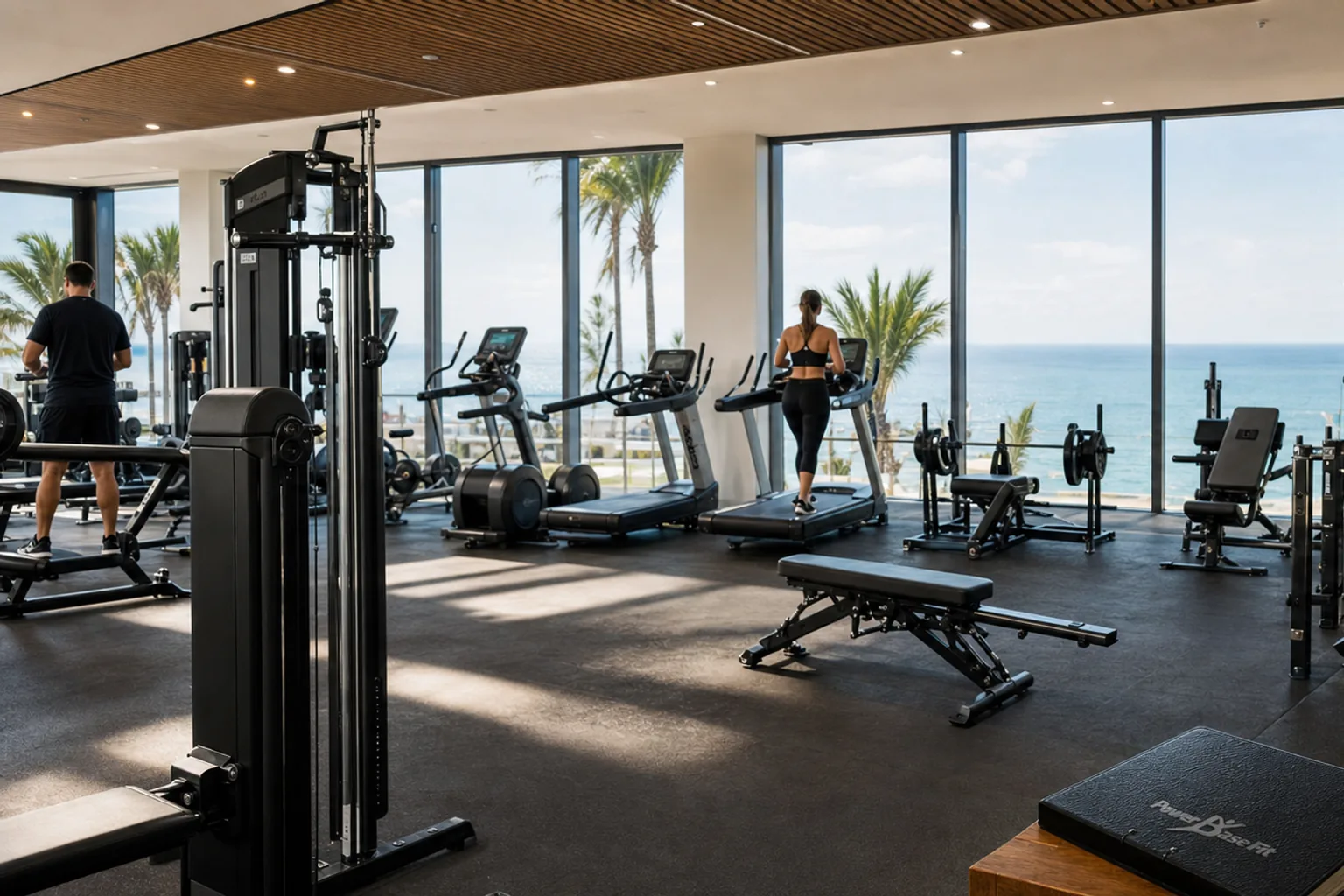
Coastal and marine fitness facilities should select commercial gym equipment through an environmental plan, not a generic 'rust-proof' claim. Control water and salt entry, room humidity and condensation; specify suitable surface preparation, coatings, fasteners and protected components; coordinate power, stability and access with qualified local specialists; and increase inspection and cleaning around joints, guide rods, hardware and concealed surfaces. Equipment still needs dry storage, correct installation and timely repair—no finish makes ordinary indoor machines maintenance-free in a harsh environment.
Key takeaways
- Define the actual exposure before asking for a marine-grade product.
- Room ventilation, condensation and cleaning practice affect corrosion as much as product finish.
- Review hidden hardware, moving interfaces and service access—not only visible frames.
- Use a documented maintenance and replacement-parts plan for remote facilities.
Define coastal and marine exposure
A beachside hotel gym behind conditioned glass is different from an open-air deck, a room with doors regularly open to sea air or a vessel fitness space. Document distance from open water, enclosure, air-conditioning schedule, humidity, direct spray risk, wet-user traffic, cleaning method and periods when the facility is closed. Avoid one label for all environments.
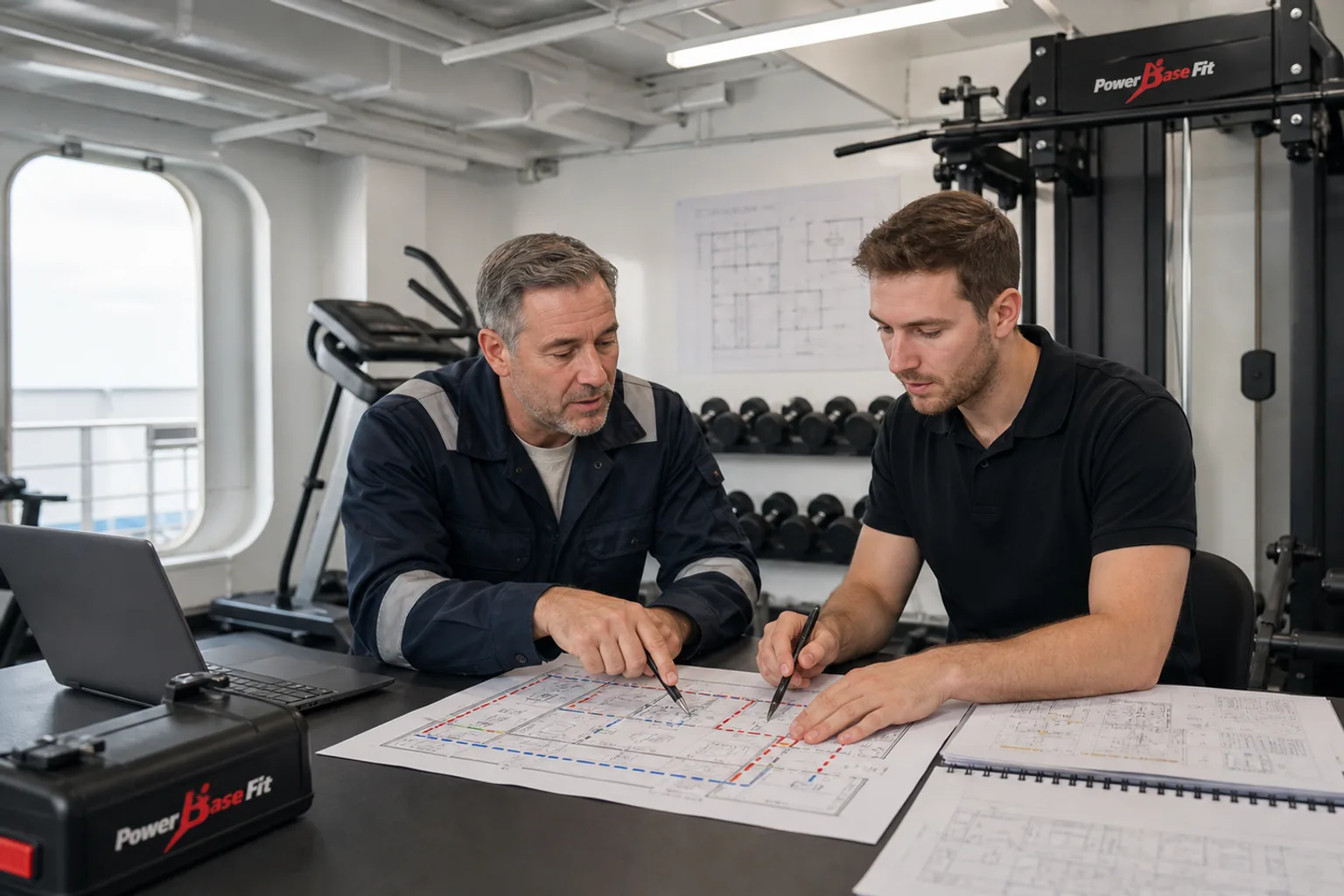
Marine installations may also introduce motion, weight-distribution, anchoring, fire, electrical and access requirements governed by the vessel or local authority. The gym equipment supplier should provide product information, but the naval architect, marine engineer, electrical specialist or responsible local professional must approve site-specific integration.
Control the room before upgrading the equipment
Persistent condensation will attack even a well-finished machine. Coordinate ventilation, dehumidification, drainage, glazing, door operation and cleaning storage. Keep equipment away from direct wet traffic and allow air circulation behind shrouds and frames. Do not place cardio power connections where water from towels, bottles or exterior doors can collect.
Measure conditions across operating and closed periods. A resort gym may be conditioned during the day but accumulate moisture overnight. A storage area can be harsher than the fitness room. The environmental plan should cover spare parts and replacement equipment waiting for installation as well as active machines.
Review materials as a system
Frame protection depends on surface preparation, coating coverage, cure and protection of cut edges or damaged areas. Inspect welds, joints, adjustment holes, tube openings and contact points where sweat or cleaning solution can remain. Ask how replacement touch-up should be handled; an incompatible repair can trap corrosion or create a visibly inconsistent finish.
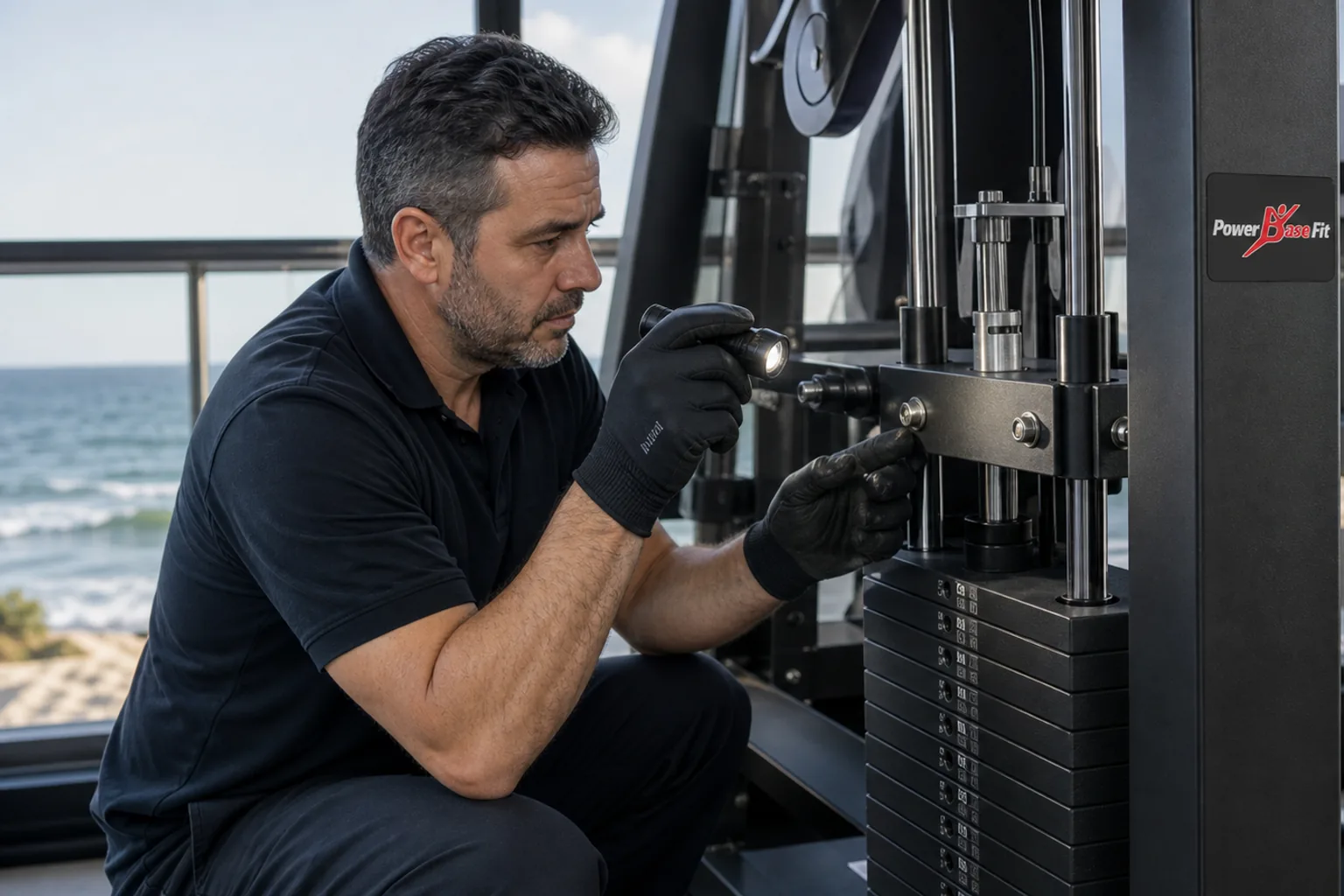
Fasteners, shafts, guide rods, bearings, cables, springs, weight plates, upholstery staples and electronic connectors may have different exposure and material needs. Do not assume a coated frame protects every component. Require model-specific identification of vulnerable parts and available replacements.
Select equipment by maintenance accessibility
Choose designs that can be inspected, cleaned and serviced without dismantling the room. Removable guards, accessible fasteners, replaceable upholstery and available cables or bearings reduce lifecycle risk. Highly enclosed decorative features can hide moisture and delay detection. Simple adjustment mechanisms may suit remote hospitality facilities better than features requiring specialized support.
Balance variety with parts standardization. A compact line using shared wear parts is easier to support on an island or vessel than many unrelated models. Keep enough redundancy that one out-of-service cardio or cable station does not remove an entire training function.
Plan power, stability and movement
Powered cardio needs a location-specific electrical review covering supply, earthing, isolation, protection, plug and service access. Do not rely on a factory plug photo as approval for a marine or resort installation. Cables should be routed away from wet cleaning and traffic, with the final work completed by qualified personnel.
For vessels or exposed structures, equipment restraint and anchoring require engineering review. A standard freestanding layout may not address motion, vibration or emergency conditions. Confirm floor construction, approved fixing locations, load distribution and any need for isolation. Do not drill or weld into the site without authorized design information.
Coordinate flooring and free weights
Flooring should tolerate the environment, cleaning method, equipment load and free-weight impact without trapping moisture beneath loose edges. Confirm substrate preparation and drainage interfaces. In vessel or compact resort gyms, raised transitions and moving mats create additional trip and housekeeping risk.
Free weights need secure storage and disciplined counts. Motion-sensitive facilities may require specialized restraint or operational rules outside normal land-based practice. The responsible project team must approve these measures. Select rack layouts that keep weights away from glazing, exits and cardio power routes.
Increase inspection and cleaning discipline
Use the manufacturer's approved cleaning guidance and dry surfaces after cleaning. Inspect frame joints, fasteners, guide rods, cable terminations, bearings, plate interfaces, upholstery seams and concealed lower surfaces more frequently than in a controlled inland room. Record early discoloration, coating damage or rough movement before it becomes structural or widespread.
Cleaning chemicals can accelerate material damage when concentration, contact time or application method is wrong. Salt removal does not mean flooding a machine. Train staff to isolate power where required, apply solution through an appropriate cloth and keep liquids away from electronics and openings.
Prepare a remote-service and spares plan
Remote locations need clear fault evidence, model and serial records, parts diagrams and a local person able to perform authorized basic checks. Stock small high-consequence wear items based on the installed range and transport lead time. Protect spares from the same humidity that threatens installed equipment.
Define how heavy components will reach the room and how failed units leave it. Narrow corridors, guest operations, port schedules and limited technicians can make a simple replacement a project. Capture access dimensions and lifting constraints before selecting large assembled machines.
Common coastal procurement mistakes
- Using marine-grade as an undefined marketing requirement
- Upgrading frame coating while ignoring fasteners, bearings and electronics
- Treating air-conditioning as proof that condensation cannot occur
- Selecting equipment before access and restraint review
- Using aggressive cleaning chemicals to remove salt
- Storing spare parts in an uncontrolled damp room
- Assuming the manufacturer can approve vessel structure or local electrical work
Manufacturer perspective: disclose the environment early
Tell the manufacturer the facility type, enclosure, exposure, power, access, target users and maintenance capability before requesting models. The supplier can then identify finish options, vulnerable parts, disassembly state and service needs. If a product is intended only for controlled indoor use, that limitation should remain visible rather than being hidden by a broad project label.
Agree inspection photographs and packing protection for the destination. Long sea transport is separate from permanent coastal operation, but both expose the order to moisture risks. On arrival, inspect and move equipment into controlled storage promptly instead of leaving unopened packages in an exposed area.
Coastal and marine planning matrix
| Risk area | Buyer check | Control direction |
|---|---|---|
| Humidity and salt | Exposure, condensation and operating schedule | Room control plus frequent inspection |
| Materials | Coating, fasteners, joints and moving parts | Model-specific protection and replaceability |
| Power | Supply, protection, routing and service access | Qualified local electrical review |
| Stability | Floor, motion, restraint and fixing limits | Site-specific engineering approval |
| Service | Access, lead time, skills and spares | Standardized range and evidence workflow |
Useful next pages
Buyer FAQ
Is powder-coated steel rust-proof near the sea?
No. Good preparation and coating reduce exposure, but damage, joints, fasteners, condensation and maintenance still determine corrosion risk.
Can ordinary commercial gym equipment be used in a beach hotel?
It depends on enclosure and environmental control. The buyer should disclose exposure and confirm model suitability and maintenance needs.
What does marine-grade gym equipment mean?
The phrase is not sufficient by itself. Define the environment, components, tests, installation and maintenance requirements that the project needs.
Should equipment be anchored on a vessel?
Restraint and anchoring require approval from the responsible marine or structural professionals and must suit the specific vessel and equipment.
Which parts should be inspected most often?
Focus on coating damage, joints, fasteners, guide rods, cable terminations, bearings, plate interfaces, upholstery seams and electrical connections.
Does stainless hardware solve the whole problem?
No. Material compatibility, grade, strength, surrounding components and the full exposure system still need review.
How should salt residue be cleaned?
Follow approved product guidance, avoid flooding equipment, use compatible dilution and application, and dry the surfaces appropriately.
What should be stocked at a remote resort?
Use the installed base, common wear parts, failure consequence and replenishment time to define a protected starter stock.
Conclusion
Coastal and marine gym projects need an environmental and service plan, not a cosmetic finish promise. Define exposure, control the room, review every vulnerable component, coordinate power and restraint with qualified local specialists, and make maintenance accessible. Clear disclosure lets the manufacturer recommend responsibly while the project team controls site-specific risks.
Need this topic turned into a real equipment plan?
Send your market, gym size, product categories or OEM needs. Kloe can help clarify the next step.