

Introduction
Commercial gym equipment commissioning is the controlled process of proving that delivered units match the approved schedule, have been assembled and positioned correctly, operate as intended, include the required accessories and documents, and are ready for the facility to manage. It should combine a 100% identity and condition check with equipment-specific functional tests, a categorized punch list, staff handover and signed acceptance. Opening the gym before critical findings are closed transfers avoidable risk to users and operators.
Key takeaways
- Commission the installed system, not isolated machines only.
- Keep critical safety or function failures separate from cosmetic snags.
- Link every finding to a model, serial number, owner and closure record.
- Final handover includes people, documents, spares and cleaning guidance.
Commissioning is more than switching machines on
Commissioning begins when installation is sufficiently complete and ends when the facility has evidence that the equipment can enter controlled use. It covers the relationship between machines, flooring, power, clearances, accessories, layout and operating procedures. A treadmill that starts in a warehouse has not been commissioned if its final circuit, emergency access or service clearance is wrong.
The process is different from routine maintenance and from factory inspection. Factory checks establish the pre-shipment condition; commissioning proves the completed installation. The checklist should reflect the actual categories on the project instead of applying the same five questions to a dumbbell, cable station and powered cardio unit.
Set readiness gates before the walk-through
Do not start formal commissioning while installers are still moving major units or while power and flooring work are incomplete. First confirm that the approved layout is available, packaging has been reconciled, work areas are safe and the relevant representatives can attend. Prepare the equipment schedule, serial register, installation instructions, open delivery claims and approved deviations.
- Installation substantially complete
- Final equipment positions marked and accessible
- Required utilities available through qualified local trades
- Model, quantity and serial records prepared
- Test tools and manufacturer instructions available
- Authority to classify findings and approve closure identified
Pass one: identity, quantity and delivered condition
Walk the facility systematically by zone. Match every unit to the approved model and quantity, capture its serial or asset identifier, and confirm ordered colour, branding, voltage and accessories. Record damage with wide context and close detail. Missing attachments or hardware should be tied to the affected machine rather than listed as a general shortage.
This pass establishes traceability. It also prevents a functional test from overlooking a substitution that happens to work. Where equipment arrived in several batches, reconcile the packing and installation records so the facility knows which items are complete, which are stored and which remain in transit.

Pass two: installation and spatial checks
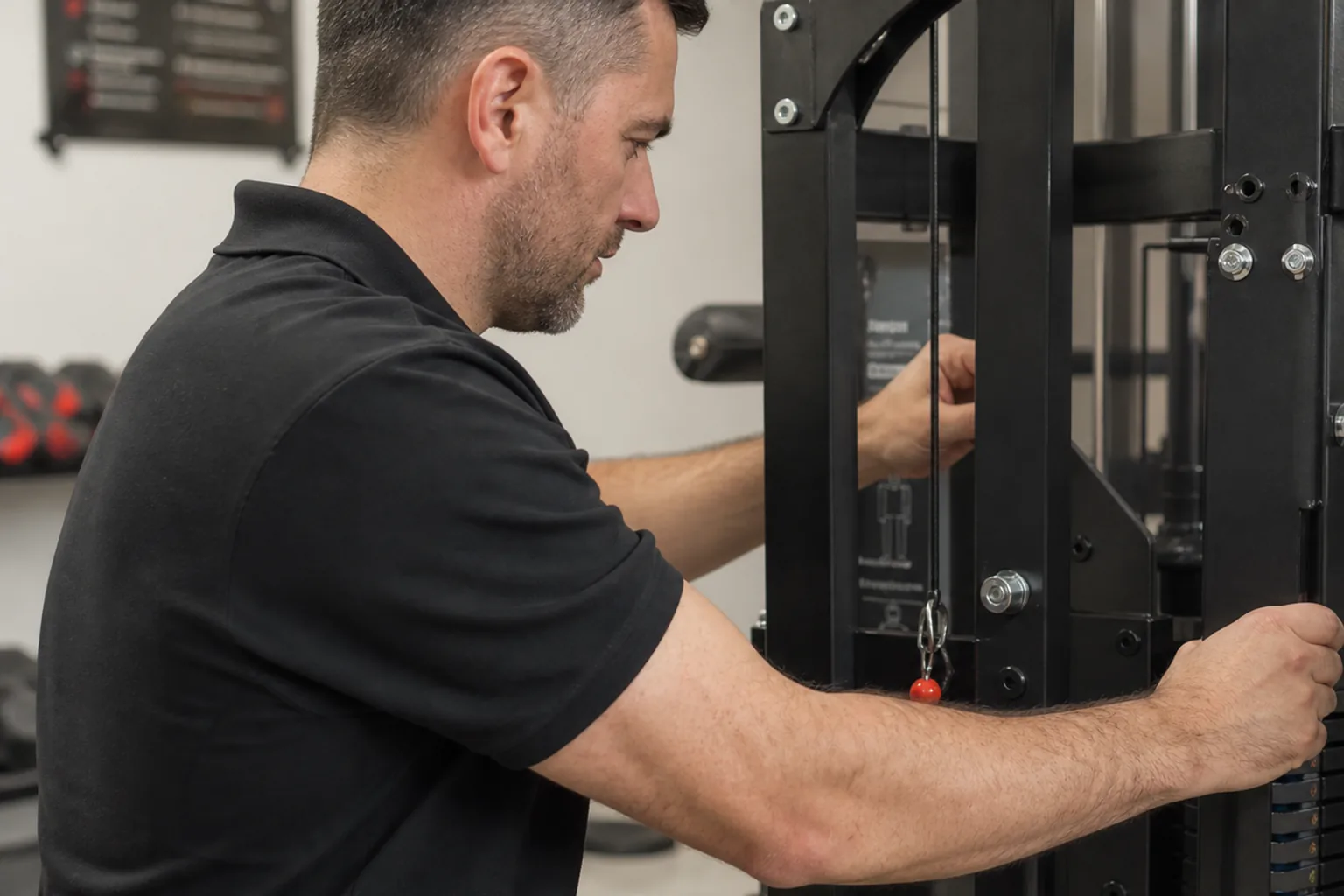
Inspect levelling, stability, approved anchoring, fastener completion, guards, end caps and cable or belt routing. Confirm that movable benches, plates and user limbs have enough operating space. Service panels should remain accessible, and emergency routes must not depend on moving equipment. Check that floor transitions do not create trip points and that heavy units sit on the intended surface.
Compare final positions with the layout, but do not preserve a drawing error simply because it was approved. If a door, column, mirror, socket or sprinkler creates a conflict, record the deviation and assign a controlled layout change. The commissioning record should show the accepted final arrangement.
Pass three: functional tests by equipment family
- Selectorized strength: full travel, weight selection, guide rods, cables, pulleys, adjustments and guards
- Plate-loaded strength: stability, loading pegs, moving arms, stops, bearings and storage clearances
- Benches and racks: adjustment locks, contact points, safeties, level and compatibility
- Free weights: weight sequence, loose heads or inserts, handle condition and storage fit
- Functional trainers: cable travel, height adjustments, attachments, trolley locks and station interference
- Cardio: qualified power connection, start-up, controls, emergency stop, belt or pedal movement and abnormal noise
Run each movement through its intended range without improvising unsafe loads. The checklist should define an observable outcome: the selector engages, the cable remains correctly seated, the bench locks at each intended position, or the treadmill emergency stop interrupts operation. Words such as feels good are not reproducible acceptance criteria.
Create a usable punch list
A punch list is a controlled closure tool, not a collection of informal comments. Give each finding an identifier, exact location, model or serial, description, classification, photo, responsible party and due date. Critical items prevent use; major items prevent required function or contractual acceptance; minor items can be closed without restricting safe operation when the buyer agrees.
Separate factory defects, transport damage, installation defects and site constraints. That distinction improves response time and protects evidence. When a finding is closed, attach the repair, replacement or retest record. Do not close ten similar issues with one generic photograph unless the photograph clearly proves all affected units.
Handover documents, spares and training
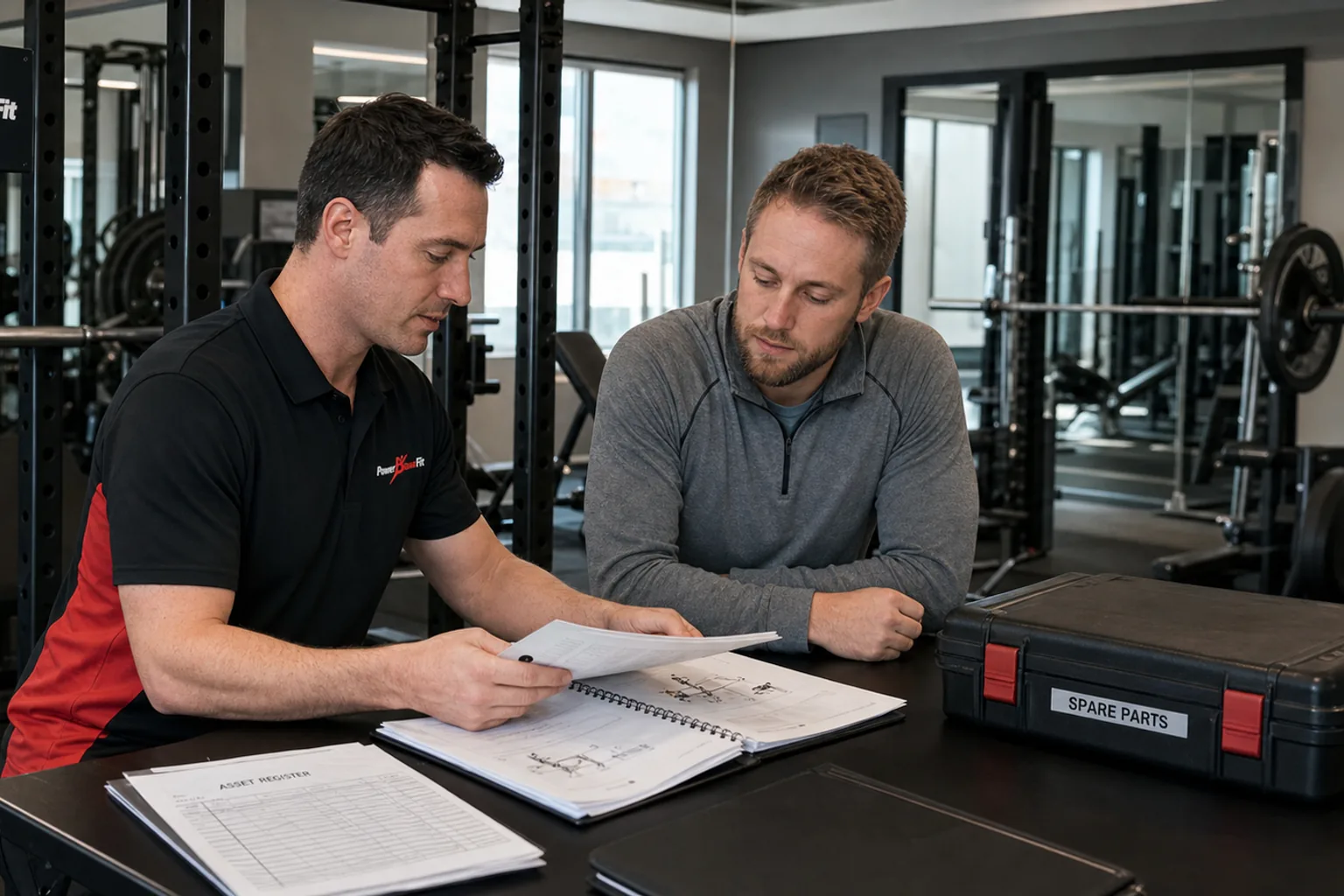
The facility needs a final asset register, model list, serials, manuals, maintenance instructions, warranty contact route, parts information, inspection records and accepted open actions. Spare parts and special tools should be counted and labelled. If documents are delivered through a portal, test access before sign-off and identify who controls future permissions.
Training should show staff how to perform daily visual checks, isolate damaged equipment, report faults and use adjustments safely. Maintenance personnel need category-specific access and scheduled-care guidance. Record attendees and topics without pretending that a short handover makes every employee a qualified repair technician.
Plan a short stabilization review
Some issues appear only after initial use: cable settling, fastener recheck needs, minor levelling movement, unfamiliar controls or accessories stored in the wrong place. Schedule a review after an agreed early operating period. Use real observations and fault reports to distinguish installation settling from misuse or an emerging component problem.
This review does not delay initial acceptance indefinitely. Define which findings remain under warranty, which are installer callbacks and which become routine facility maintenance. A short stabilization loop gives the project team a controlled exit instead of disappearing immediately after opening day.
Common commissioning failures
- Checking only a sample while missing wrong quantities or substitutions
- Testing movements before confirming fasteners, stability and guards
- Ignoring operating envelopes and service access
- Mixing cosmetic snags with equipment that must remain out of service
- Accepting without serials, manuals, spares or warranty contacts
- Allowing verbal promises to replace closure evidence
- Opening the full floor while critical punch-list items remain uncontrolled
Manufacturer perspective: design the handover backwards
Manufacturers and installers should agree the final evidence before dispatch. Serial formats, hardware lists, assembly instructions, electrical schedules and spare-part packs are easier to prepare at source than reconstruct on site. Clear packing identification also lets installers commission one zone while another batch remains unopened.
A useful commissioning record feeds future service. Model identity, parts references, initial settings and accepted deviations become the baseline for warranty triage and repeat orders. Treating handover data as part of the product reduces later downtime and helps the buyer manage the equipment as an asset portfolio.
Commissioning stages and release criteria
| Stage | Core checks | Release evidence |
|---|---|---|
| Readiness | Installation, utilities, layout and documents ready | Signed readiness gate |
| Identity | Model, quantity, serial, finish and accessories | Reconciled asset schedule |
| Installation | Stability, fasteners, anchoring, clearance and protection | Zone inspection record |
| Function | Category-specific movements and controls | Test results and issue log |
| Handover | Training, manuals, spares, warranty and open actions | Acceptance certificate and handover pack |
Useful next pages
Buyer FAQ
Who should lead gym equipment commissioning?
A named project or facility representative should coordinate it with the installer, supplier and qualified local trades where required.
Does every machine need a commissioning record?
Every unit should be identified and checked for condition and installation; functional records can be organized by unit, model or zone if traceability remains clear.
Can the gym open with minor punch-list items?
Yes, if they do not affect safe required use and the buyer records the owner, remedy and closure date.
What should remain out of service?
Any unit with an unresolved critical stability, guard, electrical, emergency-control or essential-function issue should be isolated.
Should commissioning include cleaning?
It should confirm that equipment is presentation-ready and that approved cleaning methods have been handed to operations.
How are transport claims handled during commissioning?
Preserve receiving evidence and track the claim separately while keeping the affected unit visible on the punch list.
Why is a serial register important?
It links warranty, location, inspection findings, parts and future movement to the correct physical unit.
When should a stabilization review occur?
Set a practical early-use interval based on the project, equipment and opening plan rather than leaving it undefined.
Conclusion
Commissioning converts an installed collection of machines into an operable facility. A disciplined sequence—readiness, identity, installation, function, punch-list closure and handover—keeps important failures visible and gives the facility a reliable starting record for maintenance and warranty support.
Need this topic turned into a real equipment plan?
Send your market, gym size, product categories or OEM needs. Kloe can help clarify the next step.