How to Choose a Commercial Lat Pulldown Machine
Choose a commercial lat pulldown from the vertical-pull demand, user range and busiest-hour traffic of the facility. A standalone selectorized station favors fast changeovers; a pulldown-row combination saves floor area but one user occupies both functions; a plate-loaded or independent-arm machine suits a strength-led program that already manages plates. Compare thigh restraint, seat and handle reach, starting resistance, increments, cable or lever path, operating clearance and service access on the exact offered model. Approve a representative unit, then put the accepted configuration and receiving tests into the order.
Define the station's operating job
Begin with the program rather than a model name. Record whether the floor needs one scalable vertical-pull movement for general members, an independent-arm strength station for experienced users, or both vertical and horizontal pulling from one footprint. Note the users who require staff help, the expected busiest-hour arrivals and whether coaches teach from beside or behind the seat. A hotel, school and strength club can reach different answers from the same catalog.
Observe current pulling demand in fixed time blocks. Count occupied minutes, changeover time, queues and the exercises that members substitute when the station is unavailable. Separate demand for pulldowns from demand for rows; a combined machine covers two movement patterns but serves only one user while either cable is active. This evidence turns an equipment wish into a capacity brief and prevents a compact frame from hiding an operating bottleneck.
Compare four commercial formats
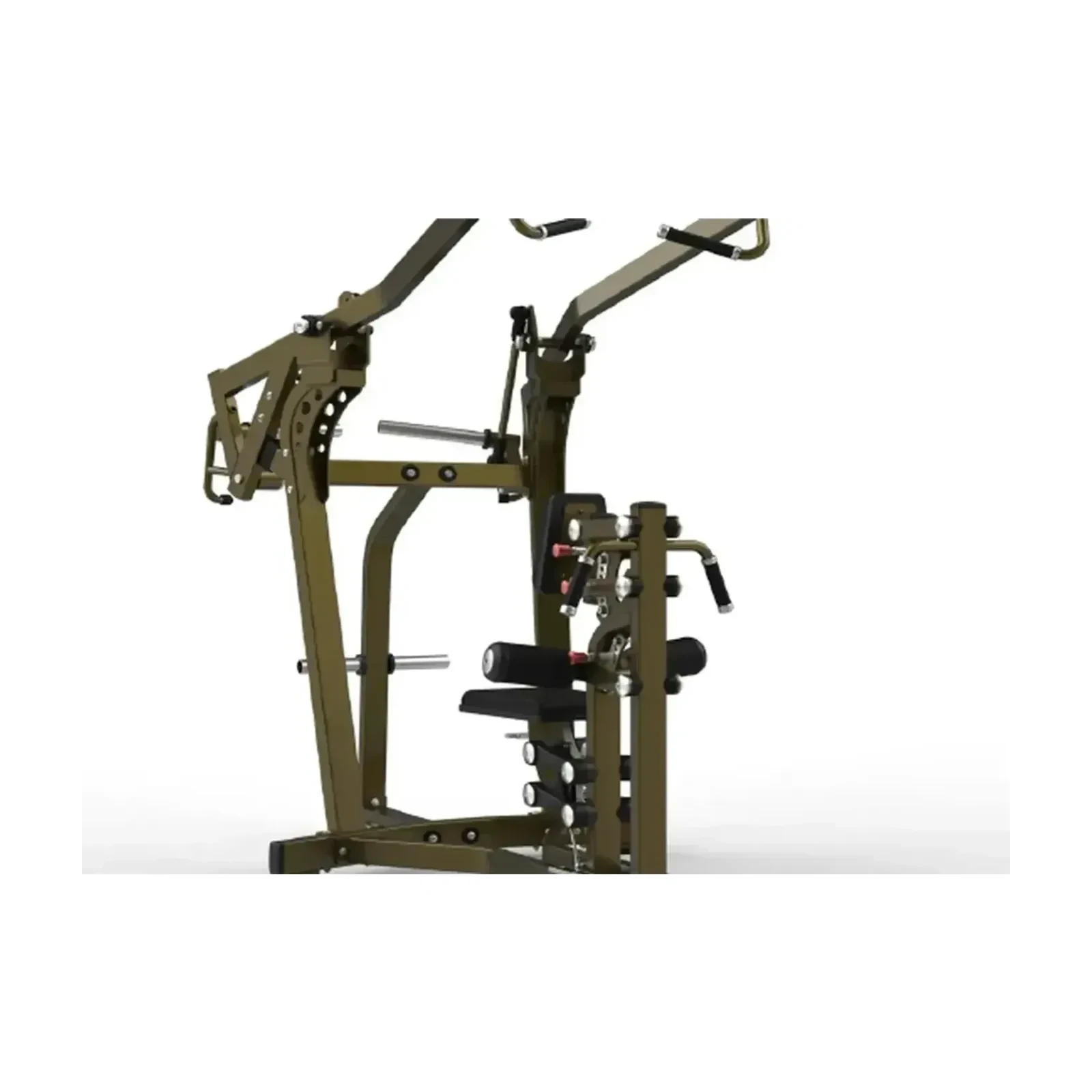
A standalone selectorized pulldown supports quick load changes and familiar setup. A pulldown-row combination shares a stack, seat and frame, reducing installed area for a small facility. A plate-loaded pulldown uses the site's existing plates and creates a different loading routine. An independent-arm fixed-path pulldown can support unilateral work and a defined arc, but its entry, grips and resistance curve must be tested rather than inferred from the format label.
Official manufacturer lines show that these are materially different products. Precor's Vitality range includes a combined pulldown and seated-row station, while its Resolute range presents dedicated pulldown and row formats. Life Fitness documents an independent-arm selectorized pulldown, and Precor's Discovery line shows plate-loaded versions. Use those examples to identify comparison fields; request drawings, instructions and evidence for the exact PowerBaseFit configuration quoted.
| Format | Best-fit operating case | Primary test | Scope often missed |
|---|---|---|---|
| Standalone selectorized | General clubs needing fast changeovers | Pad range, increments and cable travel | Service access and replacement parts |
| Pulldown-row combination | Compact, lower-concurrency facilities | Both setups and shared queue | Foot support, handle storage and one-user capacity |
| Plate-loaded | Strength floors already managing plates | Starting load, arm path and sleeve access | Plates, storage and side loading clearance |
| Independent-arm fixed path | Programs valuing unilateral or defined arcs | Grip reach, user fit and resistance path | Model-specific motion and larger live area |
Test access, restraint and handle reach
Run the complete setup with short, tall, novice and experienced users from the buyer's real population. They should approach the seat, adjust the thigh restraint, reach the selected grip without climbing or pulling a free cable down with body weight, establish the instructed torso position and return the handle under control. Record the adjustment sequence and any point where a user needs staff assistance. Test ordinary training clothing and the footwear used at the facility.
The thigh pad must hold the user against upward pull without trapping entry or pressing on an unsuitable contact point. Check seat height, pad range, bar clearance, grip diameter, wrist position and whether the user can finish the intended path without the stack, cable stop or movement arm reaching its limit first. For a row combination, repeat the assessment at the low outlet with the foot support, handle storage and cable path in their working positions.
Compare resistance on the delivered mechanism
Ask for declared starting resistance, increment pattern, permitted loading, cable ratio or lever arrangement and the settings used to state those values. On a selectorized station, inspect the pin, add-on increment, guide rods, top-plate travel and whether the selected load returns without catching. On a plate-loaded model, confirm the loading sides, usable sleeve interface, plate clearance, storage arrangement and the rule for balanced loading. Keep optional accessories separate from the base configuration.
Do not equate a stated stack mass with resistance at the handles, or plates on a lever with the same mass on a cable. Pulley ratio, cam or lever geometry, arm length and the path through the repetition alter effective resistance. Compare machines with a documented reference test: same user or test method, same seat and pad settings, stated grip, controlled range and recorded starting condition. ISO 20957-2 gives the strength-equipment framework, while product evidence must match the offered model.
Plan peak capacity and the complete live area
Draw the frame at scale, then add the space occupied by the user, the moving handle or arms, the pulldown bar at rest, a coach, cleaning access and the route to adjust or load the machine. Plate-loaded units also need safe access to sleeves and nearby plate storage. A combination station needs clearance for row foot supports and low-cable work without placing the user in a walkway. Confirm ceiling height, delivery route, floor conditions and any anchoring instruction before approving placement.
Calculate capacity from observed demand rather than total membership. If pulldown and row demand overlap during the busiest period, one combined station creates a single shared queue even though the product list shows two exercises. A low-traffic hotel can value the saved footprint; a busy club can gain more throughput from dedicated stations or a dedicated pulldown plus another row option. Include planned service downtime so one fault does not remove every vertical-pull position from the floor.
Inspect cables, pulleys, pivots and wear parts
For a cable unit, trace the full route from handle to stack. Check that the cable remains seated through the approved range, pulleys rotate without side contact, guards do not create pinch access and the top plate travels smoothly. Identify the cable, pulley, bearing or bushing, selector pin, guide component, upholstery, handle and restraint parts that the operator can order. Ask for inspection limits and replacement instructions rather than an unsupported fixed service interval.
For a plate-loaded or fixed-arm station, inspect pivots, stops, movement-arm clearance, sleeves, retaining points, grips, seat mechanisms and frame contact with the floor. Verify that a technician can reach service points without dismantling neighboring machines. Cleaning products must suit the supplied upholstery, grips, coatings and plastics. Write the isolation rule for damaged cables, loose restraints, abnormal movement, worn grips or any condition that falls outside the current instructions.
Approve a representative unit and configuration
Test a unit that matches the proposed movement system, grips, seat, thigh restraint, stack or loading arm, upholstery and adjustments. Have representative users perform the setup at a light resistance, then progress only within the facility's controlled trial procedure. Record entry, reach, restraint security, movement clearance, load change, return behavior and exit. The purpose is repeatable commercial use, not a maximum-strength performance demonstration.
Freeze the approved model code, revision, resistance format, finish, upholstery, grips, attachments, placards, storage and instruction set. Photograph the accepted contact points and cable or lever routing for receiving comparison. If the production offer changes a handle, pad, pulley arrangement, arm geometry or stack option, route the substitution through written review before shipment. A visually similar unit does not establish equivalence where setup or resistance delivery changes.
Write the quotation and receiving schedule
Send every supplier the same facility brief, user range, floor plan and demand evidence. Request model and revision, assembled and moving dimensions, live-area drawing, loading type, starting resistance, increments, user adjustments, supplied handles, restraint details, cable or lever information, floor requirements, packing, assembly, instructions, named wear parts and warranty responsibilities. Price optional stacks, plates, storage, extra handles, installation and technician training as separate lines so offers retain the same scope.
At delivery, match packages and model identity to the order before assembly. Inspect frame, finish, upholstery, restraint, handles, cable or arms, pulleys or pivots, stack or sleeves, fasteners, guards, labels and documents. Assemble to the current instructions, complete prescribed anchoring and repeat the accepted setup, low-load movement, load change and return tests. For a PowerBaseFit review, send the project country, user profile, floor plan, preferred format, quantity and purchasing schedule.
FAQ
Is a pulldown-row combination suitable for a busy gym?
It is suitable when measured pulldown and row demand rarely overlaps. During simultaneous demand, one shared station offers one user position, so dedicated equipment provides greater throughput.
Should a commercial gym choose selectorized or plate-loaded pulldown equipment?
Selectorized equipment favors quick changes and broad access. Plate-loaded equipment fits strength-led floors that already control compatible plates, storage and loading traffic.
Can weight-stack size be used to compare two pulldown machines?
Not by itself. Starting resistance, increments, cable ratio, movement path and the user's settings must be recorded in the same reference test.
Which fit points should buyers test first?
Test seat and thigh-pad adjustment, handle reach, stable torso position, wrist alignment, full approved travel, controlled return and unobstructed entry and exit.
What information should be included in the purchase order?
Record model and revision, loading system, adjustments, supplied attachments, finish, live area, packing, installation, documents, wear parts and the accepted receiving tests.
Sources
- ISO 20957-1 general requirements — International Organization for Standardization
- ISO 20957-2 strength equipment requirements — International Organization for Standardization
- Life Fitness Insignia Pulldown — Life Fitness
- Precor Vitality pulldown-row format — Precor
- Precor Resolute dedicated pull formats — Precor
- Precor Discovery plate-loaded pull formats — Precor