
How to Choose a Commercial Rotary Torso Machine
Buy a rotary torso station only when the program needs dedicated, measurable trunk-rotation capacity that cables and open-floor work do not provide at peak time. Trial the exact offered revision in both directions with representative users. Compare entry, hip and thigh support, start-position controls, delivered resistance, reset time, live area, cleaning and service access; then lock those findings into the quotation and receiving test.
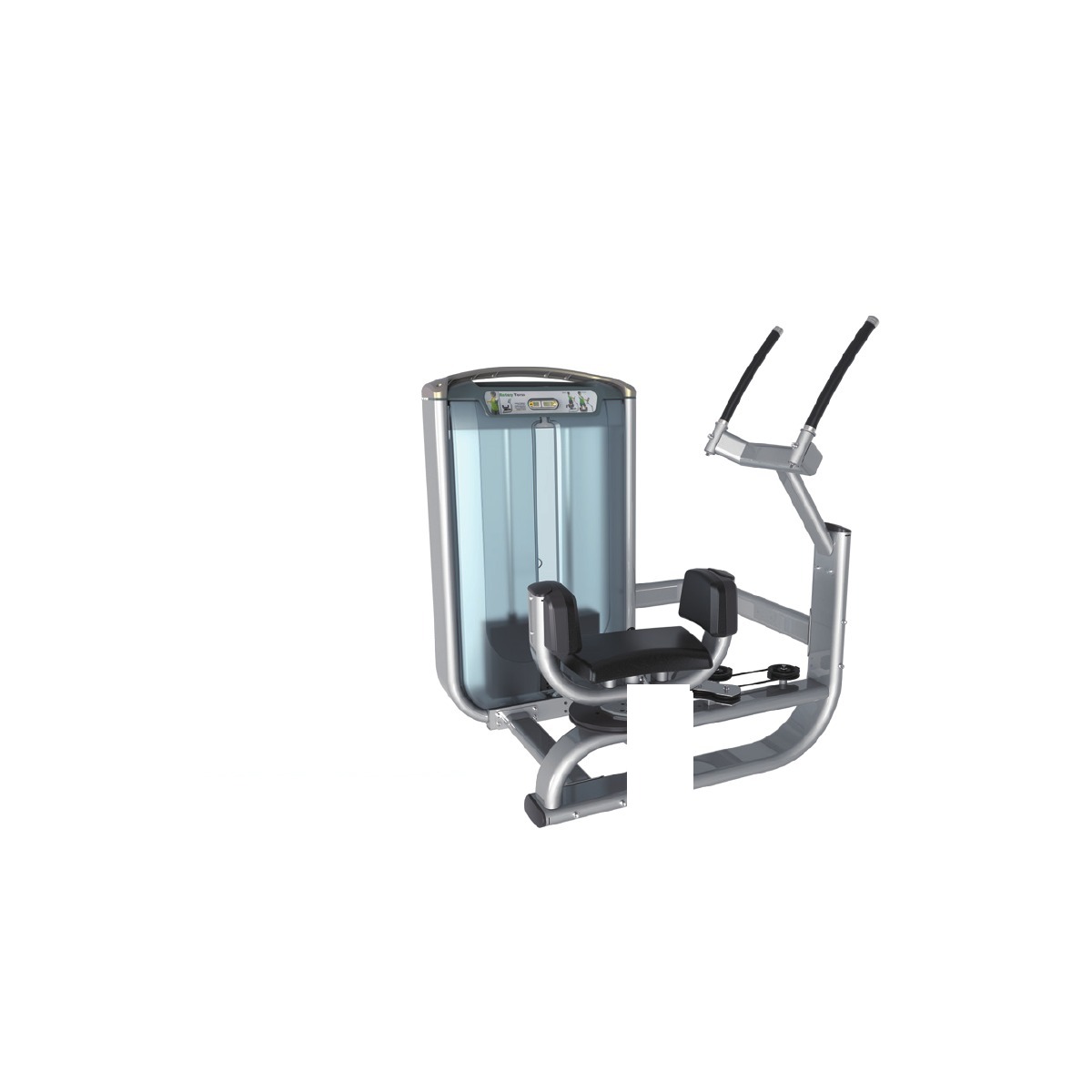
Decide whether rotation deserves a dedicated station
Start with the training role rather than the machine name. Record who needs guided trunk rotation, whether coaches supervise the core area, how often cable stations are occupied, and whether members can set a bilateral movement consistently. A rotary torso unit adds value when it removes a documented capacity or instruction bottleneck; it is not automatically required because a strength line contains one.
Keep abdominal flexion, back extension, anti-rotation drills and torso rotation as separate capacities. They use different movement patterns, setup times and coaching cues. Define the intended users, peak-hour demand, acceptable wait, staff presence and substitute exercises before requesting prices. This prevents a low-use specialist station from displacing equipment that solves a larger operating problem.
Compare the exact movement and support architecture
Commercial designs differ in what rotates, where the pivot sits and how the user is stabilized. One unit can rotate the upper body over a supported pelvis; another can keep the upper body comparatively fixed while the lower platform turns. Pads, foot supports, hand positions and direction-change controls therefore cannot be compared from a category label alone.
Ask each supplier to demonstrate approach, entry, seat or platform adjustment, start-angle selection, loading, rotation to each side, return, direction change and exit. Note every hand movement and whether the user can see the settings while seated. Reject a comparison sheet that treats different motion architectures as equivalent merely because both products are called torso rotation.
| Decision point | What to verify | Why it changes the purchase |
|---|---|---|
| Movement architecture | Which segment rotates and where the pivot acts | Changes contact, coaching and perceived motion |
| Bilateral setup | Start settings, direction change and visible labels | Controls reset time and left-right consistency |
| User support | Seat, back, arm, thigh, knee and foot contacts | Determines fit and whether the pelvis follows |
| Resistance path | Starting load, increments, transfer and return | Stack mass alone does not show delivered effort |
| Operating zone | Entry, motion, coach, cleaning and technician reach | Frame dimensions understate usable floor area |
Test representative users, not one experienced lifter
Include smaller, middle-range and larger users plus people who have never used this station. Check that each person can enter without climbing over moving parts, place the feet securely, contact the intended pads, reach the handles and controls, and understand which section should move. Record the adjustment used for each profile rather than relying on a verbal impression.
Run light and moderate trials on both sides. The user should be able to hold the supported posture, move without a pad sliding away, return under control and leave without the mechanism pulling unexpectedly. A range limit is not a medical prescription; it is a machine control that must be clear, repeatable and suitable for the facility's instruction model. Refer individual exercise limits to qualified staff.
Compare start settings and delivered resistance
Document every available start position, how it is selected and whether left and right use the same sequence. Test the smallest setting changes and watch for a release that is difficult under load, ambiguous labels or a control hidden behind the user. A good trial establishes a repeatable neutral reset without assuming that the maximum mechanical travel is appropriate for every person.
Request starting resistance, increment sequence and the mechanism that transfers stack force to the user. Observe slack, friction, sudden pickup, end stops and stack contact through the full approved path. Equal stack labels can feel different because lever arms, cams, cables and bearings differ. Quote the delivered experience and adjustment steps, not only the total stack mass.
Measure bilateral throughput and draw the live area
Time a realistic visit: entry, settings, work on the first side, direction change, second side, rest, wiping and exit. A station that appears quick for one set can hold a queue when every user must reset twice or ask for help. Use observed peak arrivals, selection share, occupied minutes, planned service downtime and growth rather than a universal equipment ratio.
Draw the complete operating zone around the offered revision. Include door-side approach, moving arms or platforms, leg position, a coach, circulation, cleaning reach, open guards and technician access. Check mirrors, columns, walls and neighboring equipment. Confirm package size, component weight, door and lift limits, turns, floor protection, assembly sequence and any model-specific anchoring instruction before shipment.
Inspect wear points, cleaning access and service work
Review upholstery, seams, grips, foot surfaces, adjustment pins, ratchets, bearings, pivots, cables, pulleys, guide rods, guards, fasteners, stops and floor contacts as applicable. Operate every setting and listen for rubbing or impact. Look for incomplete engagement, excessive play, pad rotation, unstable contact, trapped fingers and labels that become hidden during normal use.
Ask how routine inspection is performed, which covers must open, how wear parts are identified and whether the machine must be moved for access. Verify cleaning products for upholstery, grips, decals and coating. The service pack should identify manuals, diagrams, parts references, tools, inspection intervals and responsibility for initial adjustment without promising an unsupported service life.
Approve one physical reference configuration
Have representative members, a coach, cleaning staff and a technician use the same offered revision. Measure setup and side-change time, record the supported posture at light and moderate resistance, clean the contact surfaces and perform the supplier's routine inspection. The purpose is repeatable commercial operation, not a maximum-effort demonstration by one athlete.
Keep dated photographs, measurements, model and revision identifiers, the approved drawing, settings, labels, manuals and signed observations. Give every correction an owner and closure record. If the seat, pads, pivot, cam, stack, control, guard or base changes after approval, review the change before production instead of accepting the commercial name as proof of equivalence.
Lock the quotation and repeat acceptance at receiving
The final schedule should state model and revision, quantity, movement architecture, start-position method, bilateral sequence, starting resistance, increments, user contacts, finishes, instructions, parts documentation, packaging, installation and acceptance evidence. Separate equipment price, freight, inside delivery, assembly, specified anchoring, commissioning and staff handover so competing offers share the same boundary.
At delivery, match packages and serial records to the order, document visible damage, assemble to the approved instructions and repeat the reference sequence on both sides. Check stability, adjustment engagement, smooth movement, stops, guards, labels, resistance change, cleaning reach and service clearance. Record deviations before handover and open the station only after required actions are closed.
FAQ
Does every commercial gym need a rotary torso machine?
No. Add one when measured demand, programming and cable availability justify dedicated guided rotation; otherwise floor area can be assigned to a higher-priority capacity.
Is a rotary torso machine the same as an abdominal crunch machine?
No. A crunch emphasizes trunk flexion, while a rotary torso station provides resisted rotation. Treat them as different movement roles, setups and capacity decisions.
Can buyers compare rotary torso machines by stack weight?
No. Compare starting resistance, increments, transfer mechanism, friction, start settings and delivered effort through the approved path in both directions.
How much space should be planned around the machine?
Use the exact model drawing and add entry, moving parts, user legs, coaching, circulation, cleaning and technician access. The frame footprint alone is insufficient.
What belongs in a rotary torso quotation?
Specify the exact revision, movement, settings, bilateral operation, resistance, contacts, live area, documentation, packaging, installation and a repeatable receiving test.
Sources
- ISO 20957-1 general safety requirements — International Organization for Standardization
- ISO 20957-2 strength-equipment requirements — International Organization for Standardization
- Precor Resolute Rotary Torso — Precor
- Life Fitness Insignia Torso Rotation — Life Fitness