
Introduction
Compare commercial gym equipment suppliers with the same written project brief and a weighted scorecard covering product fit, manufacturing control, quality evidence, quotation clarity, spare parts, warranty process, communication, customization and shipment support. Verify claims with documents, samples, video inspection or an appropriate factory review before comparing final landed cost.
Key takeaways
- Issue one brief: Give every supplier the same technical, quantity, destination and schedule information.
- Normalize proposals: Separate models, quantities, inclusions, alternatives, services, packing and freight assumptions.
- Score product fit: Review users, movements, layout, service access and equipment-family consistency.
Planning context
Supplier comparison fails when each company receives a different request and returns a different scope. One quote may include flooring and installation, another may exclude spare parts, and a third may substitute models that do not fit the same training role. Unit prices cannot be compared until the technical and commercial scope is normalized.
A defensible evaluation combines evidence with project fit. The largest product catalog is not automatically the best match, and the lowest quote is not automatically the lowest-risk purchase. Buyers need a repeatable process that reveals what a supplier controls, what it outsources, how it checks equipment, and how it will support the order after shipment.
Start with One Supplier Brief and One Comparison Format
Send every shortlisted supplier the same floor plan, equipment categories, user profile, quantity, destination, target schedule, finish requirements, documentation needs and requested commercial terms. Identify which items are mandatory, which may be proposed as alternatives and which belong to a second phase. Without this baseline, a cheaper quote may simply cover fewer machines, lighter accessories or less delivery support.
Ask suppliers to answer in a structured line-item format. Each item should state the model, training function, load type, quantity, included attachments, finish, packing method and any assumption that affects price. Separate product cost from optional services and logistics. When an alternative is proposed, require the supplier to explain the difference rather than silently replacing a specified training function.
Understand Whether You Are Comparing a Manufacturer or a Trading Company
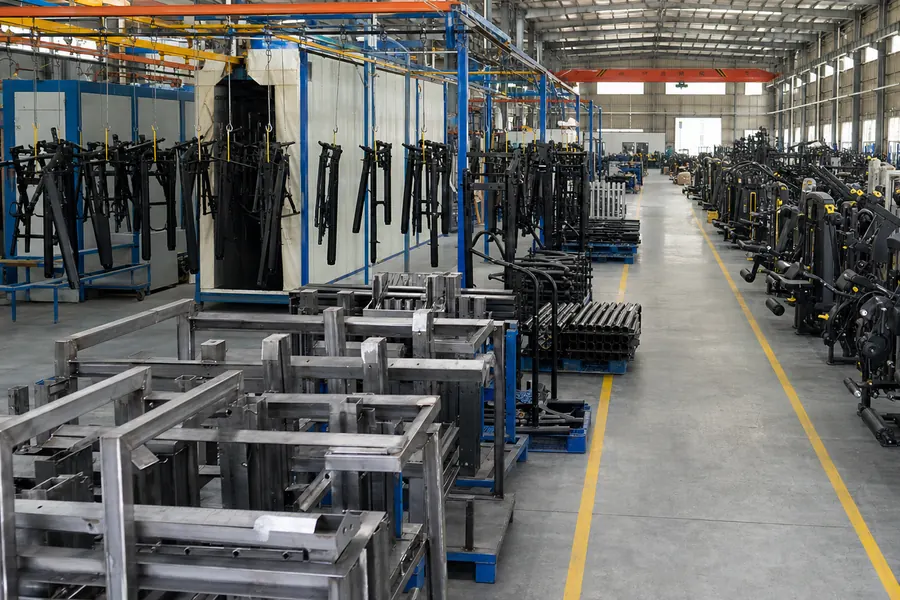
A manufacturer may control frame fabrication, welding, surface preparation, coating, assembly and final inspection, while still buying components such as motors, electronics, bearings or upholstery materials. A trading company may offer a wider combined catalog and coordinate products from several factories. Neither structure is automatically good or bad; the buyer needs to understand who is responsible for specifications, quality decisions and corrective action.
Ask where each product category is made, which processes are performed in-house, who approves engineering changes, and how traceability is maintained across outsourced components. For multi-category projects, a capable integrator may add value by coordinating compatible products and one shipment. The risk appears when the business model is hidden or when responsibility becomes unclear after a problem is reported.
Score Product Fit Before Factory Presentation
The first technical question is whether the proposed equipment suits the intended facility. Compare movement coverage, adjustment range, entry, user guidance, footprint, working clearance, plate or stack access, storage and maintenance points. A supplier can have an impressive workshop and still propose the wrong mix for a hotel, school, chain or strength club.
Review product families as systems. Consistent adjustment logic, upholstery, finishes and shared wear parts simplify the member experience and maintenance. Check whether the range covers the opening package without forcing unrelated styles together. For cardio, review power, console operation and service access. For racks and plate-loaded machines, review loading clearance, storage and the interaction between bars, plates and walkways.
Verify Manufacturing Capability Through Observable Process Evidence
Useful factory evidence connects the requested products to actual processes. Buyers can ask for a live or recorded walk-through that shows incoming material control, cutting or machining, welding, surface preparation, coating, assembly, inspection and packing. The goal is not a cinematic factory video. It is to see whether work is organized, specifications reach the floor, nonconforming parts are separated and finished equipment is checked before packing.
Ask how drawings and bills of materials are controlled, how a revision is approved, and how custom colors or logos move from sample to production. If a supplier states that a process is tested, request the applicable method and report format rather than accepting an isolated number. Do not assume that a certificate shown in a presentation applies to every model, market or current production batch; verify relevance and validity independently.
Compare Quality Control by Checkpoints and Corrective Action
A quality plan should identify what is checked at incoming, in-process, assembly and final stages. For strength equipment, this may include material and component identity, frame and weld appearance, coating coverage, fastener control, moving-path alignment, cable routing, adjustment engagement, upholstery condition, stability and functional movement. For cardio, electrical safety and functional checks require product-specific procedures and qualified personnel.
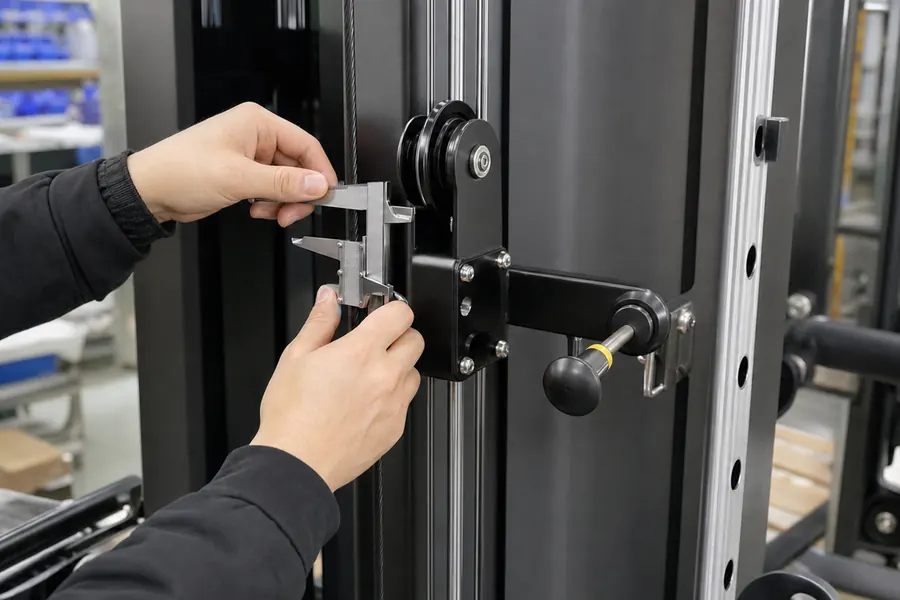
Ask what happens when a check fails. The supplier should be able to explain containment, rework approval, reinspection and how recurring issues reach engineering or procurement. Photographs of a caliper or a checklist are not enough if the result cannot be connected to a product and corrective process. For the buyer's own order, agree what inspection records, photos or pre-shipment review will be provided.
Use Samples and Inspections to Reduce Interpretation Risk
When the order is large, customized or intended for multiple locations, a sample or pre-production approval can clarify finish, upholstery, logo placement, ergonomics and assembly details. Define exactly what the sample approves and which changes remain possible. A color chip does not approve an entire coating process, and one sample machine does not prove every production unit will match without controlled specifications and inspection.
Choose inspection depth according to risk. Options include document review, live video inspection, a buyer visit, or a qualified third-party inspection. Pre-shipment inspection should use the approved order and agreed acceptance points. It should also review quantity, visible condition, accessories, identification, packaging and documentation. Inspection reduces risk; it does not transfer all responsibility away from either party.
Evaluate Warranty, Spare Parts and Technical Response as a Process
A warranty statement is only useful when the claim process is clear. Ask what information is required, who diagnoses the issue, who pays freight or labor in different situations, which exclusions apply and how response time is managed across time zones. Separate warranty replacement from routine wear, misuse, installation errors and maintenance tasks so the operating team understands its responsibilities.
Request a recommended spare-parts plan for the chosen equipment, not a generic carton added to every order. Confirm part identification, compatibility, lead time, storage guidance and access to diagrams or service instructions. Test the supplier's technical communication before ordering: send a realistic question about cable routing, assembly or a product difference and assess whether the answer is specific, internally consistent and documented.
Compare Landed Scope, Payment Risk and Shipment Preparation
Normalize currency, trade terms, payment schedule, validity, production lead time, packing, documentation and freight assumptions. Estimate landed cost using the same destination and responsibility split. A quote that excludes protective packing, accessory cartons or port-related items may look lower but create cost later. Buyers should obtain independent advice for customs, taxes and local compliance because these responsibilities vary by market.
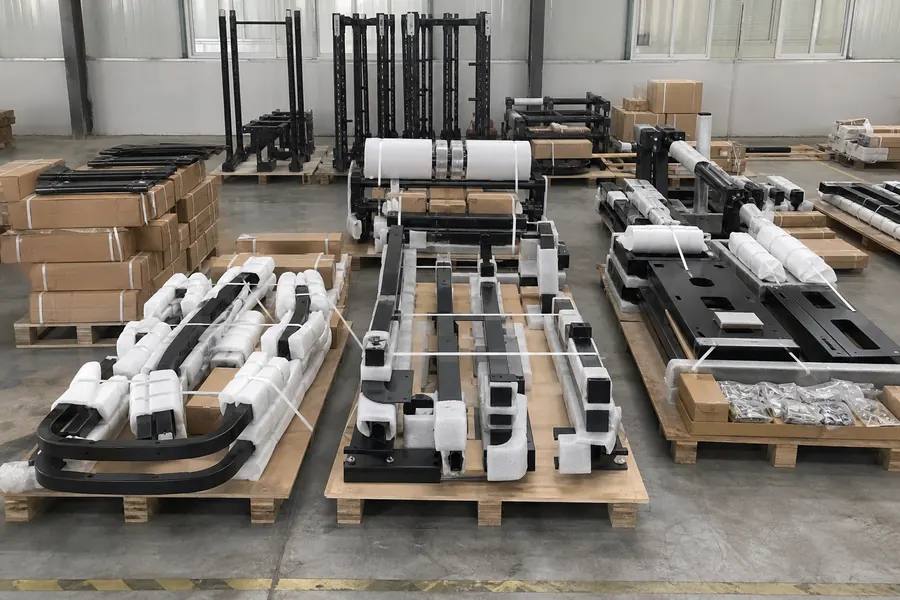
Review how machines are protected and identified for receiving. Frames, upholstery, electronics and hardware have different damage risks. Ask whether assemblies are shipped complete or partly disassembled, how hardware is grouped, and whether packages can pass the destination access route. A clear packing list and receiving plan reduce installation delay and make shortages easier to identify without inventing a perfect-shipment promise.
Buyer decision framework
- Issue one brief: Give every supplier the same technical, quantity, destination and schedule information.
- Normalize proposals: Separate models, quantities, inclusions, alternatives, services, packing and freight assumptions.
- Score product fit: Review users, movements, layout, service access and equipment-family consistency.
- Verify capability: Connect claims to observable factory processes, documents, samples and responsible people.
- Test support: Evaluate technical answers, warranty workflow, parts identification and corrective response.
- Compare landed risk: Assess payment, lead time, packing, inspection, logistics and total responsibility—not unit price alone.
Buyer checklist
- All suppliers received the same written project brief.
- Every quote uses comparable line items, quantities and inclusions.
- Product mix has been checked against users, movements and floor plan.
- Production location and in-house versus outsourced processes are understood.
- Quality checkpoints and failure handling have been explained.
- Sample or inspection requirements are defined for the project risk.
- Warranty claim steps, exclusions, labor and freight responsibility are written.
- Spare parts are model-specific, identifiable and supported by documentation.
- Payment, trade terms, packing, lead time and shipment documents are comparable.
Common buying mistakes
- Comparing different scopes: A lower total may represent fewer machines, fewer attachments or excluded services.
- Judging only by factory size: Scale does not prove that the proposed products fit the project or that process control is effective.
- Accepting generic certificates: Buyers must verify that documents are valid, current and relevant to the specific product and market.
- Skipping technical communication tests: Slow or vague answers before payment often predict more difficult support later.
- Treating warranty length as the whole warranty: Process, exclusions, parts, labor, freight and evidence requirements determine practical value.
- Ignoring packaging and receiving: A machine that arrives without clear parts grouping or suitable protection can delay an otherwise sound project.
Manufacturer perspective
From a manufacturer's perspective, capable buyers are easier to support when they provide one controlled specification and a clear approval route. Production teams can then link drawings, finishes, upholstery, logos, attachments and packaging to an approved order rather than resolving changing requests through scattered messages.
During production and shipment preparation, buyers should expect evidence that is proportionate and traceable. Factory photos, inspection records and packing views are useful when they relate to the order and agreed checkpoints. They should not be presented as proof of certifications, test results or completed customer projects that have not been independently verified.
A practical comparison also considers how the supplier manages questions between sales and production. Technical clarifications should reach the people who control drawings, components, assembly and inspection, then return as one consistent written answer. When different contacts give conflicting specifications, the buyer should pause the comparison and request a controlled confirmation before price or schedule is accepted.
Manufacturer and Trading Company Comparison
| Factor | Direct manufacturer | Trading company or integrator | Buyer verification |
|---|---|---|---|
| Production control | May directly control core factory processes | Coordinates one or more producing factories | Ask for process map and product-specific production location |
| Product range | Often strongest in defined categories | May combine a broader range | Check consistency between categories and support responsibility |
| Customization | Can be direct when engineering and tooling are controlled | Depends on partner factory capability | Request written scope, sample method and approval steps |
| Communication | Technical answers may be close to production | Can provide consolidated commercial coordination | Test response accuracy with the same technical questions |
| After-sales responsibility | Should define factory support and parts route | Should coordinate across supplying factories | Name the responsible contact and escalation path in writing |
| Best fit | Focused repeat orders or category expertise | Broad mixed sourcing with strong integration | Choose according to project complexity, not a label |
Useful next pages
Buyer FAQ
Is it better to buy from a gym equipment manufacturer or trading company?
Choose the organization that best fits the project and can clearly own specifications, quality, communication and after-sales support. Verify where products are made and how responsibility works across categories.
How many suppliers should I compare?
A shortlist of qualified suppliers is more useful than many superficial quotes. Compare enough options to understand the market while keeping the scope identical and the verification process manageable.
What factory evidence should a buyer request?
Request product-relevant production flow, quality checkpoints, specification control, sample approval, packing method and the responsible support process. Verify any formal claim independently.
Should I order a sample before a container order?
A sample can be valuable for large, customized or repeat programs. Define what it approves and remember that consistent production still depends on controlled specifications and inspection.
How should commercial gym equipment warranties be compared?
Compare covered components, duration, exclusions, claim evidence, response path, replacement parts, labor, freight and the buyer's maintenance responsibilities.
Why are two supplier quotations so different?
They may differ in equipment configuration, materials, accessories, customization, packing, trade terms, warranty, services or freight assumptions. Normalize these items before comparing price.
Conclusion
The best supplier comparison is evidence-based and project-specific. Normalize the request, confirm product fit, verify manufacturing and quality processes, test support communication and compare the complete landed responsibility. A scorecard makes tradeoffs visible and prevents a persuasive presentation from replacing due diligence. Send shortlisted suppliers the same equipment schedule and questions. Record what was verified, what remains an assumption and what must be written into the quotation or purchase agreement before the project proceeds.
Need this topic turned into a real equipment plan?
Send your market, gym size, product categories or OEM needs. Kloe can help clarify the next step.