
Introduction
A factory acceptance test verifies that the ordered gym equipment is correctly identified, configured, assembled, functional and ready for shipment before it leaves the supplier. A site acceptance test verifies what the factory cannot prove: delivery condition, correct installation, stability, power, final layout, complete accessories and operation in the real facility. Buyers should use both when order value, customization or project risk justifies staged acceptance; one test should not duplicate or replace the other.
Key takeaways
- FAT controls shipment release; SAT controls operational handover.
- Use an approved model and specification baseline for both tests.
- Record deviations, evidence, owners and closure dates instead of relying on verbal acceptance.
- Do not make the factory responsible for site conditions outside its confirmed scope.
FAT and SAT defined
Factory acceptance testing, or FAT, is a planned verification activity before dispatch. It checks the ordered configuration against the approved schedule while the supplier still has access to production staff, tools and replacement components. The test may cover every unit or a defined sample, depending on the order and risk. It should finish with a release decision: accepted, accepted with controlled actions, or not released.
Site acceptance testing, or SAT, occurs after unloading, assembly and placement. It confirms that the equipment survived transport, was installed correctly and works in the actual electrical, flooring and spatial conditions. SAT also checks order completeness, asset identity and handover documents. It is not simply a second factory inspection; it answers a different set of questions.
When a formal FAT is worth the effort
A formal FAT is most valuable for customized equipment, private-label launches, large mixed-model orders, tight opening dates or buyers who cannot easily return defective items. A repeat order of unchanged standard products may need a lighter pre-shipment inspection instead. The buyer should scale the test to the cost of failure, not add ceremony to every purchase.
- New or materially changed model
- Custom logo, colour, upholstery, labels or packaging
- Electrical variants or console configuration
- Large quantity with limited arrival recovery time
- Unfamiliar supplier or first production batch
- Contract payment milestone tied to pre-shipment release
Freeze the acceptance baseline
Testing is unreliable when the reference is unclear. Before FAT, assemble the purchase order, approved model list, drawings, finish schedule, electrical data, accessory list, packaging requirements and accepted deviations into one controlled baseline. Note the revision and approval date. A catalogue downloaded after production starts is not an adequate substitute.
The same baseline must follow the order to site. If FAT approves a temporary deviation, it should appear on the SAT action list. If a model changes after FAT, the change needs a new review rather than being hidden inside the packing list. Version control prevents the factory, installer and facility team from accepting different things.
What to inspect during FAT
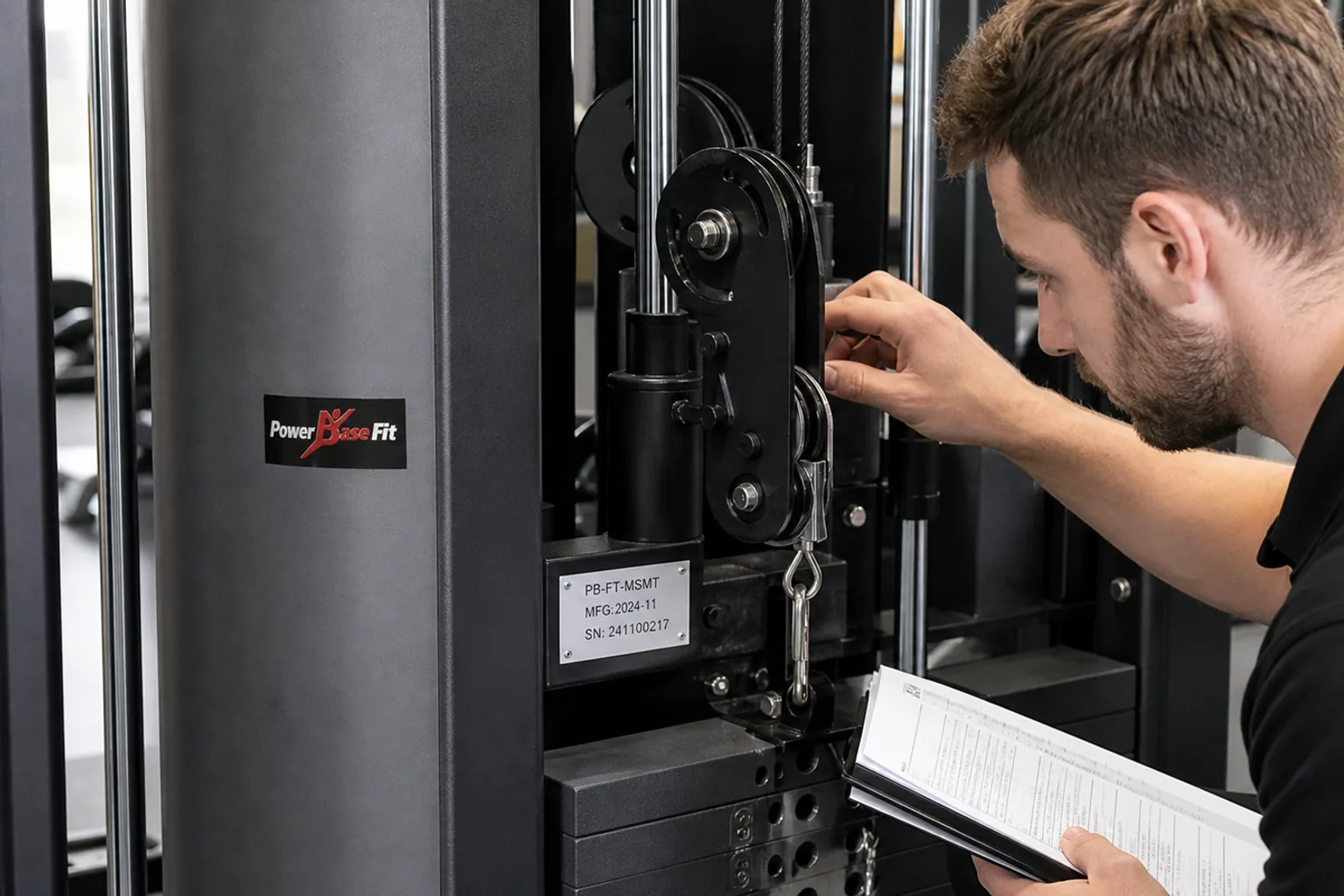
Start with identity and configuration: model, quantity, frame and upholstery colour, branding, voltage, plug, accessories and labels. Then inspect workmanship and function. On strength machines, check frame condition, fasteners, adjustment points, movement, cable routing, pulleys, weight selection, guards and abnormal noise. On cardio products, confirm console start-up, controls, emergency functions and ordered options using the available factory supply.
Packaging is part of FAT because it determines what arrives. Verify disassembly state, part identification, hardware control, moisture protection, surface protection and carton or crate labels. Photograph serial numbers and finished configurations before packing where practical. The evidence should allow the receiving team to distinguish a shipment issue from a factory issue.
What only SAT can prove
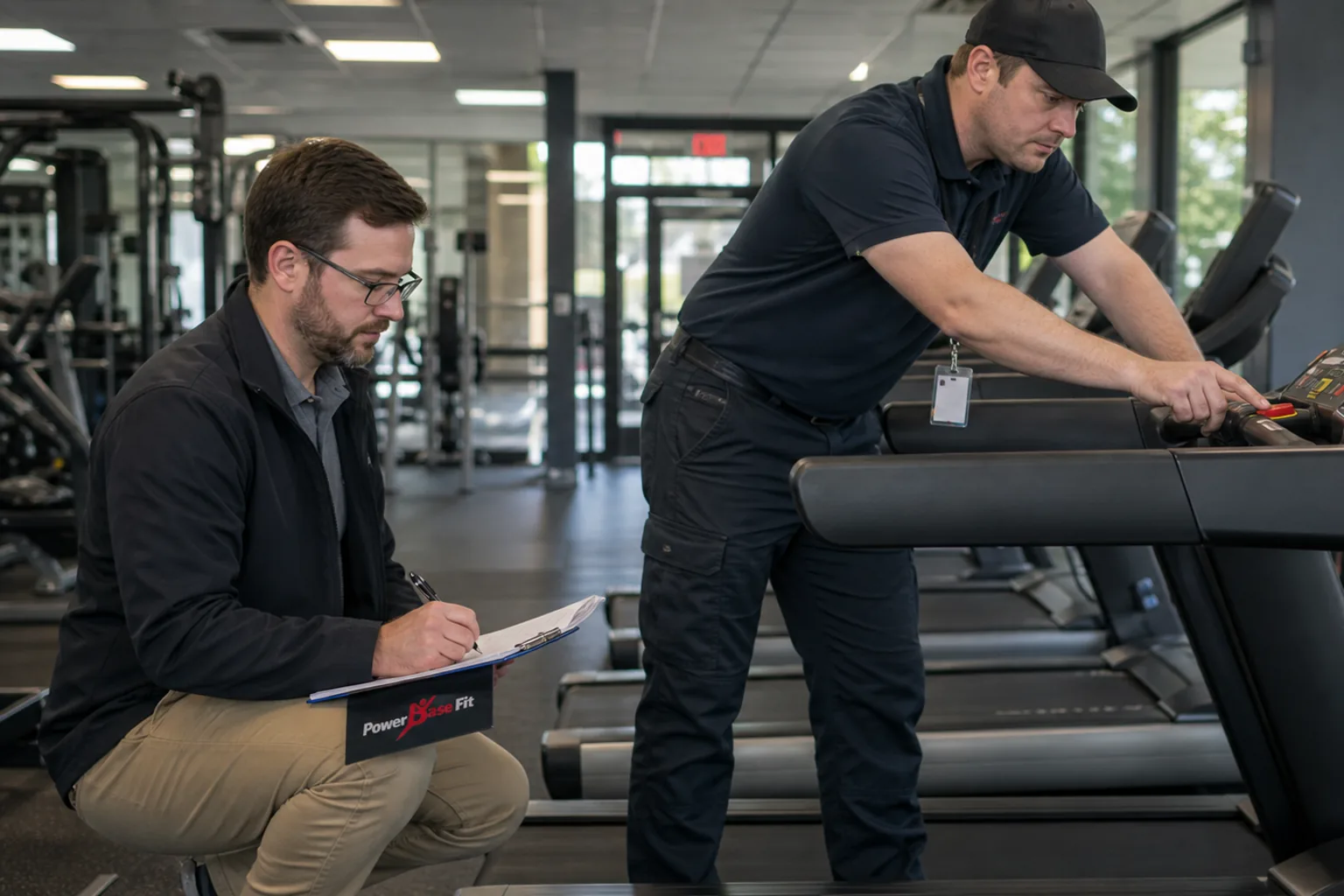
SAT confirms transit condition and installation quality. Count delivered packages and units, reconcile serials, note visible or concealed damage, and verify that all hardware and attachments reached the correct location. Check levelling, stability, anchoring where approved, clearances, cable tension after assembly and safe movement around the installed equipment.
For powered cardio, confirm the final circuit, plug, earthing and start-up conditions through qualified local personnel. Test user controls and emergency-stop functions in the installed position. SAT should also confirm that manuals, warranty contacts, spare parts and training have been handed over. A machine can pass FAT and still fail SAT because it was damaged, assembled incorrectly or installed in an unsuitable environment.
Choose an inspection and sampling method
Not every test must cover every characteristic on every unit. Identity, quantity and visible damage often deserve full checks. Repeated functional or dimensional checks may use a risk-based sample when the contract allows. Customized first units and safety-critical functions should receive more attention than repetitive cosmetic points. The sampling rule should be agreed before the inspector arrives.
A failed sample needs a defined response: expanded inspection, rework and retest, or rejection of the affected lot. Avoid inventing acceptance rules after seeing the defects. If the buyer requires a third-party inspector, confirm access, notice period, test tools, language, reporting format and who can authorize release.
Use one issue classification and closure log
Classify findings by consequence. A critical issue prevents safe release or operation; a major issue affects required function, identity or contractual use; a minor issue is limited and does not prevent controlled acceptance. The precise definitions should match the project. Every finding needs a photo or record, affected serial or package, responsible party, target date and closure evidence.
Some minor FAT actions can remain open if the buyer explicitly accepts them and the remedy is controlled before or at site. Critical issues should not be converted into vague promises to protect the shipping date. At SAT, distinguish transport damage, installation defects, factory defects and site constraints so the correct party acts without losing time.
Assign responsibilities and decision rights
- Buyer: approves baseline, witnesses or reviews evidence and authorizes release
- Manufacturer: prepares units, records, tools and corrective work within factory scope
- Inspector: tests objectively and reports without changing commercial terms
- Freight and receiving teams: preserve transport evidence and package counts
- Installer: assembles to instructions and records site deviations
- Facility representative: confirms access, utilities, layout and final handover
The contract should identify who may sign FAT and SAT, whether signatures release payment, and which rights remain after acceptance. Acceptance of a visible minor issue should not accidentally waive a different latent warranty matter. These are commercial terms that need project-specific review rather than assumptions made on inspection day.
Common FAT and SAT mistakes
- Testing against a sales brochure instead of the approved order baseline
- Treating pre-shipment photos as a complete FAT
- Repeating factory checks on site while ignoring installation and utilities
- Failing to record serial numbers or affected packages
- Using undefined words such as good, smooth or acceptable
- Shipping with open critical issues to protect the programme
- Signing final acceptance before documents, training and defect closure
Manufacturer perspective: prepare evidence as production output
A factory can make FAT efficient by building evidence collection into final assembly and packing. The production team should know which custom points require photographs, which units are test samples and which labels or accessories must be reconciled. The inspection area needs safe access and enough time to correct findings before the booked container date.
For mixed commercial orders, a model-by-model checklist is more useful than one generic form. Strength, cardio, free weights and flooring have different acceptance points. A concise, relevant record improves trust more than hundreds of unlabelled photos. The goal is a defensible release decision and a smoother SAT, not paperwork volume.
FAT vs SAT responsibility map
| Test point | FAT | SAT |
|---|---|---|
| Model and customization | Confirm against approved production file | Reconcile delivered identity and serials |
| Workmanship and movement | Inspect before packing with factory support | Recheck after transport and assembly |
| Packaging | Verify protection, labels and hardware control | Record package condition and missing items |
| Utilities and layout | Confirm ordered specification where possible | Test actual power, clearance, floor and placement |
| Release decision | Authorize or hold shipment | Authorize operational handover |
Useful next pages
Buyer FAQ
Is FAT the same as pre-shipment inspection?
They can overlap, but a formal FAT is usually tied to an approved test plan and release decision; a basic PSI may be narrower.
Can a buyer perform FAT remotely?
Yes, when live video, model identification, agreed camera views, records and decision authority are arranged in advance.
Should every machine be function-tested?
The scope depends on risk, quantity and contract. Identity and obvious condition may be checked fully while some repeated tests use agreed sampling.
Who signs the SAT?
The contract should name the authorized buyer or facility representative and any installer or supplier witness required.
Can equipment ship with open FAT findings?
Only controlled, non-critical findings should remain open, with written buyer acceptance, an owner, a remedy and a deadline.
What happens if equipment passes FAT but arrives damaged?
Record receiving evidence immediately and treat it through the agreed transport-damage process while keeping the FAT record as the pre-shipment baseline.
Does SAT replace the warranty?
No. SAT confirms installation and initial operation; warranty rights and exclusions are governed by the agreed warranty terms.
What records should be retained?
Keep the baseline, test plan, serial list, photos, readings where relevant, issue log, corrective evidence and signed release or acceptance record.
Conclusion
FAT and SAT protect different stages of a commercial gym equipment order. FAT prevents known configuration, workmanship and packing problems from leaving the factory. SAT confirms delivery, installation and operation in the real facility. When both tests use the same approved baseline and issue log, buyers gain better control without duplicating inspection work.
Need this topic turned into a real equipment plan?
Send your market, gym size, product categories or OEM needs. Kloe can help clarify the next step.