
Introduction
Choosing between a gym equipment manufacturer and a trading company is not only a price decision. The real difference is who controls the product, who can answer technical questions, who accepts responsibility for customization, and who can support repeat orders after the first shipment.
Key takeaways
- A manufacturer is closer to production, customization and quality responsibility.
- A trading company may be useful for broad sourcing, but technical confirmation can be limited.
- Buyers should compare communication, OEM support and after-sales responsibility, not only price.
Business model: who controls the product?
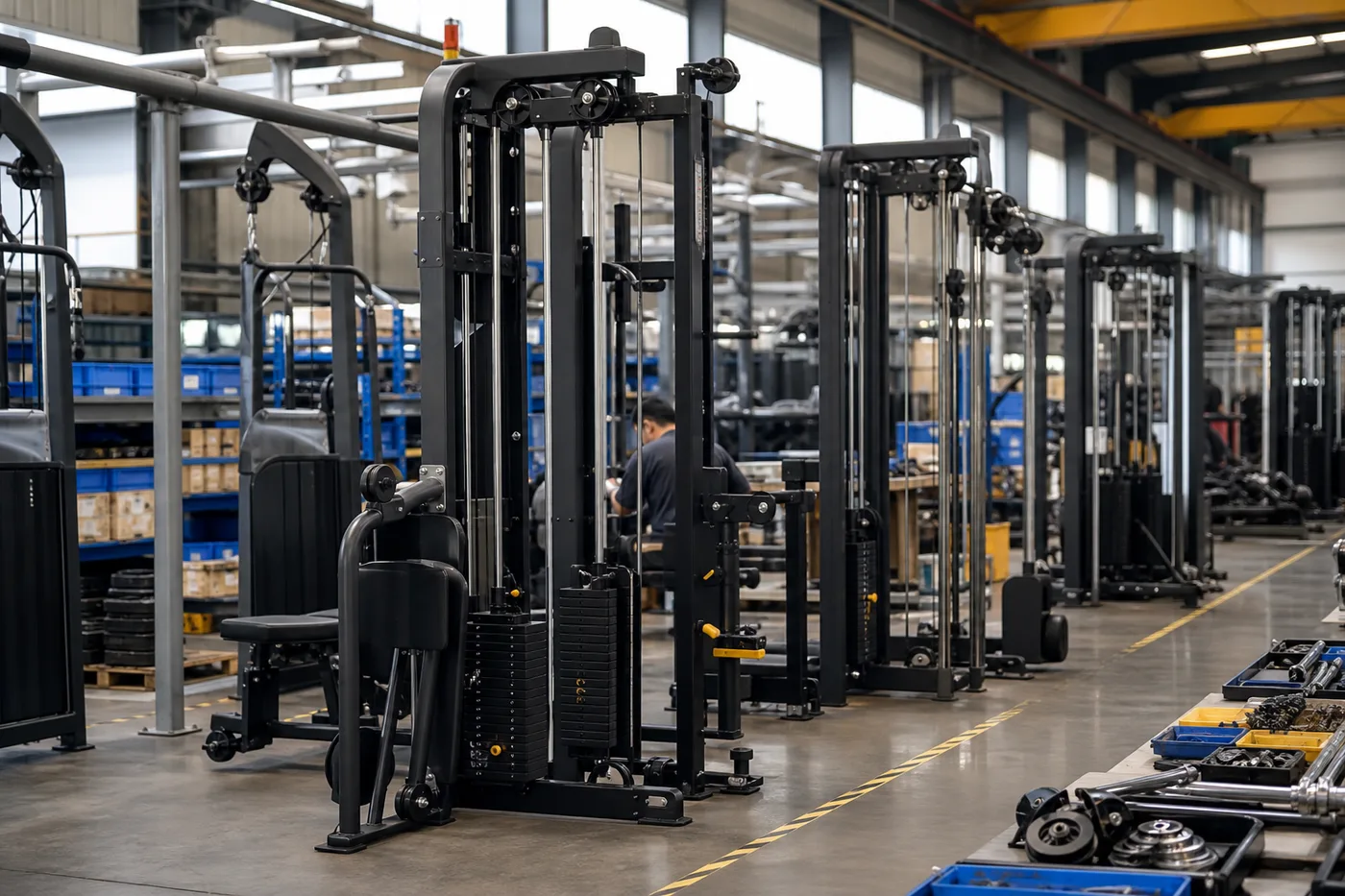
A gym equipment manufacturer is directly involved in production. The team should understand frame structure, welding, coating, upholstery, moving parts, packing and order scheduling because these points are connected to daily factory work.
A trading company usually connects the buyer with one or more factories. Some trading companies are useful when the buyer needs product consolidation, language support or broad category sourcing. The risk appears when the trading company cannot explain the product beyond catalog photos and price sheets.
The key question is not whether one model is always better. The key question is whether the supplier type matches the buyer's project. A distributor planning repeat orders and private-label equipment needs deeper product control than a buyer placing a small mixed trial order.
OEM capability: who can confirm what is possible?
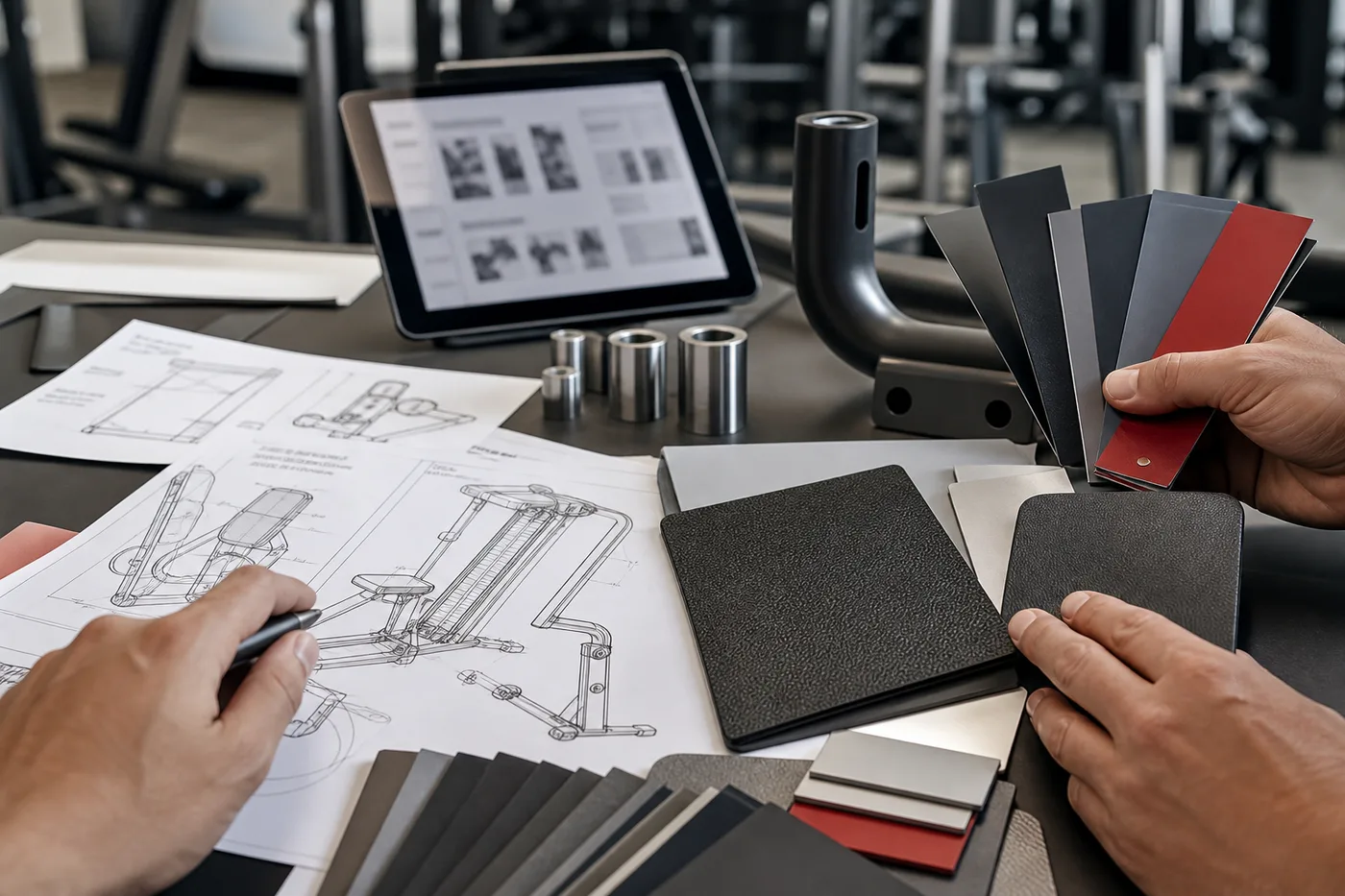
OEM gym equipment requires more than adding a logo. Buyers may need frame color, upholstery color, logo plate position, packaging marks, product labels, instruction materials and repeated visual consistency across future orders.
A manufacturer should be able to confirm which parts can be customized, which changes affect production time, and which requests may require drawings or sample confirmation. A trading company may still manage OEM work, but it often needs to confirm details with the factory before giving a reliable answer.
For private label buyers, slow or unclear OEM answers are a warning sign. If the supplier cannot explain logo placement, color matching, packaging options or production limitations, the buyer may face delays after the deposit is paid.
Communication difference: direct technical answers vs message forwarding
In a direct manufacturer relationship, the buyer should be able to discuss product structure, finish, training function, packing and inspection details with fewer layers. This does not mean every answer is instant, but the answers should become more specific as the discussion continues.
With a trading company, communication may depend on how accurately the message is passed between buyer and factory. A good trading company can still coordinate well. A weak one may only forward screenshots, delay technical questions or avoid discussing product limits.
Buyers should test communication before placing an order. Ask practical questions such as which parts are detachable for packing, where the logo can be placed, how color samples are confirmed, and what photos are provided before loading. The quality of the answers usually reveals the supplier's real control level.
Customization difference: standard catalog order or controlled production change?
Customization creates risk when the supplier treats it casually. A small change in color, logo position, upholstery or packaging may affect production steps, inspection, packing and future repeat orders.
A manufacturer can usually explain whether the change is a normal option, a special production request or something that requires additional confirmation. This matters for buyers who want a consistent product line under their own brand.
A trading company may be acceptable for basic customization if it has a stable factory relationship. However, buyers should ask for written confirmation, sample photos and a clear approval process before production starts.
Quality responsibility: who owns the problem?
Quality responsibility is easier to manage when the supplier can identify where a problem happened. For example, coating defects, upholstery issues, missing hardware, cable movement problems or packing damage each require a different response.
A manufacturer should be able to review production photos, inspection records and packing details. A trading company may need to investigate with the factory, which can slow down problem solving if responsibilities were not clear before the order.
For overseas buyers, the practical point is simple: before paying the balance, confirm what inspection photos or videos will be provided, who checks the product, and how issues are handled before shipment.
After-sales responsibility: spare parts, repeat orders and problem handling
Commercial gym equipment is not a one-time product for many buyers. Distributors, wholesalers and gym project companies often need spare parts, matching products, repeat colors and technical support after delivery.
A manufacturer is usually better positioned to support repeat production, compatible parts and product-line consistency. A trading company can still help if it keeps reliable records and maintains long-term factory relationships.
Before choosing either supplier type, buyers should ask how replacement parts are identified, how past order details are stored, and whether future orders can match the same frame color, upholstery and branding.
When a trading company can still be acceptable
A trading company is not automatically a bad choice. It can be useful for buyers who need small mixed orders, many unrelated categories, local-language coordination or flexible sourcing across several factories.
The risk is using a trading company for a project that requires deep product knowledge, custom engineering discussion, private-label consistency or long-term repeat supply. In those situations, the buyer should confirm how close the trading company is to production and whether factory-level answers are available.
Practical decision rule for buyers
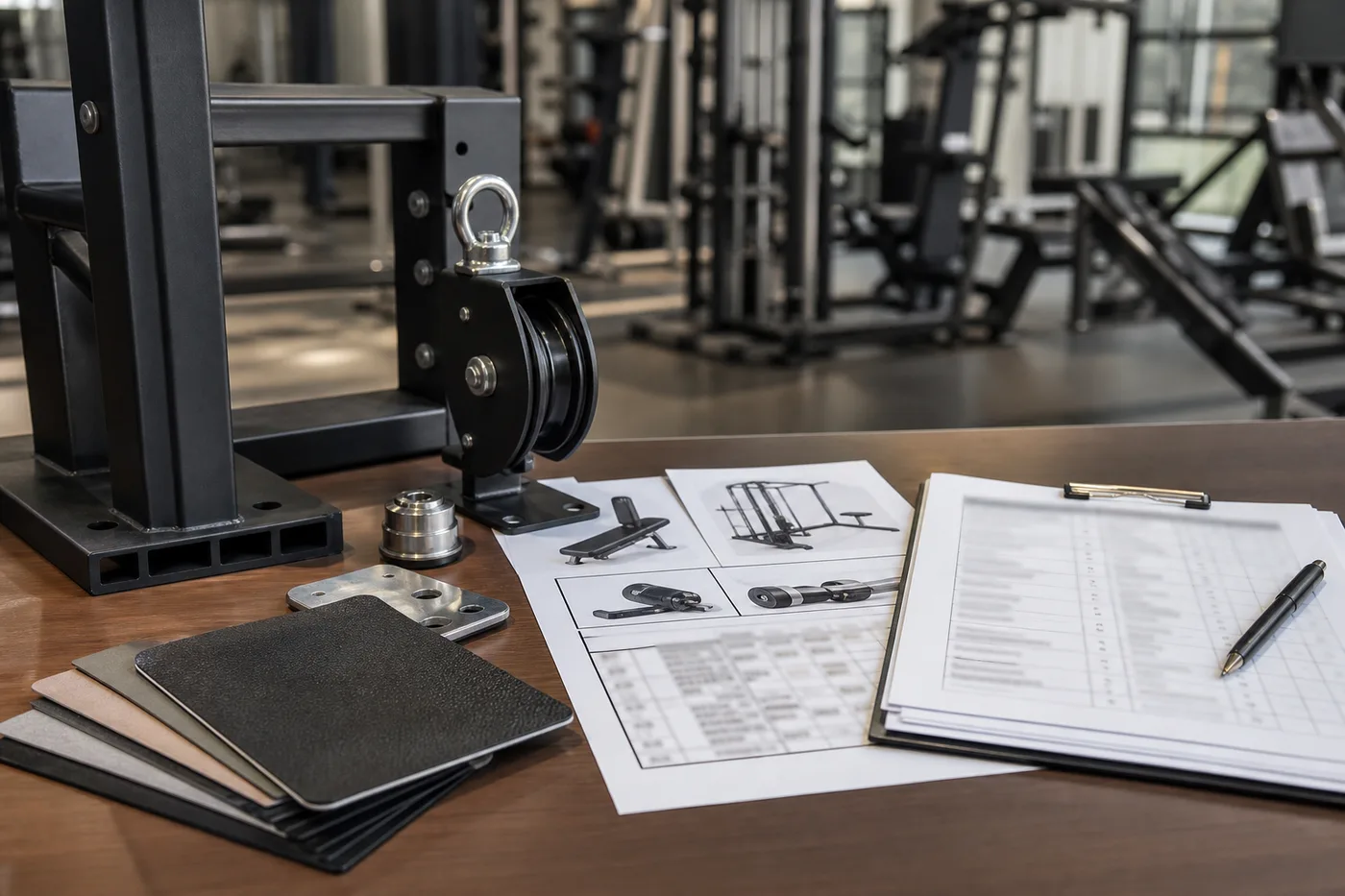
Choose the supplier type based on the order's risk level. If the purchase is a simple catalog order, a capable trading company may be enough. If the order involves commercial gym packages, OEM branding, repeat distribution, product-line planning or after-sales parts, direct manufacturer capability becomes more important.
Useful next pages
Buyer FAQ
What is the main difference between a gym equipment manufacturer and a trading company?
A manufacturer is directly involved in production and should understand product structure, customization, inspection and packing. A trading company usually coordinates between buyer and factory. The difference matters most when the order requires OEM work, repeat supply or technical problem solving.
When is a trading company acceptable for gym equipment sourcing?
A trading company can be acceptable for small mixed orders, broad category sourcing, language coordination or simple catalog purchases. Buyers should still confirm product knowledge, factory relationship, inspection process and after-sales responsibility before ordering.
What information can only a real manufacturer usually confirm?
A real manufacturer can usually confirm production limits, frame and coating details, logo placement options, packing structure, inspection points, customization feasibility and repeat-order consistency more directly than a supplier who only forwards catalog information.
Why does OEM capability differ between manufacturers and trading companies?
OEM work touches production, labeling, color matching, packaging and repeat-order records. A manufacturer can usually confirm these details from the production side. A trading company may need to check with the factory, so buyers should require written confirmation and sample photos.
Can a trading company manage private label gym equipment?
Yes, if it has stable factory partners, clear documentation and a reliable approval process. For long-term private label operation, buyers should verify how the supplier records colors, logo files, packaging details and previous order specifications.
How should buyers test supplier communication before placing an order?
Ask specific questions about detachable parts, packing method, logo position, color confirmation, inspection photos and spare parts. Clear and practical answers are more useful than fast but vague replies.
Who is responsible if quality problems appear before shipment?
Responsibility should be agreed before production. Buyers should confirm who performs inspection, what photos or videos are provided, how problems are corrected and whether the supplier can identify the production or packing step involved.
Which supplier type is better for distributors?
Distributors usually benefit from direct manufacturer capability because they need product consistency, repeat supply, spare parts and private-label support. A trading company may still work if it provides reliable factory-level coordination and records.
Should price be the deciding factor between a manufacturer and a trading company?
Price should not be the only factor. Buyers should compare product control, customization support, communication quality, inspection process, packing responsibility and after-sales support before choosing a supplier type.
Conclusion
A manufacturer and a trading company can both serve overseas gym equipment buyers, but they solve different sourcing problems. The safest choice depends on how much product control, OEM work, inspection responsibility and after-sales support the order requires.
Need this topic turned into a real equipment plan?
Send your market, gym size, product categories or OEM needs. Kloe can help clarify the next step.