
Introduction
Distributors should add specialized arm machines only after defining the customer segment, the gap in the current range and the support required after sale. Start with a small, coherent group—such as biceps, triceps, forearm and grip equipment—then validate demand, product compatibility, pricing structure, parts support and repeat-order potential before expanding.
Key takeaways
- Define the segment: Choose the gym types, distributors or specialty buyers the category will serve.
- Find the portfolio gap: Document what current machines, attachments or competitors do not cover.
- Build three layers: Select core, extension and signature products with clear roles.
Planning context
Specialized arm training equipment can differentiate a distributor from suppliers that offer only standard chest, back and leg lines. It can also create slow inventory if the range is selected by visual novelty rather than customer demand. The commercial opportunity lies between those extremes: a controlled category that helps strength clubs, bodybuilding gyms, combat-sports facilities and specialty retailers solve an identifiable training need.
A product-line decision is broader than choosing models. The distributor must define who will buy them, which core machines they complement, how many price and load formats are needed, what demonstration is required, and how parts and warranty questions will be handled. The strongest launch is usually a focused extension to an existing strength range, not an isolated collection with unrelated frames, colors and service requirements.
Why Specialized Machines Can Create Distributor Differentiation
Most commercial buyers expect basic presses, rows, pulldowns, leg machines, benches and racks. Those categories establish credibility but make distributor comparisons difficult because many suppliers cover them. A specialized arm line creates a more specific conversation. A forearm curl, gripper, wrist trainer or dedicated biceps and triceps pair can show that the distributor understands strength-club accessory zones and athlete-focused applications.
Differentiation only matters when customers can explain the value to their own members. The machine should solve a recognizable problem: cable congestion, inconsistent improvised wrist work, missing arm capacity or a desire for a visible specialist zone. A product that is different but difficult to demonstrate, maintain or place in a layout may attract attention without producing repeatable sales.
Analyze Customer Demand Before Selecting Models
Segment the customer base. General commercial gyms may prefer familiar selectorized biceps and triceps stations. Strength clubs may accept plate-loaded specialist machines with more visible mechanics. Combat-sports and performance centers may be interested in forearm, wrist and grip equipment but have limited floor area. Retail and smaller studio buyers may prefer attachments and portable tools rather than full machines.
Use real sales conversations instead of broad claims about market popularity. Review quotation requests, lost deals, customer questions, replacement-part inquiries and the categories competitors present locally. Ask existing accounts which movements create queues or improvised setups. Separate expressed interest from purchase readiness by confirming budget level, footprint, preferred load type and expected ordering window.
Build a Product Portfolio with Core, Extension and Signature Layers
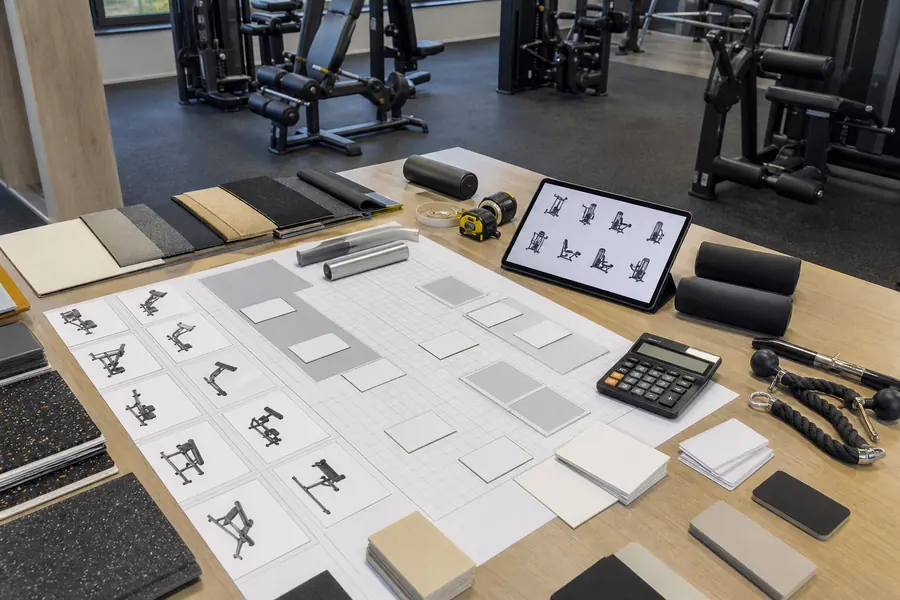
The core layer should contain the easiest products to explain and combine: a biceps curl and triceps extension in the same visual family. The extension layer can add a forearm curl or wrist trainer for facilities that want a more complete arm zone. The signature layer can include a gripper or unusual specialist mechanism that creates showroom interest and serves a narrower training audience.
This structure prevents the launch from depending on one niche model. It also gives sales teams a clear upgrade path. A customer can buy the core pair, add forearm coverage or select a signature machine for differentiation. Each layer should share compatible finishes, documentation and service logic where possible. Too many unrelated frames and load systems make the category harder to quote and support.
How Distributors Should Evaluate a New Specialized Category
Begin with functional review. Confirm the movement, user position, adjustment range, resistance source and the facility types the product is intended to serve. Ask why the machine deserves floor space beside a cable tower or free-weight alternative. Then review commercial construction: frame stability, contact points, pivots, loading access, chain or cable path, guarding and inspection requirements.
Next evaluate business fit. Compare the model with the distributor's existing frame colors, upholstery, warranties, manuals and parts process. Estimate the sales effort needed to explain it. Check packing dimensions and assembly state because specialist machines can be light but awkwardly shaped. Confirm whether samples, mixed orders or project quantities fit the supplier's production and quotation process.
Discuss Margin Opportunity Without Assuming Automatic Profit
Specialized machines can support better differentiation and less direct price comparison, but that does not guarantee stronger margin. The distributor must account for sample cost, content creation, sales training, freight, storage, installation, warranty exposure and slower turnover. A higher unit margin can be offset by low inventory velocity or complex service requirements.
Evaluate contribution at the category level. A specialist machine may help close a complete strength package even when it is not the largest line item. Attachments can increase order value with low footprint but require compatibility and inventory control. Use landed cost and realistic sales volume rather than a simple factory-price markup. Avoid publishing unsupported return claims; discuss opportunity as a planning scenario that requires local validation.
Use the Showroom to Explain a Coherent Training Story
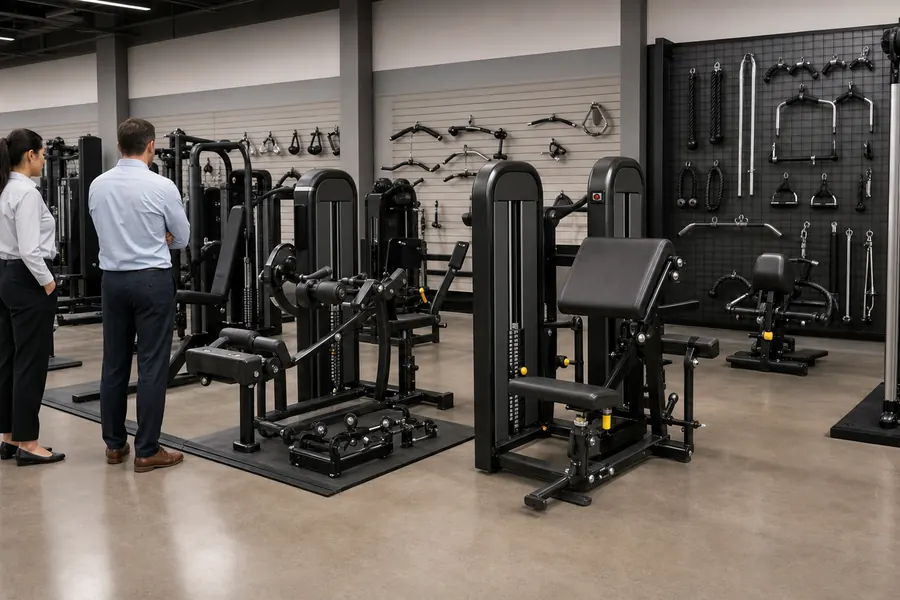
A showroom should present specialized arm equipment as a zone, not scattered novelty. Place biceps, triceps, forearm and grip products near related strength machines. Provide enough working clearance and keep attachments organized. Sales staff should be able to explain the movement, ideal facility, loading method, adjustment and maintenance points in a short demonstration.
The sample selection should represent the planned portfolio layers. One familiar core machine establishes context, one forearm or wrist product demonstrates category depth and one signature unit creates differentiation. Printed or digital materials can show alternate load types and finishes without filling the showroom with every model. The demonstration should remain truthful and avoid claims that have not been supported by testing or customer evidence.
Supplier and Manufacturer Requirements for a Specialist Line
A supplier should explain the product's intended use, movement, adjustment and maintenance rather than sending only photos and dimensions. Request detailed images of mechanisms, grips, pads, pivots, guards and loading points. Ask how the product is inspected before packing and which components are wear or replacement items. Confirm the revision process if the distributor requests OEM colors, logos or functional changes.
Consistency matters across repeat orders. Approve color references, upholstery, decals or nameplates, hardware finish and packaging requirements in a controlled specification. If the specialist machines come from different series, document the intentional differences so sales teams and customers understand them. Do not assume a matching color creates a matching product family when geometry, adjustments and service parts are unrelated.
Launch in Stages and Use Evidence to Expand
A practical launch begins with sales enablement: product-role notes, target-customer guidance, mechanism photos, comparison points, installation information and a parts list. Select a limited sample or first order that represents the portfolio structure. Prepare product pages and quotation templates around commercial applications rather than exaggerated muscle or performance promises.
After launch, track which customer types ask for each model, which products appear in full-package quotations, which objections delay orders and which parts or setup questions arise. Expansion should answer a documented gap. If customers request another load format or combined function, compare that demand with the cost of adding a new SKU. Remove or reposition products that remain difficult to explain after sufficient sales effort.
Buyer decision framework
- Define the segment: Choose the gym types, distributors or specialty buyers the category will serve.
- Find the portfolio gap: Document what current machines, attachments or competitors do not cover.
- Build three layers: Select core, extension and signature products with clear roles.
- Validate the supplier: Review function, quality checkpoints, parts, packaging and repeat-order consistency.
- Model landed economics: Include samples, freight, storage, sales effort, warranty and turnover assumptions.
- Pilot the category: Launch a controlled selection with showroom and sales-support materials.
- Expand from evidence: Use quotations, objections, utilization and repeat demand to add or remove SKUs.
Buyer checklist
- Target customer segment and facility applications are written down.
- The gap in the existing product range is documented.
- Core, extension, signature and accessory roles are separated.
- Every machine has a clear movement and commercial use explanation.
- Load type and frame family fit the existing portfolio strategy.
- Mechanism, adjustment, guarding and maintenance access are reviewed.
- Replacement parts and service documents can be supplied.
- Packing dimensions, assembly state and container impact are known.
- OEM colors, logo positions and approval process are controlled.
- Landed cost includes samples, storage, sales and warranty exposure.
- Showroom placement and sales demonstration are prepared.
- Launch metrics and expansion rules are defined before the first order.
Common buying mistakes
- Launching too many SKUs: A broad first range divides sales attention and creates inventory before demand is understood.
- Choosing only by appearance: A distinctive machine still needs a clear movement, user setup, commercial role and service path.
- Treating interest as demand: Customer curiosity should be tested against budget, footprint, load preference and purchasing timeline.
- Ignoring landed support cost: Samples, freight, storage, training, warranty and parts can reduce the apparent unit-margin opportunity.
- Mixing incompatible product families: Unrelated finishes, adjustments and spare parts make the line harder to present and support.
- Expanding without evidence: New SKUs should answer recorded quotation gaps or customer demand, not imitate a competitor's catalog size.
Manufacturer perspective
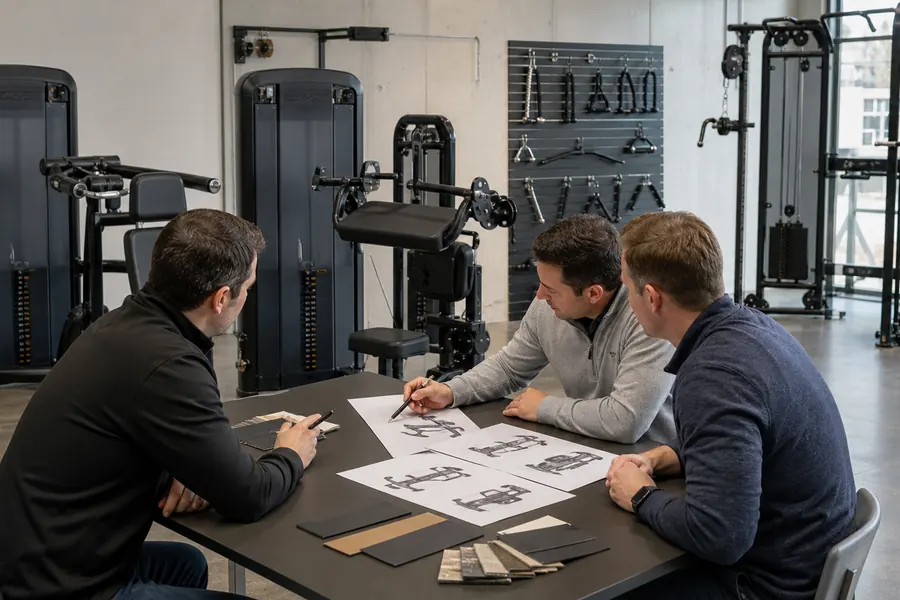
From a commercial equipment manufacturer's perspective, a distributor launch works best when each machine has a defined role and an approved configuration. Production teams can then control frames, finishes, upholstery, mechanism components, labels and packing against a stable specification.
Specialized equipment requires disciplined communication because small differences in grip diameter, pad angle, starting position, chain or cable routing and loading access affect the user experience. A useful supplier should discuss these details and make replacement components identifiable rather than relying on catalog appearance alone.
Specialized Arm Product Line Structure
| Portfolio Layer | Example Products | Customer Role | Inventory Approach | Sales Conversation |
|---|---|---|---|---|
| Core | Biceps curl and triceps extension | Broad commercial familiarity | Prioritize proven configurations | Complete the basic arm circuit |
| Extension | Forearm curl and wrist trainer | Adds focused wrist and forearm capacity | Stock selectively or offer project ordering | Reduce improvised setups and expand accessory coverage |
| Signature | Gripper or distinctive specialist machine | Differentiates strength and combat-sports packages | Use sample or showroom-led sales | Create a specialist training identity |
| Accessory | Cable handles, ropes and grip tools | Low-footprint add-on and replacement demand | Maintain organized compatible sets | Expand exercise variety and attach to larger orders |
Useful next pages
Buyer FAQ
Why should distributors add specialized arm training machines?
They can differentiate a strength range, complete arm zones and serve strength clubs or combat-sports facilities that need forearm, wrist and grip equipment beyond standard biceps and triceps machines.
Which specialized arm machines should a distributor add first?
Start with a coherent core such as biceps and triceps machines, then add forearm or wrist equipment and one signature grip product when customer demand supports it.
How can distributors evaluate specialized fitness equipment?
Review movement purpose, user geometry, adjustments, resistance mechanism, commercial construction, maintenance access, parts support, packaging, target customers and fit with the current portfolio.
Do specialized machines offer better margins?
They may reduce direct price comparison and support larger packages, but margin depends on landed cost, turnover, sample expense, sales effort, storage, installation, warranty and local demand.
Should specialized arm machines be stocked or ordered by project?
Core models may justify stock when demand is proven. Narrower forearm, wrist or grip machines can begin as showroom samples or project-order items until sales evidence is stronger.
How many models should be included in the first launch?
Use the smallest range that tells a complete story. A core pair, one extension product and one signature item are often easier to explain and validate than a large first catalog.
What OEM details should be confirmed?
Confirm frame and upholstery colors, logo or nameplate position, mechanism configuration, labels, packaging, manuals, approval samples and how changes affect quantity or lead time.
What sales materials are needed for specialist equipment?
Prepare application guidance, movement explanation, mechanism images, product comparisons, dimensions, installation notes, maintenance information, parts identification and clear quotation options.
How should distributors decide whether to expand the category?
Use quotation frequency, customer segment, objections, sample demonstrations, package attachment rate, service questions and repeat demand to decide which SKUs to add, reposition or remove.
Conclusion
Specialized arm machines can make a distributor's product line more useful and more distinctive when the category is built around customer problems rather than catalog volume. A focused core, a clear extension and one signature product create a manageable place to start. The distributor should connect product function, supplier capability and landed economics before placing the first order. Staged launch and evidence-based expansion protect inventory while giving sales teams a credible specialist story.
Need this topic turned into a real equipment plan?
Send your market, gym size, product categories or OEM needs. Kloe can help clarify the next step.