
Urethane vs Rubber Dumbbells for Commercial Gyms
Choose urethane when appearance retention, low odor and molded branding justify a higher specification; choose commercial rubber when purchase efficiency and broad general-gym use matter more. Do not approve either by coating name alone. Compare the core, head-to-handle connection, grip, weight marking, allowed impact, rack contact, cleaner compatibility, warranty exclusions and the exact inspection method for the ordered construction.
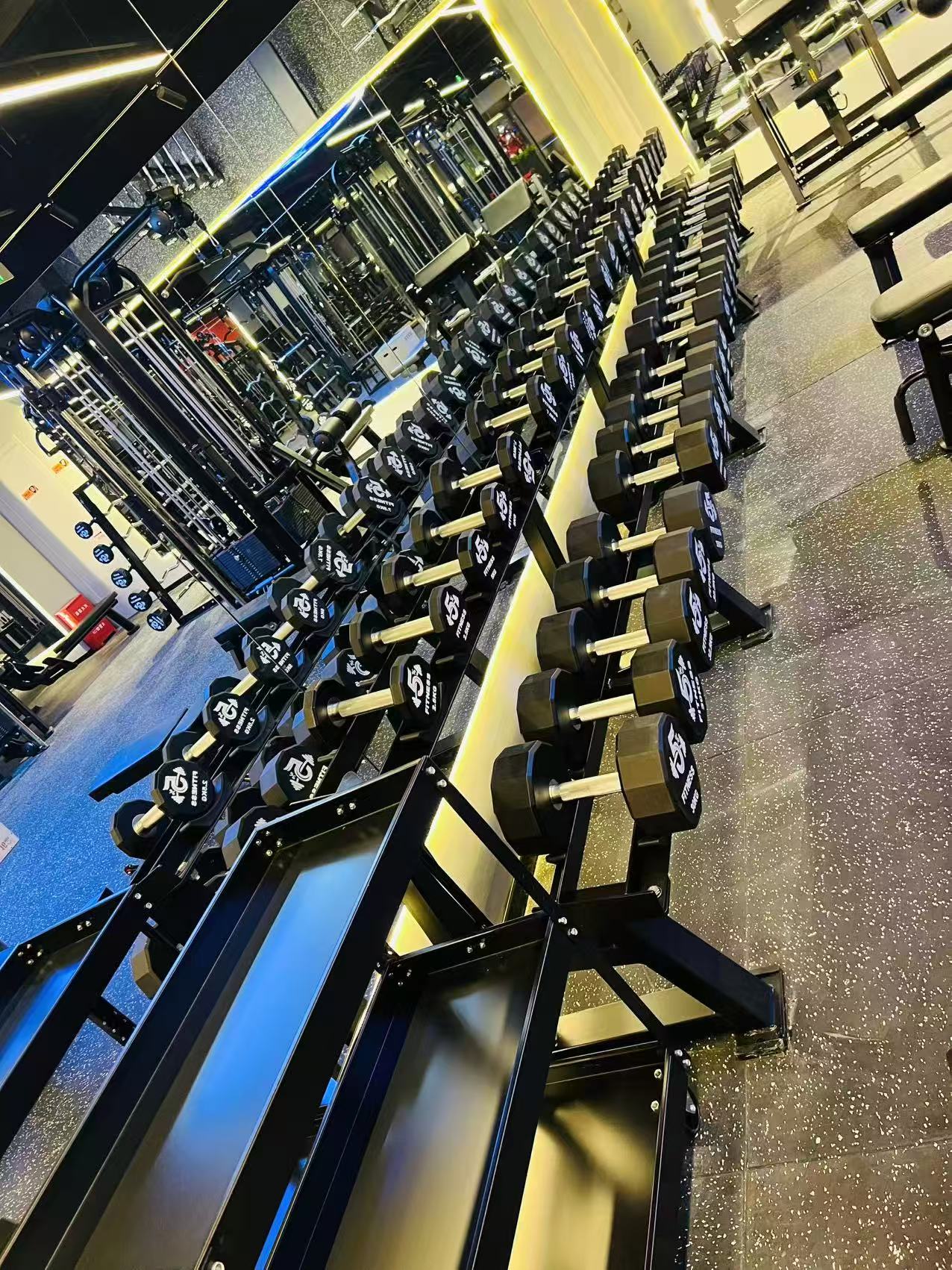
Start with the room and operating model
Define where the dumbbells will work, who will handle them and how the floor is supervised. A premium hotel room, a school weight room, a strength club and a distributor showroom have different priorities for odor, appearance, anti-roll behavior, maximum range and replacement cost. Record expected traffic, cleaning routine, humidity, flooring, rack style and whether members are coached not to release weights. This operating brief prevents a material label from becoming a substitute for the real requirement.
Separate fixed dumbbells for general strength work from light studio weights and from loadable handles. A studio set values rapid identification and easy storage; a heavy fixed range puts greater demand on joints, rack saddles and handling. If a project needs both, specify them as different lines. One coating, grip diameter or head shape does not need to serve every class, free-weight bay and hotel guest.
Understand what the coating name does and does not tell you
Rubber-coated heads can offer a practical balance of protection, noise control and purchase cost, but rubber compounds, hardness, odor and surface marking vary. Polyurethane heads are commonly selected where buyers prioritize finish retention, crisp molded markings and a lower-odor presentation. Exposed cast iron or chrome creates a different contact and corrosion risk. These are useful directions, not universal performance guarantees for an unnamed product.
Ask whether the quotation means cast polyurethane, thermoplastic polyurethane or a rubber compound, and request the exact construction description. Confirm the core material, how the coating is bonded, whether the logo and weight number are molded or applied, and which parts remain exposed. A supplier comparison is valid only when each bidder describes the same weight range, head form, handle finish, tolerances, packaging and use restrictions.
| Format | Useful when | Buyer checks | Operating caution |
|---|---|---|---|
| Commercial rubber-coated | General gyms, schools, functional zones and value-focused ranges | Compound declaration, odor, molding, joint, marking and transfer | Use only within the stated cleaning, storage and impact policy |
| Polyurethane-coated | Premium clubs, hotels, visible flagship areas and branded ranges | PU type, bonding, molded details, finish consistency and replacement route | Higher price does not remove the need to inspect the joint and use limits |
| Exposed iron or chrome | Controlled traditional strength rooms and specific visual concepts | Corrosion protection, edges, floor contact, handle finish and maintenance | Hard contact can mark floors and damaged finish can expose metal |
| Light studio format | Group classes, rehabilitation and low-load training | Weight identification, anti-roll shape, grip coverage and storage | Do not extend a light studio construction into heavy free-weight use |
Match the format to the commercial use case
A round head presents efficiently on a saddle rack but needs disciplined storage. Multi-sided heads resist rolling and can suit functional areas where weights are set on the floor. Studio dumbbells serve lighter group work and should not be treated as substitutes for a full fixed range. The table is a specification starting point; the approved unit and written documents must decide the order.
Mixed specifications can be rational. A club can use a high-presentation line in the visible main rack and a robust value line in a coached functional zone, provided weight steps, grip feel and storage remain clear. Distributors can also separate a volume range from a premium private-label range. The key is to document why each line exists rather than mixing products only to reduce the opening invoice.
Inspect the core and head-to-handle connection
Coating wear is visible; a loose head or rotating joint is a more serious failure. Ask the supplier to describe whether the core is cast iron or steel, whether the head is one piece, and how the handle is mechanically secured or bonded. Review sectioned drawings or controlled production photographs when available. Do not infer the joint design from the exterior shape, and do not transfer a construction claim from another brand to the unit being quoted.
During evaluation, hold both heads and check for movement, twist, gaps, uneven molding and exposed edges. Roll or place the dumbbell on a flat surface to observe alignment. Check representative light, middle and heavy sizes because the core and handle dimensions can change through the range. Record the model, marked weight and findings so approval can be compared with received goods instead of relying on memory or sales images.
Specify grip, marking and weight control
Handle diameter, usable grip width, contour, knurl depth and finish affect control and cleaning. A sharp grip can be uncomfortable for general members; a very smooth grip can become difficult with sweat. Ask for measured dimensions across the range and inspect transitions where the handle meets the head. Confirm that rack saddles do not cut the coating or repeatedly strike the same point on the handle.
Weight numbers must remain readable from the normal approach to the rack. Confirm metric or imperial marking, increment sequence, color use and logo hierarchy. State the accepted weight tolerance and the method and scale used to verify it; do not assume a tolerance from a different manufacturer brochure. Weigh a documented selection across the range and record each pair, since clear markings cannot correct an inaccurate or mismatched load.
Test odor, transfer and cleaning compatibility
Evaluate a pilot unit after unpacking and again after controlled ventilation in conditions close to the destination room. Record odor observations without promising that every compound behaves identically. Place the head on the intended flooring and rack contact material to check visible transfer. For colored or branded surfaces, inspect edges and raised details where abrasion appears first. These checks are particularly important for hotels, corporate rooms and compact studios with limited air exchange.
Use the manufacturer-approved cleaner and dilution on a small, inconspicuous area, then inspect gloss, tackiness, pigment, printed details and grip finish. The same protocol should cover sweat removal and routine drying. A public claim that a material resists every disinfectant is not enough. Put the approved cleaning method into the facility handover and ensure the warranty does not exclude damage caused by the chemicals the operator intends to use.
Treat flooring, racks and drop rules as one system
A coated head does not make the underlying floor suitable for released weights. Match the dumbbell range and training behavior to the verified flooring assembly, subfloor and any acoustic requirement. Provide clear space for lifting and return, keep racks out of escape routes, and prevent round heads from being left where they can roll. Heavier sizes also change manual handling and rack loading, so the facility plan must cover access and staff practice.
Request written limits for dropping, storage and outdoor or wet exposure. Official manufacturer documents show that dumbbell warranties can differ by construction and can be voided above a stated release height; this is why staff rules must follow the ordered model rather than gym folklore. If the program expects repeated releases, specify equipment and platforms designed for that use instead of assuming a premium coating turns a fixed dumbbell into a dropping implement.
- State the exact coating family and head construction, not only a color or marketing tier.
- List the range, increments, pairs, marking system and accepted weight tolerance.
- Describe the handle, knurl, joint, rack saddle and intended flooring contact.
- Attach the approved cleaning, storage and impact policy to the purchase record.
- Define packing, receiving checks, replacement pairs and revision identification.
Control branding, replacement and range continuity
Private-label buyers should approve logo artwork, color reference, number size, orientation and surface texture on a physical reference unit. Confirm whether branding is molded into the head, fitted as an insert or applied at the surface, and define acceptable alignment and color variation. Keep a signed visual record under the exact model revision. Attractive branding should never obscure the weight number or create a sharp edge at a frequent contact point.
Ask how single pairs can be reordered after the initial shipment and how the supplier identifies revisions. Record the weight, unit system, coating, color, logo file, handle and joint construction in the item code. A replacement plan matters because one missing pair disrupts the rack sequence and encourages weights to be stored in the wrong saddle. Distributors should decide whether they will hold service pairs or combine replacements with regular replenishment orders.
Write the quotation and acceptance record
Send every bidder the same schedule: facility type, destination, full weight range and increments, pair quantities, coating and head form, core and handle description, unit marking, logo requirement, rack interface, flooring context, cleaning method, packing, documentation, warranty scope and use policy. Require declared alternatives to be placed on separate lines. This makes material upgrades and cost reductions visible instead of hiding them inside a set price.
Before release, inspect a controlled selection from the finished order for identity, pair count, markings, weight, head security, molding, handle finish, odor, transfer, packaging and document match. Define how nonconforming units are isolated and corrected. Keep the approved reference, photographs and measurement record with the purchase file so receiving staff can distinguish transport damage, production variance and a specification mismatch.
FAQ
Are urethane dumbbells always better for a commercial gym?
No. Urethane often suits projects that prioritize low odor, molded branding and long-term presentation, while a well-specified rubber range can fit general gyms, schools and value-led programs. Construction quality, use policy and replacement support still decide the result.
Should a buyer accept a claim that a dumbbell is odor-free?
Treat it as a property to verify on the ordered construction. Inspect a pilot unit after unpacking and ventilation, document the room conditions, and include odor and surface-transfer observations in approval and receiving checks.
Can commercial dumbbells be dropped?
Only within the written use limits for the exact model and on a suitable verified floor system. Some official warranties restrict release height or exclude damage from dropping, so the facility rule must match the supplied documentation.
What should be sent with a dumbbell quotation request?
Send the facility type, destination, weight range, increments, pairs, material and head form, handle and marking needs, logo files, rack and floor context, cleaning routine, packing needs, use policy and requested acceptance evidence.
Sources
- ISO 20957-1:2024 — General safety requirements — International Organization for Standardization
- Life Fitness dumbbells and fixed barbells — Life Fitness
- Precor limited standard warranty — Precor
- Nike Strength Pro urethane dumbbell brochure — Precor
- American Barbell Series I urethane dumbbells — American Barbell