
Introduction
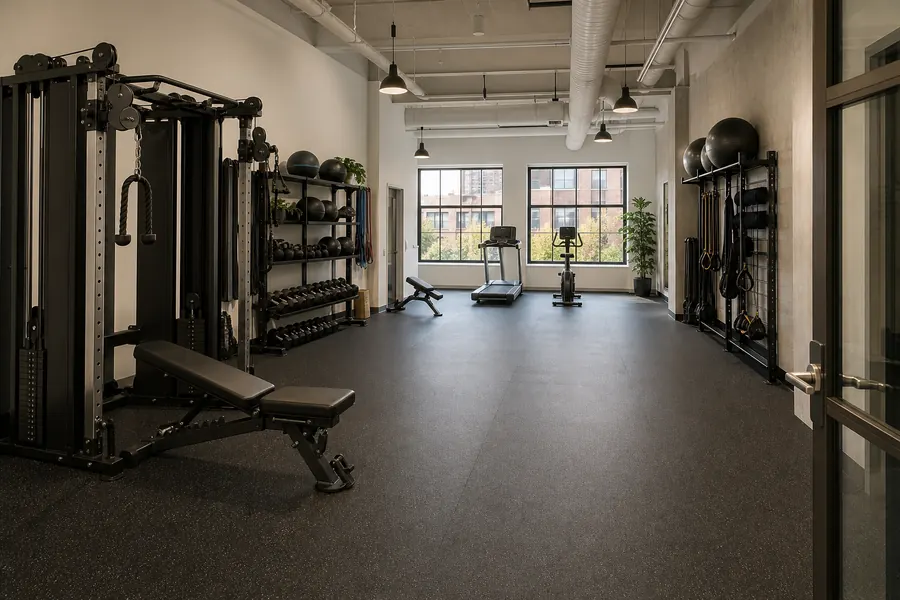
The best equipment for a small fitness center combines several useful training positions without crowding the room: a compact functional trainer, adjustable bench, selected selectorized strength stations, dumbbells with vertical storage, one rack only when the concept supports it, essential cardio, functional accessories and correctly zoned flooring. Choose by working envelope and member demand, not footprint alone.
Key takeaways
- Define the concept: State target members, coaching, peak attendance and the training promise.
- Map the room: Measure doors, columns, ceiling, power, windows, circulation and service constraints.
- Secure coverage: Cover cardio, guided strength, free weights, functional training and mobility.
Planning context
Small gyms can deliver a complete commercial experience, but every machine must justify its space and support a clear training journey. The challenge is not squeezing in more frames. It is preserving enough capacity, circulation, storage and open movement that members can use the equipment comfortably during busy periods.
A compact plan starts with the target user and coaching model, then selects versatile equipment and a few high-value dedicated stations. It also uses walls, corners and vertical storage deliberately. This guide explains how to balance equipment density with commercial operation, maintenance and future flexibility.
Small Fitness Centers Need Coverage, Capacity and Clarity
A small facility still needs a complete offer. Members should be able to warm up, perform major push and pull movements, train lower body, use free weights, work through functional patterns and finish with mobility. Coverage describes those needs. Capacity describes how many people can train at once. Clarity describes whether users understand the zones and can move between them without conflict.
Versatility helps coverage, but a single multi-function machine cannot serve everyone simultaneously. Combine adaptable stations with selected dedicated equipment where demand is strong. A compact functional trainer may handle many accessory movements, while a dedicated leg press or chest press gives a familiar path and frees the cable station for other users. The correct balance depends on peak attendance and programming.
Use a Functional Trainer as the Versatility Anchor
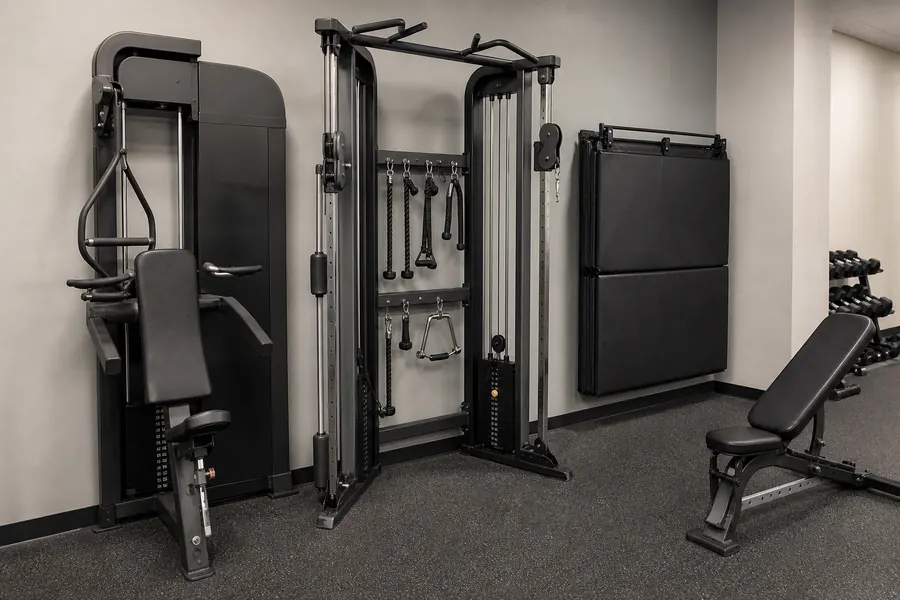
A dual adjustable pulley can support rows, presses, pulldowns, arms, rotation, split-stance work and many coached movements. Choose a configuration whose pulley range, stack access, cable travel and attachment points suit the intended exercises. A compact frame is only beneficial when users still have room to step, rotate and place a bench.
Keep attachments on dedicated storage beside the station. Too many handles create clutter and slow turnover, while too few reduce the machine's value. Select a practical set, document its location and replace damaged pieces correctly. If two people may use the station together, confirm that their paths do not cross and that one stack or cable setup does not unintentionally limit the other.
Add Dedicated Strength Only Where It Solves a Real Bottleneck
Small centers often benefit from a limited selectorized circuit or a few recognizable staples. A leg press gives stable lower-body loading that is difficult to duplicate for all users with dumbbells. A chest press or row can support beginners and reduce demand on benches or cables. Combination machines may save frame space, but the operator should test adjustment, movement quality and whether changing stations creates delays.
Avoid buying several machines that repeat similar angles. Map horizontal push, vertical push, horizontal pull, vertical pull, knee-dominant, hip-dominant and core options. Use the functional trainer and free weights to cover lower-demand accessories. Dedicated equipment should go to important movements where guidance, capacity or member confidence justifies a permanent footprint.
Design the Free-Weight Zone Around Storage and Bench Movement
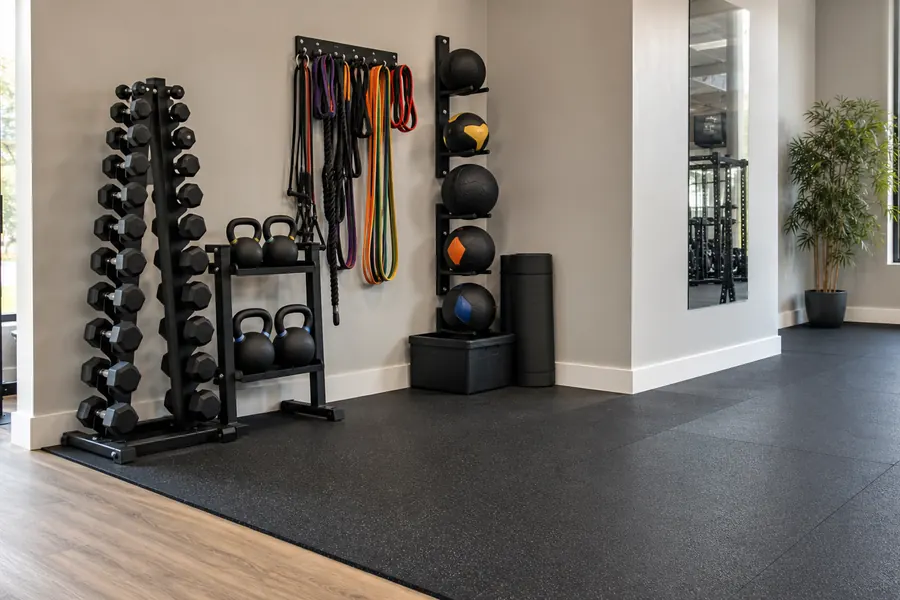
Dumbbells and adjustable benches provide exceptional exercise coverage, but their working zone is larger than the rack. Users need space to pick up, carry, lift and return weights without stepping into a doorway or cable path. Benches need parking locations so they do not block circulation when unused. Vertical or compact racks can help, but stability and comfortable access remain essential.
A full barbell rack is appropriate when the center offers coached lifting or serves strength-oriented members. It is not mandatory for every small gym. If included, plan the bar length, plate loading, spotting, storage and overhead movement. A Smith or integrated rack-cable system may consolidate functions, but it can still require substantial width and depth once users and plates are added.
Keep Cardio Familiar and Proportionate
A small center rarely needs every cardio modality. Choose the equipment members are most likely to use, often a treadmill plus a lower-impact bike or elliptical, and scale quantity to peak demand. If the concept emphasizes coached strength, cardio may support warm-up rather than dominate the room. If the center serves hospitality or general wellness, cardio may need a larger share.
Preserve electrical, ventilation and service requirements. Treadmills need rear clearance and access for belt and deck work. Ellipticals need movement and height clearance. Bikes need safe entry. Do not place cardio so tightly against glass or walls that cleaning, leveling or panel access becomes difficult. One reliable user position is more valuable than an extra machine that makes the row unserviceable.
Use Flooring and Vertical Storage to Define the Room
Flooring can identify functional, free-weight and cardio zones without adding walls. Choose surfaces based on activity, equipment support, cleaning, impact and local building requirements. Transitions should remain stable and visible. Heavy or moving equipment should not rock because of uneven seams, and loose mats should not become permanent trip edges.
Walls can hold light attachments, mats, bands or medicine-ball systems when the structure and installation are suitable. Avoid placing storage inside exercise arcs or above areas where items could fall onto users. Frequently used accessories belong at reachable height near their station; reserve high storage for light, controlled items. Good storage increases usable floor area only when members can return equipment safely.
Plan the Layout with Full Working Envelopes
Draw each machine at scale and add the user, adjustment, loading, bench and service envelope. Preserve a clear route from entrance to every zone and avoid dead ends around large frames. Keep door swings, emergency routes, columns, windows, radiators and electrical panels clear. Consider what a coach can see and where a waiting user can stand without blocking another station.
Test a peak scenario on the plan. Place realistic users at cardio, cable, dumbbell, bench and dedicated strength positions. If their paths overlap, reduce equipment or change the mix. The floor should remain workable when attachments and benches are temporarily in use, not only in the perfectly staged drawing. Leaving open space can increase capacity when it supports bodyweight, mobility and coached work.
Open with a Complete Core and Reserve Space for Evidence-Based Growth
A phased purchase is especially useful in a small center because one wrong specialist machine can consume a significant share of the floor. Phase one should still cover the complete training journey and expected peak capacity. Mark one or two expansion zones with power and flooring considered where practical, but use them as open functional space until demand proves the next purchase.
Collect structured feedback after opening. Observe queues, attachment conflicts, bench use, cardio preference and maintenance. A request for a new machine may actually signal missing coaching, storage or a duplicate user position. Add equipment when the proposed item solves a defined constraint and the working envelope can be integrated without damaging the rest of the room.
Buyer decision framework
- Define the concept: State target members, coaching, peak attendance and the training promise.
- Map the room: Measure doors, columns, ceiling, power, windows, circulation and service constraints.
- Secure coverage: Cover cardio, guided strength, free weights, functional training and mobility.
- Protect capacity: Add dedicated or duplicate positions where peak users would otherwise queue.
- Design storage: Give benches, weights, handles, mats and accessories clear safe return locations.
- Reserve growth: Keep a usable open zone for later equipment supported by operating evidence.
Buyer checklist
- Target members, coaching model and peak concurrent users are defined.
- Scaled plan includes working, loading, bench and service envelopes.
- Core movement and cardio needs are covered without unnecessary duplicates.
- Functional trainer has usable cable distance and organized attachments.
- Dumbbell and bench zones include carrying, lifting, parking and return paths.
- Any rack includes bar, plate, spotting and overhead clearance.
- Cardio has power, ventilation, safety and service space.
- Flooring and storage support the exact activities in each zone.
- An open area remains useful before any second-phase purchase.
Common buying mistakes
- Buying by frame footprint: The user, cable, bench, plates and service work extend far beyond the published machine size.
- Using only multi-function equipment: Versatility can become a bottleneck when one station is expected to serve every member at once.
- Adding too many dedicated machines: Narrow movement coverage can consume circulation and open training space.
- Treating storage as leftover space: Accessories and benches then migrate into doorways, walkways and exercise zones.
- Forcing in a rack: Barbell lifting needs more operating and supervision space than the frame alone suggests.
- Filling the expansion zone before opening: The operator loses flexibility before real demand and congestion are known.
Manufacturer perspective
From a manufacturer's perspective, small-space projects require more layout information, not less. A product that is compact in one dimension may need a large operating envelope or difficult service access. Sharing a scaled plan allows the supplier to flag cable travel, loading sides, console power and assembly constraints before a quotation is finalized.
Equipment-family consistency can also help a small operator. Shared adjustment logic, finishes and service components reduce visual noise and maintenance complexity. Packing and assembly should reflect narrow doors, elevators or finished interiors, with hardware and components organized for the actual installation sequence.
Small-center proposals should show the items that are intentionally omitted as well as the ones selected. This makes it easier to see whether a movement is covered by cables, dumbbells or a combination station and prevents the same function from returning as an unnecessary late addition. The manufacturer can also identify models that look compact in photographs but need side loading, overhead assembly or rear service access that the room cannot provide.
Equipment Type Comparison for Small Fitness Centers
| Equipment type | Coverage value | Capacity effect | Space risk | Best application |
|---|---|---|---|---|
| Compact functional trainer | Very high | One or two cable users by design | Needs exercise distance beyond frame | Core versatile strength station |
| Adjustable bench and dumbbells | Very high | Multiple users with enough benches | Loose movement and return path | Flexible free-weight training |
| Selectorized multi-function station | High | May support several stations | User paths can overlap | Guided mixed-level training |
| Single selectorized machine | Focused | One clear user position | Consumes space for one movement | High-demand leg, push or pull need |
| Rack or Smith system | High for strength concepts | One lifting bay | Bar, plate and spotting clearance | Coached or strength-led center |
| Cardio machine | Focused but expected | One user per position | Large footprint and service clearance | Scale familiar modalities to demand |
Useful next pages
Buyer FAQ
What is the most versatile machine for a small gym?
A dual adjustable pulley or compact functional trainer is often highly versatile, but it needs suitable attachments, a bench, storage and enough exercise space to deliver that value.
Does a small fitness center need a squat rack?
Only when the target members, coaching and floor plan support barbell lifting. Include bar, plate, spotting, storage and overhead clearances in the decision.
How many strength machines fit in a small gym?
There is no universal count. Place each machine at its full working and service envelope, model peak users and protect circulation before deciding quantity.
Should a small gym buy combination machines?
Combination machines can improve coverage, but check adjustment time, movement quality, simultaneous-use conflicts and maintenance. Compact appearance alone is not enough.
Which cardio equipment is best for a small fitness center?
Choose familiar modalities that match members, often a treadmill plus a lower-impact option, and provide the correct power, ventilation, clearance and maintenance access.
Can a small gym buy equipment in phases?
Yes. Open with complete core coverage and capacity, preserve a functional expansion area and use actual queue, utilization and service evidence before adding specialist equipment.
Conclusion
The best small fitness center does not feel like a crowded large gym. It uses versatile equipment, selected dedicated stations, disciplined storage, suitable flooring and protected circulation to deliver a complete experience in a smaller envelope. Send a scaled plan, user profile, peak capacity, training concept and access constraints when requesting a recommendation. A supplier can then compare compact options by real working space and prepare a phased package rather than simply reducing a large-gym list.
Need this topic turned into a real equipment plan?
Send your market, gym size, product categories or OEM needs. Kloe can help clarify the next step.