
How to Choose a Battle Rope for a Commercial Gym
Choose a commercial battle rope as a complete station. Start with the programmed drills and number of simultaneous users, measure the clear anchor-to-user lane, then compare the exact rope's length, diameter, mass, fibre or cover, center-contact protection and handles. Approve a compatible anchor and floor, define storage and inspection, trial one reference unit, and put the same checks into the quotation and receiving plan.
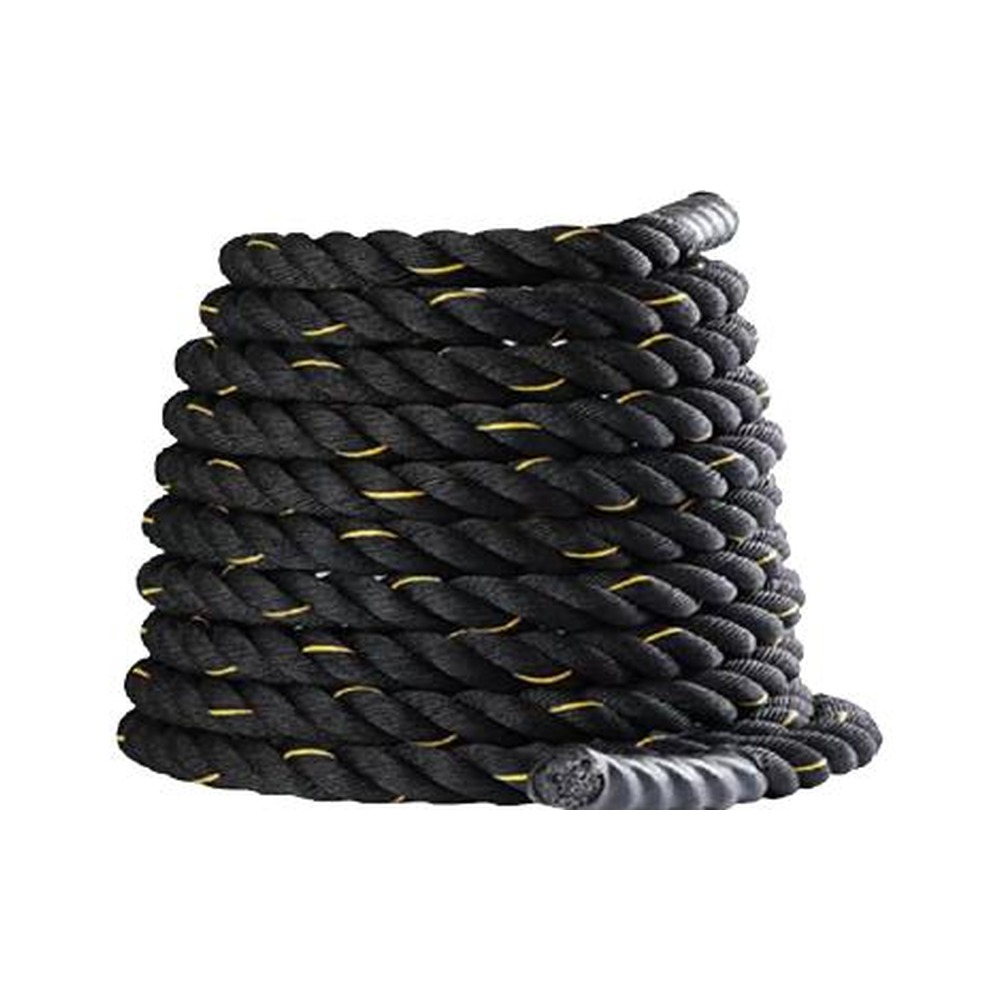
Start with the program and simultaneous stations
List the sessions that will use the rope: open-floor conditioning, personal training, coached circuits, school strength work or sports performance. Record wave, slam, pull or partner activity only when the product instructions permit it. For each session, note work interval, changeover, supervision and the number of people who must train at once.
Convert the timetable into station demand. One rope folded around one anchor normally serves one active user, while waiting users and coaches still need defined positions. If two classes overlap, count the combined demand rather than the average daily attendance. A spare rope does not create a spare station unless another approved lane, anchor and storage position exist.
Measure the complete working lane before selecting length
Measure from the proposed anchor contact to the user's working position, then add the user's stance, arm travel and a protected boundary around the moving rope. Include columns, doors, glazing, benches, rack loading zones and cross-traffic. Mark the lane on the real floor and run the busiest class transition before approving the layout.
A conventional rope folds at its midpoint, so its two working legs share the available distance. More slack, a longer construction and a heavier rope can change the wave response; excess rope is not automatically useful in a shorter room. Ask the supplier for total length, tolerance and measured mass, and trial the quoted configuration in the planned lane.
| Decision | Evidence to request | Site check | Risk if omitted |
|---|---|---|---|
| Program | Permitted drills and use instructions | Class sequence and supervision | Rope used outside its intended duty |
| Geometry | Total length, diameter, mass and tolerances | Anchor-to-user lane and boundary | Poor wave response or blocked circulation |
| Construction | Fibre/core, cover, handles and center protection | Floor and cleaning environment | Early abrasion, shedding or grip failure |
| Station | Anchor compatibility and installation scope | Structure, fixing and inspection access | Movement or sharp contact at the anchor |
Compare diameter, mass and handle as one system
A larger diameter changes hand closure and usually increases material and mass, but the actual effect depends on length and construction. Do not assign one diameter to every member from a generic chart. Trial short and long intervals with representative users, including the people expected to take beginner classes, and observe whether grip fails before the programmed conditioning objective.
Specify handle length, material, texture, bonding method and finished diameter. The handle should remain secure with dry and damp hands and should not expose a hard edge where it meets the rope. Confirm that color, logo or private-label changes do not alter grip geometry or conceal the joint during inspection.
Match rope construction and protection to the floor
Request the exact fibre or core, braid arrangement, outer cover, center-contact sleeve and end finish. Natural and synthetic constructions behave differently around moisture, shedding, abrasion and cleaning, while a full protective cover changes inspection access and movement. Treat every statement as model-specific evidence rather than a universal promise for the category.
Map every contact point: the anchor, the first section leaving the anchor, the active wave path and the handles during storage. Rough concrete, sharp steel edges and dirty outdoor surfaces can damage a rope quickly. Use only the surfaces allowed by the supplier, keep the lane free of debris and ask how the cover or sleeve is replaced when it becomes a wear item.
Approve the anchor as part of the equipment station
A rack upright, wall plate, floor fitting or purpose-made attachment is suitable only when the equipment provider and the responsible site professional confirm the structure, compatibility and installation. A smooth contact radius helps reduce localized wear, but it does not prove that the supporting rack, wall or floor can resist repeated dynamic loading.
Put anchor model, mounting location, fasteners, substrate, installer, clearance and inspection access into the project scope. Prevent the center loop from rubbing against a sharp seam or nearby hardware. Before every operating period defined by the facility, verify that the anchor is secure and the contact surface is intact; isolate the station when movement or damage appears.
Plan class capacity, storage and housekeeping
For circuits, draw active lanes, waiting positions and the route to the next station. Parallel ropes need boundaries that prevent waves and users from entering adjacent lanes. The instructor must be able to see each anchor and stop a station without crossing another rope. Use a live trial to measure reset time and confirm that the planned class count is operationally realistic.
Coil each rope in a repeatable way and store it dry, off circulation routes and without tight bends around unsuitable hooks. The storage point must accept the rope's actual bulk and mass and allow staff to examine it. Keep wet or contaminated ropes separate until cleaned and dried under the supplier's instructions, and record which station received each rope.
Normalize the quotation and reference-unit trial
Issue one comparison sheet covering product code, permitted drills, length, diameter, mass, construction, cover, center protection, handles, anchor, floor limits, quantity, marking, packaging, installation scope, spare or wear items and private-label details. Require each bidder to identify exclusions and supplied documents so a lower unit price cannot hide an incomplete station.
Approve one reference unit with the proposed anchor and floor. Check setup time, wave response, grip, center travel, cover movement, noise, floor contact, return to storage and visible identification. Record the accepted rope and anchor revision with photographs and written measurements; keep the physical unit available when practical for production and receiving comparison.
- Rope and anchor product codes
- Dimensions, mass and tolerances
- Fibre, cover, handles and wear protection
- Permitted drills, surfaces and cleaning method
- Installation, storage and inspection scope
- Packaging, batch identity and replacement route
Inspect the shipment before opening the station
At receiving, reconcile cartons and product codes, then measure a defined inspection subset for length, diameter and mass using the agreed method. Examine the full rope for cuts, splits, exposed core, contamination, inconsistent braid or cover damage. Inspect both handles and the center-contact area, and verify that anchors, fasteners, instructions and labels match the approved scope.
Install one station under the approved method and repeat the reference drills on the approved floor. Check that the anchor remains stable, the rope travels without sharp rubbing, the handles stay secure and the rope returns to storage without obstructing circulation. Record batch or shipment reference, findings and disposition, and release the remaining stations only after deviations are closed.
Buyer questions
What length of battle rope should a commercial gym buy?
Choose only after measuring the approved anchor-to-user lane and testing the exact construction. Total rope length, slack, diameter, mass and the programmed wave all affect the usable result, so one universal length is not reliable for every room.
Is a thicker battle rope better for a gym?
Not automatically. A larger diameter changes grip and often increases mass, which can end an interval through forearm fatigue before the intended conditioning target. Test representative users and keep a specialist size separate when the program requires it.
Can a battle rope be looped around any rack post?
No. The rack provider and the responsible site professional must confirm the structure and attachment. The contact surface should be smooth and compatible, and the complete anchor needs installation and inspection instructions.
How many battle ropes does a group-training gym need?
Count simultaneous active stations in the busiest class, then confirm a clear lane, approved anchor and storage position for each station. Extra ropes without usable stations do not increase class capacity.
What should be checked when a battle-rope order arrives?
Check identity, quantity, dimensions, mass, construction, cover, handles, center-contact area, anchor parts, labels and shipping damage. Then install one reference station and repeat the approved drills before releasing the lot.
Sources
- Rogue Battle Rope — Rogue Fitness
- TRX Battle Rope — TRX Training
- Battle Rope Anchor — Torque Fitness
- Battle Rope — Life Fitness
- Battle Rope — Primal Strength