
How to Choose a Commercial Belt Squat Machine
Choose a commercial belt squat machine only after confirming the programme, peak demand and available shared stations. Compare dedicated lever-arm, cable or trolley, rack-mounted and integrated multifunction formats on the exact belt and connector, delivered resistance, usable travel, entry and release, complete operating area and service access. A compatible rack or cable solution can cover lower demand only when its capacity and setup have been verified. Approve one reference configuration and repeat the same checks at receiving.
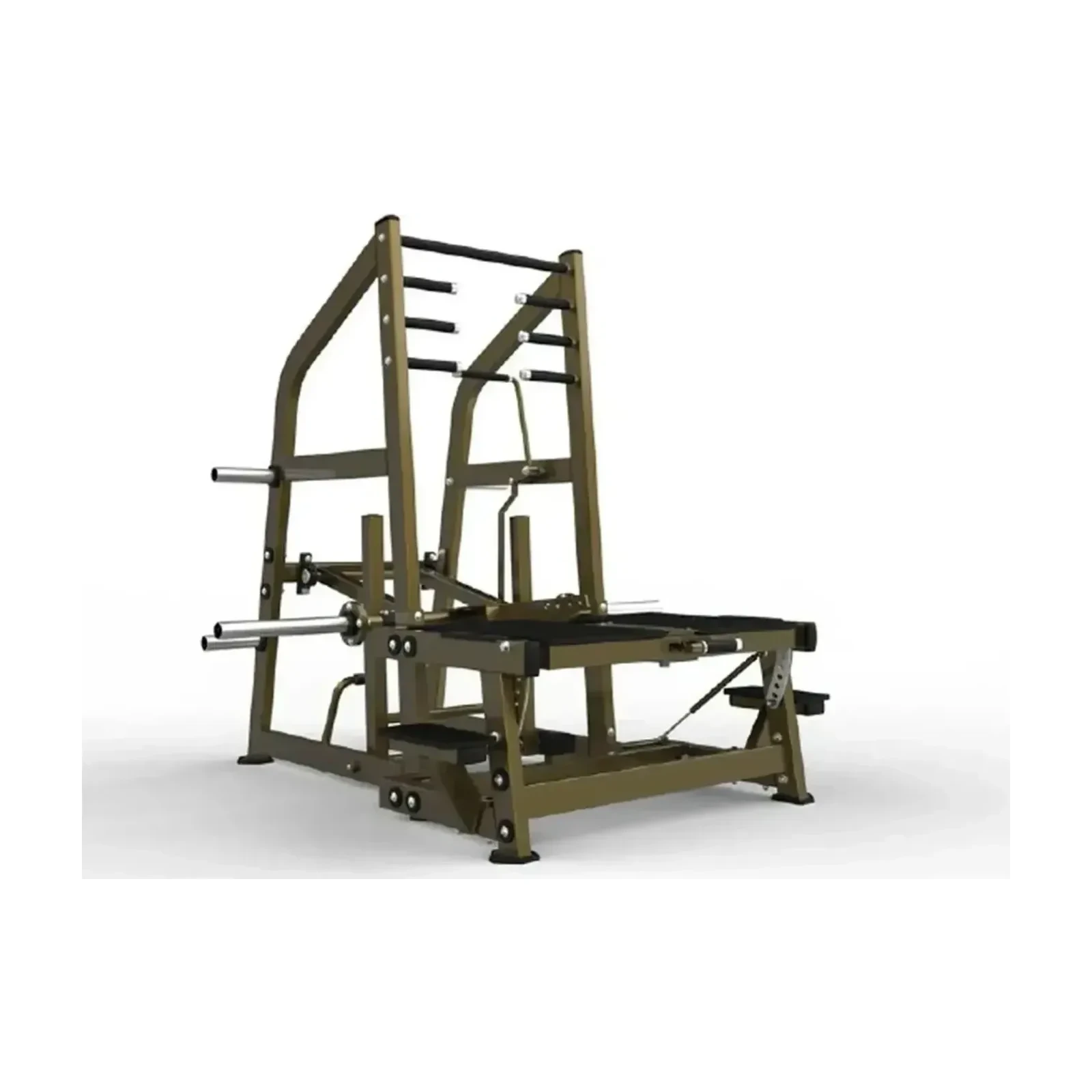
Start with demand, not with an empty place in the catalogue
Start with the programmed use, not a gap in an equipment list. Record who will use belt squats, which lower-body sessions include them, what coaches need the station to achieve and where the same users train now. Observe queues at racks, cable stations and other lower-body equipment during a fixed busy window. A dedicated machine is justified when it solves a defined access, coaching or capacity problem that the current floor cannot solve consistently.
Turn the observation into a procurement brief. State the intended user range, supervision model, weekly programme, expected simultaneous demand, available plates, floor and ceiling constraints, delivery route and service capability. Keep barbell squats, hack squats and leg presses as programme alternatives, but do not treat them as mechanically identical. The brief should explain why belt-squat capacity is required and how the buyer will judge that the selected format has met the requirement.
Choose the movement format before comparing finish or price
Separate the four architectures before comparing price. A dedicated lever-arm unit gives the exercise its own platform and queue but needs plate handling and permanent floor area. A cable or trolley version is governed by anchor height, cable travel and transmission. A rack attachment depends on documented compatibility and occupies that rack. An integrated multifunction station shares capacity with its other functions.
Walk through the complete task on the offered unit: select the belt, connect it, set the start position, load or select resistance, enter, perform the planned depth, stop, release, disconnect, store accessories and prepare for the next person. Check whether a user or helper must cross a weight horn, cable path or loaded arm. Select the format whose full workflow fits the programme, supervision and peak flow.
| Format | Best fit | Reference-unit checks | Operating trade-off |
|---|---|---|---|
| Dedicated lever-arm, plate-loaded | High planned use and a facility that already manages plates | Lever pickup, approved depth, foot platform, release control, belt line and loading access | Permanent footprint plus plate storage and handling |
| Cable or trolley | Projects needing adjustable resistance and a long, clear travel path | Anchor range, cable travel, delivered resistance, connector, reset and cable clearance | Cable sweep and service access must stay clear |
| Rack-mounted attachment | Lower dedicated demand where a compatible rack has spare capacity | Exact rack compatibility, fixing points, belt path, setup time and loaded stability | Consumes rack capacity and requires accessory storage |
| Integrated multifunction station | Projects consolidating several functions in one purchase | Included belt and connectors, simultaneous-use limits, transitions, guards and service route | Shared capacity and more complex changeovers |
Specify loading as delivered resistance, increments and workflow
Ask the supplier to describe resistance at the user rather than only stack or plate capacity. The schedule should identify unloaded starting resistance, the smallest practical increase, approved plate interface or stack increments, lever or cable relationship, usable travel and the point at which resistance engages. Values from another model or a marketing photograph do not establish the behaviour of the offered revision.
Use the reference unit to test controlled entry, the first loaded movement, the planned depth range, a deliberate stop and the return to the release position. Repeat with lighter and stronger representative users. Reject uncontrolled pickup, frame movement, belt migration, connector contact, exhausted cable travel, plate interference or a release control that cannot be reached under the approved setup. Record settings and observations, not an unsupported universal capacity claim.
Test pad adjustment, foot support and safe entry as one sequence
Trial the exact belt, connector and release system with short, mid-range and tall users. Each tester should be able to connect without twisting under load, set a controllable start position, keep both feet stable, reach the handles, descend to the approved depth and return to the release point without the belt, cable or loading arm striking the frame.
Use adults selected by the buyer with different body proportions, shoe sizes and training experience. Record the belt size, anchor or start setting and stance used by each tester. Look for stable whole-foot support, clear belt and connector travel, tolerable contact pressure, secure handholds, a smooth pickup and a clear exit path. Accessibility, supervision and clinical-use decisions remain with the responsible local professionals.
Plan capacity, plates and the complete live area
Draw the complete operating envelope around the exact configuration. Include the user's stance and torso, lever or trolley travel, cable sweep, plate loading, plate and belt storage, helper position, cleaning reach, normal aisle and technician access. Check doorways, lift limits, turns, packaging, assembly sequence, finished-floor protection and the manufacturer's fixing instructions before reserving the location.
Capacity depends on the format. A rack attachment can preserve floor area but occupies a rack during fitting, loading and training; an integrated multifunction station can block another cable function; a dedicated unit protects its own queue but consumes permanent space. Time belt fitting, adjustment, loading, the set, unloading and changeover during the pilot. Use those occupied minutes and the accepted queue to decide quantity instead of applying a generic machines-per-member ratio.
Inspect wear points, cleaning access and service isolation
Treat the belt, webbing and connectors as specified equipment, not incidental accessories. Confirm the supplied sizes, adjustment range, stitching, attachment points, rated connector type, storage method, replacement part codes and permitted cleaning products. Inspect contact edges and the path between belt and anchor through the whole approved movement. If an alternate belt changes fit or travel, it is a configuration change that requires another check.
Map routine inspection points for pivots, bearings or bushings, cables, pulleys or trolley wheels, stops, release parts, foot surface, guards, fasteners and floor contact. Request current assembly and user instructions, an exploded parts view, revision-specific part numbers, wear criteria and an isolation procedure. A service plan is credible when staff can identify the exact part and remove a faulty unit from use without blocking an aisle or guessing at a repair.
Approve one reference unit and normalize every quotation
Make every supplier quote the same schedule: model and revision, format, resistance system, starting resistance, increments, usable travel, anchor position, foot platform, belt and connectors, handles, start and release controls, guards, finish, labels, drawings, fixing, packaging, assembly, documents, initial wear parts and the receiving protocol. Price plates, storage and installation separately so a lower total cannot hide a smaller scope.
Approve one physical reference or a fully documented reference unit before volume production. Attach dated photographs, signed settings, measurements and the pilot record to the purchase order. Freeze belt geometry, connector, lever or cable path, platform, release system and finish. A substitution or revision is evaluated against the same brief before shipment; visual similarity is not acceptance evidence.
Receive, commission and release against the approved reference unit
At receiving, match package marks, model and revision, quantities and visible condition to the order before assembly. Record transport damage and verify frame, finish, pivots, loading system, platform, belt, connectors, handles, controls, guards, labels, manuals and fasteners. Assemble, level and secure the equipment only under the current instructions, while preserving access for cleaning and service.
Commission each unit with the approved user profiles, settings, increments and movement sequence. Confirm controlled entry and exit, stable whole-foot support, predictable resistance, sufficient travel, reachable release, secure plate or selector retention, quiet operation and a stationary frame. Log the serial reference, result, defect owner and closure. Train staff on daily visual checks, belt storage, cleaning, out-of-service marking and the escalation route before members use the station.
FAQ
Does every commercial gym need a dedicated belt squat machine?
No. Choose a dedicated unit when the programme, coaching method or measured shared-station queue justifies its permanent floor and service demand.
What is the main difference between lever-arm and cable belt squats?
A lever creates a model-specific pickup and resistance path; a cable or trolley depends on anchor position, travel and transmission. Test delivered behaviour on the offered unit.
Can a rack-mounted attachment replace a dedicated machine?
It can when the rack is compatible and has spare capacity. Count fitting, loading, training and reset time because the attachment occupies the rack throughout that sequence.
Should buyers compare stack or plate capacity?
Only after starting resistance, practical increments, transmission, usable travel and the approved user range are documented for the exact configuration.
What must appear in the purchase order?
Record the model and revision, format, resistance schedule, belt and connectors, platform, controls, live area, drawings, fixing, finish, documents, spares and receiving test.
Sources
- ISO 20957-1 general requirements — International Organization for Standardization
- ISO 20957-2 strength equipment requirements — International Organization for Standardization
- ASTM F2216 selectorized equipment specification — ASTM International
- Matrix belt squat development — Matrix Fitness
- Hammer Strength plate-loaded belt squat — Life Fitness / Hammer Strength
- Precor belt squat and step-up — Precor