
Introduction
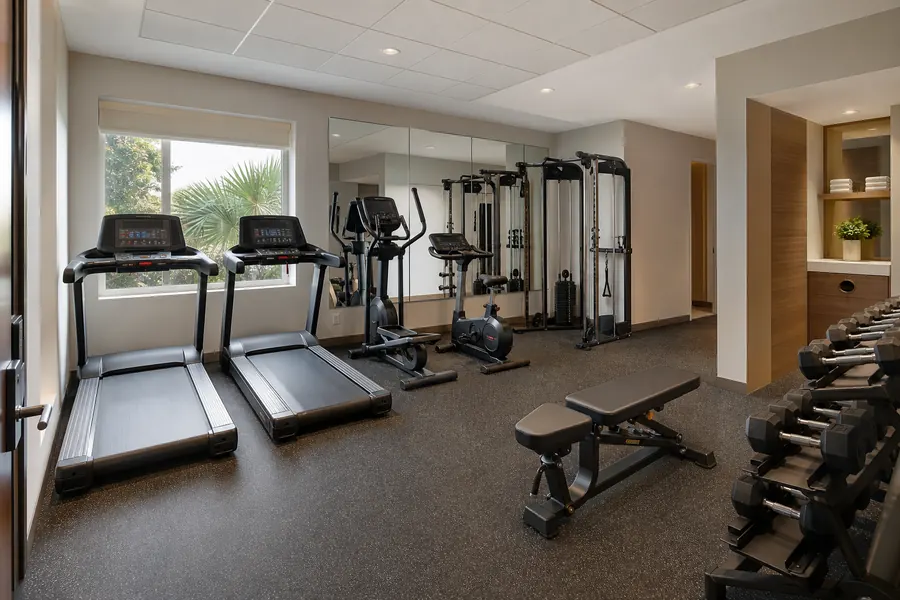
Hotels should buy easy-to-use cardio, a compact full-body strength solution, adjustable free weights, a bench, functional accessories, durable flooring and organized storage first. The priority is broad guest access, quiet operation, simple maintenance and safe use in limited space—not a large collection of specialized bodybuilding machines.
Key takeaways
- Define the guest experience: Clarify hotel positioning, guest profile, hours and whether the room is staffed.
- Audit the room: Check structure, noise adjacency, access, power, ventilation, ceiling and door routes.
- Secure the core: Prioritize familiar cardio, compact full-body strength, dumbbells, bench, flooring and storage.
Planning context
A hotel fitness room has a different job from a membership gym. Guests arrive with different training experience, use the room without a long onboarding process and expect equipment to work at varied hours. The winning package must feel complete in a short visit while remaining manageable for hotel staff who also support many other facility systems.
The purchase decision should start with room size, likely occupancy, guest profile, noise-sensitive spaces, ventilation, power, operating hours and staff support. A compact mix can deliver a strong guest experience when every item has a clear role. An oversized list can make the same room difficult to navigate, clean and maintain.
Hotel Gyms Should Prioritize Access, Reliability and Simplicity
Hotel operators usually serve first-time visitors, regular exercisers, older guests, business travelers and leisure guests in the same room. Equipment should be recognizable, adjustable without staff assistance and suitable for short sessions. Clear entry, stable contact points and straightforward resistance changes matter more than an advanced feature that only a small group understands.
Operational simplicity is equally important. Housekeeping needs surfaces that can be reached and cleaned. Engineering staff need access to belts, cables, fasteners, batteries or power connections. Procurement teams need a documented route for spare parts and warranty support. The equipment mix should limit avoidable variation in consoles, adjustment systems and wear parts, especially when the hotel manages several properties.
Buy Familiar Cardio and a Compact Strength Core First
For most hotels, the first cardio positions should be treadmills plus at least one lower-impact option such as an upright bike, recumbent bike or elliptical. The exact mix depends on room size and guest expectations. Treadmills are familiar but demand careful power, rear clearance and routine deck and belt attention. Bikes can use less operating space and broaden access. An elliptical offers full-body conditioning but needs suitable ceiling and movement clearance.
Strength coverage can come from a compact selectorized multi-function station or dual adjustable pulley, an adjustable bench and a practical dumbbell range. This combination supports presses, rows, pulldowns, arm work, lower-body variations and guided cable exercise without filling the room with single-purpose stations. If space allows, add one intuitive lower-body machine because many guests value stable leg training and may not want to improvise with dumbbells.
Select Hotel Cardio for Quiet, Unsupervised and Frequent Use
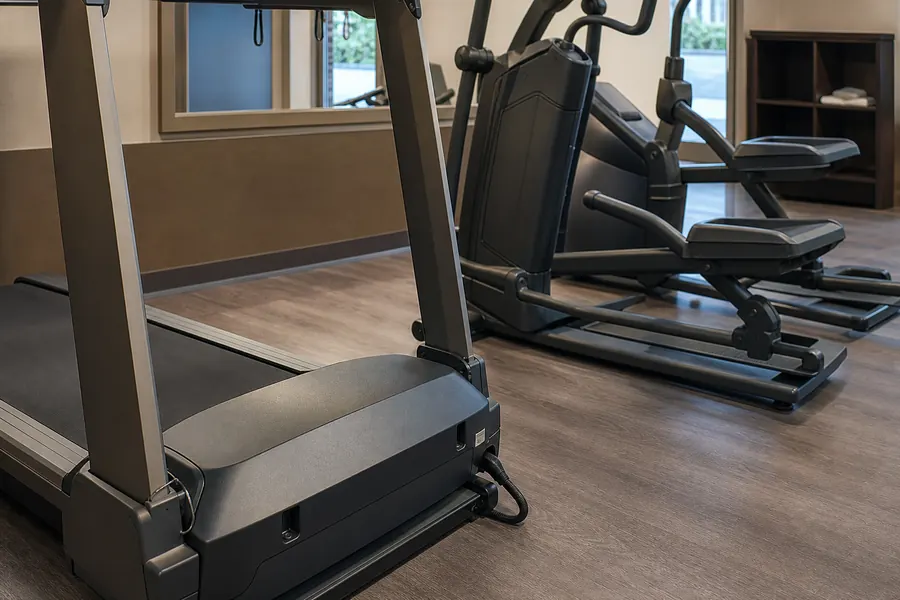
Cardio equipment must be evaluated in the actual room context. A motorized treadmill above guestrooms, beside a meeting room or near a spa may require more attention to structure-borne noise and flooring than the same unit on a ground-floor slab. The operator should review electrical load, outlet location, ventilation, ceiling clearance, safe approach, rear fall zone and the ability to remove the machine later for service.
Ask the supplier what routine inspections are expected and how service panels are reached. Review how the console starts, whether controls are understandable, and what happens when the machine loses power. Hotels do not need invented performance claims; they need a practical support plan. A smaller number of serviceable commercial machines is safer than a dense row that cannot be cleaned or accessed without moving neighboring equipment.
Use Multi-Function Strength Equipment to Cover More Guest Needs
A dual adjustable pulley or compact cable system is valuable because it creates many exercise paths without assigning floor area to every movement. The package should include a rational attachment set, a clear storage location and enough open working distance for users to step away from the pulleys. A bench turns the same zone into a place for seated, incline and supported movements, but it also needs a defined parking position.
If the hotel chooses a multi-gym with fixed stations, confirm how many guests can train at the same time and whether one station blocks another. Review entry height, seat adjustment, weight-stack selection and instructions from the perspective of an unfamiliar guest. Avoid a configuration that looks compact in a catalog but creates overlapping user paths once pulldown bars, leg developers and cable handles are in motion.
Keep the Free-Weight Area Useful but Controlled
Dumbbells provide efficient exercise variety and are expected in many hotel gyms, yet the range should match the supervision and guest profile. The rack needs clear number visibility, stable saddles and enough approach space for safe return. An adjustable bench should be easy to move without damaging flooring and stable at all intended angles. Provide a clear location for mats and small accessories so the room does not become a collection of loose items.
More weight is not automatically better. A hotel may decide that very heavy dumbbells, loose plates or barbell lifting do not fit its risk policy, floor construction or acoustic environment. That is an operating decision, not a sign that the gym is incomplete. A well-chosen moderate range combined with cables and a lower-body station can support meaningful strength training for a broad guest population.
Zone the Room for Sightlines, Circulation and Noise
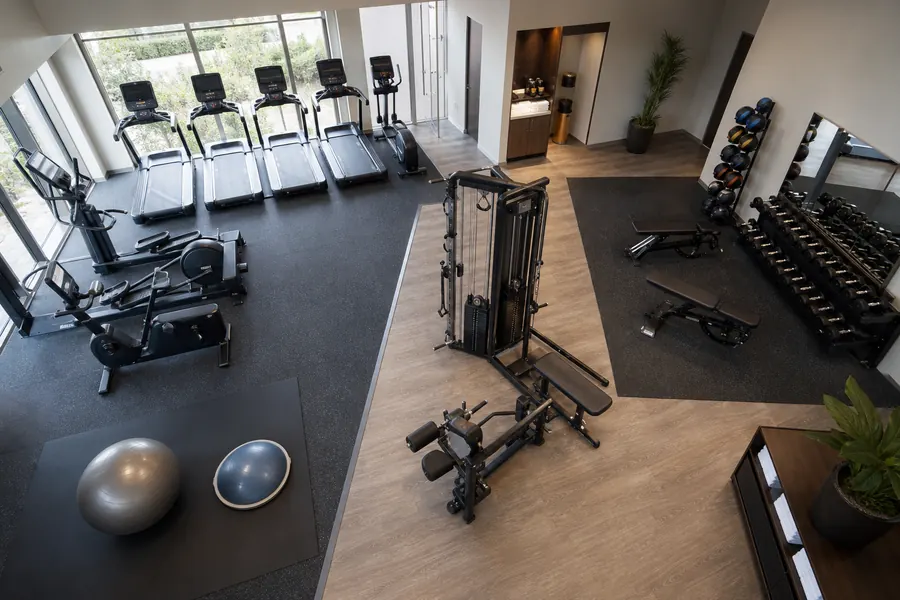
Place cardio where ventilation, views and power work together, but preserve required safety clearance behind moving belts. Put strength equipment where users can enter and adjust it without stepping into the main path. Keep dumbbell lifting away from glass, door swings and cardio access. Reserve a genuinely open area for stretching rather than treating leftover gaps between machines as mobility space.
Mirrors can improve spatial awareness, but they should not hide service panels or encourage machines to be placed too close to walls. Flooring should respond to the activity: resilient surfaces under weights, stable level support under cardio, and clean transitions that do not create trip edges. If guestrooms or quiet functions are adjacent, involve the building team before the equipment list is approved.
Build the Maintenance Plan into the Purchase
Hotel fitness rooms may be inspected by staff who are not dedicated gym technicians. The supplier should provide a clear routine checklist covering cleaning, visible damage, cable condition, fasteners, upholstery, treadmill belt condition, power leads and abnormal noise. The hotel should define who removes a machine from service, how guests are prevented from using it and who contacts technical support.
For multi-property operators, standardizing selected equipment families can reduce training and spare-parts complexity. However, each property still needs a site review because power, access, ceiling height and room shape vary. Keep a small approved stock of appropriate wear parts only when the supplier and maintenance plan support that approach. Unverified substitute parts should not be treated as interchangeable simply because they look similar.
Request a Hotel-Specific Proposal, Not a Generic Gym Package
Give the supplier the room plan, hotel category, expected key count or occupancy context, guest profile, operating hours, acoustic constraints, electrical information, access route and desired opening date. Ask for a proposal that explains each equipment role, working clearance and service access. The response should distinguish essential positions from optional upgrades so the operator can protect the core experience when budgets change.
Also clarify delivery responsibilities. A hotel project may involve timed access, finished corridors, passenger or service elevators, limited loading bays and strict protection requirements. Confirm packaging size, unloading method, internal transport, assembly location, floor protection, waste removal and commissioning scope. These logistics can change the feasible product choice and should appear in the quotation discussion before production begins.
Buyer decision framework
- Define the guest experience: Clarify hotel positioning, guest profile, hours and whether the room is staffed.
- Audit the room: Check structure, noise adjacency, access, power, ventilation, ceiling and door routes.
- Secure the core: Prioritize familiar cardio, compact full-body strength, dumbbells, bench, flooring and storage.
- Test working envelopes: Draw rear treadmill clearance, cable exercise distance, bench movement and dumbbell return paths.
- Plan support: Assign inspection responsibility and confirm parts, warranty, service access and removal-from-use procedures.
- Coordinate delivery: Match packaging, internal transport, installation and commissioning to hotel access rules.
Buyer checklist
- Room plan, ceiling height, power and ventilation have been verified.
- Noise-sensitive rooms above, below and beside the gym have been considered.
- Cardio includes familiar and lower-impact choices appropriate to guests.
- Strength equipment can be adjusted by an unfamiliar user without staff assistance.
- Cable, bench and dumbbell working zones do not overlap main circulation.
- Flooring, mirrors, storage and cleaning access are part of the layout.
- Routine hotel staff inspection and out-of-service procedures are documented.
- Packaging and internal delivery route fit the loading bay, corridors, doors and elevator.
- Warranty contact, spare-parts route and installation responsibility are written in the quotation.
Common buying mistakes
- Buying a health-club package for a hotel: The room becomes crowded with specialized stations while basic guest access and serviceability suffer.
- Ignoring acoustic transfer: Impact, motors and dropped weights can affect guestrooms and quiet functions beyond the gym walls.
- Placing cardio without service clearance: Cleaning, belt work or panel access may require moving several machines.
- Adding accessories without storage: Loose handles, bands, mats and weights create trip hazards and an untidy guest impression.
- Choosing complex controls: Guests should not need an orientation session for a short hotel workout.
- Leaving logistics out of the quote: Finished interiors, elevator limits and timed access can make delivery more difficult than factory-to-site freight.
Manufacturer perspective
From a manufacturer's perspective, hotel projects benefit from an early room and access review. The product mix can then be checked for user coverage, console or adjustment consistency, finish coordination and service access. Compact does not mean placing machines as closely as possible; it means reducing duplicated functions while preserving each station's working envelope.
Shipment preparation should reflect the building route. Frames, consoles, weight stacks, benches and accessory cartons may need different protection and assembly sequences. The receiving team should know which parts belong together and which packages must reach the room before final assembly. Clear coordination reduces handling risk without inventing a completed-project claim.
Hotel Gym Equipment Priority Comparison
| Equipment type | Guest value | Space need | Operational attention | Typical priority |
|---|---|---|---|---|
| Commercial treadmill | Familiar walking and running | High plus rear safety clearance | Belt, deck, cleaning and power | First group |
| Bike or elliptical | Lower-impact conditioning | Low to medium | Moving joints, pedals and console | First group |
| Compact functional trainer | Many strength exercises from one station | Medium working envelope | Cables, pulleys and attachments | First group |
| Dumbbells and adjustable bench | Flexible familiar strength work | Medium plus safe return path | Upholstery, fasteners and storage | First group |
| Single-purpose strength machine | Very clear guided movement | Medium per movement | Adjustment points and upholstery | Add when space and demand justify it |
| Specialist plate-loaded machine | Appeals to strength-focused guests | Medium plus plates and loading access | Plate storage and supervision policy | Usually later or concept-specific |
Useful next pages
Buyer FAQ
What are the essential machines for a small hotel gym?
A practical core is two or more familiar cardio positions as space allows, a compact functional trainer or multi-gym, dumbbells, an adjustable bench, mats, small functional accessories, durable flooring and organized storage.
Should hotels buy commercial or home-use fitness equipment?
Hotels should evaluate equipment intended for the expected shared-use environment, operating hours and support needs. Confirm suitability, warranty scope and maintenance expectations with the supplier rather than relying only on a product label.
How many treadmills should a hotel gym have?
The answer depends on room size, occupancy pattern and guest profile. Treadmills often deserve multiple positions, but every unit needs power, ventilation, safe rear clearance and service access.
Is a functional trainer suitable for hotel guests?
It can be very useful because it covers many movements. Choose intuitive adjustments, supply a controlled attachment set and leave adequate exercise space so unfamiliar users can train without blocking circulation.
How can a hotel reduce gym noise?
Review floor structure and adjacent uses, choose suitable flooring, control dropped-weight activities, maintain moving equipment, preserve machine leveling and involve an acoustic or building specialist when the location is sensitive.
What should be included in hotel gym equipment delivery planning?
Confirm packaging dimensions, loading access, elevator capacity, corridor and door clearance, floor protection, assembly location, installation responsibility, waste removal and commissioning.
Conclusion
A strong hotel fitness room is easy to understand, broad enough for a useful workout and simple for the property to operate. Familiar cardio, compact full-body strength, controlled free weights, resilient flooring and disciplined storage should come before specialist variety. Send the room plan, hotel positioning, guest profile, access route and operating constraints when requesting a recommendation. Those inputs allow the manufacturer to propose a category mix and quotation scope that can be reviewed by procurement, engineering and operations before an order is placed.
Need this topic turned into a real equipment plan?
Send your market, gym size, product categories or OEM needs. Kloe can help clarify the next step.