
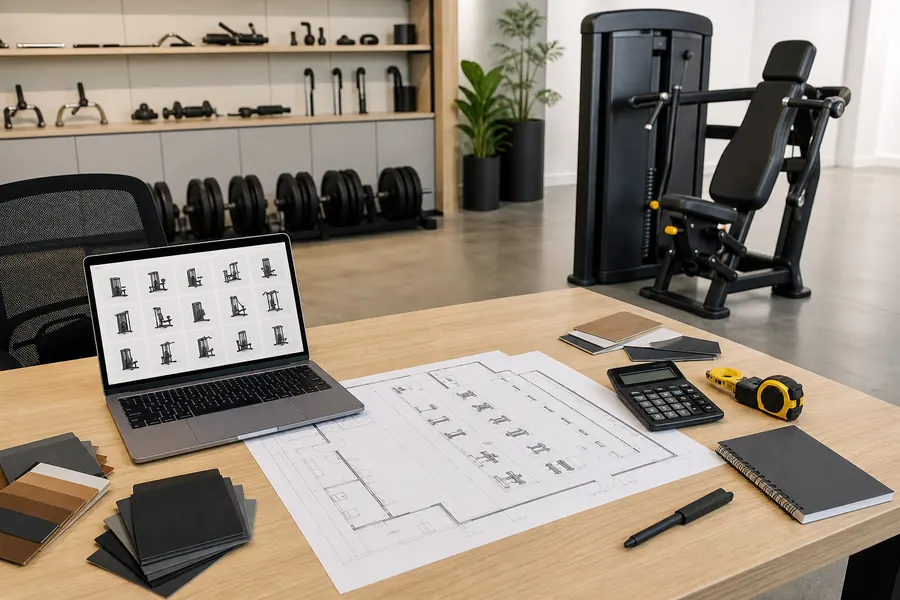
Introduction
A commercial gym equipment quotation should identify every model, configuration, quantity, included accessory, finish, unit and total price, trade term, packing method, lead time, payment term, warranty, spare parts, documentation, quotation validity and responsibility for freight, installation and commissioning. It should also record assumptions, exclusions and the process for approving changes.
Key takeaways
- Freeze the comparison scope: Use one product schedule, destination, service requirement and requested term for every supplier.
- Audit every line: Confirm configuration, quantity, accessories, finishes, prices and alternatives.
- Allocate responsibilities: Map trade, freight, customs, internal delivery, installation and commissioning.
Planning context
A quotation is not useful because it contains a grand total. It is useful because a buyer can understand exactly what is being supplied, what remains optional, what must be done by others and which conditions can change price or schedule. Ambiguity at quotation stage becomes avoidable cost and delay during production, shipping or installation.
Commercial fitness projects combine machines, accessories, flooring, branding, packaging, logistics and support. Buyers should ask for a scope that can be compared line by line and later converted into controlled order documents. This guide focuses on quotation completeness rather than the information a buyer sends before requesting one.
Every Product Line Should Be Technically Identifiable
Each line should include model or product identifier, clear name, training function, load type where relevant, quantity, unit price, line total and currency. Record the selected configuration rather than relying on a catalog photo. For cable and multi-station equipment, list included handles, bars, benches, stacks or attachments. For racks and free weights, separate frames, safeties, bars, plates, storage and floor protection.
Where a specification remains open, mark it as an assumption or option. A quote should not silently use a smaller stack, different console, alternative upholstery or reduced accessory set to reach a target price. If the supplier proposes a substitute, show it as an alternative with the effect on function, dimensions, parts, price and lead time.
Pricing Should Show Currency, Units and Optional Scope Clearly
State the quotation currency and whether prices are fixed for the validity period or subject to a defined adjustment. Unit and line totals should reconcile with the grand total. Discounts should be transparent enough that removing or changing a line does not create confusion. Taxes, duties and local fees should be identified as included, excluded or for buyer confirmation with qualified local advice.
Options belong in a separate section. Useful options may include alternative stack sizes, consoles, colors, upholstery, logo methods, spare-parts kits, flooring, extra attachments, installation or freight. The buyer should be able to approve the base package without accidentally accepting every option, and should see whether an option changes packaging, production lead time or compatibility.
Trade Terms Must Name the Place and Responsibility Split
A trade term without the named place or port is incomplete. The quotation should identify the agreed term and location and describe which party arranges main carriage, insurance where applicable, export clearance, import clearance, duties and inland delivery. Buyers should confirm current Incoterms usage and customs obligations with qualified logistics advisers rather than relying on a casual abbreviation.
Freight estimates should state their basis, validity and whether they are firm bookings or planning figures. Container type, consolidation, destination charges and delivery restrictions can change cost. If the supplier provides a loading estimate, confirm that it is based on the quoted mix and packing configuration rather than a generic capacity statement.
Lead Time Should Start from Defined Approval Conditions
Production cannot begin from an unresolved order. The quotation should state which events trigger lead time, such as receipt of deposit, signed product schedule, approved color, confirmed artwork and technical clarification. It should also identify expected sample or pre-production approval time where customization is involved.
Ask how changes affect schedule. A logo revision, console change or additional model may require new materials or drawings. The supplier should not promise an unchanged date without review. Separate manufacturing time from inspection, booking, port handling, transit, customs, inland transport and installation so the project team understands the full opening path.
Packing Scope Should Match Equipment Shape and Receiving Needs
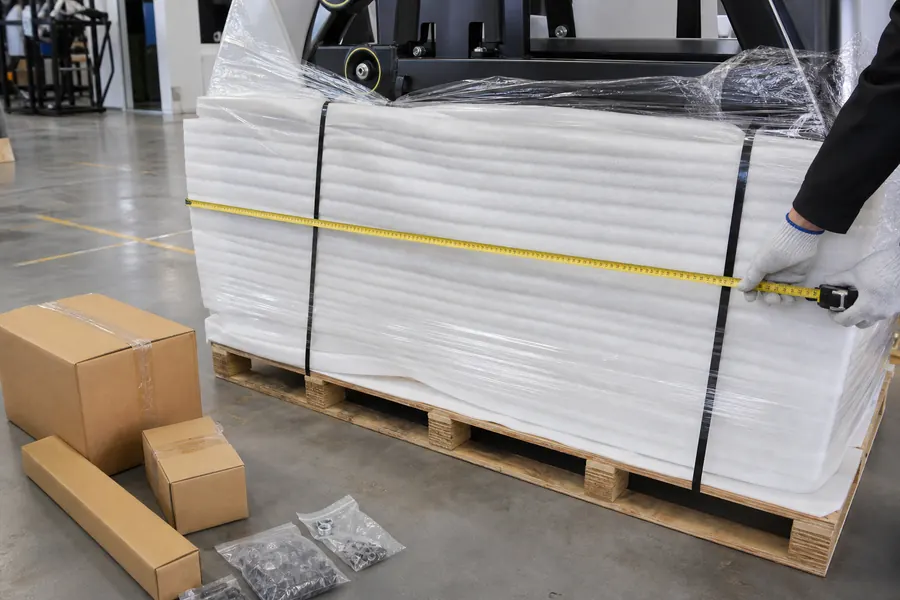
Commercial equipment includes coated frames, upholstery, weight stacks, moving arms, consoles, cables, glass or plastic covers and small hardware. The quotation should describe the packing approach and whether machines ship assembled, partly assembled or knocked down. Note pallet, crate or carton use where relevant and how moisture, abrasion and movement are controlled.
Request package count and dimensions at the appropriate project stage, especially when doors, elevators, containers or warehouse space are constrained. Hardware and attachments should be grouped and identified for installation. If wooden packing, fumigation documents or special marks are required, record responsibility and any additional cost after confirming destination rules.
Installation and Commissioning Need Their Own Scope
The word installation can mean unloading at the curb, moving packages into the room, assembly, anchoring, electrical connection, leveling, functional checks, waste removal or staff handover. The quotation should state exactly which tasks are included and which are excluded. It should also name site readiness assumptions such as clear access, completed flooring, available power and approved anchoring conditions.
Commissioning should confirm that the delivered equipment is assembled as intended, adjustments engage, cables and moving paths are correct, fasteners and guards are checked, cardio equipment powers and basic functions operate, and the area is ready for the facility's own acceptance. This is not the same as staff training or an ongoing maintenance agreement unless those services are listed.
Warranty and Spare Parts Must Be Operational, Not Decorative
List coverage by relevant component category, duration, start date, exclusions and conditions. Explain the claim process, required evidence, response channel and responsibility for parts freight, labor and travel. Clarify routine wear, misuse, unapproved modification, poor maintenance and installation responsibility. A headline warranty period without this process cannot be compared reliably.
Spare parts should be model-specific. The quote may include a recommended opening kit, optional stock or a commitment to supply, but it should identify what is included and how compatibility is maintained. Ask for parts diagrams and service information where appropriate. Electronic or cardio parts may have different lead times and diagnostic requirements from cables, pins or upholstery.
List Documentation, Inspection and Change Control
Record the documents the supplier will provide: commercial invoice, packing list, origin or shipping documents where applicable, manuals, assembly instructions, maintenance guidance, warranty information and any product-specific records agreed for the destination. Formal compliance needs vary; buyers should verify them locally and ensure any supplied report applies to the selected model and configuration.
Define pre-shipment inspection, photo records or third-party access if required. The quotation should also state validity, confidentiality where relevant, order acceptance and how changes are priced and approved. A revision number and date make it clear which quotation is active. Once an order proceeds, the approved product schedule should remain the technical source of truth.
Buyer decision framework
- Freeze the comparison scope: Use one product schedule, destination, service requirement and requested term for every supplier.
- Audit every line: Confirm configuration, quantity, accessories, finishes, prices and alternatives.
- Allocate responsibilities: Map trade, freight, customs, internal delivery, installation and commissioning.
- Connect approvals to time: State deposit, artwork, sample and technical approvals that trigger production.
- Test support wording: Review warranty, parts, evidence, response and exclusions as operating processes.
- Control revisions: Use dated versions and written change approval before converting the quote into an order.
Buyer checklist
- Models, functions, configurations, quantities and included accessories are clear.
- Currency, unit prices, line totals, options and grand total reconcile.
- Trade term includes a named place and responsibility split.
- Freight basis, validity and destination assumptions are stated.
- Lead time begins from defined payment and approval events.
- Packing method, assembly state, package information and marks are addressed.
- Unloading, internal movement, installation and commissioning are separately defined.
- Warranty, spare parts, labor, freight and claim evidence are documented.
- Required manuals, shipping documents and agreed inspection records are listed.
- Validity, exclusions, revision number and change procedure are present.
Common buying mistakes
- Comparing grand totals: Different models, quantities, accessories and services can hide behind similar totals.
- Leaving configuration in catalog images: A picture does not define stack size, console, attachments, finish or selected options.
- Using a trade term without a named place: Responsibility and cost remain unclear when the location is missing.
- Treating lead time as door-to-door time: Approvals, booking, transit, customs, delivery and installation are separate stages.
- Assuming installation includes everything: Unloading, moving, assembly, anchoring, electrical work and commissioning need explicit scope.
- Accepting warranty duration alone: Practical support depends on coverage, exclusions, evidence, labor, freight and parts availability.
Manufacturer perspective
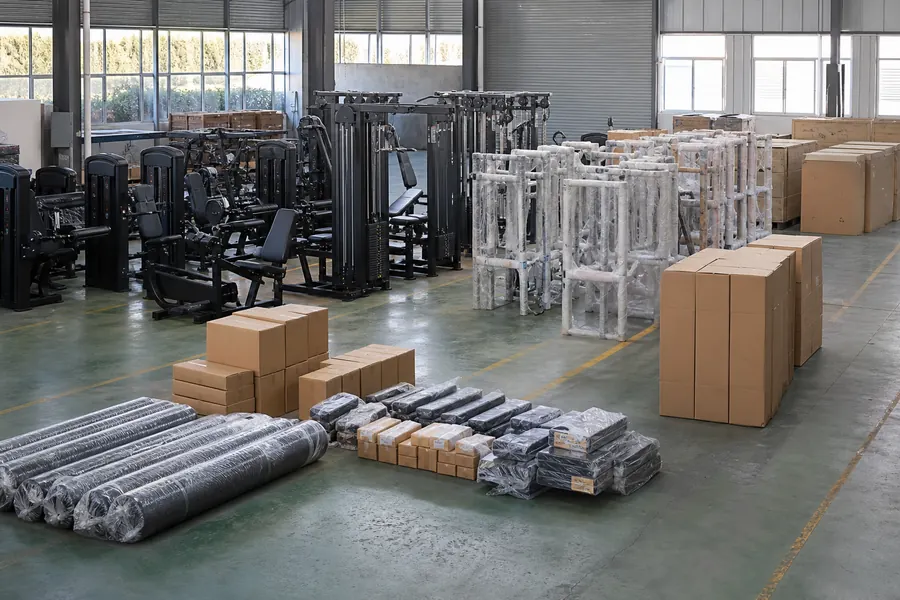
From a manufacturer's perspective, a precise quotation protects production as well as the buyer. The approved configuration guides material purchasing, drawings, color and upholstery preparation, logo application, assembly, inspection and packing. Ambiguous options force factory teams to make assumptions that should belong to the buyer's approval process.
Before shipment, the product schedule should reconcile with quantities, accessories, spare parts and package identification. Photographs and packing records can support review when agreed, but they should relate to the actual order. A quotation cannot guarantee every external logistics event; it can clearly allocate responsibilities and assumptions.
Quotation quality also depends on disciplined communication inside the factory. Sales, engineering, purchasing, production, quality and logistics should work from the same approved configuration. When the buyer requests a change, the supplier needs time to check drawings, material availability, purchased components, packing and inspection before confirming price and schedule. A fast answer that ignores those dependencies creates more risk than a careful written revision.
Buyers should keep commercial allowances separate from technical acceptance. A discount, free accessory or favorable payment milestone does not approve an alternative frame, console, stack or finish. Conversely, approving a sample does not automatically approve the final quantity or freight scope. The quotation and later order documents should show which approval applies to product, artwork, sample, commercial term, inspection and shipment. Clear boundaries make review faster and prevent one email from being interpreted as approval of unrelated decisions.
Commercial Gym Equipment Quotation Structure
| Quotation section | Required detail | Why it matters | Common ambiguity to remove |
|---|---|---|---|
| Product schedule | Model, function, configuration, quantity and inclusions | Defines the physical scope | Catalog image used instead of selected configuration |
| Commercial price | Currency, unit price, line total, discounts and tax treatment | Enables line-by-line comparison | Discount shown without a stable baseline |
| Trade and freight | Named term, location, freight assumption and responsibility | Allocates logistics cost and risk | Shipping stated as included without destination scope |
| Production | Approval inputs, lead-time trigger and change effect | Connects schedule to buyer decisions | Lead time counted before artwork or deposit approval |
| Packing and documents | Packing method, marks, list and supplied records | Supports transport and receiving | Export packing described with no machine-specific detail |
| Support | Warranty, parts, installation, commissioning and exclusions | Defines post-delivery responsibility | Warranty duration shown without claim process |
Useful next pages
Buyer FAQ
Should gym equipment quotations include unit prices?
Yes. Unit price, quantity and line total make scope changes and supplier comparisons easier. Options and discounts should remain transparent.
What does lead time mean in a gym equipment quote?
The quote should define the trigger and whether it covers production only. Approvals, inspection, booking, transit, customs, inland delivery and installation are usually separate.
Should freight be included in the quotation?
It can be included or separate, but the trade term, named place, basis, validity and responsibilities must be clear so the buyer can compare equivalent landed scope.
What warranty details should be written?
Record coverage, duration, start date, exclusions, maintenance conditions, claim evidence, response path and responsibility for parts, freight, labor and travel.
Does a quotation need packing dimensions?
Final package dimensions may follow production, but planning information should be provided when containers, elevators, doors, warehouse or internal delivery create constraints.
How should quotation changes be approved?
Use a dated revision, show price and schedule effects, and obtain written approval from the authorized buyer before the changed scope reaches production.
Conclusion
A complete quotation lets technical, commercial, logistics and operating teams review the same project. It identifies products, options, cost, timing, packing, responsibility, support and assumptions clearly enough to compare and control. Before accepting a quote, reconcile it with the floor plan and equipment schedule, mark every open decision and confirm how revisions will be approved. The resulting document becomes a strong foundation for the order without pretending to replace legal, customs or local compliance advice.
Need this topic turned into a real equipment plan?
Send your market, gym size, product categories or OEM needs. Kloe can help clarify the next step.