
Introduction
A gym chain should choose equipment through a controlled platform: one standardized core specification for brand-defining machines, finishes, parts and service procedures, plus a documented variable layer for site size, local demand and building constraints. Validate the standard in a pilot, approve changes centrally and plan phased production, installation and spare parts across locations.
Key takeaways
- Define the brand platform: Record movement coverage, equipment families, finishes, interface and service principles.
- Create site archetypes: Build compact, standard and flagship packages with approved option modules.
- Pilot and document: Validate one representative site and convert findings into a controlled specification.
Planning context
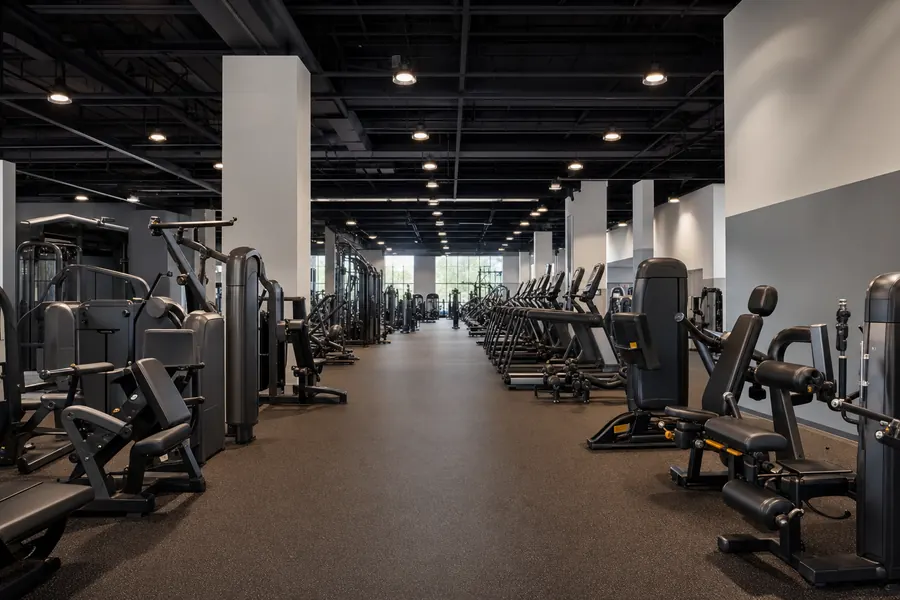
Multi-location buying is not simply a larger single-gym order. A decision repeated across ten sites multiplies both benefits and mistakes. Equipment must create a recognizable member experience while fitting rooms with different columns, access routes, electrical capacity, local demand and opening schedules.
The practical solution is controlled standardization. The chain defines what must stay consistent, what may vary, how alternatives are approved and how data from operating sites changes the next rollout. Manufacturers and project teams can then plan repeatable specifications, samples, production, quality records, packaging and spare-parts support without pretending every location is identical.
Create a Standard Core and a Controlled Site-Specific Layer
The core should include the equipment that communicates the chain's training promise and operating method. This may cover the main selectorized circuit, rack and bench family, functional trainer, free-weight specification, essential cardio console family, upholstery, frame finish, branding positions, attachment set and storage logic. Standardizing these elements makes the member journey more familiar and helps staff move between locations.
The variable layer responds to real site conditions. A compact urban club may use more multi-function equipment, while a suburban flagship may add plate-loaded variety and more cardio capacity. Local demand may justify a glute zone, group training area or additional lower-body stations. Every variation should come from an approved menu with a stated reason, so flexibility does not become uncontrolled model drift.
Write an Equipment Standard That Is More Precise Than a Model List
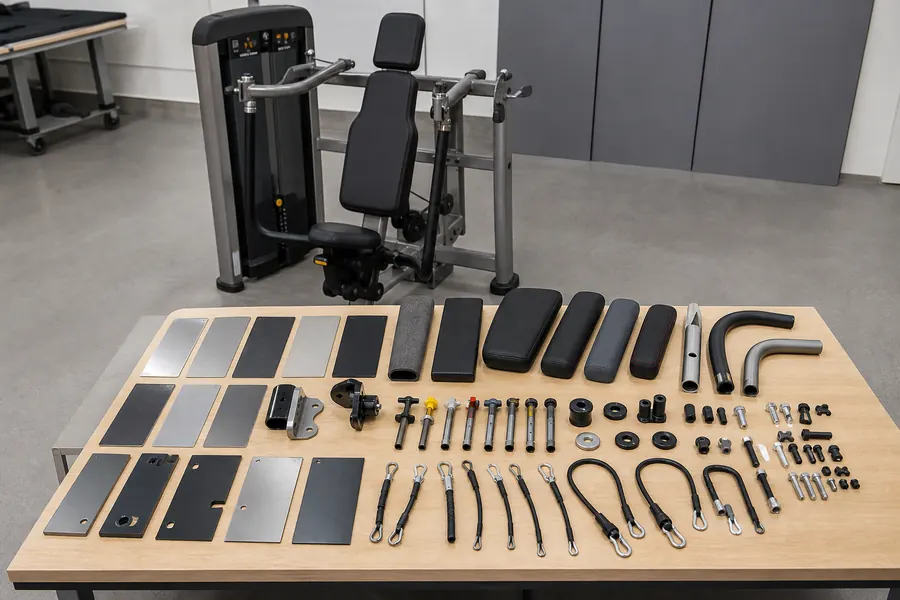
A model list can change when products are updated or supply conditions shift. A durable chain standard records the training role, accepted configuration, critical dimensions, finish, upholstery, attachments, labels, service requirements and approved alternatives. It should state which details cannot change without central approval and which tolerances or substitutions require new review.
Keep a controlled version history. When a cable, console, fastener, pad or frame detail changes, the chain needs to know which locations and spare parts are affected. The manufacturer should receive one approved release rather than different instructions from designers, franchisees and contractors. This reduces production ambiguity and makes later problem analysis more reliable.
Use Site Archetypes Instead of Designing Every Location from Zero
Group planned clubs into a small number of archetypes, such as compact, standard and flagship. Each archetype can have a base zone allocation, equipment-capacity range and approved option modules. A compact site may prioritize selectorized and functional coverage; a standard site may balance guided and free-weight training; a flagship may add specialist plate-loaded or performance zones.
Archetypes speed planning but do not replace a site survey. Columns, ceiling height, lifts, door routes, slab capacity, power, HVAC and emergency circulation must still be verified. Place machines at working envelopes and confirm installation access. If a standard unit cannot be serviced or carried into the room, the site needs an approved alternative before production—not an improvised change during delivery.
Validate the Platform in a Pilot Location
A pilot allows the chain to test ergonomics, layout, member understanding, cleaning, inspection, assembly and support before repeating the specification. Choose a representative site rather than the easiest showroom environment. Train staff, record issues and distinguish product defects from layout, installation, programming or user-education problems.
Define the pilot acceptance plan before delivery. Review finish samples, logo placement, machine settings, cable and adjustment behavior, storage, console setup and maintenance access. After a controlled operating period, collect utilization, service and staff feedback. Changes should be approved through the same specification process and applied to future locations with version control.
Standardize Coverage but Size Capacity for Local Demand
Every location should deliver the brand's promised movement coverage, but it does not need the same number of positions. Estimate peak concurrent users and how they distribute across cardio, guided strength, racks, free weights and functional areas. Add duplicate capacity where queues are most damaging. Removing a rarely used specialist station may be more sensible than reducing essential benches or pulling positions.
Use comparable operating data across locations. Track equipment downtime, service frequency, peak congestion and member requests with consistent definitions. Utilization should inform changes, but avoid interpreting one unusual site as the entire chain. Combine data with the local concept, membership mix and floor constraint before changing the standard platform.
Plan Production in Waves with Approved Samples and Hold Points
A chain rollout rarely needs every site shipped on one day. Production waves can follow construction readiness and reduce warehouse pressure, but only when the approved specification remains controlled. Agree color and upholstery samples, logo artwork, configuration, packing and documentation before the first wave. Define hold points for changes that would affect later batches.
Ask the manufacturer how common frames, components and purchased parts will be planned across the program. A forecast helps capacity and material coordination, but it should not be confused with a firm order unless commercial terms say so. Each released batch needs its own quantity, destination, inspection and shipping confirmation tied to the correct specification version.
Design Packaging, Identification and Installation for Repeatability
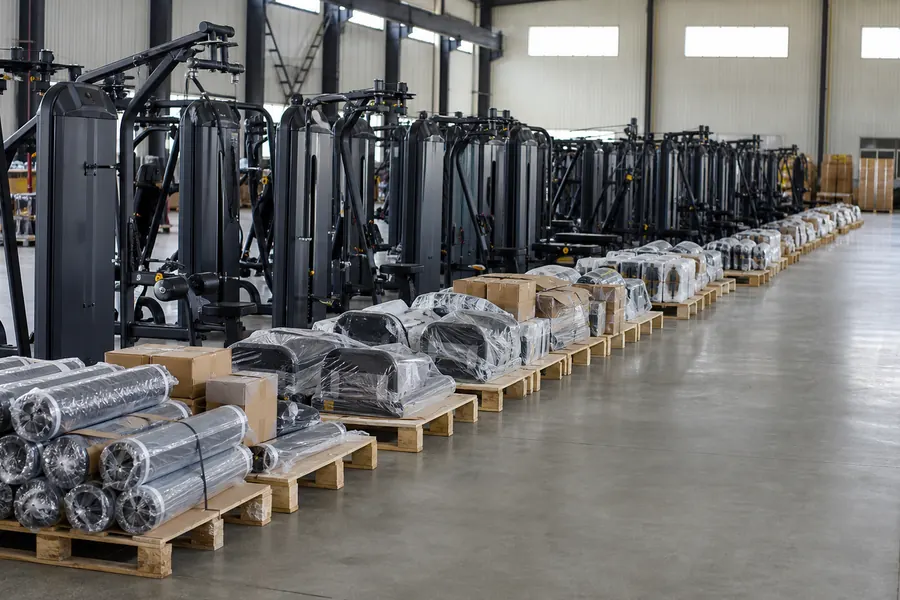
Multi-location shipments need clear grouping. Packages should identify the site or batch without exposing unnecessary customer information, while frames, pads, hardware and accessories remain traceable to the correct machine. Installation teams benefit from repeated hardware logic, assembly instructions and packing sequence. Site-specific accessory or branding kits should be separated from common components.
Coordinate construction readiness before dispatch. Finished floors, power, access, mirrors and storage must be ready for the equipment being installed. Define who receives, counts, moves, assembles, levels and commissions each item. A repeatable installation checklist prevents local teams from skipping cable checks, fastener verification, guards, leveling or final cleaning under opening pressure.
Build a Chain-Wide Parts and Maintenance System
Standardization has real value when the service system uses it. Create a central asset record with model, serial or identifying information, location, installation date, maintenance history and parts used. Staff should follow common inspection language and escalation rules. A local technician needs access to the correct diagram and approved part, not a photo of a similar machine from another club.
Decide which parts are held centrally, regionally or at the site based on installed quantity, failure impact, shelf life and replenishment lead time. Do not stock arbitrary kits without compatibility control. Review warranty claims and recurring maintenance observations across the chain so genuine patterns reach the supplier and future specification releases.
Buyer decision framework
- Define the brand platform: Record movement coverage, equipment families, finishes, interface and service principles.
- Create site archetypes: Build compact, standard and flagship packages with approved option modules.
- Pilot and document: Validate one representative site and convert findings into a controlled specification.
- Release by location: Use verified plans, capacity needs and access constraints to choose approved variations.
- Produce and ship in waves: Tie every batch to a specification version, destination, inspection and readiness date.
- Learn from operations: Feed comparable utilization, service and member evidence into the next controlled release.
Buyer checklist
- A chain-wide core and approved variable layer are defined.
- Critical specifications extend beyond model names and marketing descriptions.
- Compact, standard and flagship archetypes have clear capacity ranges.
- Every site has verified layout, access, power, ceiling and service clearances.
- Pilot findings and changes are recorded through version control.
- Production waves use approved samples and formal release points.
- Packages, accessories and hardware can be identified by site and machine.
- Installation and commissioning checklists are consistent across locations.
- Asset, maintenance, warranty and spare-parts records use a common system.
Common buying mistakes
- Making every site identical: A fixed list ignores local capacity, building and member needs and can create poor layouts.
- Letting every site choose independently: Uncontrolled variety weakens brand consistency, parts support and staff training.
- Standardizing only color: True standardization covers functions, interfaces, service parts, documents and change control.
- Skipping a representative pilot: Problems then repeat across production waves before operations provide real feedback.
- Changing specifications through informal messages: Factories and installers may work from different versions with no reliable approval trail.
- Separating procurement from maintenance: The chain loses the main operational benefit of repeated equipment families.
Manufacturer perspective
From a manufacturer's perspective, a chain program works best with one technical owner, one approved specification set and a forecast separated from firm releases. Shared finishes and components can support repeatability, but every production wave still needs controlled quantities, samples, artwork, inspection and packing instructions.
The factory should also be told which features are brand-critical and which may use approved alternatives. When a component change becomes necessary, its effect on appearance, function, documentation and spare parts should be reviewed before use. Clear change control protects both the rollout schedule and the operating chain.
A chain program should define a feedback route that separates urgent site support from specification improvement. An isolated installation issue may require immediate containment at one club, while a recurring adjustment or maintenance observation may justify a controlled change for future batches. The manufacturer needs model, location, production release, photos and service history to investigate effectively. The chain needs one central record so local teams do not solve the same problem in different, incompatible ways. This discipline helps both parties decide whether the cause is product, transport, installation, environment, maintenance or use. It also prevents an informal local modification from becoming an accidental new standard without review of safety, parts and documentation.
Forecast accuracy matters as the rollout grows. Early visibility of likely models and timing can support material and capacity planning, but the factory should not produce unapproved site variations to protect a date. The chain should distinguish forecast, reserved capacity, approved release and shipped quantity in its commercial process. That language reduces disputes and keeps construction changes from silently entering production.
What to Standardize and What to Adapt
| Decision area | Standardize across locations | Allow controlled variation | Approval evidence |
|---|---|---|---|
| Brand experience | Finish, upholstery, logo rules and equipment-family language | Limited local accent choices | Approved samples and brand specification |
| Core strength | Movement coverage and key machine families | Quantity and selected specialist stations | Member profile, demand and floor plan |
| Free weights | Bar, plate, bench and storage standards | Rack count and weight range | Peak capacity and supervision model |
| Cardio | Console logic and service platform where practical | Modality and quantity | Local user demand, power and ventilation |
| Functional area | Attachment, storage and safety rules | Open-floor size and station count | Programming model and room shape |
| Support | Parts naming, maintenance records and escalation path | Local service partner and stock level | Region, lead time and installed base |
Useful next pages
Buyer FAQ
Should every gym in a chain use exactly the same equipment?
No. Standardize the brand-defining core, interfaces, finishes and support system, then allow approved variation for site size, local demand, capacity and building constraints.
What should a gym chain pilot before a rollout?
Pilot the equipment mix, ergonomics, layout, member understanding, cleaning, inspection, installation, storage, branding and technical support in a representative operating site.
How can a chain control equipment substitutions?
Define approved alternatives and require central review of function, dimensions, finish, parts, documentation, price and schedule before a substitute is released.
How should multiple-location orders be shipped?
Use controlled production waves and package grouping tied to each site, specification version, machine, hardware set and installation sequence.
What data should chains collect after opening?
Track comparable peak congestion, downtime, maintenance, parts use, staff observations and member feedback, then interpret it with each site's concept and capacity.
Can OEM branding stay consistent across multiple batches?
Consistency improves when artwork, placement, color and application method are controlled through approved samples and versioned production specifications for every release.
Conclusion
Multi-location procurement succeeds when the chain standardizes what creates brand and operating value while allowing verified site differences. A platform, archetypes, pilot, version control and common service system turn repeated equipment purchases into an operational advantage. Prepare the chain standard, rollout schedule, site plans and option rules before requesting a program quotation. The manufacturer can then plan samples, production waves, packing and parts support against one controlled source of truth.
Need this topic turned into a real equipment plan?
Send your market, gym size, product categories or OEM needs. Kloe can help clarify the next step.