
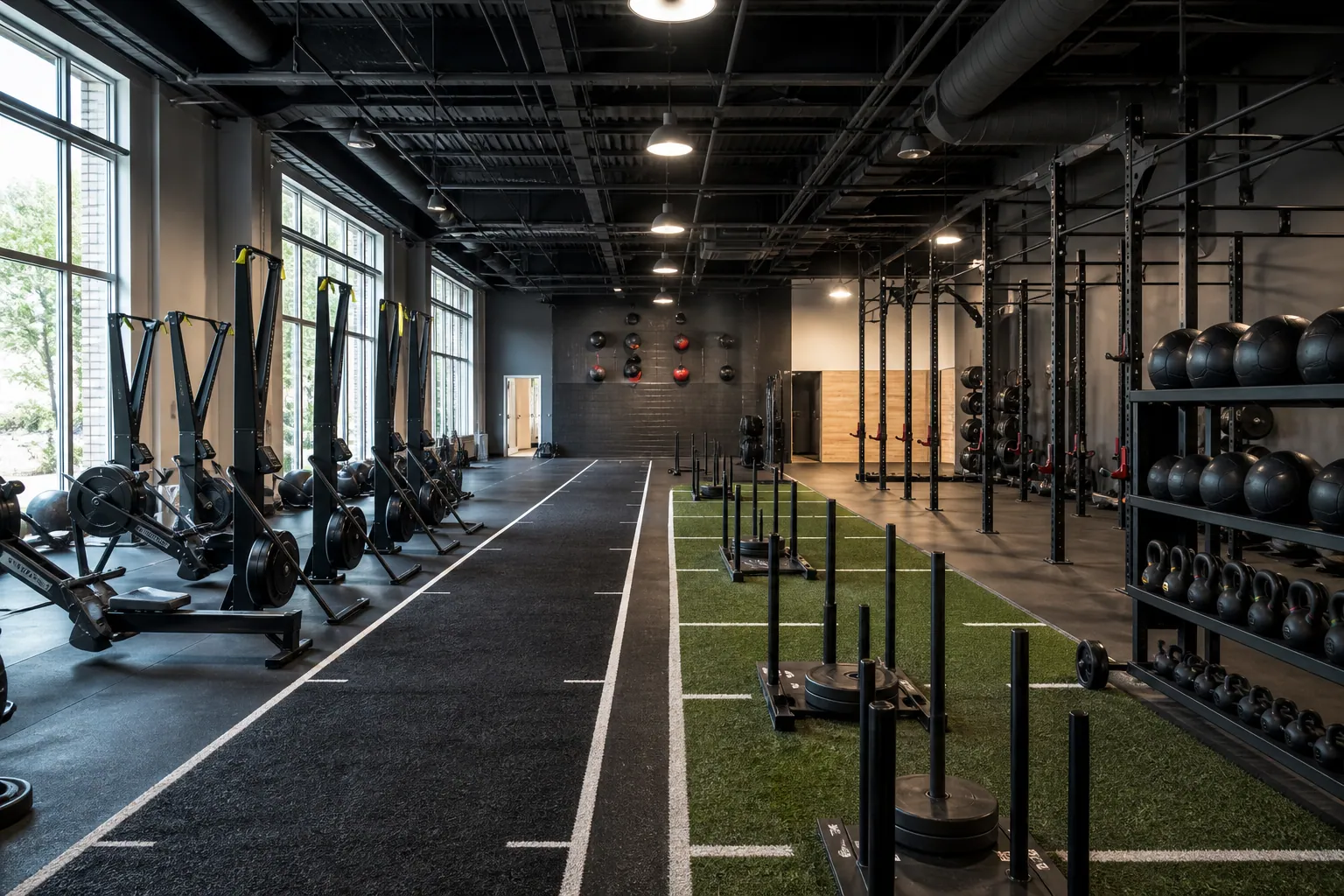
How much does a HYROX gym setup actually cost?
For early planning, equipment and training-zone infrastructure may range from about $15,000 for a compact zone to more than $150,000 for a large dedicated performance facility. That range is not a quotation. Facility size, simultaneous users, station duplication, sled lanes, flooring, freight and installation determine the real budget.
HYROX is a trademark of its respective owner. This independent guide covers general hybrid-race facility planning and does not present PowerBaseFit as an official supplier, partner or certified provider.
Capacity is the number that changes the investment
A six-person training zone and a facility running 20-person classes are not variations of the same purchase. They are different operating systems. The second facility needs more stations, wider circulation, faster transitions and equipment that can absorb many more cycles each day.
Buyers often calculate equipment cost before deciding how many people the equipment must support. Reverse that order. Define the class format, peak attendance, daily sessions and expected expansion, then calculate station quantity. The HYROX-style equipment planning page provides a category-level view of the complete training system.
Six factors behind the budget
- Facility size and usable training area
- Number of simultaneous users
- Quantity of duplicated stations
- Equipment specification and expected duty cycle
- Flooring, turf and sled-lane requirements
- Freight, local installation, storage and supporting infrastructure
The business model matters too. An existing club adding group programming can reuse far more infrastructure than a dedicated performance gym starting with an empty building.
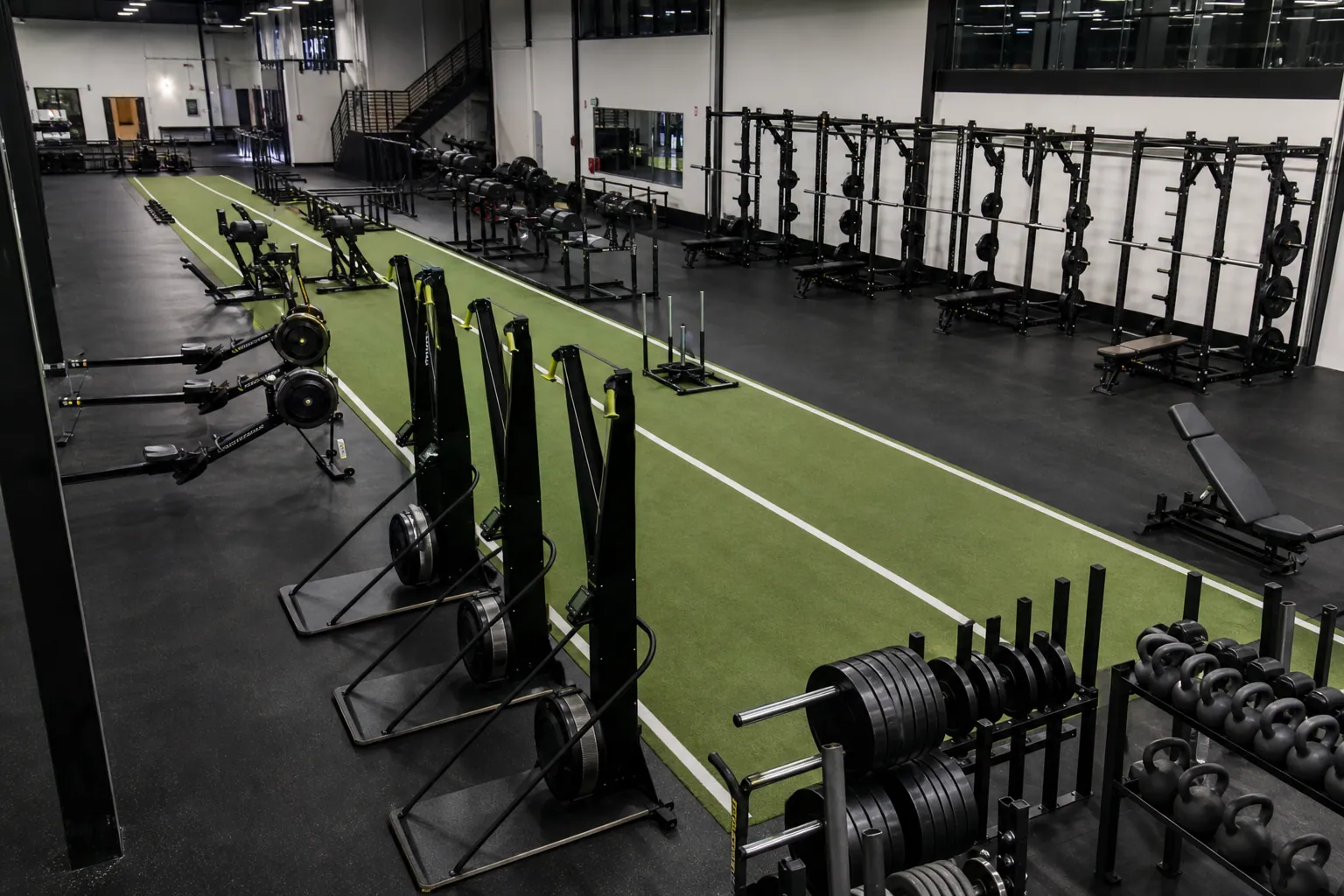
Three typical HYROX-style gym investment levels
The following figures are broad planning ranges for equipment and training-zone infrastructure. They are not fixed prices or construction quotations. Brand, specification, country, freight, facility condition and local labor can change the result materially.
| Setup | Typical space | Typical application | Indicative equipment and zone budget |
|---|---|---|---|
| Compact training zone | 50-100 m² | Existing gym or PT studio | $15,000-$35,000 |
| Commercial group zone | 100-300 m² | Commercial gym or group training | $35,000-$80,000 |
| Dedicated performance facility | 300 m²+ | Performance-focused gym | $80,000-$150,000+ |
These estimates exclude rent, building work, HVAC, showers, permits, electrical work, taxes and other local costs. Freight and installation should be quoted against the actual destination and order.
Someone asking for the cost to open a complete gym is asking a different question from an operator adding a training area to an existing club. Keep the equipment budget separate from the full startup budget.
What equipment does the training area need?
Race preparation combines skiing, sled push and pull, burpee broad jumps, rowing, loaded carries, sandbag lunges, wall balls and running. A commercial facility also needs the strength and conditioning tools that prepare members for those tasks.
Ski and rowing stations
One machine makes a movement possible; it does not automatically support a class. A 16-person session with two ski trainers or two rowers depends on deliberate station rotation. More units reduce waiting, but they also increase capital cost and floor demand. Compare the available commercial cardio equipment against the actual class timetable rather than a generic checklist.
Sled push and pull systems
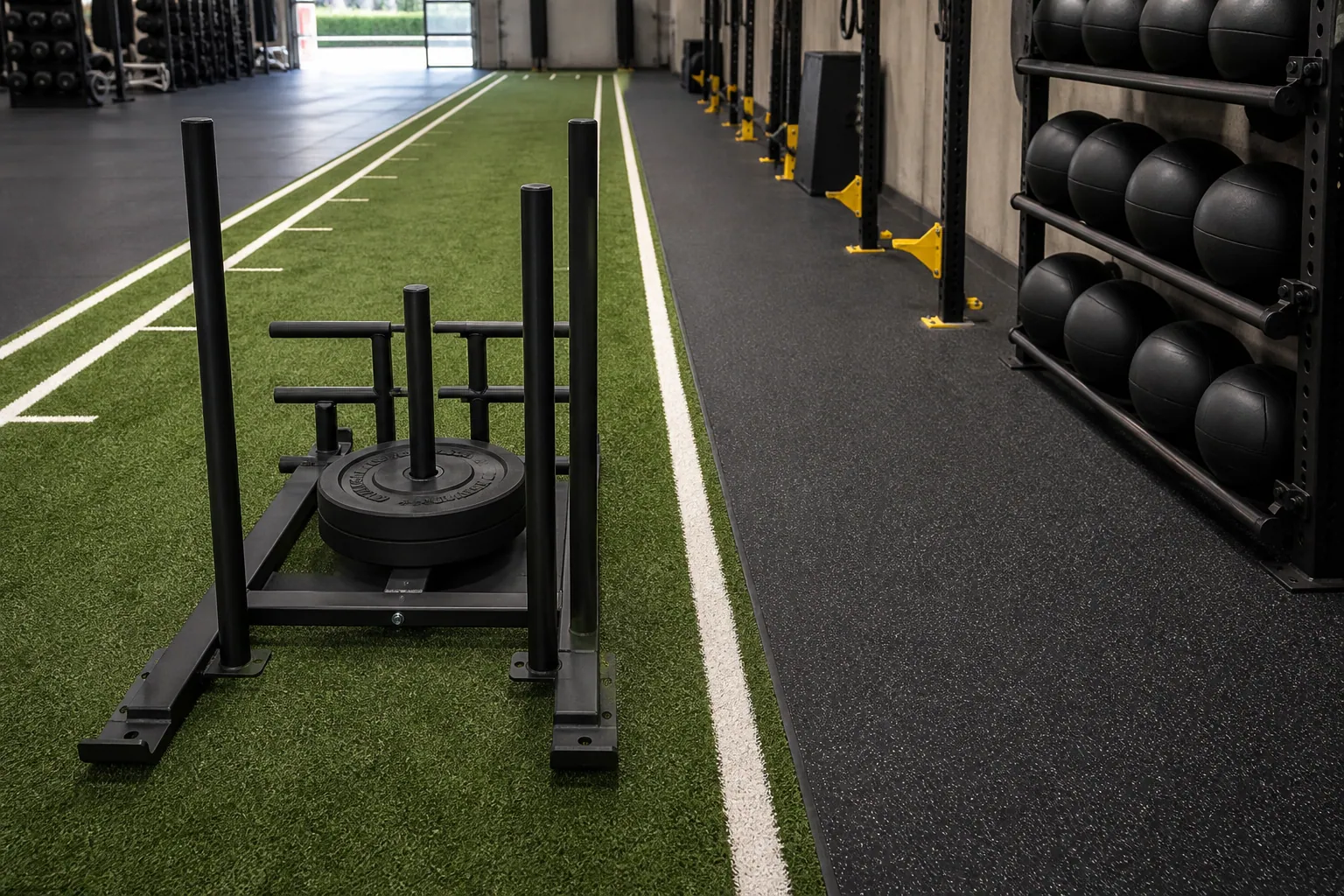
The sled, plates and rope are only part of the station. The lane controls resistance, noise, wear and user experience. Plan lane width, length and return flow before selecting the sled. A complete sled without a usable route is not a functional commercial station.
Sandbags, wall balls and loaded carries
These accessories appear simple, but group use exposes stitching, handles, filling design and storage quality quickly. Multiple weights are required for mixed abilities. Kettlebells and dumbbells offer particularly strong utilization because they also support squats, presses, swings and strength circuits. The accessories category helps buyers plan the supporting pieces as one system.
Free weights and supporting strength equipment
Racks, adjustable benches, barbells, bumper plates, dumbbells, kettlebells and functional trainers are not decorative extras. They build the leg, trunk, pulling and pressing strength that athletes need for sled work and loaded movement. Review commercial strength equipment andmultifunctional trainers as supporting infrastructure.
Running strategy
Running may happen outdoors, on commercial treadmills, on curved treadmills or on an indoor lane. The correct choice depends on climate, location, floor area and coaching model. Do not buy treadmills only because running is part of the event; first define how members will run during a normal session.
Need a capacity-based equipment list?
Send the room size, expected class size, current equipment and destination. We can organize the request around stations, flow and expansion.
The hidden infrastructure cost: flooring and storage
Hybrid training introduces sled friction, repeated foot traffic, burpees, loaded carries and rapid transitions. Machine flooring alone does not answer every requirement. A professional facility may combine commercial rubber flooring, turf or a dedicated sled surface, and marked open-training zones.
Flooring belongs in the first layout conversation because it changes station position, circulation and noise. Buyers can compare available gym flooring options, but the specification should follow actual impact and sled use.
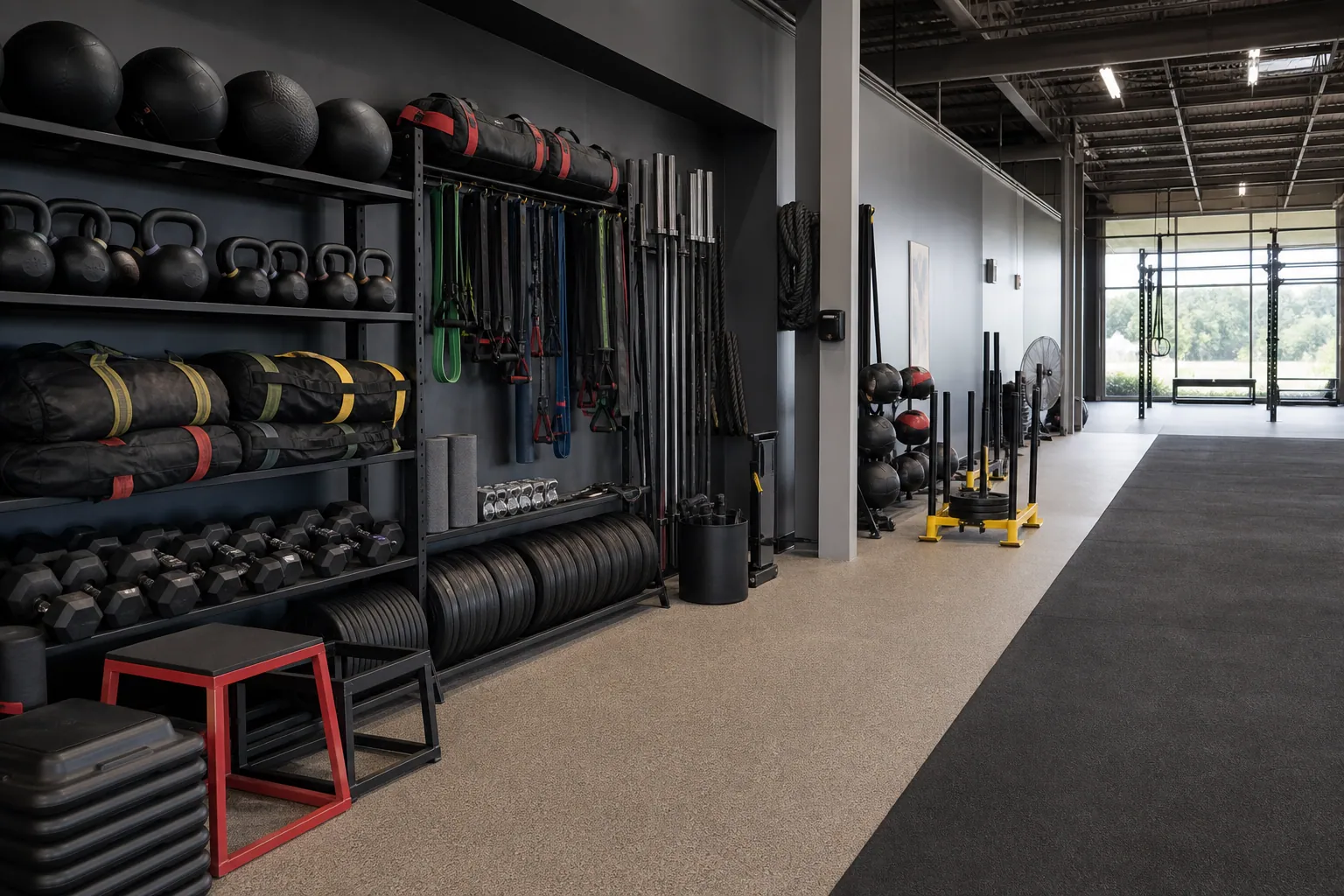
Storage is equally operational. Kettlebells, wall balls, sandbags, plates, ropes and handles become obstacles when they do not have assigned positions. Good storage improves safety, protects the usable floor and shortens class transitions. It is often appreciated more after six months of operation than on opening day.
Why the cheapest equipment package can cost more
A quotation compares purchase prices. It does not automatically compare ownership. A cheaper sled may create greater floor wear; a low-cost sandbag may lose shape or leak; a light-duty rower may require more attention under repeated classes. Maintenance access and replacement parts also matter.
Spend more where repetition, stress, impact and member contact are highest. That generally means cardio stations, sled systems, flooring, strength equipment and frequently handled accessories. Save by buying fewer well-planned stations, using multi-purpose tools and preserving expansion space—not simply by reducing every specification.
Investment per usable training position
If one $40,000 zone supports eight people and a $55,000 zone supports 16 with smoother flow, the larger project costs more but invests less per simultaneous training position. This metric is more useful than the total quotation when class capacity is part of the revenue model.
Consider a hypothetical $50,000 zone running three 12-person classes per day, five days per week, with $15 of incremental revenue per participant. The theoretical weekly amount is $2,700. This is not a profit forecast: occupancy, staffing, rent, marketing, tax and other operating costs still apply. It simply shows why equipment should be assessed as operating infrastructure rather than as isolated objects.
What should be defined before requesting a quotation?
- Usable floor area and measured ceiling height
- Expected class size and peak daily traffic
- Existing equipment that can be reused
- Sled-lane length, width and surface
- Indoor or outdoor running strategy
- Accessory and plate storage requirements
- Target opening date and destination
- Equipment budget and preferred procurement phase
- Expansion plan for the next two to three years
- Logo, color or other OEM customization requirements
This information lets a fitness equipment manufacturer respond with a usable station plan instead of a generic price list. It also exposes questions about packing, freight and lead time before they become late-stage problems.
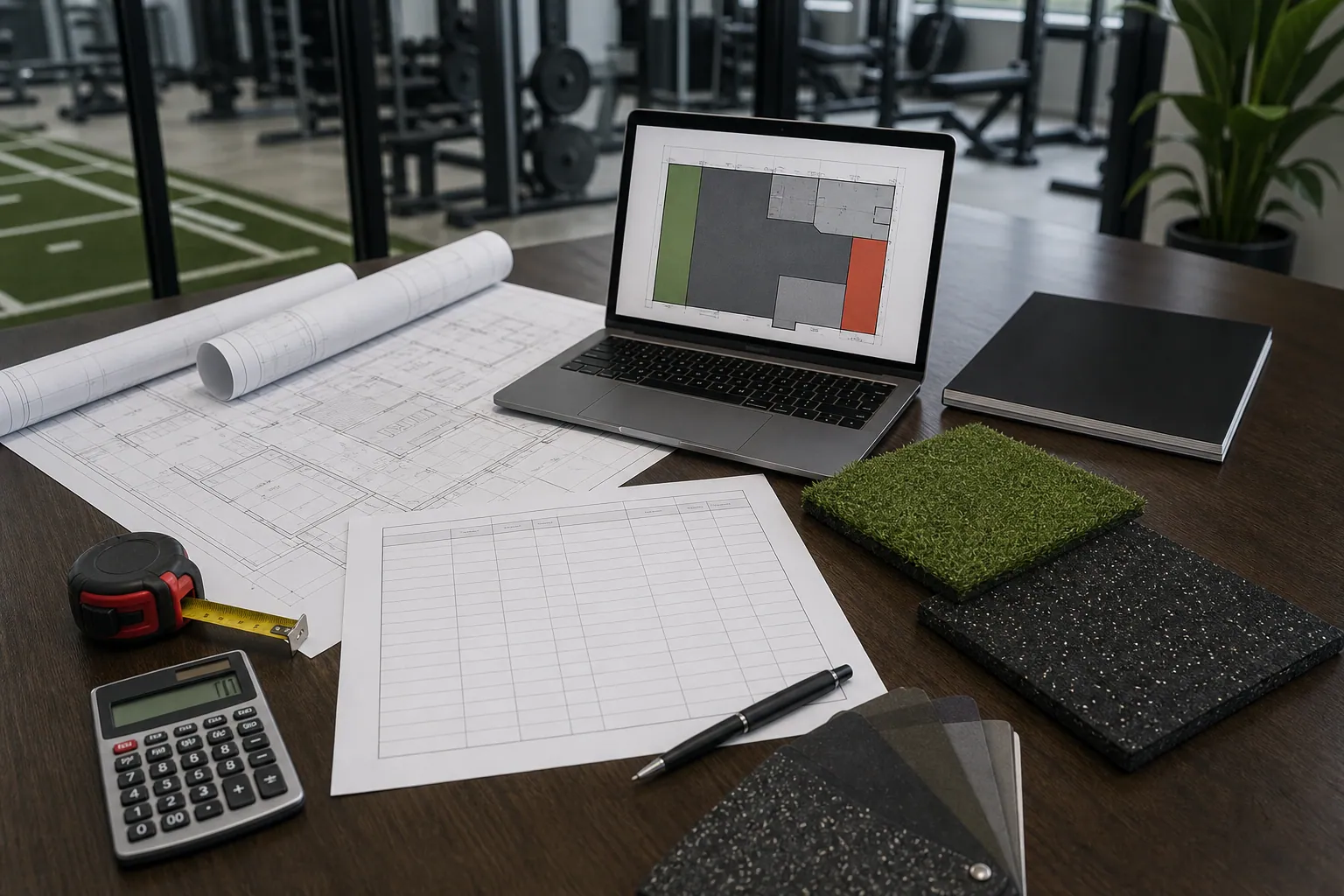
Compact zone, commercial zone or dedicated facility?
| Facility model | Planning priority | Practical starting direction | Common mistake |
|---|---|---|---|
| Compact zone | Reuse and flexibility | Core race stations, multi-purpose strength tools and compact storage | Filling the room before proving demand |
| Commercial group zone | Flow and station capacity | Duplicated high-use stations, defined sled lanes and clear transitions | Buying by movement list without class timing |
| Dedicated facility | Whole-facility operation | Multiple stations, strength support, running solution and simulation capacity | Treating layout as secondary to equipment purchasing |
A compact zone should validate demand without blocking future growth. A commercial group zone should protect coaching visibility and movement between stations. A dedicated facility needs the layout, equipment quantities and programming model to be designed together.
Useful next pages
Frequently asked questions about HYROX gym setup costs
How much does a small HYROX training area cost?
A compact commercial training zone may require roughly $15,000-$35,000 for equipment and core training-zone infrastructure. The usable result depends on station quantity, flooring, the sled lane and which strength equipment the facility can already reuse. This is a planning range, not a quotation.
How much does a commercial HYROX gym setup cost?
A group-training setup may fall around $35,000-$80,000, while a larger dedicated performance facility can exceed $80,000-$150,000 in equipment and training-zone investment. Freight, taxes, construction, HVAC, permits and local installation are separate variables.
What is usually the most expensive part of a HYROX-style gym?
The largest cost is not always one machine. Multiple cardio stations, duplicated class stations, commercial flooring, sled lanes and supporting strength equipment can each represent a major share. Capacity decisions usually have more impact than the price of one item.
Can an existing commercial gym add a HYROX training area?
Yes. An existing gym can often reuse racks, benches, dumbbells, kettlebells, free weights, changing rooms and service infrastructure. A measured conversion plan can therefore be more capital-efficient than building an entirely separate facility.
Should a gym buy all HYROX-style training equipment at once?
Not necessarily. When demand is still being tested, a modular first phase can support smaller classes and leave clear expansion points. The first purchase should protect training flow and safety before maximizing equipment count.
Final thoughts
For planning purposes, equipment and training-zone investment may range from roughly $15,000 for a compact setup to well above $150,000 for a large dedicated performance facility. The better decision, however, comes from asking how many people the facility can train, how often each station will be used, what maintenance the system requires and whether the layout can expand without being rebuilt.
A hybrid-race gym is not a collection of ski trainers, sleds and wall balls. It is a training system. Space, equipment, programming, durability and member capacity need to work together.
Turn your facility plan into an equipment direction
Share your gym size, class capacity, current equipment, destination and target opening date for a more useful sourcing discussion.