
How to Choose Kettlebells for a Commercial Gym
Choose commercial kettlebells as a managed fleet, not as isolated weights. General-use cast bells suit broad strength and conditioning when handle and body size changes are acceptable; coated bells add body and floor-contact protection where the exact covering is compatible with cleaning; competition-format bells support consistent outside geometry when the program requires it. Before ordering, define exercises, single- or double-bell use, simultaneous stations, useful increments, handle and window dimensions, body shape, base stability, marking, rack fit, permitted floor contact, reference-set approval and lot acceptance.
Start with the program, then choose the bell family
List the sessions that will use kettlebells: open-floor strength, personal training, group circuits, sport practice, hotel fitness or distributor display. Record swing, clean, press, carry and paired-bell requirements without turning the purchase sheet into an exercise lesson. The important fields are supervision, participant count, set length, transitions, floor rules and whether members select weights without a coach. A product family earns a place only when it serves those operating conditions.
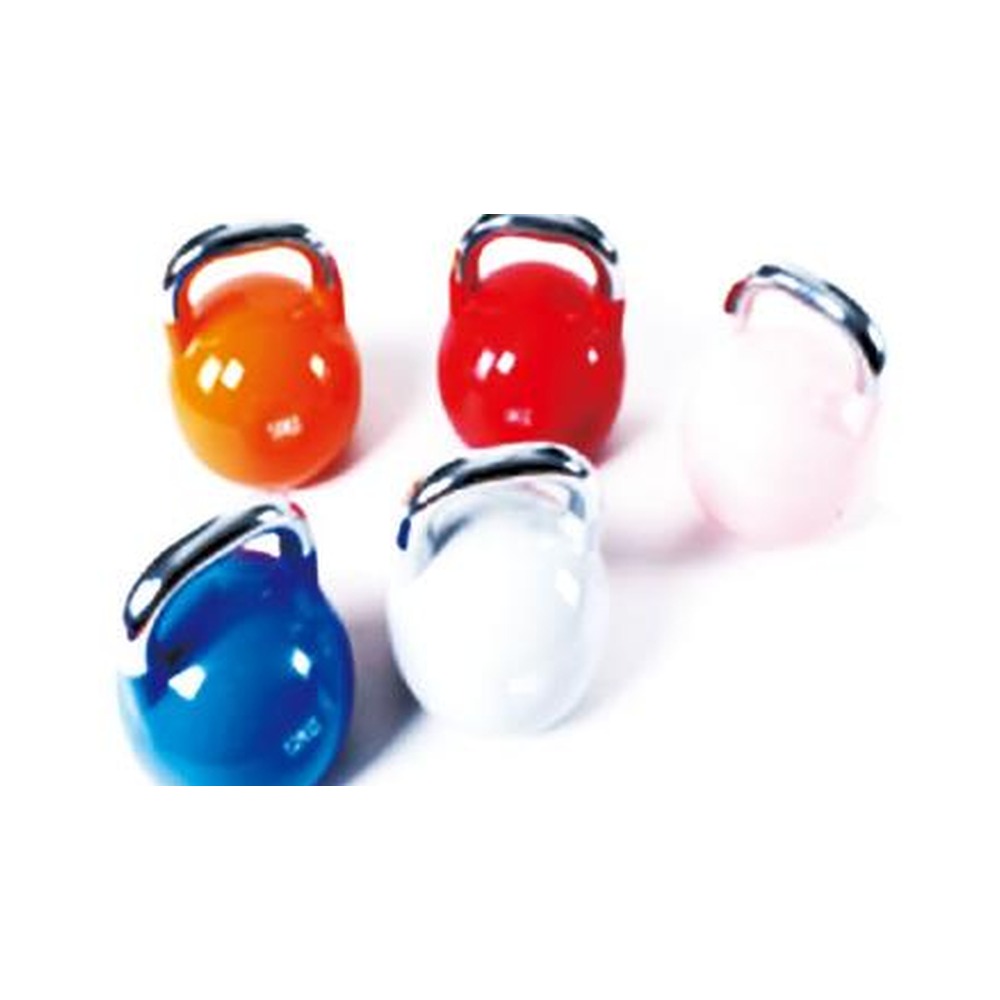
General-use cast bells usually change body and handle dimensions as weight rises. That can suit broad club use and generous two-hand work. Coated-body bells target contact protection and cleaning needs, but the covering, seam, handle exposure and permitted impact remain exact-product questions. Competition-format bells keep a more consistent outside geometry across a defined range, which supports repeated technique in sport-focused programming. Do not use the word competition as a substitute for verified dimensions or conformity.
| Format | Best purchasing case | Trade-off to test | Evidence to request |
|---|---|---|---|
| General-use cast | Mixed club strength and conditioning | Geometry can change by weight | Per-weight dimensions and handle data |
| Coated body | Studios, hotels and controlled-contact areas | Covering, seam, cleaner and odor behavior | Material identity and care instructions |
| Competition format | Sport practice and consistent geometry | Window and two-hand fit for the user group | Current dimensions, tolerance and rule reference |
Build the weight fleet from simultaneous demand
Create a session matrix with rows for weight increments and columns for stations or class blocks. Count single-bell users, double-bell users, coaches' demonstration units and changeover overlap. A total-weight figure hides the real shortage: ten bells can still stop a class when four people need the same middle increment. Use booking records for an existing facility; for a new site, document the assumed class size and revise the fleet after an observed operating period.
Separate core weights, bridge weights and specialist weights. Core increments need duplicates near the rack that serves them. Bridge increments reduce jumps for technique development and mixed populations. Specialist heavy or light units need a named program and storage position. Keep kilograms and pounds as distinct purchasing systems unless every marking, coaching cue and asset record follows a written conversion policy. Order each denomination by individual unit, not by an ambiguous set description.
Freeze handle, window, body and base interfaces
Request handle diameter, usable straight length, internal window width and height, surface treatment and transition radius into the body for every quoted weight. Confirm whether dimensions change through the range. Coaches should test one- and two-hand grip, hand insertion, rotation during cleans and snatches, forearm contact in the rack position and clearance when two bells are used. A wide photograph cannot prove any of these interfaces.
Record body height, width, depth, center behavior and base diameter. The base should sit as intended on the actual shelf and training surface without uncontrolled rocking. For floor-supported movements, confirm the permitted use and stability of the quoted bell rather than assuming every flat-looking base is designed for it. The final acceptance sheet should carry measurable dimensions and functional observations, not only words such as ergonomic or professional.
Compare casting, covering, finish and marking
Ask whether the handle and body are one casting, how voids and seams are controlled, how the base is finished and how the stated mass is achieved. For a coated body, identify the metal core, covering material, bonding method, edge termination and handle exposure. For a competition shell, identify the internal construction and how mass is secured. Construction names do not establish durability on their own; the buyer needs drawings, limits and a reference unit from the proposed production route.
Evaluate handle texture with dry hands, chalk only where the site permits it, and the approved cleaning product. Look for sharp flash, ridges, pits, thick transitions and finish buildup where the bell rotates in the hand. Weight markings should be readable from the rack, permanently tied to the unit system and consistent with the purchase list. Color is a navigation aid, not proof of mass accuracy or federation approval. Lock logo method and artwork separately for private-label orders.
Design storage, floor contact and cleaning together
Draw the route from shelf to training station and back during a full class. Place popular duplicates near their stations without narrowing exits or creating a low trip line. Measure shelf depth, lip, load rating, spacing, hand clearance and frame stability against the largest quoted body, not the smallest catalog picture. Confirm whether a rack needs anchoring and have the building team approve floor loads and fixing conditions where applicable.
Define where bells can be set down and what impact is prohibited. Kettlebells are not bumper plates, and a rubber-covered body does not authorize dropping. Pair the equipment rule with suitable flooring, coached placement and inspection after unintended impact. Cleaning instructions must cover handle and body materials, dwell time and drying. Quarantine a bell with a loose internal component, cracked body or covering, sharp edge, unstable base, severe corrosion or unreadable mass marking.
Approve a reference set before the production order
Select at least one light, one high-use middle and one heavy denomination from the proposed construction, plus a matched pair where double-bell work matters. Measure mass on a suitable calibrated scale; record handle and window dimensions, body size, base contact, finish, color and marking. Test rack fit, grip changes, rotation, forearm contact, two-hand space, paired feel and cleaning. Keep photographs and signed results tied to product codes and revision dates.
Convert observations into acceptance limits. State how mass deviation, dimensional variance, base movement, surface defects, sharp transitions, color difference, marking error and packaging damage will be classified. Define the lot-check method, instruments, responsible party, hold area and correction path before production. A pleasant trial unit is useful only when its approved attributes become controlled order requirements and the production lot is checked against them.
Normalize quotations, branding and packing
Send the supplier the facility type, country, unit system, exercises, class size, denominations, quantity per denomination, handle and window limits, body and base requirements, construction, finish, color coding, logo method, cleaning product, rack, floor rule and acceptance plan. Request item codes, per-unit drawings, mass tolerance, care instructions, commercial-use terms and every deviation. Make substitutions subject to written approval because a handle or coating change alters the working interface.
Compare the delivered system rather than price per kilogram. Include bells, rack, packaging, labels, moisture protection, pallet pattern, package weight, inland handling, freight, duties, inspection, replacements and reorder identity. Heavy small objects need packaging that prevents movement and handle-to-body contact. Mark each carton with denomination, unit count, item code, lot and gross mass so the receiving team can stage loads safely and reconcile the packing list before opening every box.
Receive the lot and protect reorder continuity
At arrival, reconcile pallet and carton counts, package condition, item codes, denominations and lot identity before mixing stock. Use the written lot plan to check mass, markings, handle and window dimensions, body, base, finish, coating and rack fit. Compare matched pairs together. Record accepted, held and corrected quantities by denomination. Do not perform impact tests unless the written product instructions, facility and agreed method authorize them.
Store the approved specification, artwork, color reference, measurements, photos, lot records and corrective actions in the asset register. Daily operations should count units, return them to named positions and note recurring grip, coating, base or marking issues. A reorder cites the original approved revision or a newly approved change. Keeping generations identifiable prevents an unnoticed handle or body change from creating mismatched pairs and inconsistent class stations.
- Program and user group
- Denominations and duplicate count
- Handle and window dimensions
- Body, base and construction
- Finish, marking and cleaning
- Rack and floor rule
- Reference-set limits
- Packing, receiving and reorder revision
FAQ
Cast or competition kettlebells for a commercial gym?
Choose cast general-use bells for broad club programming when changing geometry is acceptable. Choose competition format when consistent outside geometry serves a defined sport or technique need. Many facilities use a controlled mix.
How many kettlebells does a gym need?
Count simultaneous users by denomination, including double-bell work, demonstrations and changeovers. Duplicate the high-use middle weights instead of relying on total kilograms or one of every size.
Does a rubber coating make a kettlebell safe to drop?
No. A covering can protect contact surfaces, but permitted impact depends on the exact construction, instructions, floor system and operating rule. Set kettlebells down under control unless documentation states otherwise.
Which handle measurements matter?
Request diameter, usable straight length, internal window width and height, transition shape, surface treatment and changes across weights. Test them with representative users and paired work.
What belongs in receiving inspection?
Check quantity, code, denomination, mass, marking, handle and window dimensions, body, base, finish, covering, package condition, rack fit and matched-pair consistency under the agreed lot plan.
Sources
- Life Fitness functional-training accessories — Life Fitness / Hammer Strength
- Life Fitness kettlebell range — Life Fitness
- Rogue general-use kettlebells — Rogue Fitness
- Rogue competition kettlebells — Rogue Fitness
- Eleiko training kettlebell — Eleiko
- WKSF rules 2023–2027 — World Kettlebell Sport Federation