

Introduction
Measure gym equipment utilization by observing each station across representative peak and off-peak periods, recording occupied time, queues, abandoned attempts, downtime and the training alternatives available. Combine those observations with membership mix, complaints, maintenance records and business strategy. Reorder when persistent unmet demand cannot be solved by layout, scheduling, repair or a better substitute; do not add equipment only because one vocal user requests it or because a supplier promotes a popular model.
Key takeaways
- Measure availability and unmet demand, not occupancy alone.
- Separate true low demand from downtime, poor placement or member uncertainty.
- Compare equipment families using capacity and alternatives.
- Run a small repeatable study before committing floor space and capital.
Define utilization for a gym floor
Utilization is the share of an available observation period during which a station is actively used. That definition is useful, but it is not enough. A squat rack occupied for long sessions may serve fewer members than a selectorized machine with rapid turnover. A cable crossover can support many exercises, while a specialized unit has one narrow job. The buyer must interpret use through capacity and member outcome.
Track unmet demand alongside use. A queue, a member abandoning a station, repeated work-ins or an exercise being moved to a poor substitute can all indicate insufficient capacity. Conversely, a machine may look busy because it is slow to adjust or because a nearby alternative is broken. The goal is a purchase decision, not a league table.
Choose a representative observation window
Sample different weekdays, weekend periods, class transitions and seasonal conditions. Include the facility's known peak hours and enough quieter time to understand whether demand is concentrated. Avoid measuring only during a promotion, equipment breakdown or unusual event unless that event is part of normal operations.
- Date and 15- or 30-minute interval
- Station or equipment family
- Available, in use or out of service
- Number waiting or abandoning
- Approximate session turnover
- Alternative station used
- Context such as class, maintenance or temporary obstruction
Use a simple manual method before buying sensors
A floor map and structured observation sheet can answer most first-stage questions. Assign staff short rounds rather than asking them to remember the day. Do not record personal identity; the decision usually needs station status and broad usage context, not individual tracking. A camera or sensor project introduces privacy, accuracy, power and maintenance questions that should be justified by the portfolio size.
For multi-site operators, keep the same equipment-family definitions and time intervals across clubs. A small pilot can reveal ambiguous fields before the method is scaled. Document how supersets, personal-training blocks and group sessions are counted so comparisons remain meaningful.
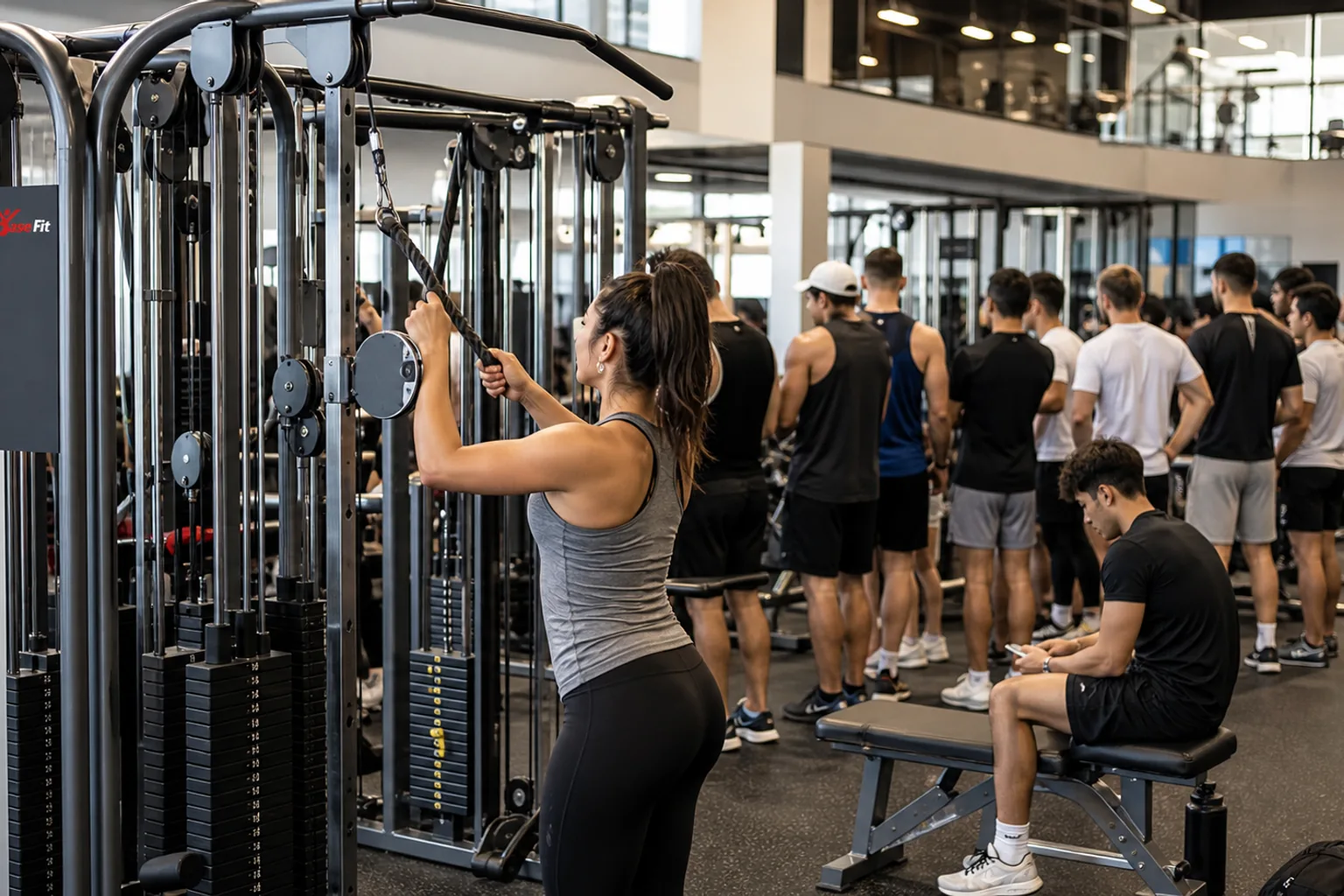

Distinguish five reasons for low utilization
- Low member demand for the movement
- Poor placement, visibility or access
- Equipment out of service or uncomfortable to use
- Members do not understand the adjustment or exercise
- Another station provides a preferred substitute
Each cause leads to a different decision. Low demand may support removal; poor placement suggests relocation; recurring downtime may justify repair or replacement; uncertainty suggests better instruction; substitution may mean the gym needs more capacity in the preferred family rather than another copy of the underused unit. Observe before assuming the product is the problem.
Interpret queues and peak-hour capacity
A short occasional wait is not automatically a purchase case. Look for repeated queues across several representative sessions, the time members wait and whether practical substitutes remain available. High-impact bottlenecks often occur at racks, benches, dumbbell ranges, cable stations and popular lower-body machines rather than evenly across the floor.
Expansion should consider the full operating envelope. Adding a machine can reduce circulation, remove stretching space or overload nearby plate storage. Compare the benefit of a duplicate station with a higher-capacity or more versatile configuration. Sometimes an additional bench or attachment unlocks existing equipment at lower cost and with less space.
Build an expansion decision score
Score each candidate on persistent unmet demand, strategic fit, space impact, purchase and operating cost, service support, member accessibility and alternatives. Add a confidence rating for the evidence. A strong case has repeated observations, clear queues, low downtime distortion and alignment with the gym's positioning. A weak case relies on one comment or a competitor's floor photo.
Use a hold category for uncertain items. Change the layout, repair the alternative or collect another week of data before ordering. This prevents false precision and lets operations test low-cost remedies first. Record the decision so future reviewers understand why a machine was added or declined.
Common mistakes
- Counting use without recording queues or downtime
- Comparing long-session and short-session equipment as if capacity were identical
- Ignoring personal-training and class blocks
- Buying a trending machine without local demand evidence
- Adding equipment without checking operating envelope and storage
- Treating a broken or poorly placed machine as proof of low demand
- Using data to justify a decision already made
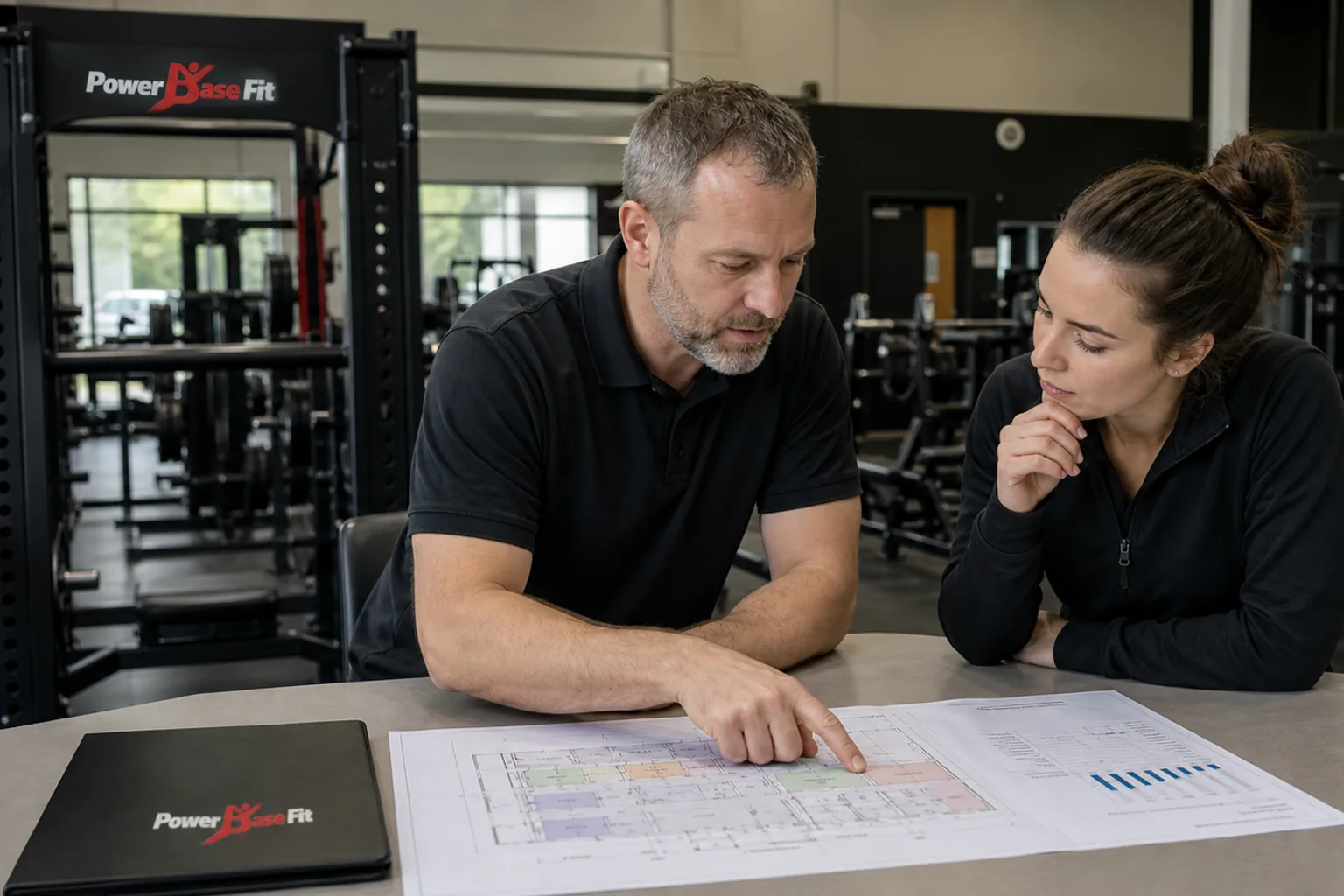
Manufacturer perspective: send the problem, not only the model name
When requesting an expansion quote, share the bottleneck, current station count, peak observation, available footprint and member profile. A manufacturer can then compare a duplicate, dual-function machine, cable station, rack or layout adjustment. The best answer may differ from the model originally requested.
For a repeat order, also share what worked and what failed operationally: adjustments members struggle with, wear points, preferred accessories and cleaning or service issues. This closes the loop between real use and equipment selection without pretending that factory experience replaces local observation.
Utilization-based purchase decision
| Observed pattern | Likely interpretation | Action before buying |
|---|---|---|
| High use, repeated queue | Capacity constraint | Check duplicate or higher-throughput option |
| High use, no queue | Good fit | Monitor before adding |
| Low use, frequent downtime | Availability problem | Repair and remeasure |
| Low use, poor location | Visibility or access problem | Relocate and observe |
| Low use, strong substitute | Redundant function | Consider removal or different category |
Useful next pages
Buyer FAQ
How long should a utilization study run?
Use enough representative peak and off-peak periods to see repeat patterns; the right duration depends on the facility's schedule and variability.
Do we need electronic sensors?
Not initially. Structured staff observation is often sufficient for a purchase decision and helps define whether automation is worthwhile.
What utilization percentage means we need another machine?
There is no universal threshold. Queue frequency, session length, alternatives, strategy and space matter alongside occupancy.
Should out-of-service time be excluded?
Record it separately. Excluding it hides availability problems; including it as zero use can falsely imply no demand.
How should cable stations be measured?
Track occupied stations, attachment or height conflicts, queues and whether several users can work safely at once.
Can member surveys replace observation?
No. Surveys explain preferences but should be compared with observed use, queues and fault history.
When is relocation better than purchasing?
When demand appears limited by poor visibility, access, adjacencies or storage rather than insufficient capacity.
What should be sent to a supplier for an expansion quote?
Send current equipment, observed bottleneck, available dimensions, target users, quantity direction and any service or standardization constraints.
Conclusion
Equipment utilization analysis turns expansion from guesswork into a controlled business decision. Measure representative use, unmet demand, downtime and substitutes; test low-cost operational changes; then buy when the remaining bottleneck aligns with the gym's strategy and available space.
Need this topic turned into a real equipment plan?
Send your market, gym size, product categories or OEM needs. Kloe can help clarify the next step.