
Soft vs Wood vs Stackable Plyo Boxes for Commercial Gyms
Choose a commercial plyo box by program, users and acceptance evidence, not by cover material alone. Define the drills and simultaneous stations, build a coached height progression, compare soft, wood, stackable and fixed-height formats, then verify each working orientation for base geometry, mass, landing surface, floor grip and damage access. Trial one reference unit, normalize the quotation and repeat the same checks at receiving.
Define the drills, users and simultaneous stations first
List every intended use before requesting prices: box jumps, step-ups, lateral work, landing drills, elevated push-ups or coached conditioning. Separate dynamic jumping from loaded step-ups and support exercises because the contact pattern, required rigidity and supervision differ. Record the member groups, coaching rules and exercises the facility will actually permit.
Convert the busiest timetable into station demand. Count active athletes, waiting positions and the coach’s viewing path, then include reset time when a three-sided box must be turned or a stack must be rebuilt. A stored spare does not add class capacity until the floor has another protected working area and a staff process for deployment.
Compare formats by operating role, not by a universal ranking
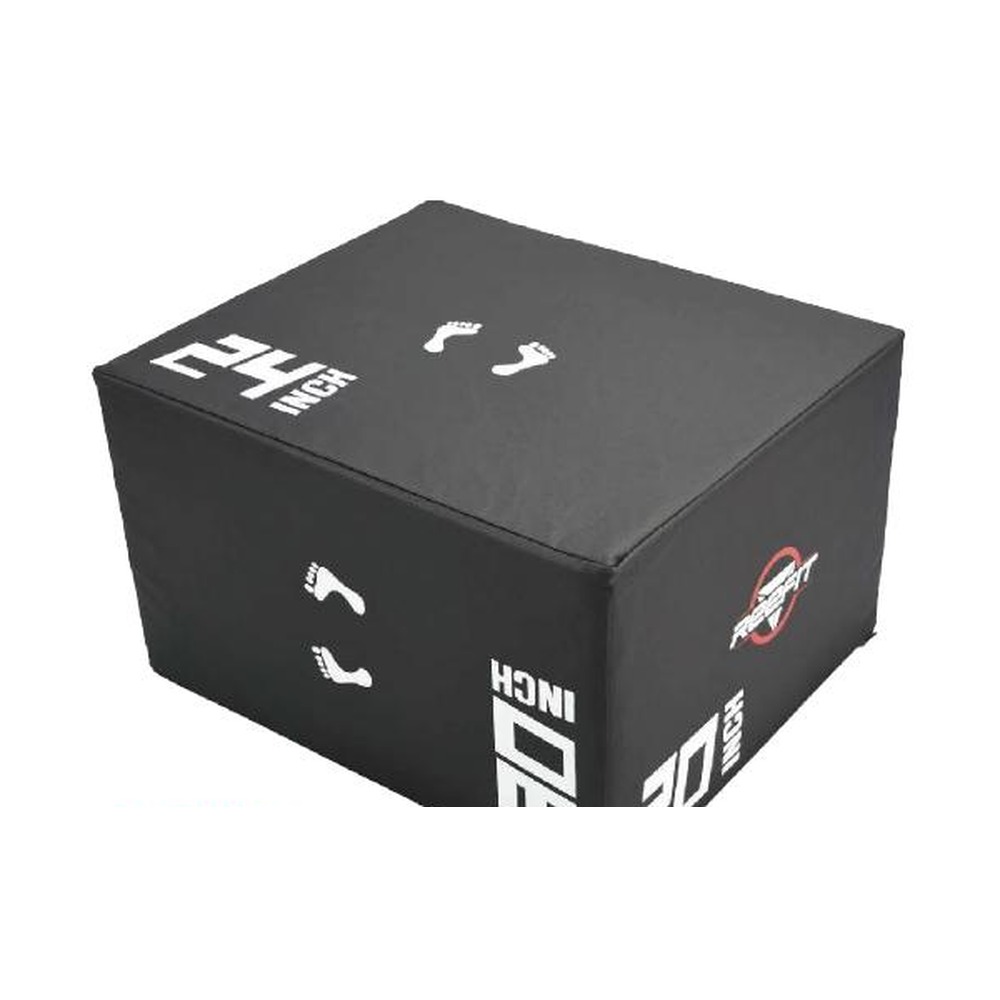
A soft three-sided box offers padded edges and compact height choice, while a wood three-sided box gives a rigid platform and requires close review of panels, joints and edges. Stackable foam systems support smaller height steps but add connector, alignment and stack-control checks. Fixed-height rigid boxes simplify height identity but require more units and storage positions.
Do not turn these tendencies into guarantees. A light soft cube can move, a poorly assembled wood box can loosen, and an approved stack is only the combination named by its instructions. Compare the exact model, orientation and floor. The buying decision is the lowest verified capability across the complete station, not the best marketing attribute of one material.
| Format | Evidence to request | Good project fit | Acceptance focus |
|---|---|---|---|
| Soft 3-in-1 | Core, cover, seams, mass and face grip | Mixed groups needing three heights in one footprint | Each orientation on the approved floor |
| Wood 3-in-1 | Panels, joints, edges, hardware and assembly | Facilities prioritizing a rigid landing platform | Joint integrity and edge condition |
| Stackable foam | Allowed stacks, connectors and alignment marks | Programs needing small height increments | Stack retention and uniform support |
| Fixed-height rigid | Frame, feet, top surface and nesting rules | High-clarity stations with dedicated storage | Rocking, grip and height identity |
Verify geometry and stability in every working orientation
Request overall dimensions for every working orientation, the actual contact footprint, product mass, center-of-mass behavior and any stated user or exercise limits. For a three-sided box, the tallest position changes the base under the athlete. Mark each orientation on the floor and check approach, landing and step-down without letting the box enter an adjacent lane.
Run the supplier’s permitted checks on the specified flooring with representative users and coaches. Observe sliding, rocking, panel flex, cover movement and tip tendency during normal entry and exit; do not create an improvised overload test. Record the orientation, floor, footwear and setup so receiving staff can repeat the approved method rather than relying on memory.
Inspect the core, shell, seams, panels and connectors
For a soft box, request the inner structure, foam layers, cover material, anti-slip treatment, seam layout, closure and repair route. Press and inspect all landing faces for uneven collapse, displaced fill or hidden hard points. The word soft describes contact feel; it does not confirm the internal structure, dimensional recovery or suitability for every drill.
For wood, resin or steel formats, request panel or frame material, edge treatment, fasteners, feet, landing surface and assembly instructions. For stackable systems, add connector type, allowed combinations and alignment marks. Inspection access matters: staff must see loose hardware, splits, corrosion, worn grip, damaged hook-and-loop and contamination before the unit returns to service.
Build a height range around coached progression
Build the order around the lowest useful height, the program’s normal range and the next controlled progression. Beginner groups, youth programs, rehabilitation-led sessions and performance athletes do not share one starting point. Ask coaches to define the movement standard and regression route; a member should never be pushed toward a height simply because that face is printed on the box.
Use clear, durable height markings in the local units, and confirm that the visible number matches the vertical height in that orientation. If the program needs finer increments, buy an approved stackable system or separate low boxes instead of placing unrelated objects under a cube. Stacking is permitted only when the manufacturer names the combination and retention method.
Plan the floor, working envelope, handling and storage
Map the complete operating envelope: approach, takeoff, landing, step-down, coach position, waiting line and a buffer from racks, machines, glazing and routes. Follow the product’s floor guidance; current soft-box instructions commonly call for a suitable rubber surface. A grippy top does not compensate for an unsuitable or contaminated floor under the base.
Create a storage position before ordering. Record box mass and handholds, the staff movement route, maximum approved stack, inspection access and whether a trolley is required. Avoid high storage that forces a worker to pull a bulky box over shoulder level. Wet or damaged units need an isolation position so they are not returned to class by mistake.
Normalize the quotation and approve a reference unit
Issue one comparison sheet covering model code, format, dimensions in each orientation, mass, materials, landing surface, base treatment, connectors, assembly, permitted uses, floor guidance, markings, cleaning, inspection, packaging, replacement parts and branding. Require suppliers to state exclusions and revision identifiers so unequal scopes are visible before a price decision.
Approve one reference unit on the intended floor. Run the planned class transitions, turn or build the box as staff would, inspect every face, clean it, move it to storage and repeat the permitted drills at each required height. Record dimensions, mass, visual details and accepted behavior; retain the unit or an exact evidence pack for shipment comparison.
- Model and revision
- Dimensions, mass and orientation map
- Core, shell, frame and landing surface
- Permitted drills, floor and stacking rules
- Cleaning, inspection and repair route
- Packaging, markings and branding scope
Inspect the shipment and control the service life
At receiving, reconcile cartons and product codes, photograph package condition, then check dimensions, mass, markings, surfaces, seams, closures, handles, panels, hardware and connectors against the approved record. Assemble flat-packed units with the specified method and verify that no fastener, edge or internal hard point interferes with the landing surface.
Release boxes only after the approved floor and orientation checks pass. Give each unit an asset identity and inspection schedule covering movement, rocking, cover cuts, seam opening, foam deformation, loose joints, splinters, corrosion, worn grip and unreadable markings. Remove a damaged unit from use until the documented repair or disposition is complete.
Buyer questions
Is a soft or wood plyo box better for a commercial gym?
Neither format is universally better. Choose soft construction when padded edges and compact multi-height use match the program, and choose wood when a rigid platform and inspectable joints fit the operating plan. Verify the exact box on the real floor in every required orientation.
Is a 3-in-1 plyo box stable at every height?
The three positions have different base geometry, so acceptance must cover each required orientation. Check dimensions, mass, floor contact, rocking and movement under the supplier’s permitted procedure before ordering the batch.
What plyo-box heights should a gym buy?
Start with the lowest coached regression, the normal program range and controlled progressions for the actual users. Several low increments are often more useful than one high maximum. Height markings must match the real vertical dimension.
Can commercial plyo boxes be stacked?
Only models designed for stacking may be combined, and only in the configurations and retention method named by the manufacturer. Do not stack unrelated boxes or place loose objects underneath to create another height.
What should a buyer inspect when plyo boxes arrive?
Check identity, packaging, dimensions, mass, markings, landing surfaces, base grip, seams, closures, handles, panels, fasteners and stack connectors. Assemble as instructed, then repeat the approved orientation and floor checks before release.
Sources
- Stackable Plyo Box — Life Fitness
- 3-in-1 Soft Plyo Box — Life Fitness
- Rogue Wood Plyo Boxes — Rogue Fitness
- Rogue Plyo Boxes — Rogue Fitness
- TRX Soft Plyo Boxes — TRX Training