
Introduction
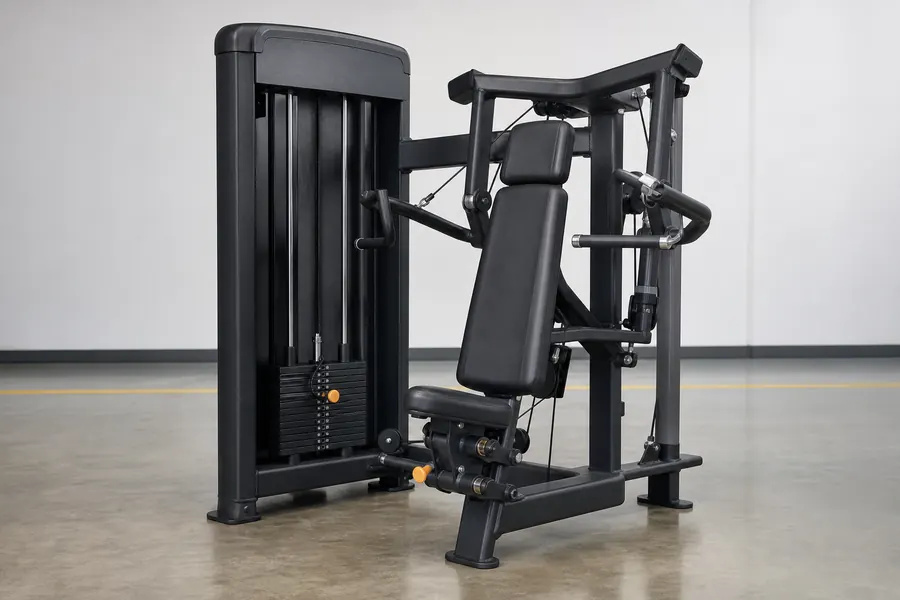
Commercial-grade fitness equipment is designed, documented and supported for shared facility use through an appropriate frame and load path, stable construction, repeatable adjustment, protected moving parts, serviceable wear components, durable contact surfaces and a support system matched to the intended environment. The label alone is not proof; buyers should verify product-specific evidence and operating suitability.
Key takeaways
- Define the use environment: Record traffic, users, supervision, hours, climate, cleaning and maintenance capability.
- Review the load path: Inspect frame geometry, joints, bases, bracing, loading and working stability.
- Check movement and adjustment: Observe full travel, stops, pins, cable routing, pivots and entry across settings.
Planning context
Commercial grade is not one steel thickness, machine weight or warranty phrase. A treadmill, cable station, bench and plate-loaded leg press face different loads and failure modes, so each needs a product-specific design and inspection approach. The buyer's traffic, supervision, maintenance and environment also influence whether a machine is suitable.
A sound evaluation looks at the complete system: frame, joints, resistance path, adjustments, user contact points, guarding, stability, electronics where applicable, service access, documentation and parts support. This guide explains what those elements mean without relying on invented specifications or universal numbers.
Commercial Grade Describes a Use System, Not a Marketing Label
Commercial equipment is expected to serve multiple users with different body sizes, training habits and levels of care. It may operate for longer hours, receive more frequent adjustments and be cleaned more often than residential equipment. The design should account for repeated loading, predictable misuse, stable entry and exit, and a maintenance process that a facility can actually perform.
Suitability must be connected to a defined setting. A lightly used supervised corporate room is different from a twenty-four-hour strength club. Hotels, schools and rehabilitation-oriented facilities also have distinct access and supervision needs. Ask the supplier to state the intended application and warranty conditions for the specific model. Avoid assuming that appearance, machine mass or a product-category name proves fitness for every commercial environment.
Frame Design Matters More Than a Single Tube Specification
The frame must carry resistance and user loads through a stable path without unwanted movement or interference. Tube profile and wall thickness are only parts of that system. Geometry, span, bracing, gussets, joint placement, base contact, fastener design and how loads enter the structure all affect performance. A heavier frame can still be poorly arranged, while an efficient design may place material where the load path requires it.
Inspect whether the machine remains stable during entry, adjustment and the full movement. Review base feet and floor contact, anchoring requirements, plate-storage effects and whether loading one side changes behavior. For benches and racks, check contact points and adjustment engagement. For large functional systems, review how multiple user positions interact with the same connected frame.
Welds and Surface Finish Should Be Consistent and Inspectable
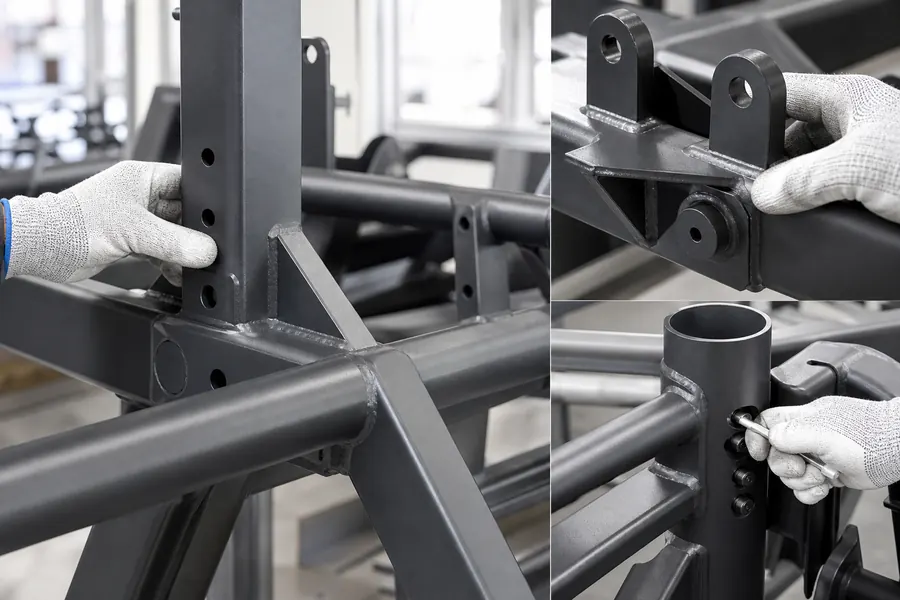
Weld evaluation should consider joint preparation, continuity, accessibility and the demands of the design rather than cosmetic smoothness alone. Visible inconsistency, missed areas, sharp residue or distortion deserves investigation. Critical joints should follow controlled drawings and qualified factory procedures. Buyers should avoid declaring structural performance from a photograph; product-specific engineering and applicable test evidence require qualified review.
Surface preparation and coating protect appearance and help manage corrosion in the intended environment. Look for even coverage, clean edges, protected threads and contact areas, and a finish that does not interfere with moving or assembly surfaces. Salt, humidity, sweat and aggressive cleaning can challenge finishes. Confirm cleaning guidance and any environmental limitations instead of assuming every coating is suitable for outdoor or coastal exposure.
Movement Quality Comes from Alignment, Bearings and Controlled Stops
Commercial strength machines should guide resistance without binding, abrupt changes or unintended contact. The feel depends on pivot alignment, bearing or bushing selection, lever geometry, cable routing, pulley size and alignment, weight-stack guidance, start position and the condition of bumpers or stops. Smoothness at one light setting does not replace checking the usable range and adjustment positions.
Buyers can observe repeated cycles, listen for abnormal contact and check whether adjustment pins fully engage. Plate-loaded arms should move as intended and provide accessible loading. Cable ends, guards and attachment points should be secure. None of these observations alone certifies safety, but together they help identify questions for technical documentation, factory inspection and commissioning.
Adjustments and Contact Points Must Support Repeated Shared Use
Seats, pads, handles, footplates and adjustments are the user's interface with the machine. Commercial equipment should make intended settings clear, hold them positively and tolerate frequent changes. Check that pins align, levers can be reached, seats do not shift after engagement and moving a bench does not require unsafe lifting. Entry and exit should not force users through the resistance path.
Upholstery performance depends on more than cover thickness. Foam support, backing, edge construction, stitching, fastener placement and the ability to replace a damaged pad all matter. Grips and foot surfaces should provide secure contact and remain inspectable. Ask whether common pads, grips or adjustment parts are available separately, and how the correct version is identified.
Guarding and Clearances Should Address Real User Interaction
Moving stacks, belts, chains, pivots and pinch areas require product-specific attention. Guards should reduce unintended access without blocking necessary inspection or creating new sharp edges. The facility must also preserve the installation clearances expected by the product; placing another machine or storage rack inside a movement envelope can defeat a sound design.
Instructions, warnings and exercise guidance must be appropriate to the destination market and user setting. Buyers should confirm language, placement and durability, while avoiding claims that a label substitutes for supervision or staff training. Commissioning should check that guards, stops, cables, fasteners and adjustments are in the intended condition after transport and assembly.
True Commercial Value Includes Serviceability and Parts Identification
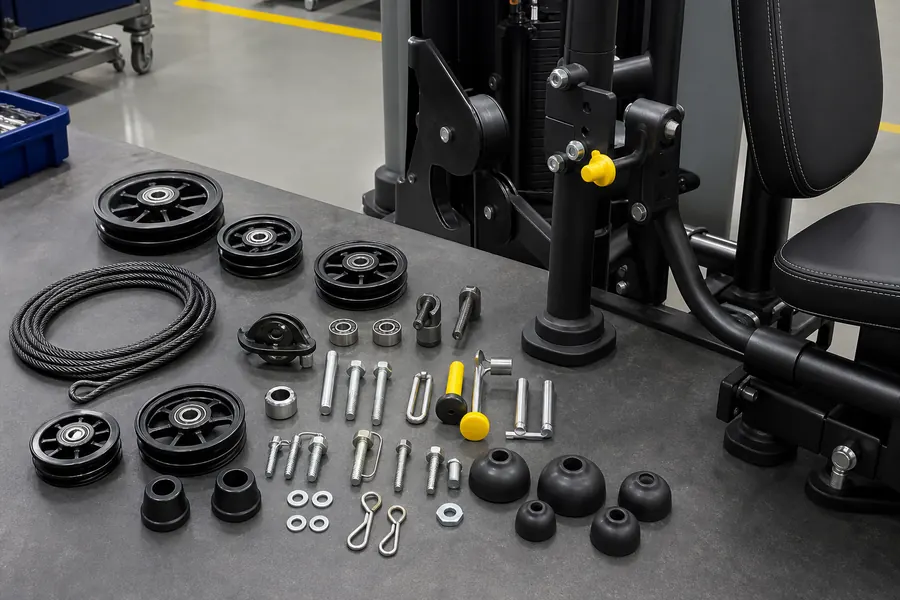
Wear is expected in cables, belts, upholstery, grips, bearings, pulleys, pins, bumpers and electronic components. Commercial design should allow appropriate inspection and replacement without unnecessary disassembly. Service panels, fasteners and routing should be reachable after installation. A beautiful row of machines placed against a wall can become expensive to maintain when ordinary access was never planned.
Ask for parts diagrams, maintenance intervals, troubleshooting guidance and the process for identifying compatible replacements. Confirm whether parts are stocked, made to order or sourced from a third party, and what information is needed to order them. Facilities should keep maintenance records and remove equipment from use when a safety-related defect is found rather than waiting for a routine service visit.
Verify Claims with Relevant Documents and Product-Specific Evidence
A responsible supplier should distinguish design information, internal inspection, third-party testing, regulatory documents and marketing statements. Buyers should confirm what model and configuration a document covers, who issued it, when it was valid and whether it is relevant to the destination market. Do not accept a factory-wide certificate as automatic proof of every product characteristic.
Request the evidence appropriate to project risk and local requirements. This may include drawings, assembly instructions, maintenance guidance, material or component records, applicable test reports and pre-shipment inspection. Legal and regulatory obligations vary, so obtain qualified local advice. The supplier's role is to provide accurate, traceable information—not to promise universal compliance without a defined product and market.
Buyer decision framework
- Define the use environment: Record traffic, users, supervision, hours, climate, cleaning and maintenance capability.
- Review the load path: Inspect frame geometry, joints, bases, bracing, loading and working stability.
- Check movement and adjustment: Observe full travel, stops, pins, cable routing, pivots and entry across settings.
- Audit contact and guarding: Review pads, handles, foot supports, grips, guards, clearances and instructions.
- Test serviceability: Locate wear parts, panels, fasteners and replacement procedures in the planned layout.
- Verify evidence: Match documents and claims to the exact product, configuration, market and date.
Buyer checklist
- The intended commercial environment and traffic level are defined.
- Frame, joints, bracing, feet and anchoring needs have been reviewed as a system.
- Full movement is checked across relevant adjustments and resistance settings.
- Pins, stops, catches and loading points engage clearly and remain accessible.
- Cables, pulleys, belts, bearings and other wear parts can be inspected.
- Upholstery, grips and contact surfaces are replaceable and supported.
- Required guards, labels, instructions and installation clearances are confirmed.
- Maintenance documents, parts diagrams and warranty process are available.
- Formal evidence is verified for the exact product and destination requirement.
Common buying mistakes
- Using machine weight as proof: Mass does not show whether loads, joints, stability, movement and service access are well designed.
- Focusing on one steel number: Tube dimensions matter only in the context of geometry, bracing, load path, material and manufacturing control.
- Judging welds only by appearance: Cosmetic observation can raise questions but cannot replace controlled procedures and relevant engineering evidence.
- Ignoring adjustments: A strong frame still creates a poor shared-use machine if settings are unclear, inaccessible or unreliable.
- Blocking service panels in the layout: Commercial maintenance becomes costly when machines must be moved for ordinary inspection.
- Accepting irrelevant documents: Evidence must apply to the exact model, configuration, market and period under review.
Manufacturer perspective
From a manufacturer's perspective, commercial quality is created across connected stages. Drawings and bills of material guide cutting, welding and assembly; finish specifications guide preparation and coating; inspection points check the product before packing. A weakness in specification control can undo good work at any individual station.
Shipment preparation is also part of preserving the delivered condition. Moving arms, stacks, pads, consoles and frames need protection suited to their surfaces and shapes. Hardware and attachments should remain identifiable for installation. After assembly, commissioning must confirm that transport and installation have not changed cable routing, fastener condition, leveling, guards or adjustments.
Manufacturers also need accurate information about the destination environment. Cleaning chemicals, humidity, coastal air, outdoor exposure, floor construction, user traffic and supervision can change material, finish and maintenance discussions. A supplier cannot responsibly declare universal suitability without these inputs. Buyers should treat environmental limits and maintenance instructions as part of the product specification, then make sure the operating team receives them before the machine enters service.
Commercial-Grade Evaluation by Equipment Type
| Equipment type | Primary structural concern | Wear or service points | Buyer observation |
|---|---|---|---|
| Selectorized strength | Stable frame and aligned resistance path | Cable, pulleys, pins, guide rods, upholstery | Smooth travel, positive adjustment and service access |
| Plate-loaded strength | Load path, sleeves, stops and user entry | Bearings, pivots, grips, pads and bumpers | Controlled movement and safe loading clearance |
| Rack and bench | Stability, contact points and adjustment lock | Fasteners, catches, upholstery, wheels and feet | Secure settings and no unintended rocking |
| Functional trainer | Connected frame and cable working envelope | Cables, pulley carriage, stacks and attachments | Both sides move correctly without path interference |
| Treadmill | Deck support, handrail and user platform | Belt, deck, rollers, drive, electronics | Level operation, accessible service areas and clear power needs |
| Gym flooring | Stable supported surface and suitable transitions | Seams, edges, surface wear and cleaning | Correct use by zone and no trip-prone transitions |
Useful next pages
Buyer FAQ
Does thicker steel always mean better commercial gym equipment?
No. Thickness is one design input. Geometry, material, span, bracing, joints, load path, manufacturing control and intended use determine how the structure works as a system.
How can I tell if a strength machine is commercial grade?
Define the intended environment, inspect stability, movement, adjustments, contact points, guarding and service access, then verify product-specific documentation, warranty and parts support.
Are commercial machines maintenance-free?
No. Shared-use equipment requires routine cleaning, inspection, adjustment and replacement of wear components. The maintenance plan should be defined before purchase.
What parts wear most often on commercial strength equipment?
Wear depends on design and use, but cables, pulleys, bearings or bushings, upholstery, grips, pins, bumpers and fasteners commonly require inspection.
Does a long warranty prove commercial quality?
Not by itself. Review covered parts, exclusions, claim process, labor and freight responsibility, maintenance conditions and the supplier's ability to identify and deliver compatible parts.
Should commercial equipment be tested before shipment?
Products should follow defined factory inspection and any applicable verification required by the project. Agree the buyer's pre-shipment evidence and acceptance scope in advance.
Conclusion
Commercial grade is a chain of design, manufacturing, inspection, documentation, installation and support decisions. Buyers should evaluate the whole system against the real facility rather than searching for one material number or label that guarantees suitability. Ask suppliers to explain intended use, load path, movement components, wear parts, maintenance access and the evidence behind important claims. That conversation reveals more about long-term commercial value than a list of decorative features.
Need this topic turned into a real equipment plan?
Send your market, gym size, product categories or OEM needs. Kloe can help clarify the next step.