
Industrial Site Staff Accommodation Fitness Room Solution
A staff fitness room at an industrial site or accommodation camp must remain understandable and serviceable across shifts, dust, heat, limited technical support and varied training experience. A dependable plan favors robust commercial equipment, compact movement coverage, organized free weights, selected cardio, durable flooring and a realistic local spare-parts kit.
This is a recommended planning example, not a claim that PowerBaseFit completed a named industrial camp. Site safety rules, welfare standards, climate conditions, transport restrictions and building approval must be confirmed for each destination.
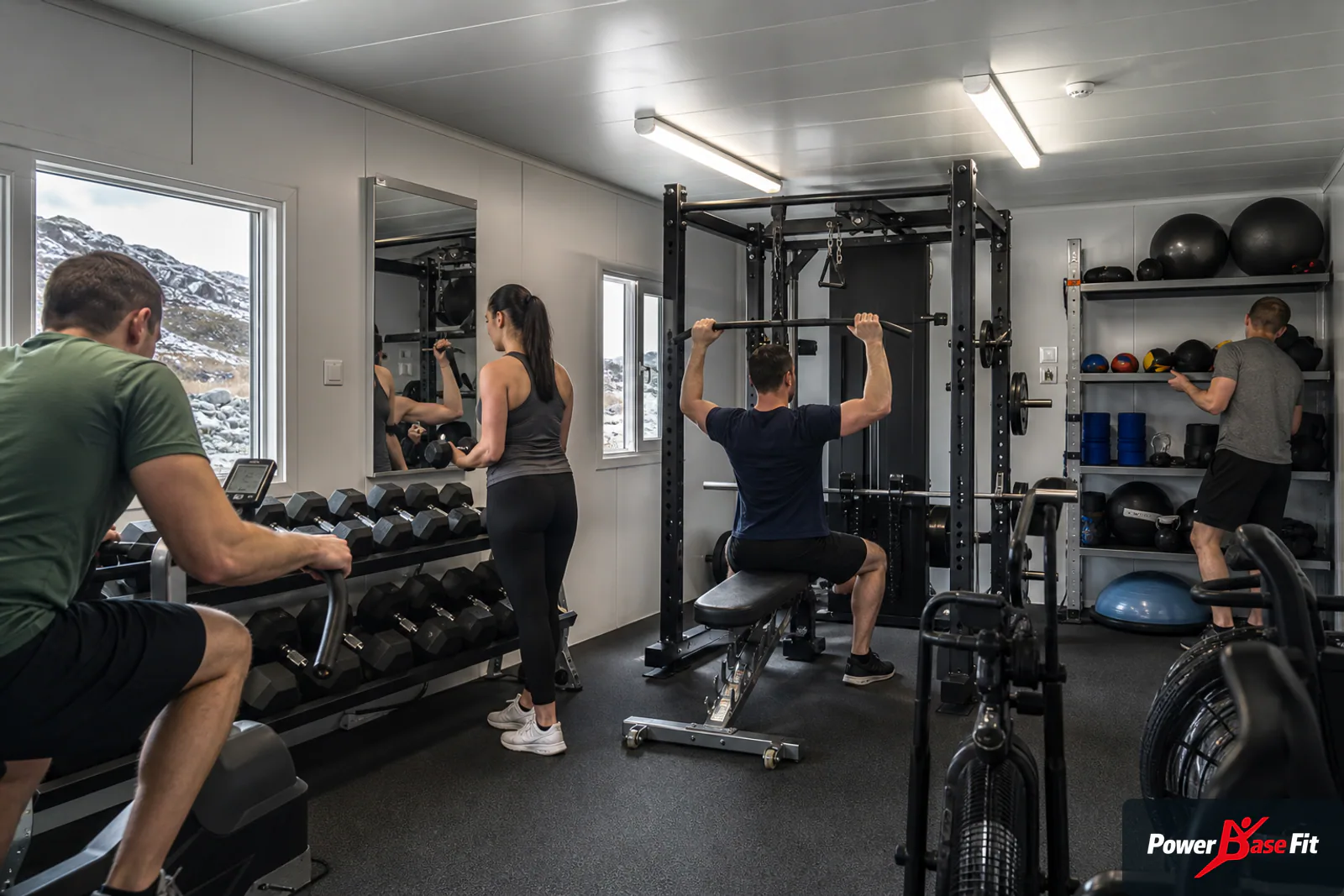
Define the remote-site operating conditions
Record workforce size, shift overlap, room access hours, gender and privacy arrangements where locally relevant, supervision, average stay length and peak simultaneous use. A room serving rotating crews may need simple adjustments and duplicated essentials more than a wide range of specialist machines.
Document climate and environment: temperature, humidity, dust, salt exposure, power stability and cleaning practices. These factors influence cardio electronics, coatings, upholstery, bearings and the parts worth keeping on site.
Decide who owns the room operationally. The camp manager, welfare team, security and maintenance department need clear responsibilities for access, defect reporting, cleaning and technical support. Equipment selection cannot compensate for unclear ownership.
- State the maximum busy-shift attendance, not only total headcount.
- Confirm voltage, frequency, plug type and power quality at the actual building.
- Identify local technicians, tools and consumables available on site.
- Map transport legs from port or warehouse to the final room.
Fit the equipment to modular or constrained buildings
Accommodation gyms may occupy modular rooms with narrow doors, low ceilings and limited structural capacity. Measure clear internal dimensions, door and corridor turns, raised thresholds and ceiling services. Check whether large frames must be split for transport and assembly.
Floor construction and acoustic transfer need local assessment, especially where sleeping rooms are adjacent or below. A heavy free-weight zone should not be placed by convenience alone. Use flooring systems suited to cleaning and impact, and establish a controlled lifting policy.
Ventilation must account for peak use and local climate. Leave clearance around cardio intakes and service panels. Avoid direct sun and airborne dust sources where possible.
Select a compact, resilient equipment mix
A dual-adjustable pulley or compact multi-station can provide many movements in limited space, but user capacity and cable-clearance zones must be verified. Add a focused guided-strength selection for high-demand lower- and upper-body patterns where space permits.
A rack or half rack, adjustable benches, dumbbells, bars, plates and storage can support experienced users. Choose loads and quantities according to supervision and user profile. Secure small accessories so they do not disappear between crew rotations.
Cardio may combine treadmills, bikes and non-motorized conditioning. In unstable power environments, the ratio of powered to self-powered equipment deserves careful review. Electrical protection decisions must be made locally using the confirmed equipment data.
| Remote-site issue | Equipment response | Procurement check |
|---|---|---|
| Limited floor area | Cable versatility and compact guided strength | Operating envelopes and simultaneous-user capacity |
| Variable experience | Intuitive stations plus controlled free weights | Adjustment range, labels and induction plan |
| Power or service limits | Selective powered cardio and maintainable alternatives | Electrical data, service parts and local technician capability |
| High turnover | Visible storage and standardized accessories | Inventory list, replacement identifiers and lockable storage needs |
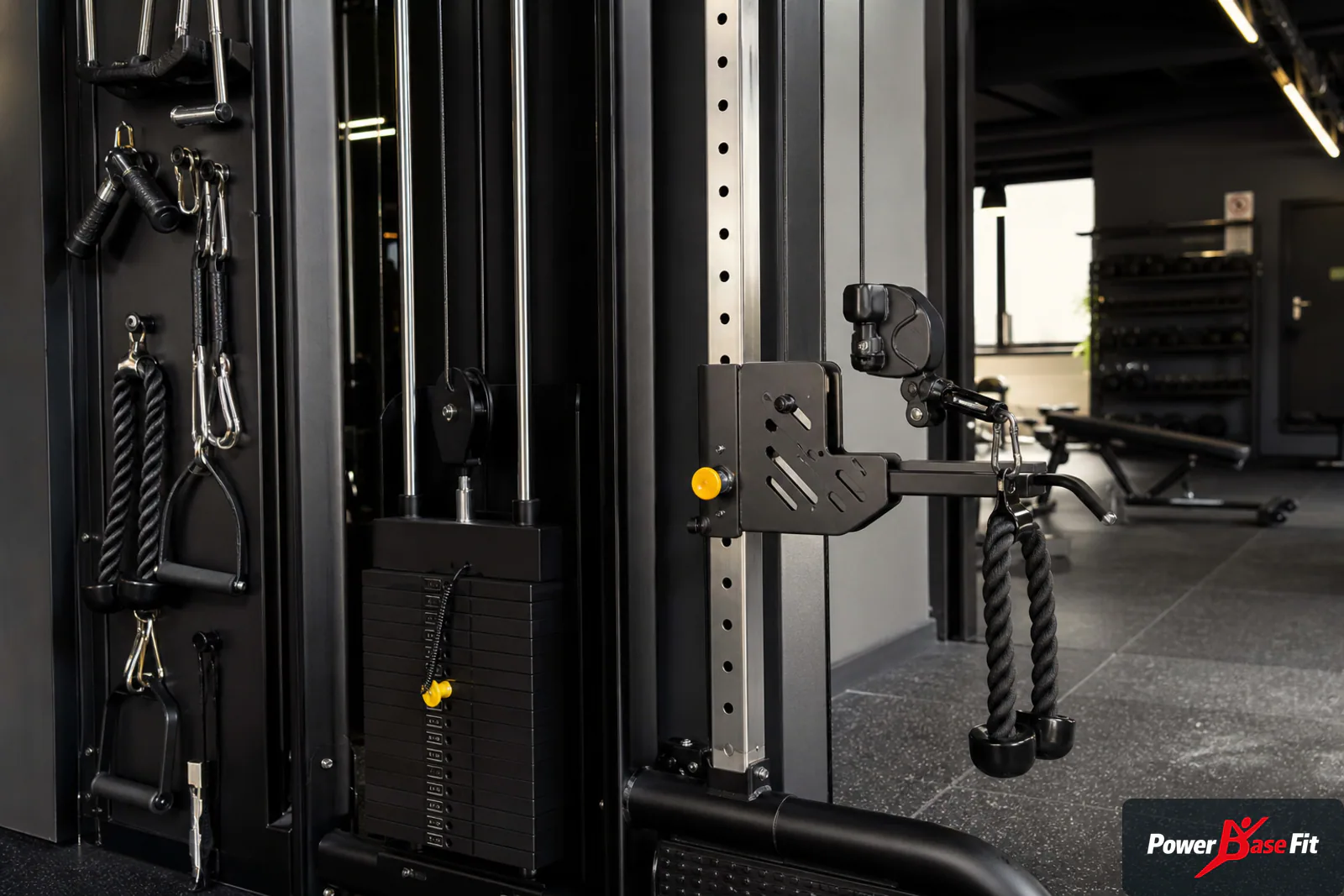
Zone the room for shift peaks and low supervision
Keep the route from entrance to cardio and guided strength obvious. Place free weights where they can be observed and where plate handling will not cross general circulation. Define an open mobility area without allowing it to become luggage or furniture storage.
Provide a notice and defect-isolation point near the entrance. Equipment that is unsafe should be physically and administratively removed from use, not left with a handwritten warning that can be ignored.
If the site provides separate training times or rooms, ensure each arrangement still has complete basic movement and conditioning access. Do not assume all users can attend a single supervised period.
Specify for logistics, not only factory price
Remote delivery costs can exceed the cost of correcting a specification before production. Confirm packed dimensions, weights where available, package count, stack and handling limitations, moisture protection and the need for reinforced packing across multiple transport legs.
Quote comparisons should use the same Incoterm, destination assumptions, included spares, assembly scope and documentation. Clarify customs and inland transport responsibility. Container optimization should not lead to unsafe packing or omitted protective components.
Approve model, finish, upholstery, electrical configuration, labels and accessory list before production. Keep a version-controlled equipment schedule so the camp, contractor and supplier work from the same scope.
Inspect equipment and packing for long transport
Inspection should verify model configuration, frame and weld condition, finish, upholstery, adjustments, cables, pulleys, fasteners, guards and cardio operation. For remote sites, pay particular attention to components that would be difficult to replace after arrival.
Review packing as a technical deliverable. Consoles, shrouds, seats, adjustment handles and coated frames need protection from vibration and handling. Small parts should be sealed, identified and linked to the correct unit.
Request loading records and a package list organized for site receiving. Photographs can document condition and placement, but acceptance requirements must be written before packing begins.
Build a remote-site spare and maintenance plan
Ask for a model-specific list of common wear and service parts, then select local stock using expected use, lead time and technician capability. Cables, belts, pulleys, selected bearings, upholstery touchpoints, console components and fasteners may warrant discussion; the final kit should not be generic.
Create simple daily and weekly checks that camp staff can perform within their competence. Technical work should follow manufacturer instructions. Protect manuals and parts diagrams in both digital and accessible local copies.
Dust control, compatible cleaning and ventilation maintenance affect equipment life. Keep lubricants and chemicals appropriate to the exact machines and prevent unapproved products from being used across the room.
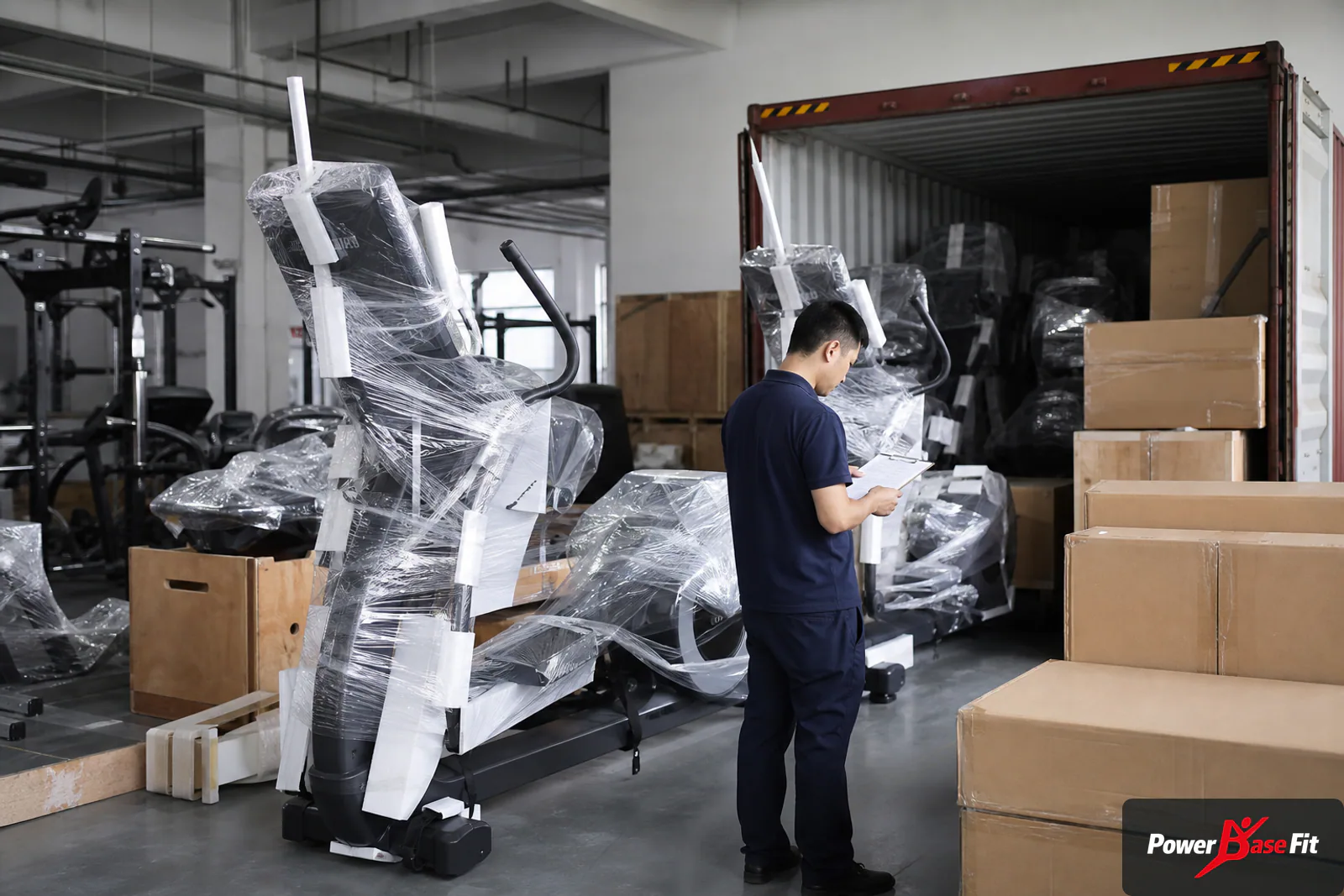
Plan inland delivery, assembly and handover
Survey every leg: port or regional warehouse, road conditions, site security, unloading equipment, temporary storage and the final building route. Confirm whether crates or cartons can be kept dry and secure before installation.
Local assemblers need the equipment schedule, manuals, tools, fastener sets and a process for reporting missing or damaged parts. Sequence the room so completed machines do not block later movement.
Commission the gym with power checks, leveling, fastener verification, cable and belt inspection, console tests, storage setup and a staff handover. Keep an unresolved-items register and do not allow uncontrolled use before closure.
Common remote accommodation gym mistakes
Common mistakes include buying home-use equipment for continuous shift access, overfilling a modular room, relying on powered cardio without confirming electricity, and shipping without a useful spare-parts file.
Projects also fail when freight is quoted only to port while inland handling, security and assembly remain unassigned. Small accessories disappear when storage and inventory are treated as afterthoughts.
Avoid fabricated mine, oil and gas or construction-camp references. A credible proposal explains which assumptions were used and asks the buyer to confirm site-specific conditions before production.
Convert environmental descriptions into purchase controls
Replace hot, dusty or coastal with expected indoor temperature and humidity, ventilation, cleaning frequency, dust source, salt exposure and whether conditioning runs continuously. These details guide protection and maintenance without creating an unsupported lifetime promise.
Ask which surfaces need inspection, which cleaners are compatible and which parts are sensitive. The site professional confirms voltage, frequency, grounding, capacity and protection; the supplier confirms configuration. Both reviews are needed before cardio production.
Build a remote spare-parts policy
Rank parts by likelihood of wear, consequence, diagnostic difficulty, local skill and replenishment time. The cable for the only multi-station may justify local stock, while an electronic module may need remote diagnosis. Store cables without kinks, electronics protected and fasteners with verified identifiers.
Review consumption after normal operation begins. Fault history should change the next order. A universal kit is not useful when it does not match installed models.
Create a register for every logistics handoff
List factory loading, port, customs store, regional warehouse, road transport, site gate, temporary store and building delivery. Name the party, handling equipment, weather exposure, evidence and damage response. Compare packages with forklifts, trucks, cranes, doors and storage. If a crate opens early, define who preserves and reseals inventory.
Use condition photographs at custody changes only as logistics evidence, never as a customer success image. Understand claims requirements before shipment.
Govern the room across rotating shifts
Provide one defect channel, a visible isolation method and a handover log reviewed by facilities. Removing a tag without verification is not a repair. Track accessories at sensible intervals so handles and collars remain available and outside walkways.
Include the gym in site emergency and cleaning plans without implying that fitness equipment is part of operational response. Industrial safety routes always take priority.
Design onboarding for a rotating and multilingual workforce
Crew rotations can bring users who have never seen the room or its equipment. Create a brief facility induction covering access, adjustments, storage, cleaning expectations, defect reporting and emergency contacts. Use the languages and formats required by the employer, and keep the process consistent across shifts.
The induction should distinguish facility use from exercise prescription. Qualified local staff decide whether and how an individual trains. The equipment information explains normal setup and limits without making health, injury-prevention or occupational-readiness promises.
Post only instructions that remain accurate for the installed model. When a model or console revision changes, update the local material. Retire old laminated sheets rather than leaving users to decide which version applies.
Review the room after the first crew cycle
Inspect storage losses, repeated adjustment questions, unusual wear, cardio errors, dust accumulation and congestion after a complete crew rotation. Compare findings across shifts because one supervisor may enforce storage and reporting more consistently than another.
Close gaps through training, layout, maintenance or parts changes. Record the action and recheck it after the next cycle. This operational feedback is more useful for repeat orders than an unsupported claim that a remote-site package suits every camp.
Control temporary storage before installation
Remote sites frequently receive equipment before the room is ready. Identify a dry, secure, level store with suitable handling access and an inventory custodian. Do not leave cartons in sun, standing water, construction dust or open traffic routes. Inspect the store after weather events and keep packages off surfaces that can transfer moisture.
If packages must be opened for customs or inspection, record condition, protect every component and reseal the inventory. Small hardware and consoles should remain associated with the correct model. Site teams need a documented exception process for missing, wet or damaged packaging before installation begins.
Measure service readiness without inventing performance data
Before handover, test whether the responsible team can identify a model, locate its manual, report a fault, isolate it and request the correct part. This practical exercise exposes gaps in labels and documentation. It does not require a fabricated uptime percentage or maintenance-cost forecast.
Record the local tools and technical capabilities actually available. Tasks beyond that boundary must have an escalation route. A remote location benefits more from honest service limits and complete evidence than from a broad promise of immediate support everywhere.
Preserve configuration evidence for repeat orders
Retain the approved model revision, electrical version, colors, accessories, packing record and site findings. A repeat order should use this evidence and current operating feedback, not assume that a similar model name guarantees compatibility.
Useful planning links
Frequently asked questions
What equipment works best in a remote staff gym?
Use robust commercial equipment with compact movement coverage, visible storage and serviceable components: selected guided strength, cable equipment, controlled free weights, practical cardio and suitable flooring.
How should shift capacity be calculated?
Estimate the largest overlap before or after shifts and the typical session pattern. Size duplicated essentials and circulation for simultaneous users rather than total workforce.
Should a remote gym avoid electronic cardio?
Not necessarily. Confirm power quality, climate, maintenance and parts lead time, then balance powered machines with maintainable alternatives appropriate to users.
Which environmental details must be sent to the factory?
Provide temperature range, humidity, dust or salt exposure, indoor ventilation, voltage, frequency, plug type, cleaning practice and transport route.
What spare parts should be stored on site?
Select model-specific wear and service items based on usage, lead time and local skill. Request identifiers and diagrams before ordering the final kit.
Can equipment be delivered in partially assembled form?
Often yes, but the split configuration, packaging, access route and local assembly capability must be agreed for each model.
What should site commissioning include?
Check power, level, fasteners, cables, belts, adjustments, consoles, storage, clearances and documentation; train responsible staff and isolate unresolved items.
Is this an example of a completed industrial project?
No. It is a transparent equipment-planning example that must be adapted to the buyer’s site, workforce, logistics and safety rules.
Make remote operation part of the equipment specification
A remote staff gym is successful when it can be used, cleaned, inspected and repaired across rotating shifts with limited disruption. Space, climate, power, storage and transport conditions belong in the equipment decision from the beginning.
A model-specific quotation, packing plan, spare-parts file and controlled site handover reduce uncertainty without making unsupported performance promises.
Plan equipment for a remote staff accommodation site
Send the room dimensions, workforce and shift profile, environmental conditions, destination route, electrical data and local maintenance capability. PowerBaseFit can prepare a practical equipment and packing discussion.